A tiny piece of protein that first appeared in early placental mammals has spent roughly 160 million years changing its ability to attack bacteria. By rebuilding extinct versions, scientists have now watched that immune defense develop step by step.
Researchers at the University of Oregon reconstructed ancestral forms of lactoferricin, an antimicrobial region embedded inside the larger protein lactoferrin.
Lactoferrin appeared after a gene duplication in the ancestor of placental mammals about 160 million years ago. It is found today in fluids including milk, tears, saliva and intestinal mucus.
The work showed that early versions could already damage bacterial membranes. Later evolutionary changes made some forms far more effective at stopping bacterial growth or killing cells outright.
“Evolution is essentially a billions-year-old science experiment, right?” said senior author Matt Barber, an evolutionary biologist at the University of Oregon.
Lactoferrin primarily binds iron, making that resource less available to microbes.
Its lactoferricin region carries another defense. The short peptide contains many positively charged and hydrophobic amino acids, chemical properties common among antimicrobial peptides.
The team focused on a 25-amino-acid stretch corresponding to positions 17 through 42 of mature human lactoferrin.
Researchers compared 376 transferrin, lactoferrin and melanotransferrin sequences from vertebrates.
Using ancestral sequence reconstruction, they statistically inferred protein sequences from extinct common ancestors.
The reconstructed series included AncTF, representing transferrin before the gene duplication, and three ancestral lactoferrins.
Their antimicrobial regions were labeled AncLFcin1, AncLFcin2 and AncLFcin3.
As lactoferricin evolved, positively charged amino acids gradually accumulated. Hydrophobic amino acids also appeared near those charged sites.
The team proposed that these changes improved interactions with bacterial cell envelopes.
Researchers synthesized the predicted peptides and tested them against several bacteria.
The panel included Pseudomonas aeruginosa, Escherichia coli, Staphylococcus aureus and Streptococcus agalactiae.
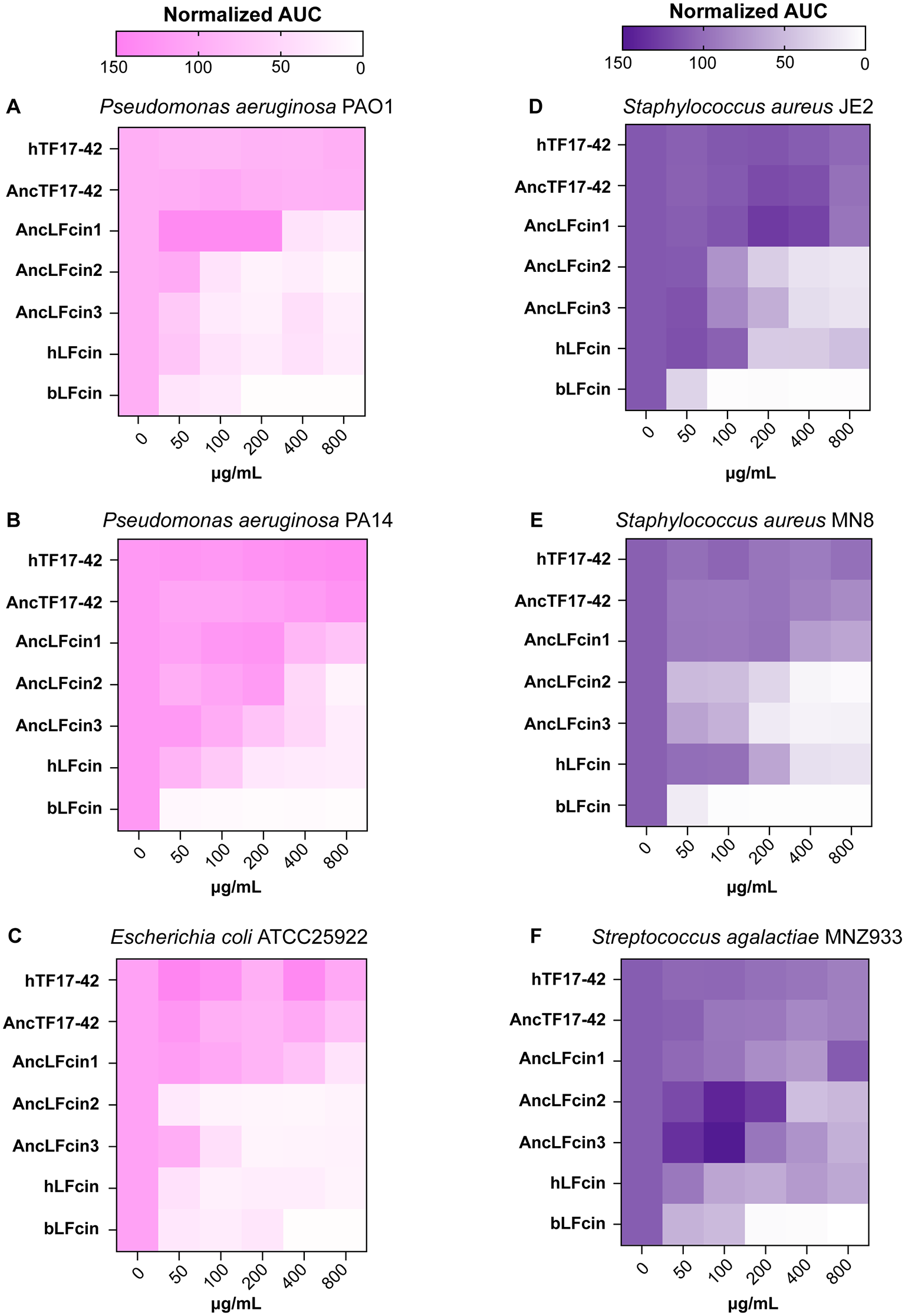
Transferrin-derived peptides showed little or no antimicrobial activity.
AncLFcin1, the earliest reconstructed lactoferricin, performed differently.
At higher concentrations, it reduced growth by more than 50% for some bacteria, including P. aeruginosa at 400 micrograms per milliliter and E. coli at 800 micrograms per milliliter.
AncLFcin2 was substantially stronger.
It showed high potency against P. aeruginosa at 100 micrograms per milliliter and against E. coli and one S. aureus strain at 50 micrograms per milliliter.
Modern bovine lactoferricin produced the most consistently strong results. It significantly restricted bacterial growth at concentrations as low as 50 micrograms per milliliter.
Human lactoferricin performed better against Gram-negative bacteria than Gram-positive bacteria in the experiments.
The team next asked whether the molecules merely slowed bacterial growth or actually killed bacterial cells.
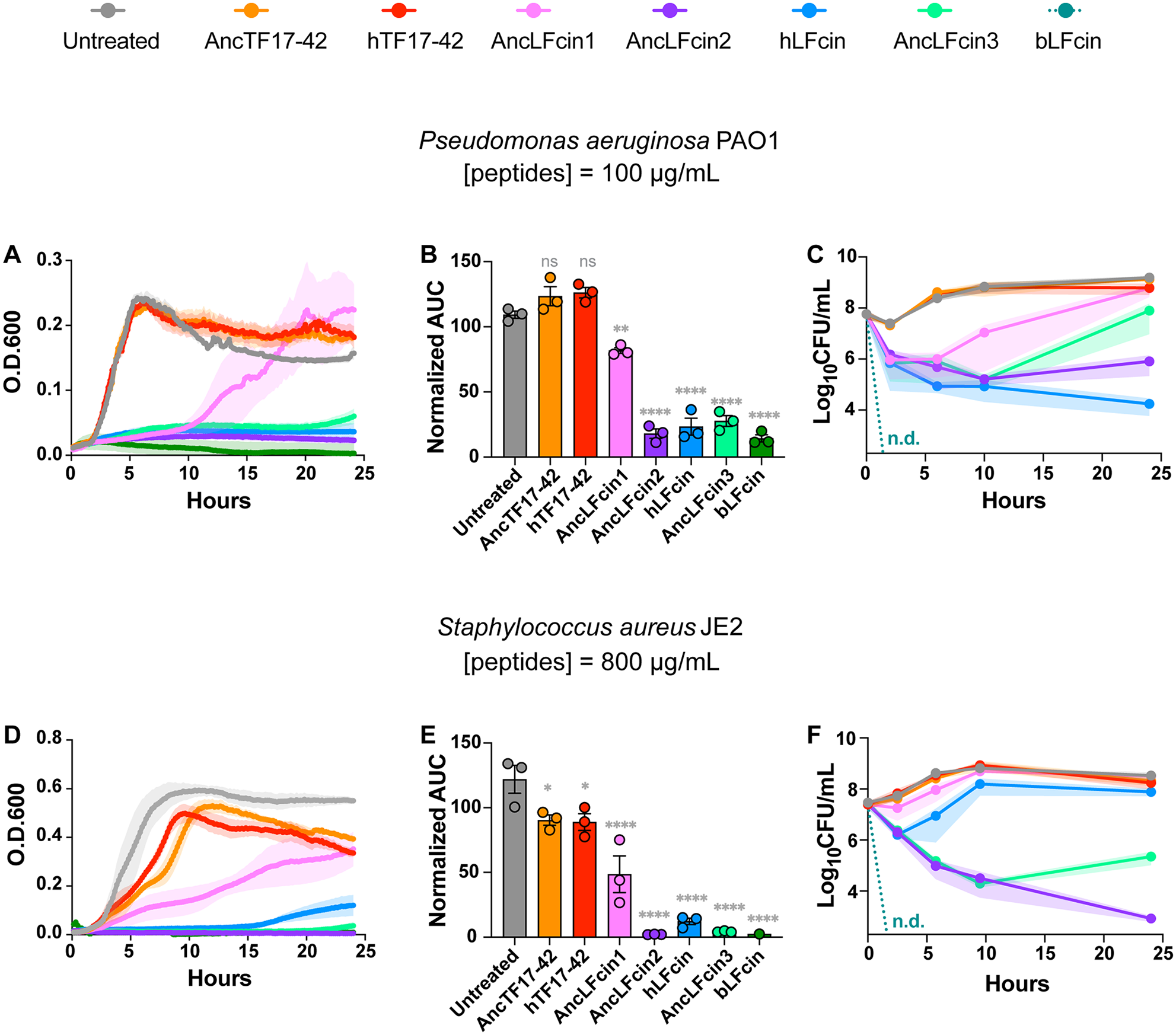
Against P. aeruginosa, researchers tested the peptides at 100 micrograms per milliliter.
AncLFcin1 caused bacterial survival to fall rapidly during the first two hours, but the population later recovered partly.
AncLFcin2 drove viability down by about 1,000-fold after 24 hours.
AncLFcin3 caused a 100- to 1,000-fold decline during the first 15 hours before bacterial growth resumed.
Modern human lactoferricin produced a 10,000-fold reduction.
Bovine lactoferricin was stronger still. No surviving P. aeruginosa colonies were detected after two hours.
Against S. aureus, AncLFcin2 produced an approximately 100,000-fold reduction in bacterial viability.
The pattern showed that antimicrobial evolution was not a simple march toward increasing strength.
Some ancestral forms were more bactericidal against particular bacteria than the modern human peptide.
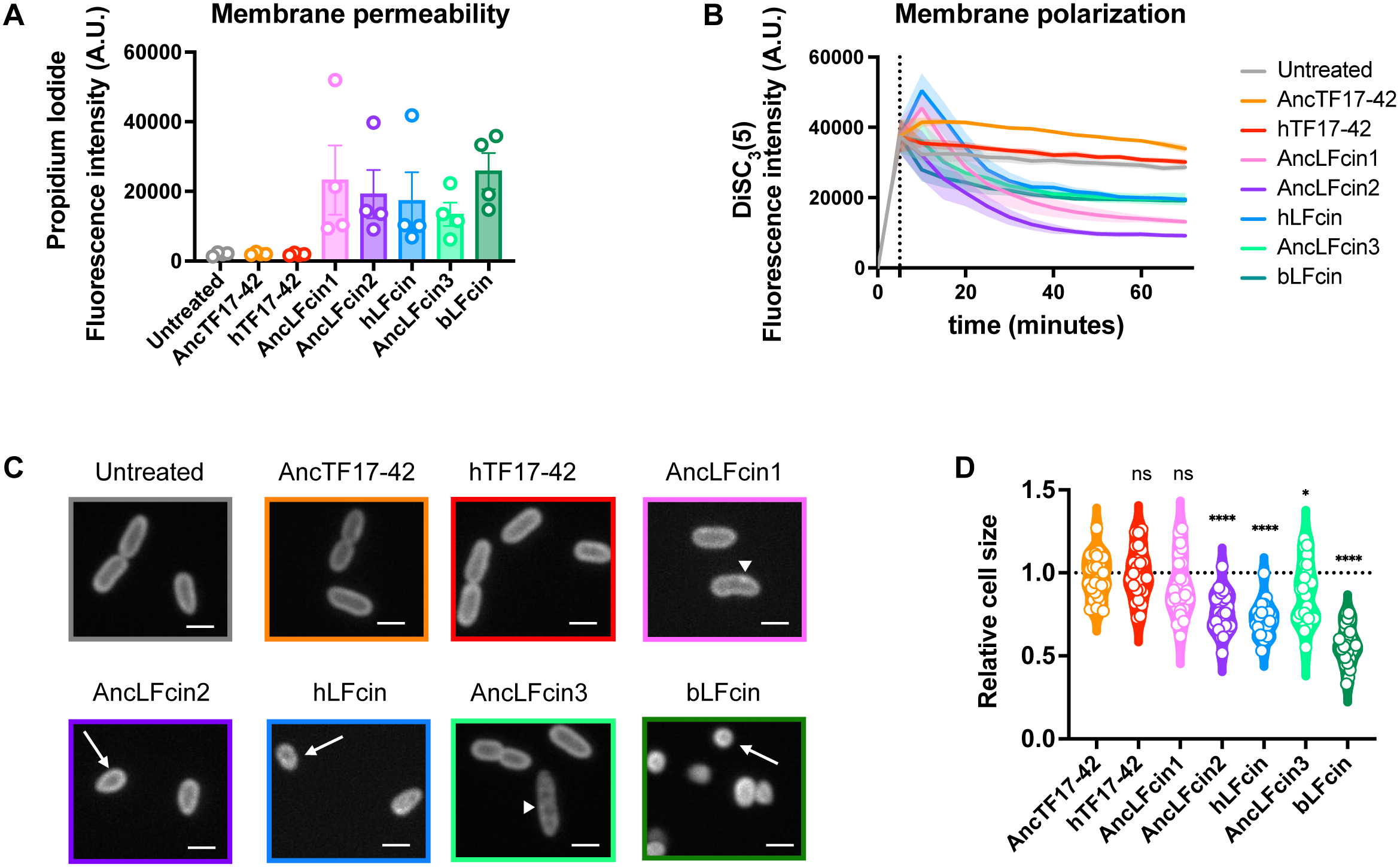
Every ancestral and modern lactoferricin tested increased P. aeruginosa membrane permeability within 30 minutes.
Transferrin-derived peptides did not.
That indicates the ability to disturb bacterial membranes appeared early after lactoferrin evolved.
Microscopy showed that ancestral peptides damaged bacterial membranes and caused cells to shrink.
Modern human and bovine lactoferricins produced more severe effects.
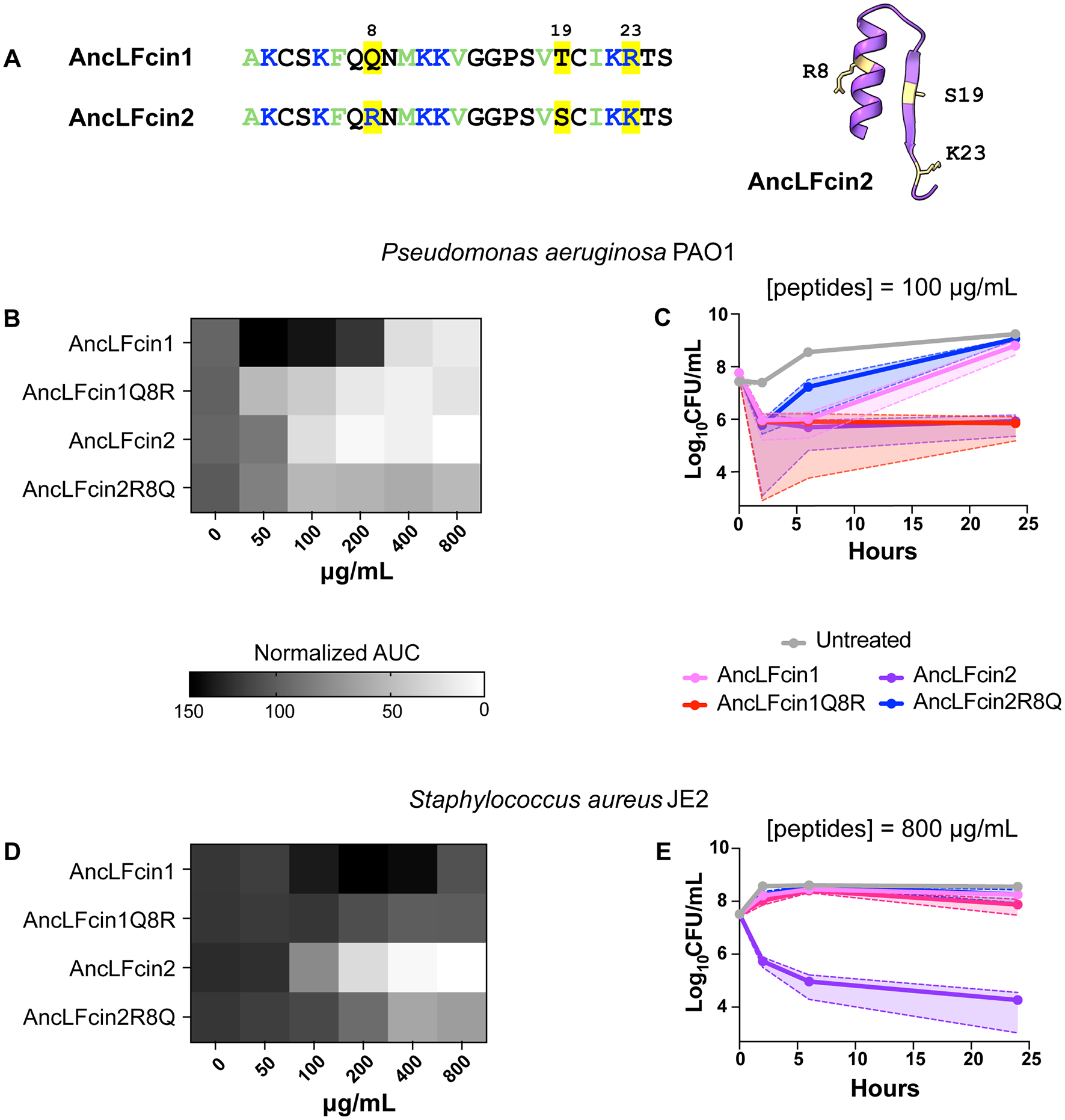
A single amino-acid substitution helped explain part of that progression.
AncLFcin1 and AncLFcin2 differ at only three amino-acid positions.
At position 8, AncLFcin2 contains arginine instead of glutamine.
Experiments showed that this Q8R substitution was both necessary and sufficient to increase antimicrobial activity against P. aeruginosa.
Against S. aureus, arginine at that position was necessary for AncLFcin2’s activity, but it was not sufficient by itself to recreate the full effect.
“What was surprising and unexpected was how small changes in these domains could have such large effects,” Barber said.
The peptide also kept changing during more recent primate evolution.
Two positions, 5 and 12, showed evidence of diversifying natural selection.
Humans and many monkeys carry glutamine at position 5, while other great apes have arginine.
Researchers created a human lactoferricin carrying the great-ape-style Q5R change.
That modification significantly strengthened activity against S. aureus and also suppressed several additional Staphylococcus species.
The position 12 mutation had much smaller effects.
The experiments mostly used low-nutrient laboratory medium rather than conditions that fully reproduce a living mammal.
General patterns remained similar in other media the researchers tested.
The peptides also did not significantly destroy bovine red blood cells.
The reconstructed peptides provide possible starting points for antimicrobial design, but they are not immediate drug candidates.
Antimicrobial peptides are generally less stable than conventional antibiotics and can break down quickly inside the body.
Still, the evolutionary record shows that very small sequence changes can sharply alter their performance.
That gives scientists specific mutations and structural features to investigate when engineering future molecules.
Barber also cautioned that bacteria can evolve resistance to antimicrobial peptides just as they do to antibiotics.
Understanding how these natural defenses changed over millions of years could therefore help researchers anticipate weaknesses rather than simply searching for the strongest peptide.
“We’re definitely interested in whether by resurrecting or engineering some enhanced antimicrobial peptides, we could use these as therapeutics down the road,” Barber said.
These resources explore how antimicrobial peptides attack microbes, how their structure influences their activity and how scientists are trying to turn natural peptide defenses into future treatments.
Antimicrobial peptides: structure, functions and translational applications: This review examines antimicrobial peptide structures, mechanisms, resistance pathways and approaches for improving peptide design. It provides a broad framework for understanding why charge, hydrophobicity and molecular structure can strongly influence antimicrobial activity. (Nature Reviews Microbiology, 2025)
Peptide-based antibiotics: structure-driven strategies to tackle toxicity and resistance of antimicrobial peptides: This review examines how peptide structure can be modified to improve antimicrobial potency while addressing major obstacles such as toxicity, instability and microbial resistance. It also discusses computational approaches for designing improved peptide antibiotics. (Bioorganic & Medicinal Chemistry, 2026)
AMPGen: an evolutionary information-reserved and diffusion-driven generative model for de novo design of antimicrobial peptides: Researchers developed an AI system that incorporates evolutionary information to design target-specific antimicrobial peptides. The work shows how evolutionary sequence patterns can be used alongside modern computational methods to search for new antimicrobial molecules. (Communications Biology, 2025)
DLFea4AMPGen de novo design of antimicrobial peptides by integrating features learned from deep learning models: This research uses deep learning to identify molecular features associated with antimicrobial activity and generate new peptide candidates. It highlights how specific sequence properties can be exploited when engineering peptides rather than relying only on naturally occurring molecules. (Nature Communications, 2025)
Lactoferricin, an antimicrobial motif derived from lactoferrin with food preservation potential: This review examines lactoferricin sequences, structures and antimicrobial activity across mammals, identifying dozens of lactoferricin variants and discussing how structural differences contribute to their function. (Critical Reviews in Food Science and Nutrition, 2023)
Research findings are available online in the journal PLOS Biology.
The original story “Scientists resurrect a 160-million-year-old mammal immune system and watch it evolve” is published in The Brighter Side of News.
Like these kind of feel good stories? Get The Brighter Side of News’ newsletter.
The post Scientists resurrect a 160-million-year-old mammal immune system and watch it evolve appeared first on The Brighter Side of News.


Leave a comment
You must be logged in to post a comment.