Artificial intelligence promises clear answers from complex data. Yet new research suggests there are limits that no amount of data can overcome. Some problems, scientists now show, cannot be solved by AI at all.
A study explores where machine learning succeeds and where it fails. Researchers from the University of Cambridge and the University of California Santa Barbara designed mathematical systems meant to expose these limits. Their findings reveal a deeper truth. In some cases, learning is not just difficult, it is impossible.
Modern science often relies on AI to study systems that are too complex for traditional equations. These include ocean currents, brain activity, and robotic motion. Instead of writing down exact rules, scientists collect data and train algorithms to learn patterns.
This approach has led to major breakthroughs. Still, it does not always work. Models can give unstable results or predictions that drift over time.
Dr Matthew Colbrook, the study’s lead author from Cambridge’s Department of Applied Mathematics and Theoretical Physics, explained the goal. “We’re probing the boundaries of what you can and can’t do with AI,” he said. “It’s so important to understand what problems can’t be solved with these methods, because otherwise you end up wasting a lot of time and money.”
To test these limits, the team built what they call adversarial systems. These are carefully designed problems that look ordinary but hide features that confuse any algorithm.
The researchers found two main reasons why AI fails in complex systems.
In some cases, the algorithm cannot tell when it has seen enough data. It keeps learning without ever reaching a reliable conclusion. In others, patterns exist but remain hidden or too subtle to detect.
More striking is the discovery that some problems cannot be solved at all. Even with unlimited data and perfect algorithms, the best possible outcome is no better than chance.
Colbrook described the assumption many researchers make. “In a lot of AI research, a common assumption is that if we just collect more data, learning will eventually work,” he said. “But we found this is often wrong. Learning is often layered, and requires multiple steps in the right order to work.”
When these steps are missing or misordered, the system becomes unsolvable.
One of the clearest examples comes from chaotic systems. These are systems where tiny differences at the start lead to large differences later.
Weather patterns offer a familiar case. A small change in temperature or wind can lead to very different outcomes over time.
The study shows that in such systems, AI can make accurate short-term predictions. Over longer periods, however, errors grow quickly. Small uncertainties multiply until predictions lose meaning.
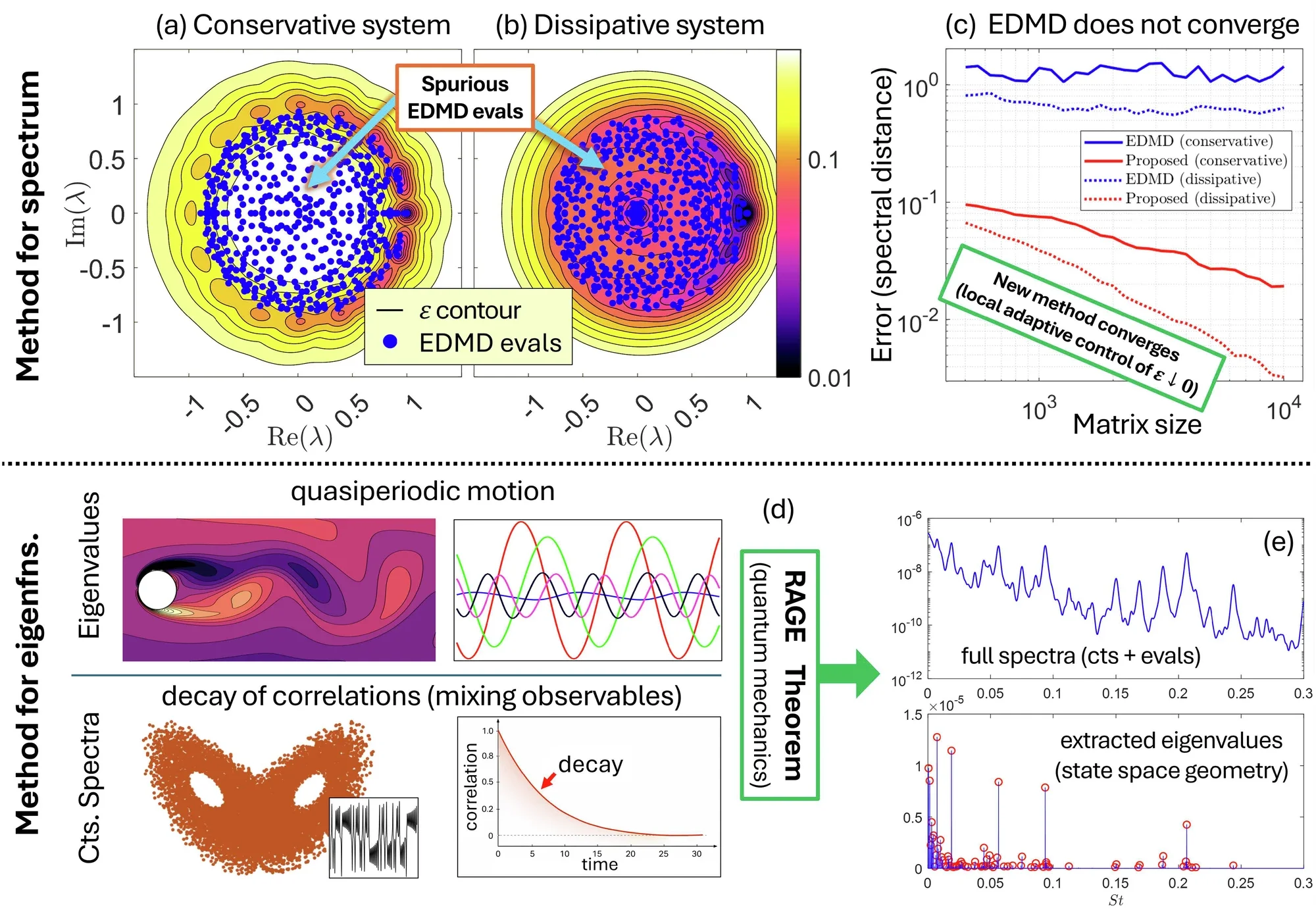
The researchers used a method called Koopman operator learning to analyze this behavior. This approach transforms complex systems into a simpler form that can be studied more easily.
Still, even with this tool, chaos creates a barrier. Instead of clear patterns, the system shows a continuous spread of behaviors. This makes long-term prediction unreliable.
The findings also shed light on why AI systems sometimes produce false or misleading results.
Large language models can generate convincing answers in the short term. Over longer responses, they may drift or produce incorrect statements. This behavior, often called hallucination, reflects the same instability seen in chaotic systems.
Small changes in input can push the model in different directions. Each step may seem reasonable, but the overall result can lose accuracy.
The study suggests that this is not just a technical flaw. It may be rooted in deeper mathematical limits.
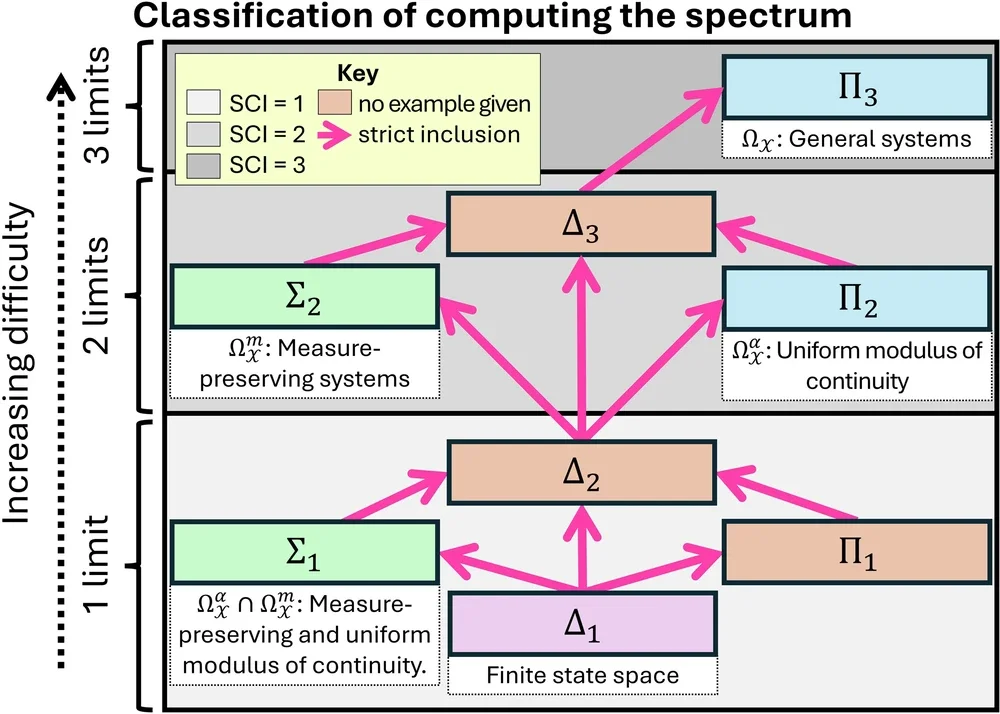
To better understand these limits, the researchers developed a way to classify problems based on how many steps are needed to solve them.
Some problems are simple. A single layer of data and processing can reveal the answer. Others require multiple layers, each refining the information further.
In the most difficult cases, even infinite data cannot solve the problem. These fall into a category where success is fundamentally out of reach.
The researchers describe this threshold as a point where the best possible outcome is a fifty percent chance. In practical terms, this means the algorithm cannot do better than guessing.
This framework helps identify when AI can be trusted and when it cannot.
While the study highlights limits, it also offers a path forward. The team developed a new algorithm designed to provide reliable results when learning is possible.
This method includes built-in error bounds. It allows researchers to measure how confident they can be in the output. It also uses fewer resources than many existing approaches.
The efficiency is striking. The algorithm can run on a standard laptop instead of requiring large supercomputers.
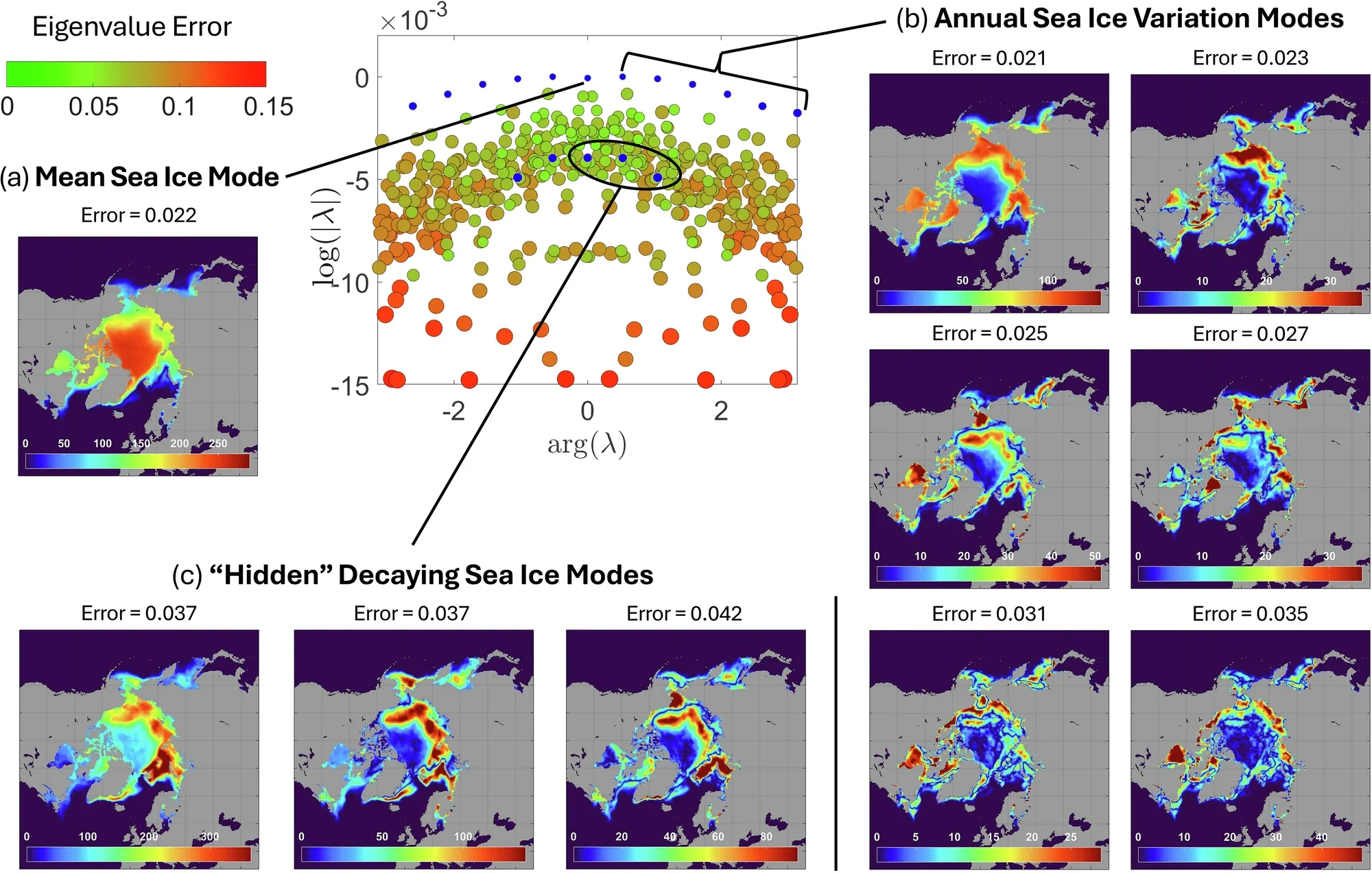
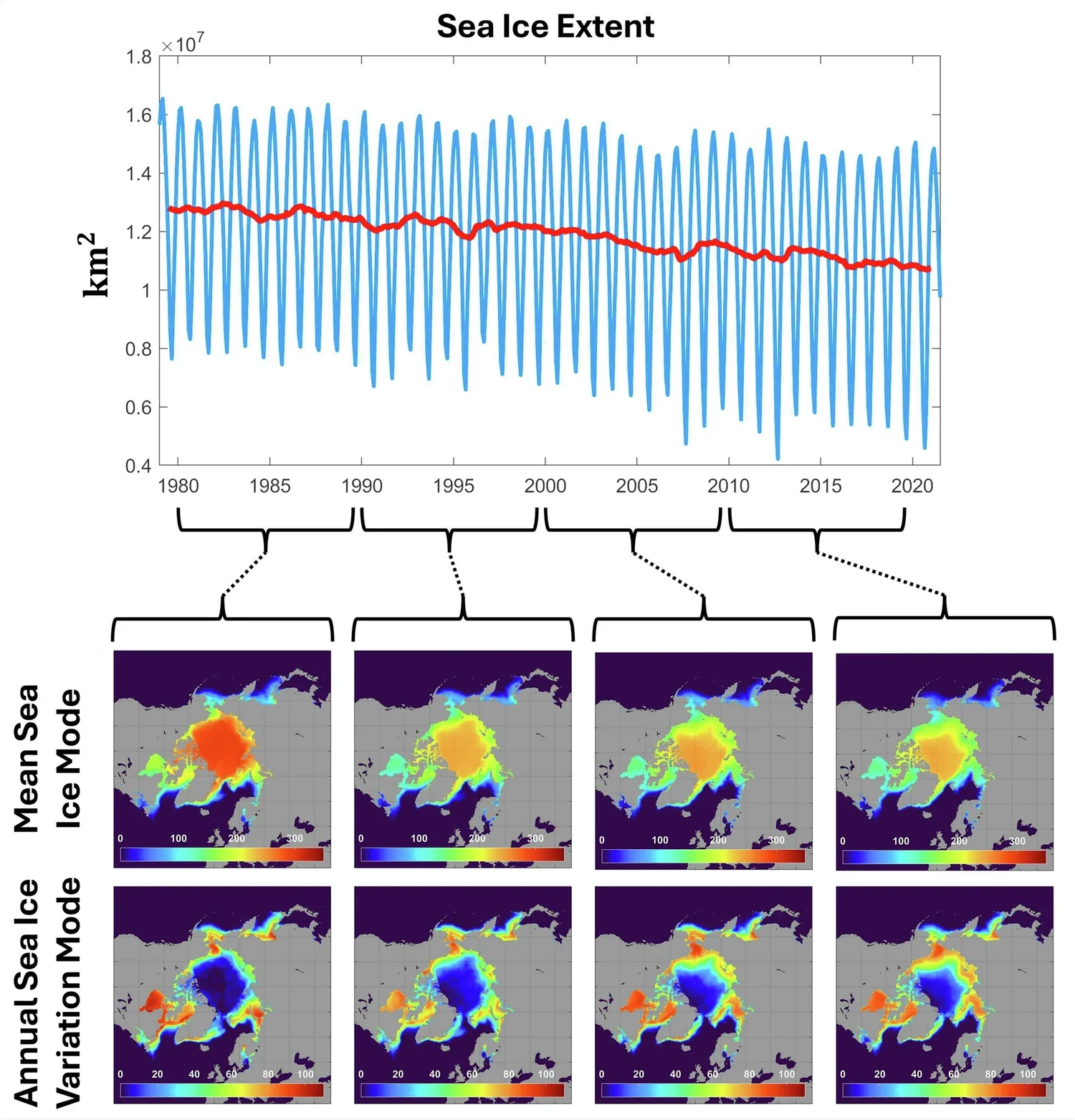
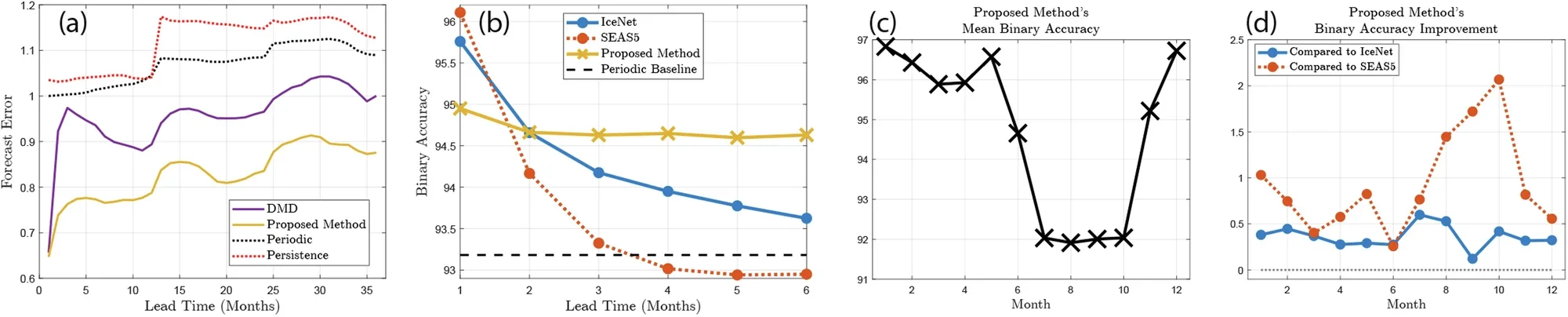
The team tested the method on real-world data, including more than forty years of Arctic sea ice records. The results revealed hidden patterns in how the ice is changing.
In these tests, the new approach outperformed leading AI models while using far less computational power.
The findings carry important implications for science and technology.
In fields like climate research, accurate predictions are critical. If models cannot reliably learn from data, decisions based on those models may be flawed.
The same applies to engineering, robotics, and medicine. In each case, understanding the limits of AI can prevent costly mistakes.
The study encourages a shift in thinking. Instead of assuming that more data will solve every problem, researchers must first ask whether the problem is solvable at all.
This research provides a clearer guide for using AI in science and industry. By identifying which problems are solvable, it helps researchers avoid wasting time and resources on impossible tasks.
The new framework can improve how models are designed. Developers can focus on problems where learning is feasible and build systems with known reliability.
The algorithm introduced in the study also offers a practical tool. Its efficiency allows more researchers to analyze complex data without expensive computing resources.
For society, the work strengthens trust in AI. By setting clear limits, it helps prevent overconfidence in systems that may fail under certain conditions.
In the long term, this understanding could lead to safer and more reliable applications, from climate forecasting to medical analysis.
The study offers a sobering but valuable insight. Artificial intelligence is powerful, but it is not limitless.
Some patterns can be learned. Others remain hidden, no matter how much data is available. Recognizing this difference is essential.
As Colbrook noted, the goal is not just to build better models. It is to understand what those models can truly achieve.
In a world increasingly shaped by AI, that understanding may matter as much as the technology itself.
Research findings are available online in the journal Nature Communications.
The original story “Scientists reveal limits of AI – where it succeeds and where it fails” is published in The Brighter Side of News.
Like these kind of feel good stories? Get The Brighter Side of News’ newsletter.
The post Scientists reveal limits of AI – where it succeeds and where it fails appeared first on The Brighter Side of News.

