The air high above Earth has been moving in the opposite direction of the world below it.
While the planet’s surface and lower atmosphere keep warming, the stratosphere, the layer that begins about 11 kilometers above the ground and stretches to roughly 50 kilometers, has been cooling for decades. Climate scientists have long treated that split as one of the clearest fingerprints of human-caused climate change. What they did not have, until now, was a detailed account of exactly why it happens the way it does.
A new analysis from researchers at Columbia University lays out that mechanism in unusually clear terms. The work points to a central answer: carbon dioxide cools the stratosphere according to how it interacts with specific parts of the infrared spectrum, and some of those wavelengths are much better than others at letting heat escape to space.
“It explains a phenomenon that’s a fingerprint of climate change, has been known to occur for decades, and has not been understood,” said Robert Pincus, a research professor of ocean and climate physics at Lamont-Doherty Earth Observatory, part of the Columbia Climate School, and a co-author of the research in Nature Geoscience.
That contrast can sound backwards at first.
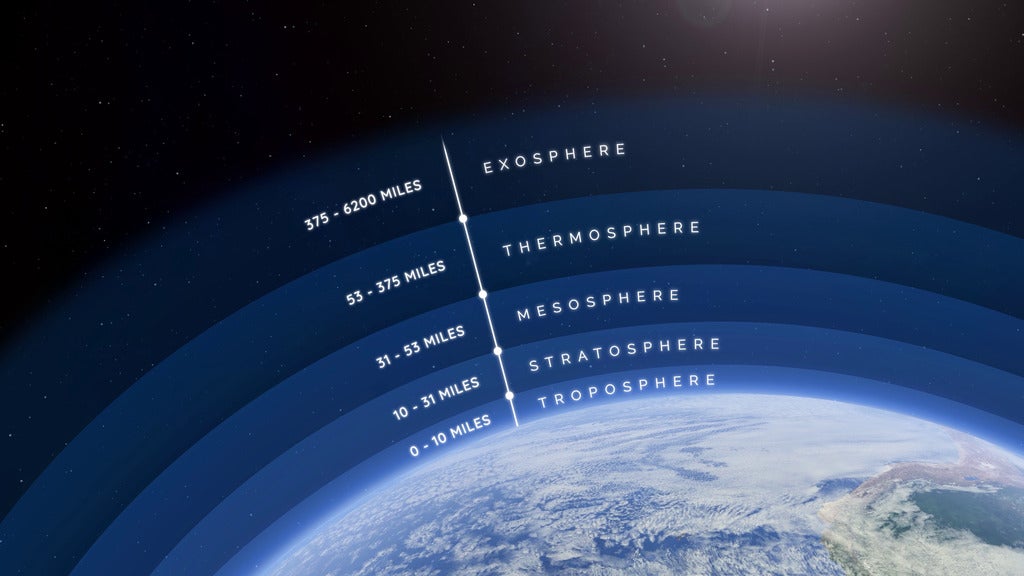
Near Earth’s surface, carbon dioxide traps heat that would otherwise escape upward. In the stratosphere, the same gas behaves differently. There, CO2 acts more like a radiator, taking in infrared energy from below and sending part of it back out into space. Add more CO2, and the stratosphere becomes more efficient at shedding heat, so temperatures fall.
Scientists have understood that broad picture since the 1960s, when climatologist Syukuro Manabe’s early climate models predicted both surface warming and upper-atmosphere cooling from rising CO2. Since the mid-1980s, the stratosphere has cooled by about 2 degrees Celsius. Researchers estimate that is more than 10 times the cooling expected without human-caused carbon dioxide emissions.
What remained murky was the fine-scale physics.
“The existing theory was incredibly insightful, but at the moment we lack a quantitative theory for CO2-induced stratospheric cooling,” said Sean Cohen, a postdoctoral research scientist at Lamont-Doherty Earth Observatory and the study’s lead author.
Cohen, Pincus and Lorenzo Polvani of Columbia Engineering built that theory step by step. They identified the main processes involved in stratospheric cooling, assigned mathematical values to them, and compared the results with detailed simulations and observations. Then they revised the equations and repeated the process until the model matched the larger picture.
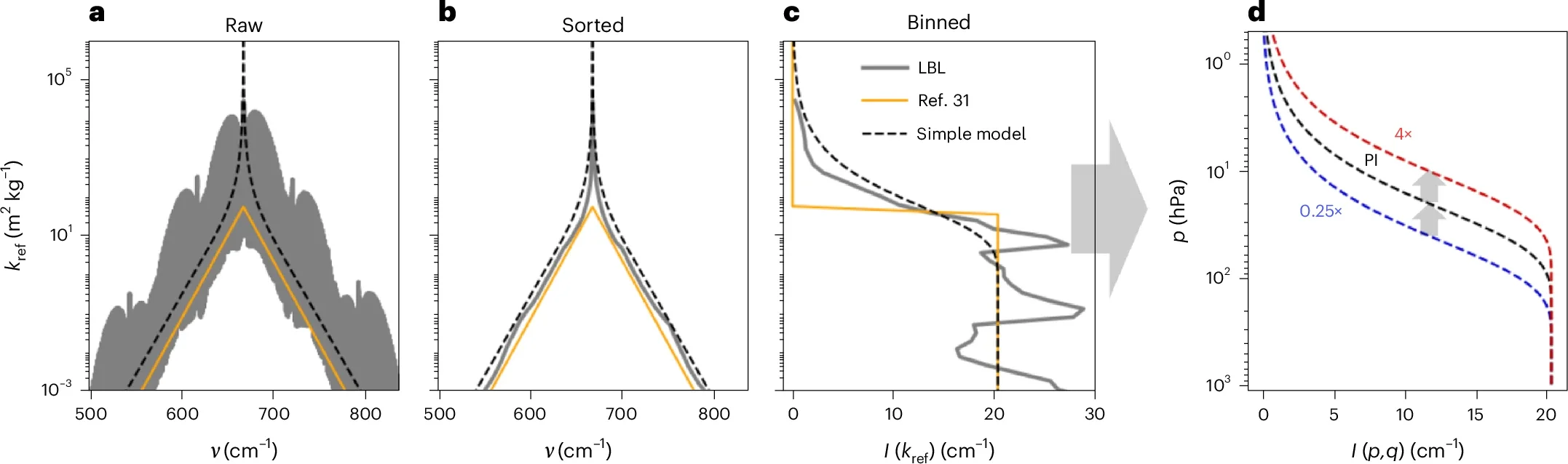
At the center of the explanation is the way carbon dioxide interacts with longwave, or infrared, radiation. Not all infrared wavelengths matter equally. Some play a much bigger role in cooling the stratosphere than others.
The team found that the most important wavelengths fall into what amounts to a “Goldilocks zone.” These are parts of the spectrum that are neither too strongly absorbed nor too weakly absorbed. In that narrow range, CO2 is especially effective at radiating heat to space. As carbon dioxide builds up, that effective zone widens.
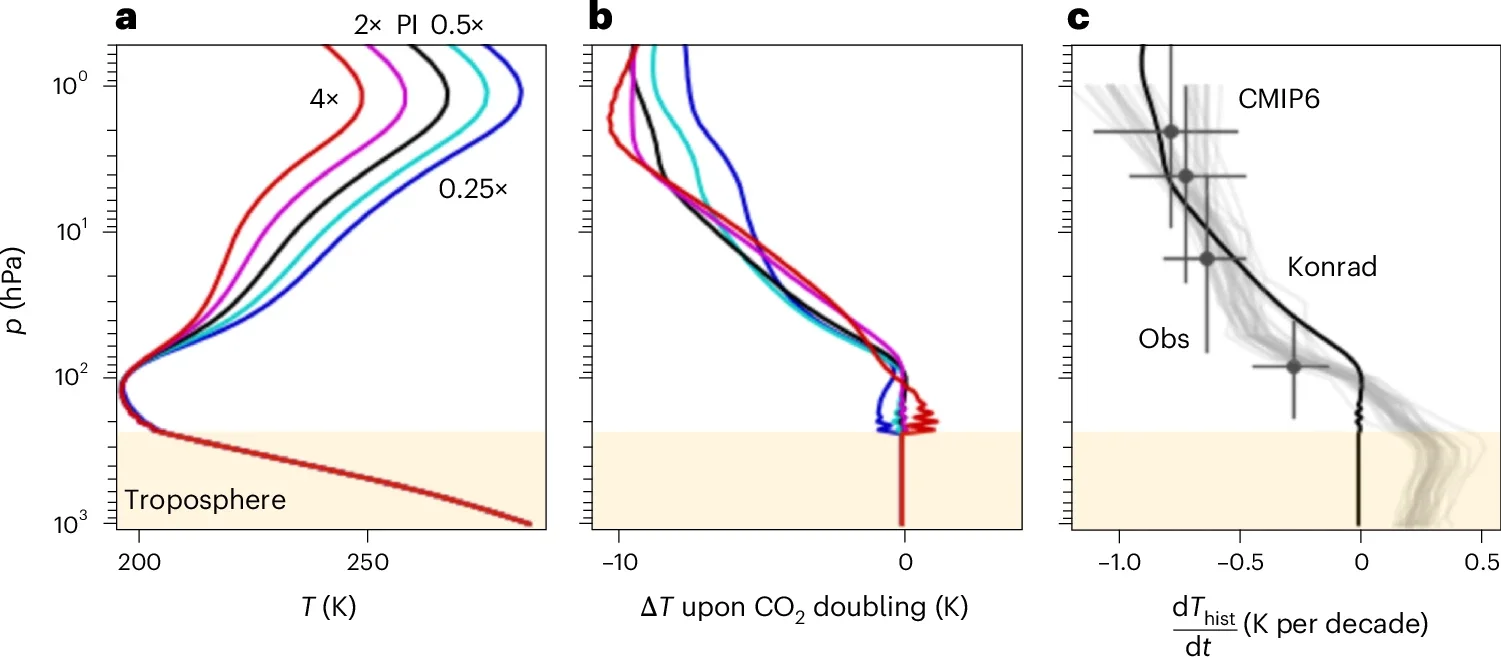
“It’s those changes in efficiency that are going to ultimately be what’s driving stratospheric cooling,” Cohen said.
That idea helps explain a set of long-observed features that had lacked a firm theoretical footing. The cooling is weakest near the bottom of the stratosphere and strongest near the top, close to the stratopause. Each doubling of CO2 produces about 8 degrees Celsius of cooling near that upper boundary. And the temperature drop scales roughly logarithmically with carbon dioxide, meaning each doubling produces a similar additional effect.
The study also clarifies why more carbon dioxide cools the stratosphere while still strengthening warming below.
As the upper atmosphere cools, it emits less infrared energy overall. So even though CO2 makes the stratosphere better at radiating heat, the colder temperatures mean the Earth system as a whole ends up losing less heat to space. That boosts the heat-trapping effect in the lower atmosphere.
In the researchers’ calculations, this stratospheric adjustment increases carbon dioxide’s radiative forcing by about 40 percent to 60 percent compared with its instantaneous effect alone. Near present-day conditions, the team estimated instantaneous radiative forcing at about 2.2 watts per square meter, effective radiative forcing at about 3.4 watts per square meter, and the adjustment itself at about 1.2 watts per square meter.
Earth’s upper atmosphere, in other words, is not just reacting to climate change. It is helping shape the planet’s energy balance in a measurable way.
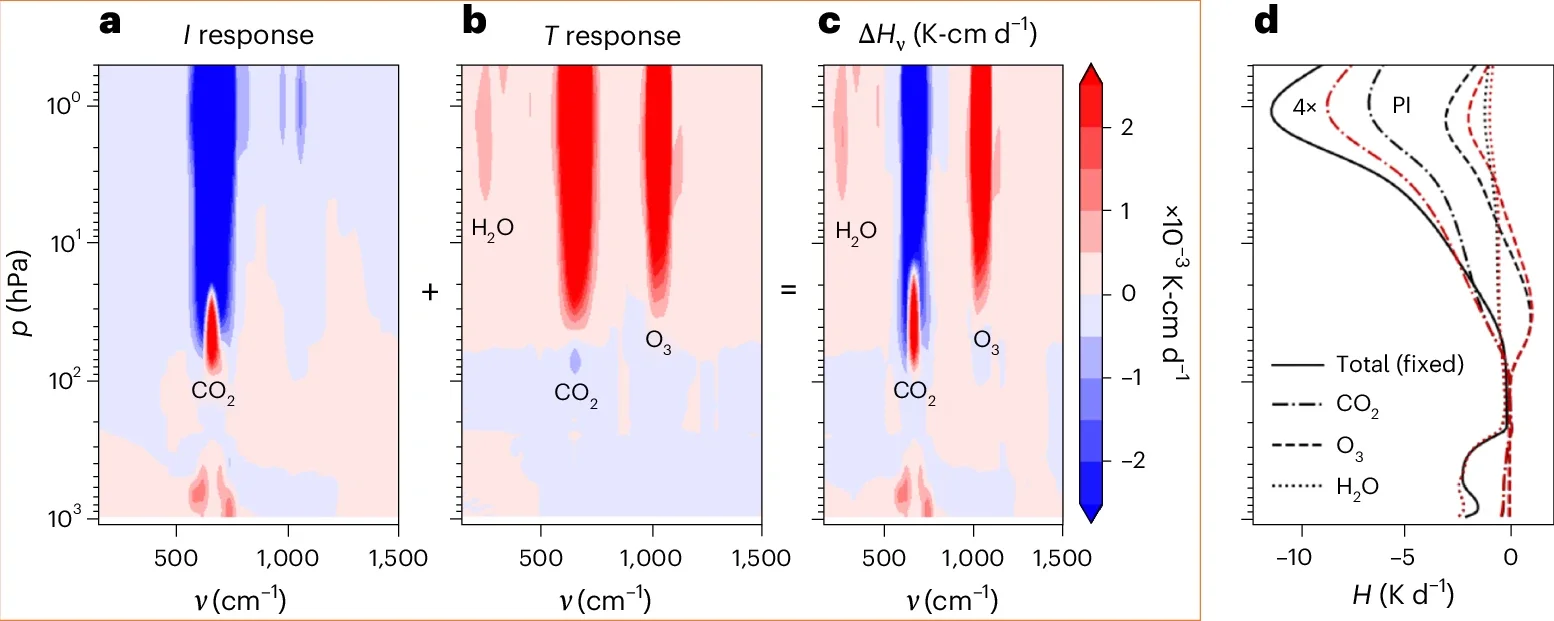
The analysis also looked at ozone and water vapor, which can cool the stratosphere by radiating heat even though they also help trap warmth lower down. Their role turned out to be much smaller than carbon dioxide’s.
Those gases still matter, but mainly as a braking force. When the stratosphere cools, ozone and water vapor reduce some of the overall cooling by changing the longwave heat balance. Without that damping effect, the temperature drop from added CO2 would be more than twice as large in some parts of the atmosphere.
One striking part of the work is how well a relatively stripped-down framework reproduces real-world trends. Using a single-column radiative-convective equilibrium model with fixed surface temperature and fixed ozone levels, the researchers were still able to broadly match observed and simulated global-mean stratospheric temperature trends from 1980 to 2014.
That gave the team confidence that the most important driver had been isolated.
“Here’s this process that we’ve known about for 50-plus years, and we had a pretty decent qualitative understanding of how it worked. However, we didn’t understand the details of what actually drove that process mechanistically,” Cohen said.
The findings do not change the basic case that greenhouse gases are warming the planet. That was already settled.
Instead, the value here is precision. By showing which wavelengths matter most, and why cooling becomes stronger higher in the stratosphere, the work gives climate scientists a cleaner physical explanation for one of the atmosphere’s clearest long-term signals.
“This is really telling us what is essential,” Pincus said.
The researchers note some limits. Their treatment neglects certain feedbacks, including temperature-driven changes in ozone chemistry, shifts in water vapor, cloud effects, and circulation changes such as an accelerated Brewer-Dobson circulation. They also focus on global averages, where radiative balance provides the clearest guide, rather than trying to explain every local temperature change in the real atmosphere.
Even so, the framework appears sturdy enough to be useful beyond Earth. Because it links stratospheric temperatures to the spectroscopy of carbon dioxide itself, the same logic may help scientists think about atmospheres elsewhere.
“Maybe we can better understand what’s going on in the stratospheres of other planets in our solar system or exoplanets,” Cohen said.
This work gives climate researchers a more exact way to describe one of the most visible atmospheric responses to rising carbon dioxide.
That matters for improving climate theory, checking model behavior against observations, and understanding how changes high in the atmosphere feed back into Earth’s energy budget.
It may also help planetary scientists study the upper atmospheres of other worlds where carbon dioxide plays a major role.
Research findings are available online in the journal Nature Geoscience.
The original story “Scientists reveal why the Earth’s upper atmosphere is cooling while the surface is heating up” is published in The Brighter Side of News.
Like these kind of feel good stories? Get The Brighter Side of News’ newsletter.
The post Scientists reveal why the Earth’s upper atmosphere is cooling while the surface is heating up appeared first on The Brighter Side of News.

