The name “Magneto” surfaced during a discussion about using artificial intelligence to discover crystal structures for stronger permanent magnets. In Marvel Comics, Magneto can control every form of magnetism. In a chemistry laboratory, the challenge is less theatrical, but no less ambitious.
A federally funded team wants to find materials that can generate and maintain magnetic fields stronger than those produced by today’s leading permanent magnets. The effort combines machine learning with hands-on synthesis, testing and materials characterization.
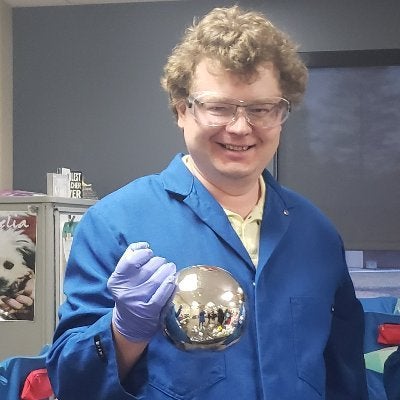
The U.S. Department of Energy’s Advanced Research Projects Agency-Energy, known as ARPA-E, awarded $2.7 million to a group led by Kirill Kovnir, a chemistry professor at Iowa State University. The researchers aim to identify, make and test new magnetic compounds that can outperform neodymium-iron magnets.
Those magnets are currently the strongest permanent magnets available. They play key roles in electric motors and electricity generators, making them important to transportation, manufacturing and power production.
The grant falls under an ARPA-E program called MAGNITO, short for “Magnetic Acceleration Generating New Innovations and Tactical Outcomes.” The program seeks “entirely new physics, chemistries, and structures for ultra-powerful magnets,” according to its summary.
MAGNITO is part of a larger $72 million federal effort supporting early-stage research intended to strengthen domestic magnet manufacturing and protect supply chains for critical minerals.
Kovnir’s team calls its project MAGNUMS, or “Machine-learning Assisted Generation of Novel Ultra-strong Magnets via Synthesis.” The name reflects the project’s strategy: use computers to narrow a vast field of possible materials before chemists begin the slower work of making them.
Machine learning allows computers to learn from data and identify patterns. Here, the tools will screen possible elements, combinations and structures for signs of useful magnetic behavior.
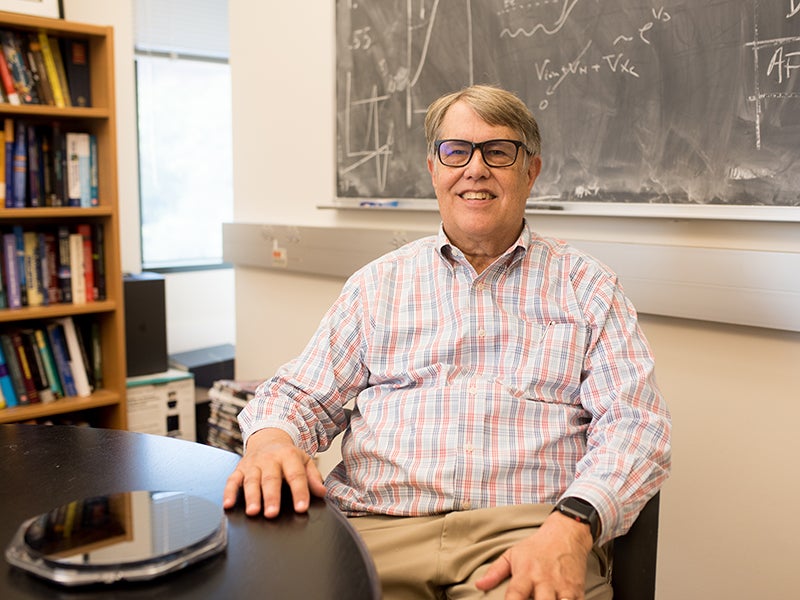
James Chelikowsky, a physics professor and director of the Center for Computational Materials at the University of Texas at Austin, will help lead that work. Yongxin Yao, a laboratory scientist at the Department of Energy’s Ames National Laboratory and an adjunct associate professor at Iowa State, will also lead the machine-learning effort.
“Armed with state-of-the-art theoretical and AI-driven tools, it is truly like embarking on a treasure hunt for new magnetic materials,” Yao said.
A computer can examine many theoretical possibilities, but a promising calculation does not automatically produce a useful magnet. Researchers still have to make the material, determine whether the predicted structure forms and test how it behaves.
That work will involve Kovnir and Julia Zaikina, an Iowa State associate professor of chemistry. The experimental team also includes Yaroslav Mudryk of Ames National Laboratory and Iowa State’s materials science and engineering department, along with Michael Shatruk, a chemistry and biochemistry professor at Florida State University.
“A lot of current research is about improving known compounds,” Mudryk said. “The goal of the MAGNITO program is to discover new compounds. That’s why chemists are involved.”
The chemists will try to guide selected elements into structures that have not been made before. They can change ingredient ratios, synthesis methods and temperatures, then examine how those choices affect the final crystal structure and magnetic performance.
That process can consume time and materials, especially when a proposed combination leads nowhere. The computational group is expected to reduce that burden by identifying promising starting points and steering the laboratory team away from less useful directions.
“We look forward to working closely with the computational group that will provide guidance on where to start and where to go, while saving time and resources from exploring the ‘dead ends,’” Zaikina said.

The project’s success will depend on how well the computational and experimental work inform each other. Predictions can guide synthesis, while laboratory results can show where a model was accurate, incomplete or wrong. That exchange may help the team refine its search.
Making a new permanent magnet involves more than finding a compound with an appealing theoretical property. The material must form under practical conditions, remain stable and hold a strong magnetic field after the external magnetizing force is removed.
Zaikina described the target as compounds “that have the superpower of generating and maintaining high magnetic fields.” Reaching that target would mean moving from a calculated possibility to a physical material that can be synthesized, measured and compared with neodymium-iron magnets.
The team has not claimed that such a replacement already exists. Its task is exploratory, and the program supports early-stage ideas. The work begins with a broad search for unfamiliar compounds, followed by the difficult process of proving whether any candidate can deliver the required performance.
Artificial intelligence can accelerate the search, but it cannot remove the need for chemical judgment, controlled experiments and repeated testing.
Stronger permanent magnets could improve electric motors and generators. Project summaries say they could raise energy productivity, lower electricity-generation costs and allow smaller, lighter motors for transportation and industry.
The work could also support domestic magnet production by expanding the range of materials available to manufacturers. That matters because the federal program is aimed partly at strengthening supply chains for critical minerals used in energy and industrial technologies.
Even if the team does not immediately produce a magnet that surpasses neodymium-iron materials, the project could establish a faster search method. Pairing machine learning with targeted synthesis may help researchers spend less time on unlikely compounds and more time testing credible candidates.
The larger question is whether computation and chemistry can turn a vast materials search into a manageable path toward a real product. MAGNUMS will test that idea one compound at a time.
The original story “Scientists use AI to search for the next generation of ultra-powerful magnets” is published in The Brighter Side of News.
Like these kind of feel good stories? Get The Brighter Side of News’ newsletter.
The post Scientists use AI to search for the next generation of ultra-powerful magnets appeared first on The Brighter Side of News.

