Earth’s descent into one of the most extreme climates in its history may have received an unexpected boost from ordinary sea salt.
As oceans froze during the Neoproterozoic Era, crystals left behind on exposed tropical sea ice could have made Earth’s already-bright frozen surface even more reflective. That extra reflection may have accelerated cooling during the early stages of Snowball Earth, according to a new climate-modeling study.
The research, published in Climate of the Past, was led by Aksel Samuelsberg with Per Kristen Jakobsen and Martin Rypdal at UiT The Arctic University of Norway. Their paper is the first to incorporate the proposed salt feedback into a Snowball Earth climate model.
The results do not identify what originally sent Earth into global glaciation. Instead, they suggest salt precipitation could have strengthened an already advancing freeze once sea ice reached sufficiently cold temperatures.
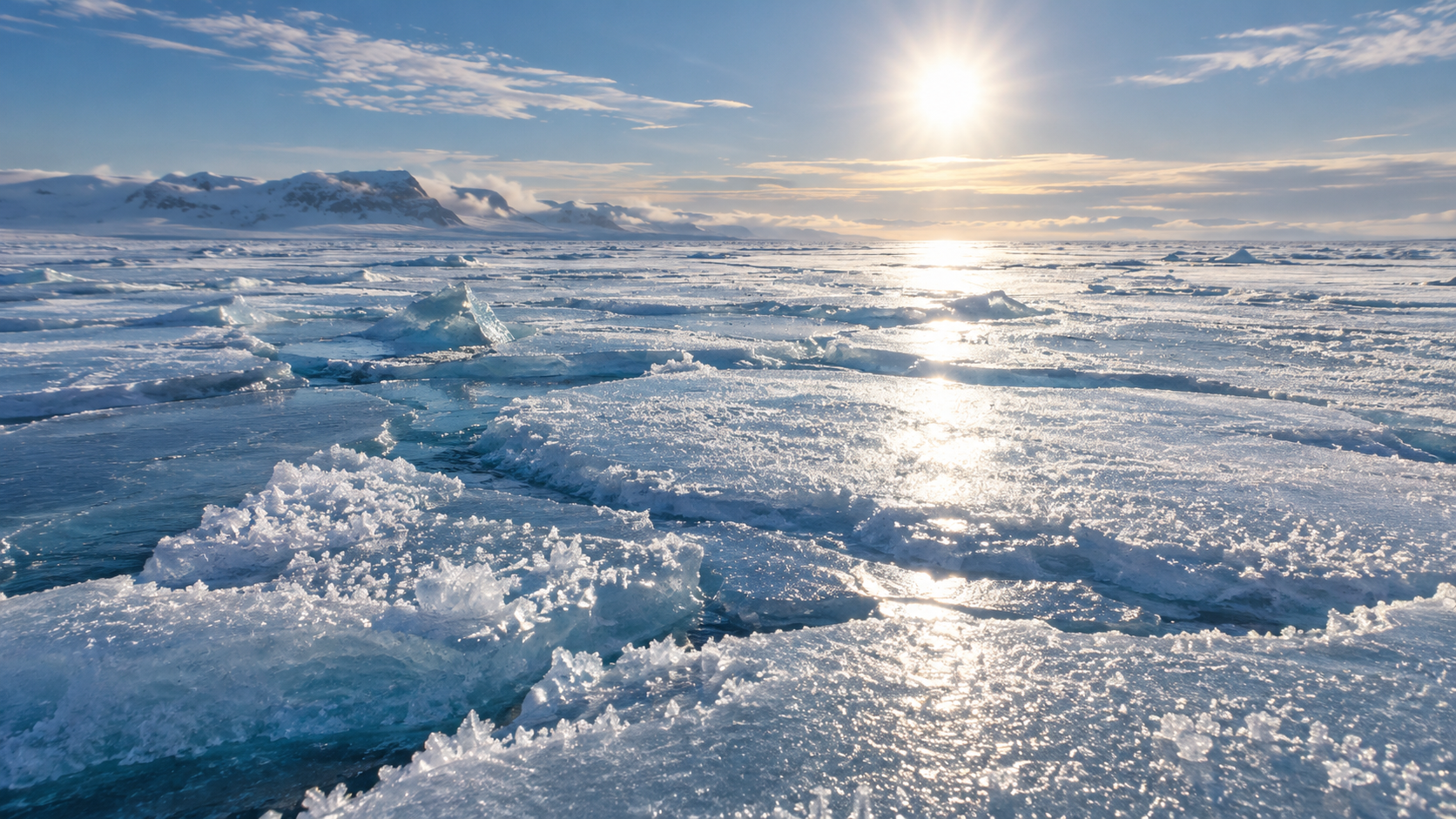
Snowball Earth refers to extraordinary glacial episodes roughly 715 million to 635 million years ago when ice extended into very low latitudes and may have covered nearly the entire ocean.
One reason such a state can become self-reinforcing is the familiar ice-albedo feedback. Dark ocean absorbs much of the sunlight reaching it. Bright ice reflects far more energy into space, cooling the planet and making additional ice formation easier.
Samuelsberg and his colleagues investigated whether salt could add another step.
When seawater freezes, most dissolved salt is excluded from the growing ice and concentrated in pockets of liquid brine. As temperatures continue falling, different salts begin crystallizing. In tropical regions of a frozen Earth where sublimation exceeded snowfall, ice could slowly turn directly into water vapor and leave those crystals behind as a concentrated surface deposit.
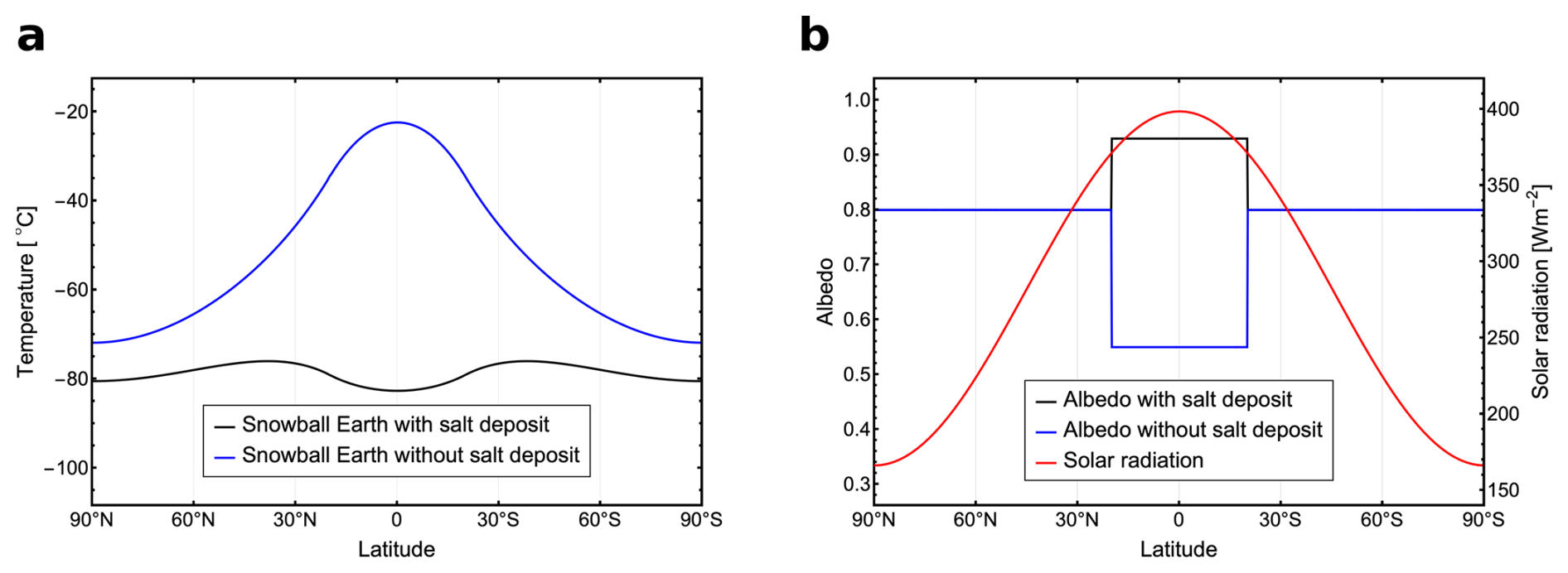
Laboratory experiments have shown just how bright such material can become. A hydrohalite-rich salt crust produced an all-wave solar albedo of about 0.93. Fresh snow measured about 0.83, while bare melting sea ice reached roughly 0.67.
That difference potentially matters enormously when multiplied across large areas of tropical ice receiving intense sunlight.
The researchers incorporated this effect into a simplified one-dimensional energy-balance model that calculates average temperatures across latitude.
They assigned different reflectivities to open ocean, snow-covered ice, bare sea ice and salt-coated ice. The salt surface received an albedo of 0.93 based on the earlier laboratory measurements.
The resulting salt-albedo feedback works much like its better-known ice counterpart.
Cooling allows salt crystals to precipitate. Sublimation concentrates those crystals at the surface. The resulting brighter ice absorbs less solar energy, producing additional cooling that can lead to still more salt precipitation.
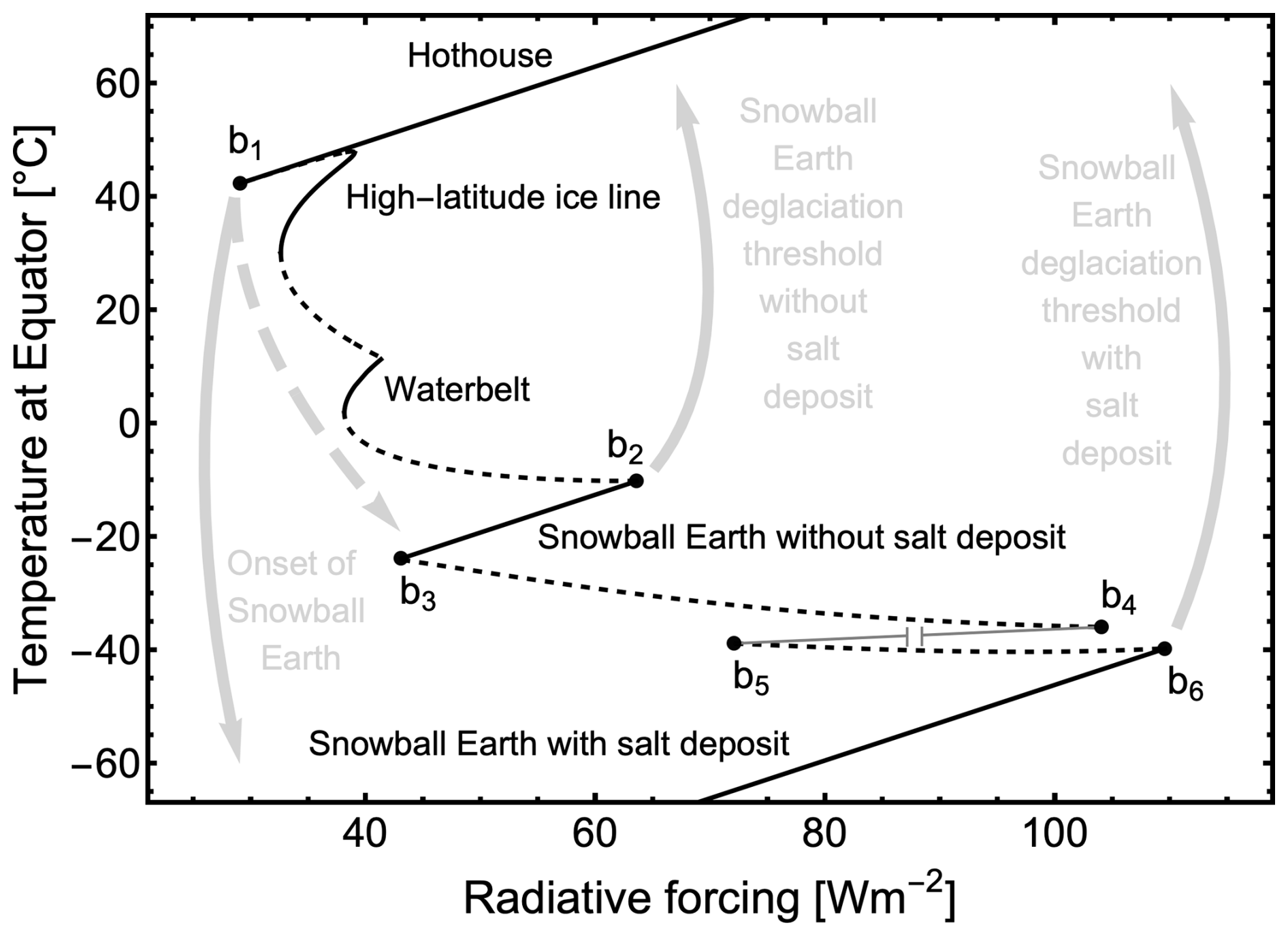
Adding this mechanism produced two coexisting stable Snowball Earth conditions in the model. Both had global ice cover, but one retained bare tropical sea ice while the other developed salt deposits over that exposed ice. The salt-covered version was significantly colder.
When the researchers modeled a transition from a warm climate into global glaciation using plausible parameters, the system generally did not settle into the warmer, salt-free Snowball state. Instead, it moved into the colder salt-covered state.
The feedback may also begin earlier than a simple freezing threshold suggests.
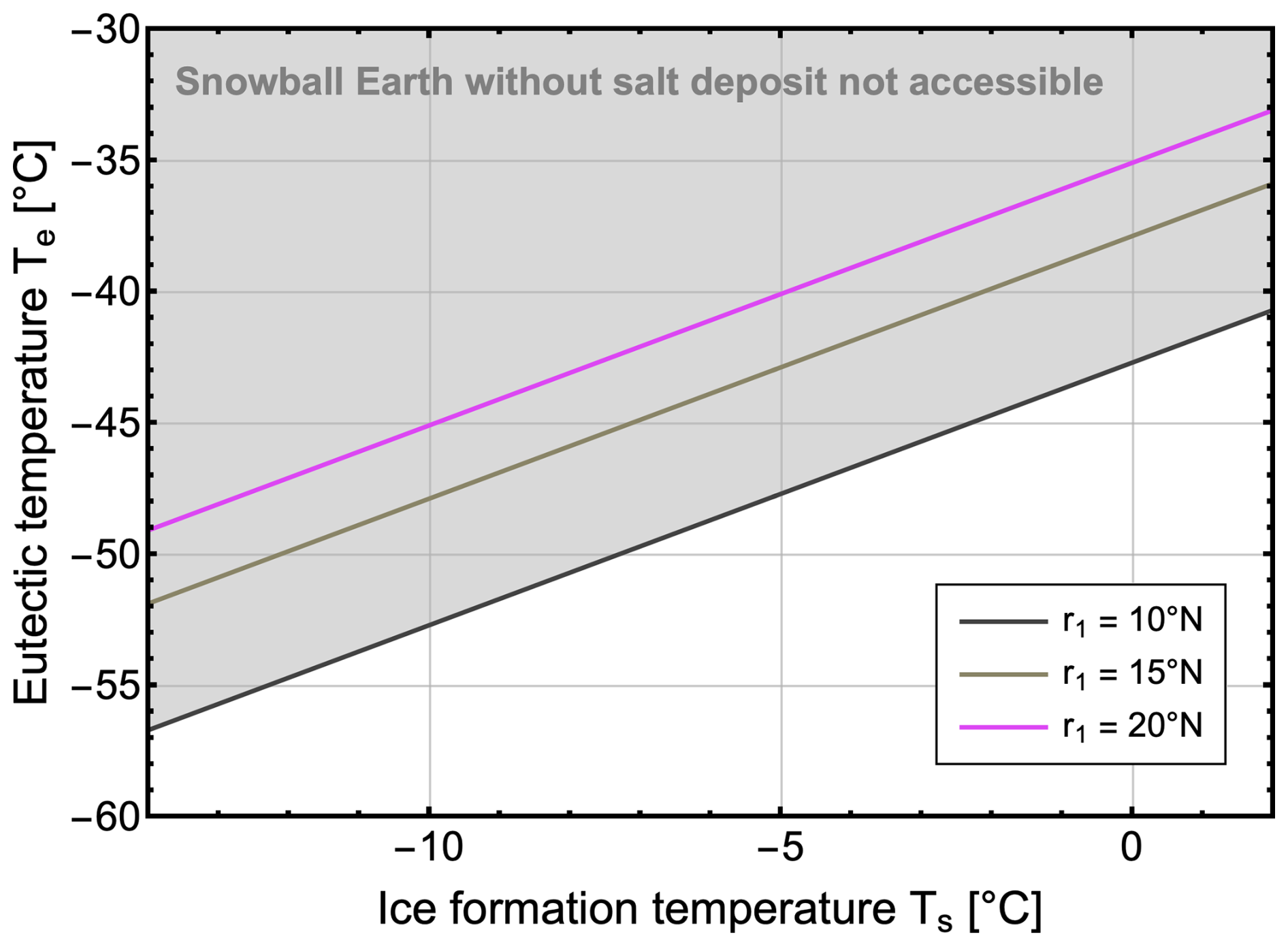
The full mixture of salts in seawater does not crystallize at one temperature. Some compounds begin precipitating well before seawater reaches its complete eutectic point near minus 36 degrees Celsius.
Mirabilite can start appearing around minus 8 degrees Celsius, while hydrohalite begins forming around minus 23 degrees. That means highly reflective material could potentially accumulate while the climate was still descending toward its coldest Snowball conditions.
Previous laboratory work specifically predicted that hydrohalite could create a positive salt-albedo feedback between roughly minus 21 and minus 36 degrees Celsius. Researchers observed a salt crust becoming brighter as sublimation concentrated hydrohalite at the surface.
The new model suggests that partial salt coverage might not remain partial for long. Intermediate states were unstable, and once salt accumulation began under the modeled conditions, the system tended toward salt-covered tropical sea ice.
The feedback could also influence the other major Snowball Earth mystery: how the planet escaped.
One leading explanation holds that volcanic carbon dioxide accumulated because chemical weathering, which normally removes CO₂ from the atmosphere, slowed dramatically beneath global ice. Eventually, greenhouse warming could become strong enough to overcome the highly reflective frozen surface.
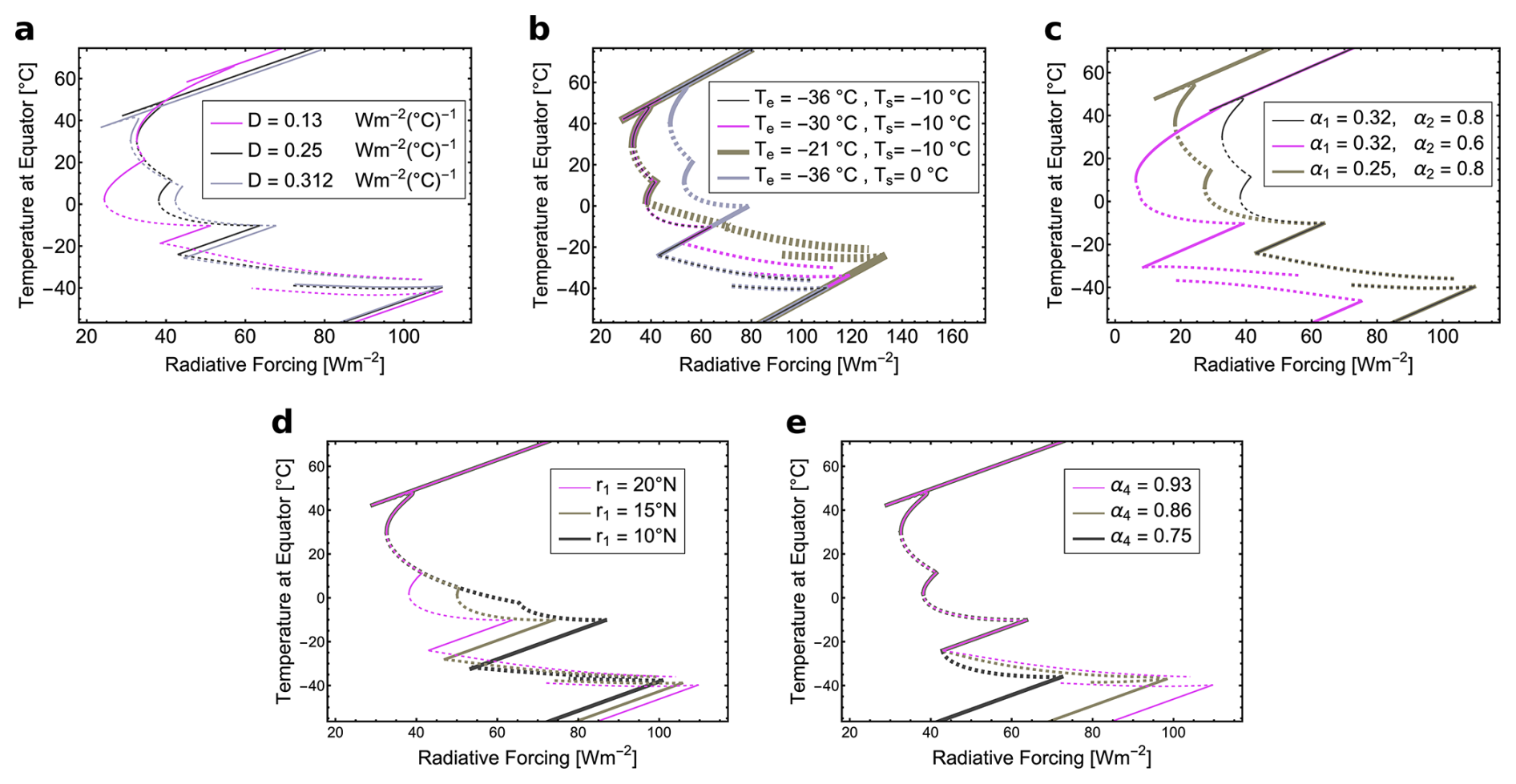
The salt-covered state in the new model required substantially greater radiative forcing to begin melting than the state without salt. In other words, the added reflectivity deepened the climatic trap.
That result comes with an important limitation. The simple energy-balance model does not explicitly simulate atmospheric CO₂, so the researchers did not calculate a realistic carbon-dioxide concentration required to thaw a salt-covered Snowball.
More sophisticated models have long struggled with the balance between a sufficiently stable global freeze and a plausible mechanism for deglaciation. A major review of Cryogenian climate emphasizes that atmospheric circulation, sea-glacier dynamics, tropical surface conditions and greenhouse forcing must all be considered together.
Whether enormous salt crusts actually persisted on ancient Earth remains unknown.
The new model contains no sea-ice dynamics. Real Snowball Earth ice would have flowed from higher latitudes toward the tropics, gradually bringing fresher ice formed from snowfall into areas where salty marine ice was sublimating. That process could have diluted the material needed to sustain salt precipitation.
Clouds could also mask the reflective surface. Winds might blow crystals into snowy regions, while atmospheric dust could darken the salt and increase solar absorption. The model does not explicitly represent these processes.
Those uncertainties mean salt should not be treated as the newly discovered cause of Snowball Earth. Other proposed triggers include declining greenhouse gases and short-lived climatic disturbances associated with major volcanism. One hypothesis links the onset of the Sturtian glaciation to sulfur-rich volcanic aerosols from the Franklin large igneous province.
Salt instead offers a possible amplifier.
Once ice had already spread far enough and temperatures had fallen sufficiently, the oceans themselves may have produced a surface capable of reflecting even more sunlight than fresh snow.
For a planet already slipping toward a deep freeze, that extra brightness could have made turning back considerably harder.
These resources explore the ice, salt, climate feedbacks and possible triggers that shaped Earth’s extreme Neoproterozoic glaciations.
The spectral albedo of sea ice and salt crusts on the tropical ocean of Snowball Earth: 1. Laboratory measurements: Laboratory experiments found that a hydrohalite crust on sublimating sea ice could reach an all-wave albedo of 0.93, providing the physical basis for the proposed salt-albedo feedback. (Journal of Geophysical Research: Oceans, 2016)
The spectral albedo of sea ice and salt crusts on the tropical ocean of Snowball Earth: II. Optical modeling: Uses radiative-transfer modeling to examine how hydrohalite crystals alter the reflectivity of cold tropical sea ice and provides an albedo parameterization for climate models. (Journal of Geophysical Research: Oceans, 2016)
The Jormungand global climate state and implications for Neoproterozoic glaciations: Develops a near-global glaciation state with a narrow tropical water belt and shows why the relatively low albedo of bare sea ice can strongly influence Snowball climate stability. (Journal of Geophysical Research: Atmospheres, 2011)
Snowball Earth climate dynamics and Cryogenian geology-geobiology: Comprehensive review connects climate dynamics, sea ice, geological evidence, biological survival and deglaciation during the Cryogenian Snowball Earth episodes. (Science Advances, 2017)
Initiation of Snowball Earth with volcanic sulfur aerosol emissions: Proposes sulfur-rich volcanic aerosols as one possible trigger for the Sturtian glaciation, illustrating that salt feedback would act as an amplifier rather than necessarily the original cause. (Geophysical Research Letters, 2017)
Research findings are available online in the journal Climate of the Past.
The original story “Sea salt may have made Snowball Earth far colder than previously thought” is published in The Brighter Side of News.
Like these kind of feel good stories? Get The Brighter Side of News’ newsletter.
The post Sea salt may have made Snowball Earth far colder than previously thought appeared first on The Brighter Side of News.


Leave a comment
You must be logged in to post a comment.