Space exploration usually gets framed as a world of national agencies, elite labs and companies with enormous budgets. Space Kidz India has spent years pushing against that picture.
The Chennai-based aerospace startup, founded by Dr. Srimathy Kesan, built its identity around a straightforward idea: students should do more than study space. They should help make the machines that go there. That idea has driven a run of student-led satellite missions, including KalamSat, KalamSat V2, AzaadiSAT and AzaadiSAT-2, while drawing thousands of young people into hands-on space education.
Now the group is preparing for its biggest educational mission yet, ShakthiSAT, a program meant to train 12,000 girls from 108 countries and move toward a student-built satellite connected to lunar exploration.
The effort sits close to the legacy of Dr. A.P.J. Abdul Kalam, India’s former president, aerospace scientist and widely admired teacher. Kalam urged young people to think boldly and treat science as a tool for national progress. Space Kidz India took that message out of speeches and turned it into workshops, hardware and launch campaigns.
Its first major breakthrough came in 2017.
KalamSat, named after Kalam, flew aboard a NASA Terrier Orion sounding rocket from Wallops Flight Facility in Virginia on June 22, 2017. Built by a seven-member team from Space Kidz India, the satellite measured about 3.8 centimeters across and weighed 64 grams, making it one of the lightest satellites ever flown.
The team included young students and engineers under Kesan’s guidance. Rifath Shaarook, then a young 18-year-old lead scientist with Space Kidz India, helped steer the technical work. Other members included Abdul Kashif, Yagna Sai, Vinay Bharadwaj, Thiru Gopinath and Tanishq Dwivedi.
The challenge was simple in theory and difficult in practice. Students were asked to design a payload that could fit inside a four-centimeter cube. Instead, they tried to turn that cube itself into a working satellite. The result used a 3D-printed structure reinforced with carbon fiber and carried sensors, electronics and experimental parts in a package barely larger than a matchbox.
The mission was never only about size.
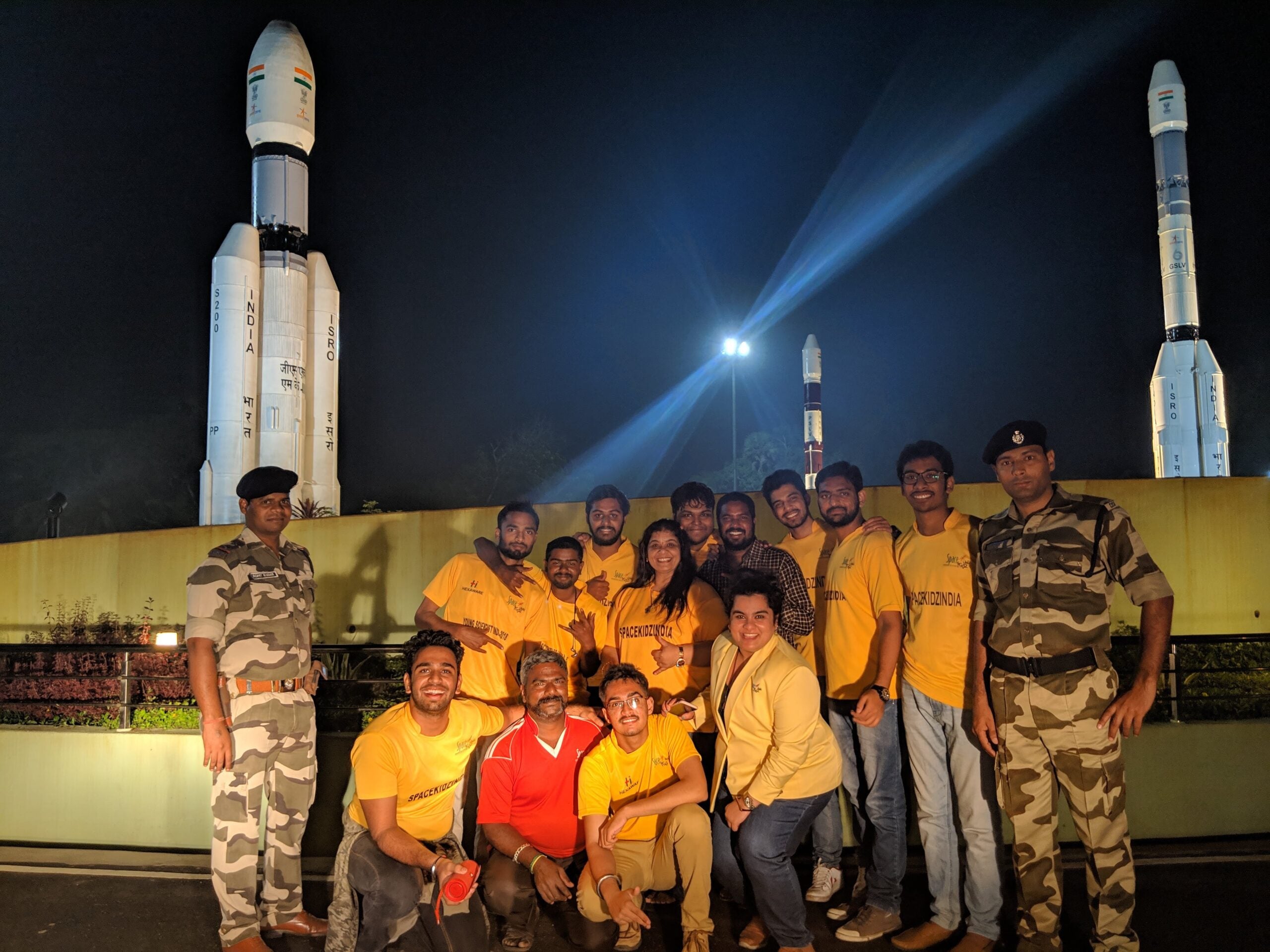
It was also a test of whether young people could take on real aerospace work when adults trusted them with real responsibility. Shaarook told reporters, “KalamSat will lead to more economical satellite launches because once the weight is reduced, the amount you need to pay to the rocket [for the satellite’s launch] will drastically decrease. Smaller satellites are also more eco-friendly.”
That same argument tied cost to access. Shaarook said the team built KalamSat for about ₹4–5 lakh ($5,500 USD), far below the price of many conventional satellites. “This will give university students and smaller countries access to space so that they can practically engage in research,” he said.
Kesan, meanwhile, pointed to the students’ determination. “They want to do something unique in life. They are extremely dedicated, with a never-give-up attitude,” she told Forbes India.
Two years later, Space Kidz India reached another milestone with KalamSat V2. Launched in January 2019 from India’s Satish Dhawan Space Centre aboard PSLV-C44, the satellite weighed about 1.2 kilograms and was built as a small communications satellite for amateur radio use.
The shift mattered. KalamSat had been a striking proof of concept, compact and experimental. KalamSat V2 pushed the student-led effort toward a functional payload launched from Indian soil.
Prime Minister Narendra Modi praised the mission after launch, writing, “Heartiest congratulations to our space scientists for yet another successful launch of PSLV. This launch has put in orbit Kalamsat, built by India’s talented students.”
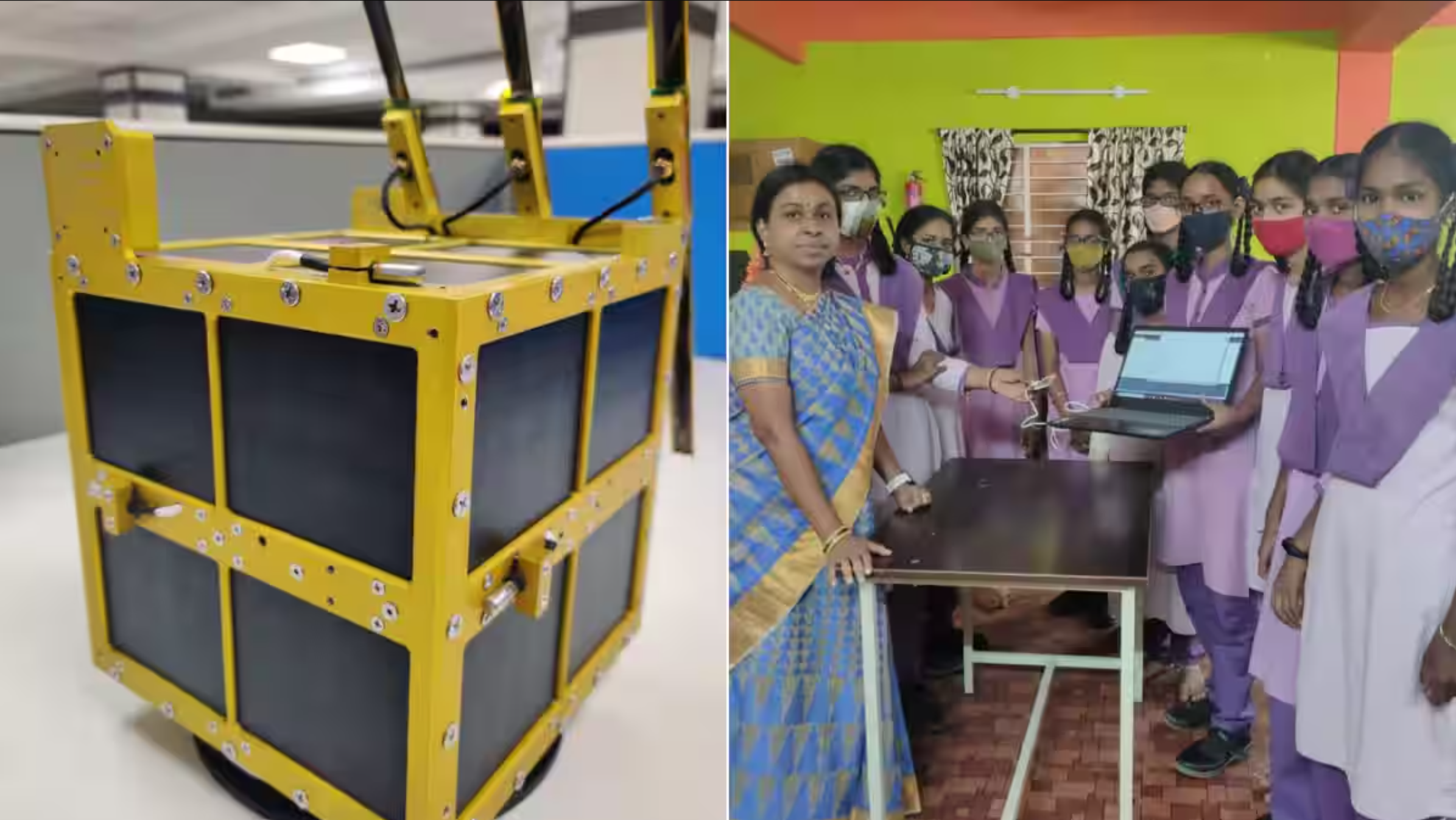
Kesan said KalamSat V2 was built for about 1.2 million rupees, or roughly $16,900 at the time. “It will serve as a communications satellite for ham radio transmissions used by amateurs for non-commercial activities,” she said.
The launch also carried broader technical meaning for India. Modi noted that the country became the first to use the fourth stage of a space rocket as an orbital platform for microgravity experiments.
For Space Kidz India, the message was clear enough. A student-led team had moved from a miniature demonstration satellite to an operational one, while staying connected to Kalam’s educational vision.
The next chapter expanded the scale dramatically. AzaadiSAT, created to mark 75 years of India’s independence, shifted away from the small core-team model and toward mass participation.
ISRO described AzaadiSAT as an 8U CubeSat weighing about 8 kilograms and carrying 75 payloads, each weighing about 50 grams. Girl students from rural regions across India were guided to build those payloads, and the student team from Space Kidz India integrated them.
The satellite carried a UHF-VHF transponder for amateur radio voice and data transmission, a solid-state PIN diode-based radiation counter, a long-range transponder and a selfie camera. ISRO also said the ground system developed by Space Kidz India would receive data from the satellite.
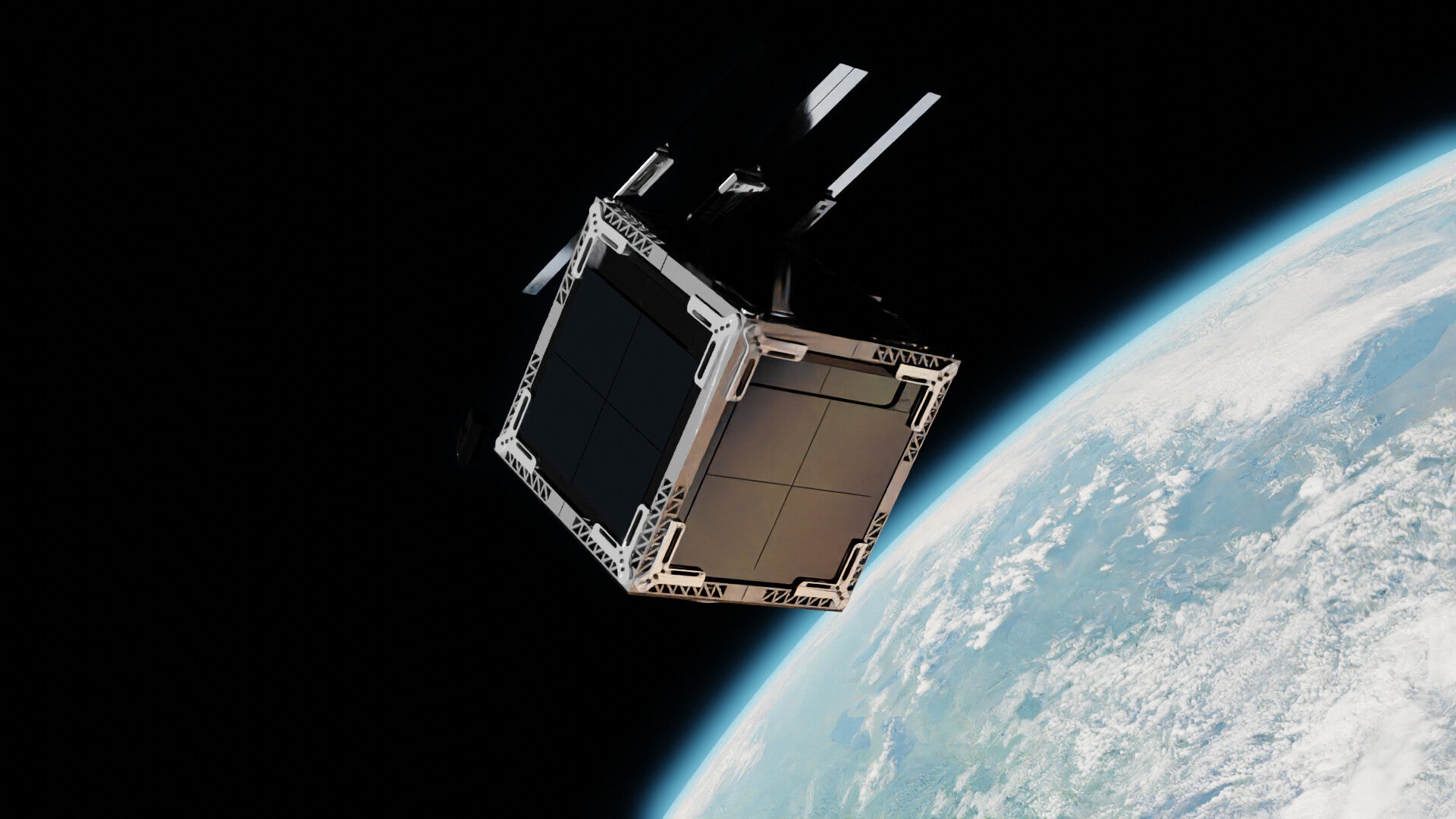
The first AzaadiSAT launched in August 2022 on SSLV-D1, but the mission did not reach its intended orbit.
That could have become the end of the story. It did not.
In February 2023, ISRO’s SSLV-D2 mission successfully carried EOS-07, Janus-1 and AzaadiSAT-2. ISRO described AzaadiSAT-2 as an 8.7-kilogram satellite and “a combined effort of about 750 girl students across India guided by Space Kidz India, Chennai.”
That recovery gave the program a different kind of force. AzaadiSAT started as an independence tribute. AzaadiSAT-2 turned into a lesson about persistence, revision and confidence after failure.
Kesan later summed up that arc to reporters: “The journey from KALAMSAT, the world’s first satellite built from reinforced carbon fiber, to AzaadiSAT, which involved 750 young girls from rural India, has been transformative.” She added that the work showed “the significance of inclusivity in innovation and the value of thinking beyond conventional paradigms.”
She put the goal in practical terms as well. “We focus on creating low-cost yet high-impact satellite projects that allow students, especially those from underserved backgrounds, to engage in real-world aerospace innovations,” Kesan said.
Mission ShakthiSAT aims to take that model global. The program is designed to train 12,000 girls from 108 nations in satellite design, space technology, telemetry, payload testing and related skills. After online training, 108 students, one from each country, are expected to be selected for hands-on work in India.
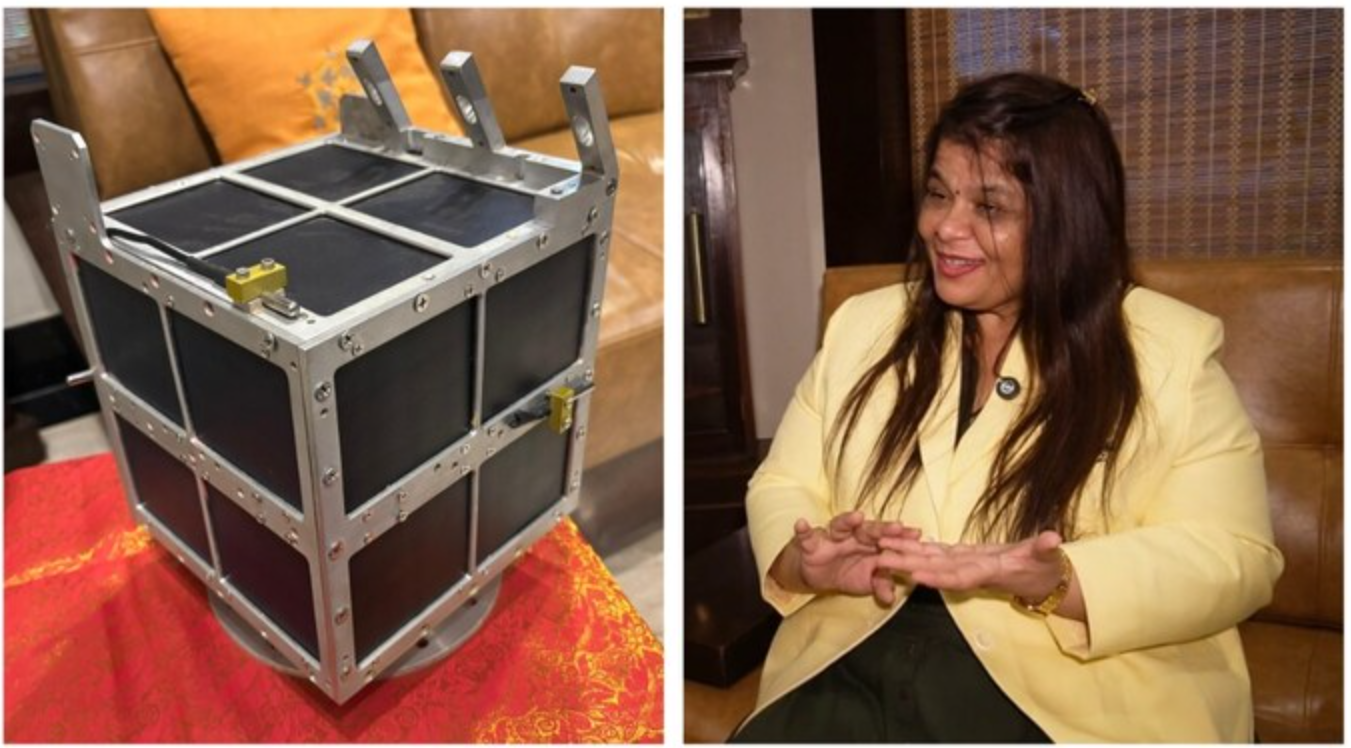
Kesan has said the mission is intended to launch a satellite as part of ISRO’s Chandrayaan-4 mission. Reports from 2024 put the target at 2026, though broader ISRO timelines for Chandrayaan-4 have continued to shift.
That timing remains one of the clearer limits around the project. The educational mission is defined; the launch schedule is less settled.
Even so, Kesan described the effort as a way to unite “12,000 young girls from 108 nations” and end with a functional nanosatellite. She has also spoken about a larger long-term ambition. Kesan said her goal over the next five to 10 years is to help create a world-renowned space university, a manufacturing port and a “Space research park” in India, calling it “a miniature version of NASA.”
That ambition matches the path Space Kidz India has taken so far. It began by making space feel reachable. Then it put satellites into students’ hands, first in miniature form, then in more advanced missions, then through projects that brought hundreds of girls from rural India into the process.
The original story “Space Kidz India students are building satellites, turning space education into real missions” is published in The Brighter Side of News.
Like these kind of feel good stories? Get The Brighter Side of News’ newsletter.
The post Space Kidz India students are building satellites, turning space education into real missions appeared first on The Brighter Side of News.

