Darwin’s old puzzle starts with a simple question: when a species enters a new habitat, does it do better by fitting in or by standing apart? A study of fish introductions in Swedish lakes argues that the answer depends on the species missing from the community. Notably, it does not depend just on the ones already there.
For more than 160 years, ecologists have wrestled with two conflicting ideas traced back to Charles Darwin. One says a newcomer should succeed if it closely resembles local species, because it is already suited to the same environment. The other says distance helps, because a less closely related species may avoid direct competition and use different resources.
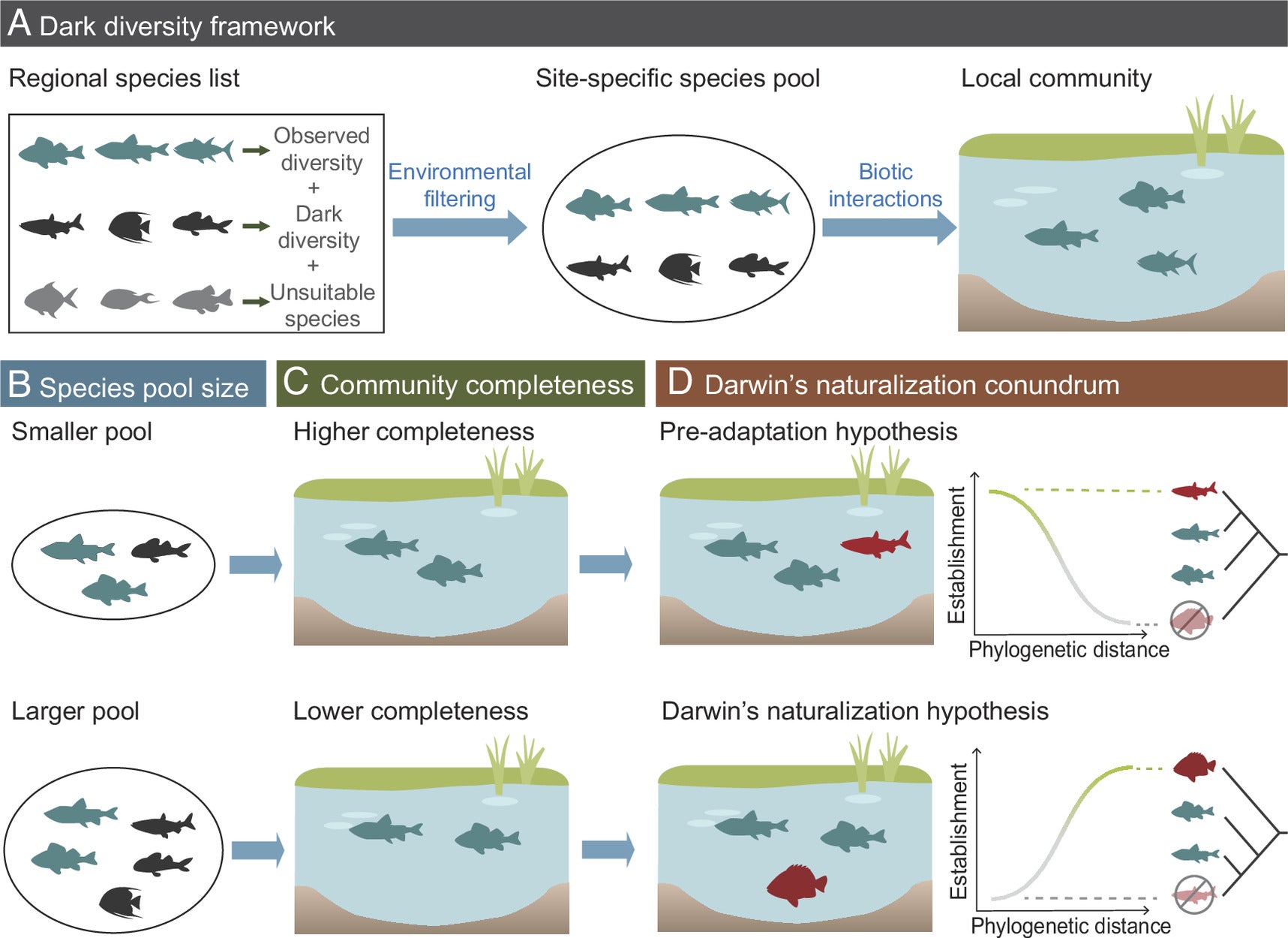
The new research ties that split outcome to a concept called dark diversity. The term describes species that could live in a place under local conditions but do not currently occur there. When dark diversity is combined with the species already present, it creates a fuller picture of the site’s species pool. In other words, this is the set of species the habitat could in principle support.
That broader view turned out to matter more than a simple species count.
“We had access to a 340-year dataset from Swedish lakes, which includes both successful and unsuccessful fish introductions. Such data allowed with rare precision for the study of the factors that determine whether species successfully establish,“ said Meelis Pärtel, professor of botany at the University of Tartu and a co-author of the study.
The team examined 516 freshwater lakes in Sweden and 748 introduction events involving 22 exotic fish species. The records covered both failed and successful attempts, giving the researchers a rare chance to compare conditions linked to establishment.
They estimated dark diversity for each lake, then used it to calculate two measures. One was species pool size, which reflects how many species the lake could potentially support. The other was community completeness, which describes how much of that potential is actually realized.
Those two measures helped sort out when each side of Darwin’s conundrum applied.
At the species level, the researchers found that introduced fish were generally more likely to establish when they were closely related to the resident assemblage. That pattern fits what ecologists call the preadaptation hypothesis. This is the idea that related species share traits that suit the same environment.
But that was only part of the story.
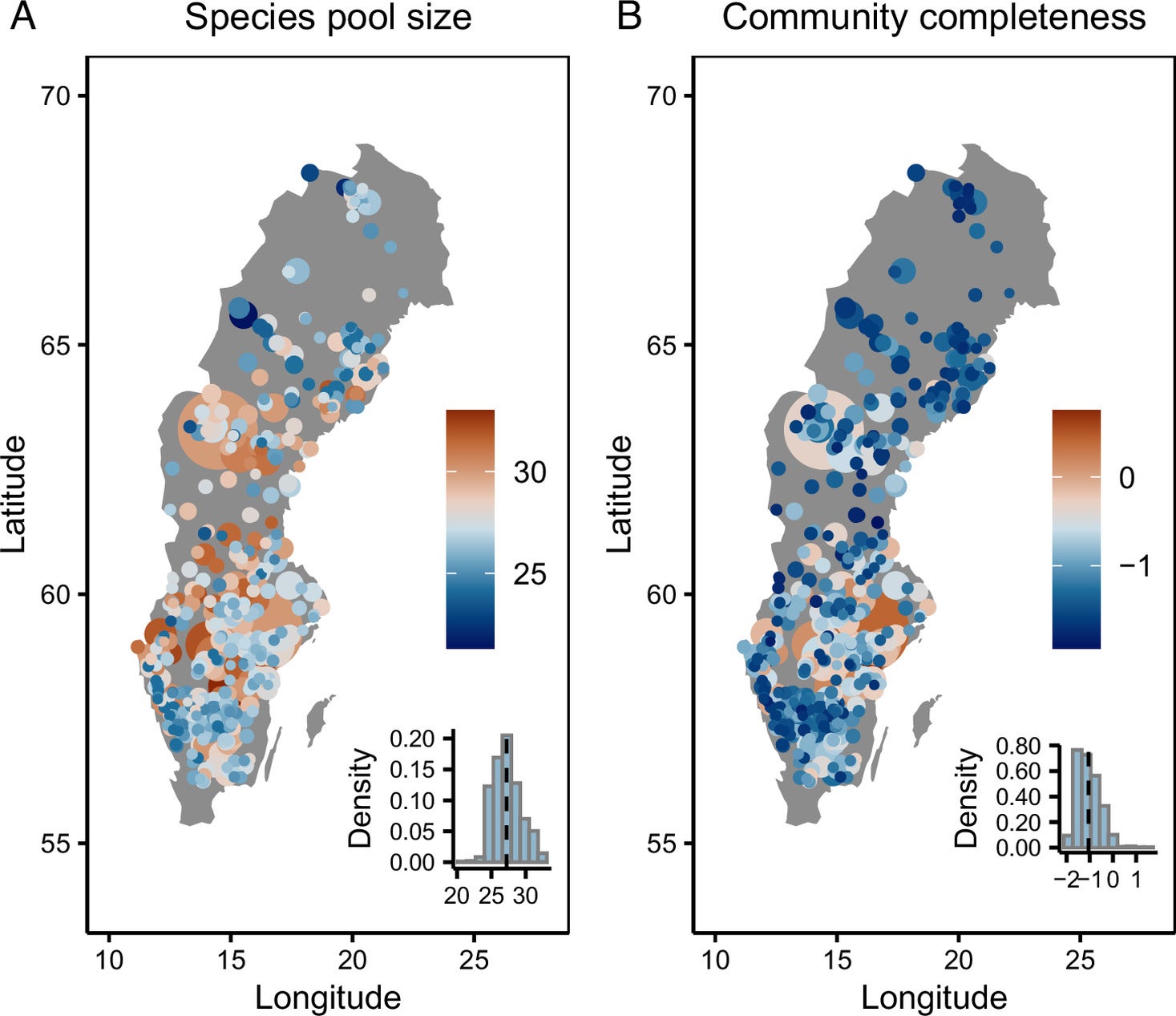
In lakes with smaller species pools, closely related fish had the clearest advantage. In lakes with larger species pools, the pattern reversed, and more distantly related species were more likely to establish. The same kind of shift appeared with community completeness. In lakes where a high proportion of the potential species were already present, closely related newcomers did better. In lakes with lower completeness, more distantly related species gained the edge.
That means the outcome depends on two ecological conditions at once: how many species could live there, and how full the community already is.
Smaller species pools often point to more restrictive conditions. In such lakes, environmental filters may be strong enough that only species with similar requirements can take hold. Under those circumstances, being closely related to local species becomes an advantage.
Larger species pools suggest a more permissive setting, with room for a wider range of ecological roles. In those lakes, a newcomer that differs from local fish may be more likely to find an opening rather than compete head-on.
Community completeness adds another layer. A lake with high completeness has relatively few missing species from its potential pool. A lake with low completeness has more. The study found that lower completeness favored fish more distantly related to native species, while higher completeness favored closer relatives.
Importantly, the number of species currently present did not reveal these relationships on its own. Models based on ordinary species richness had weaker explanatory power and less support than models using species pool size and community completeness.
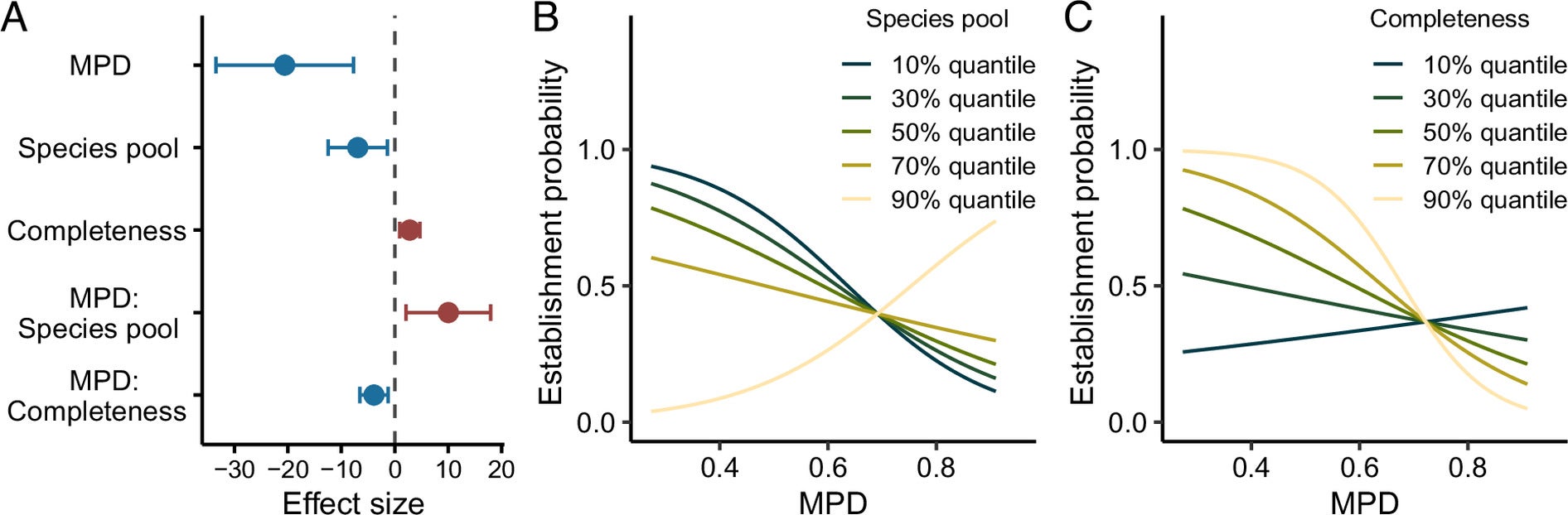
The same overall pattern held up in several robustness checks. The findings remained consistent when the researchers used different ways to estimate dark diversity, different definitions of the potential pool, and alternative phylogenetic metrics. The results also stayed similar when they accounted for lake area or limited the analysis to first recorded introductions.
At the community level, the pattern still held. In lakes with larger species pools, the successful exotic fish tended to be more distantly related to native species. In lakes with higher community completeness, successful exotics tended to be more closely related to natives.
That suggests dark diversity offers something more than another variable to plug into a model. It offers a way to combine environmental suitability and community structure into a single framework for predicting establishment.
“The study showed that dark diversity offers a new theoretical framework for understanding species distribution and community formation. This helps reconcile previously conflicting results and improve predictions about which species will be able to establish under new conditions,“ said Pärtel.
The authors are careful not to oversell the result. Their analysis focused on freshwater fish in one region, Swedish lakes, so it still needs to be tested across other groups and habitats. They also lacked data on the number of introduced individuals, a factor known to affect invasion success. Furthermore, dark diversity itself cannot be directly observed; it must be inferred statistically.
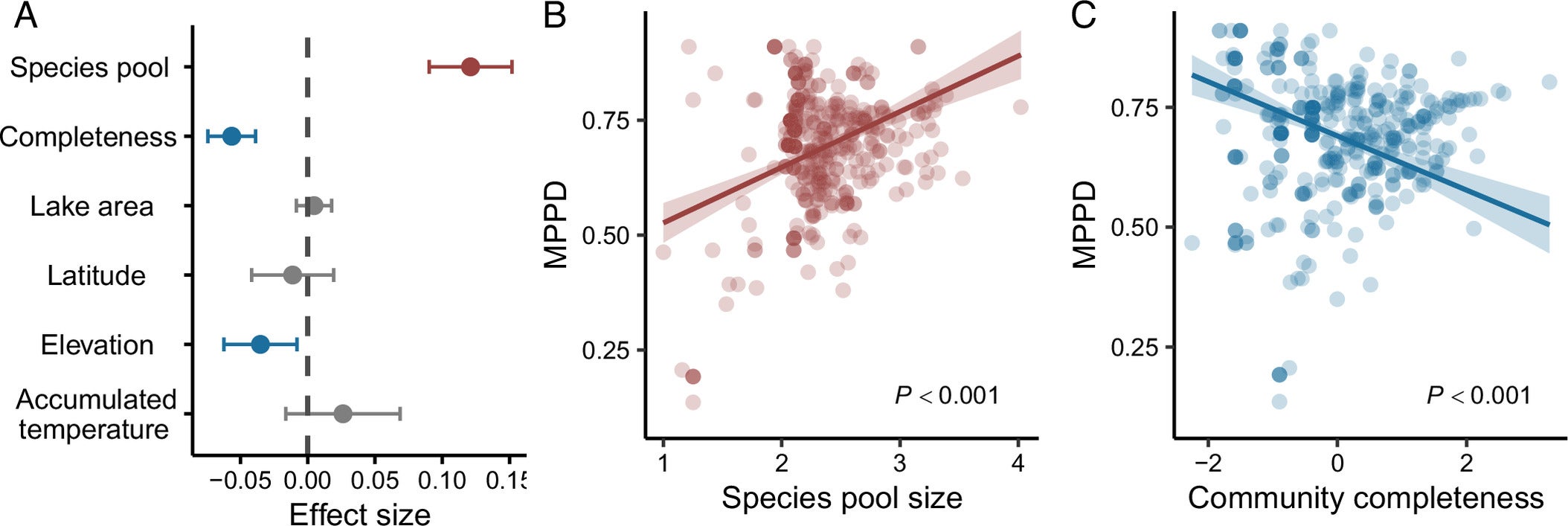
Still, the study argues that these inferred measures may be more useful than many of the standard stand-ins ecologists have relied on, including species richness, lake area, elevation, latitude, and water temperature.
“As climate change, shifts in species ranges, and human activity increasingly shape the world’s biodiversity, dark diversity offers a new way to assess how ecosystems respond to these changes. This can help better guide conservation efforts and predict changes in biodiversity in a rapidly changing world,“ Pärtel said.
The findings could help scientists and conservation planners make better predictions about which introduced species are most likely to establish in a given ecosystem. Instead of relying mainly on how many species are already present, the work points to a more informative question: how many species could be there, and how many of those are still missing?
That matters as climate change, species range shifts, and human transport continue to move organisms into new places. If dark diversity can be estimated from native community data, managers may gain a more practical way to judge whether an ecosystem is likely to favor close relatives already adapted to local conditions.
Otherwise, the ecosystem may favor newcomers that fill different ecological roles. That could improve risk assessment for invasions and sharpen efforts to protect biodiversity in changing environments.
Research findings are available online in the journal PNAS.
The original story “Swedish lakes help solve Darwin’s 160-year puzzle about invasive species” is published in The Brighter Side of News.
Like these kind of feel good stories? Get The Brighter Side of News’ newsletter.
The post Swedish lakes help solve Darwin’s 160-year puzzle about invasive species appeared first on The Brighter Side of News.

