The biggest climate cost of a World Cup or global concert tour may occur far from the stadium or stage. It begins when millions of fans board aircraft, drive long distances or book accommodation near the event.
Audience travel could produce 82 percent of emissions linked to the expanded 2026 FIFA World Cup, according to an analysis led by University of Cambridge researchers. The tournament’s total footprint may reach 4.23 million tonnes of carbon dioxide equivalent.
About 3.07 million tonnes would come from international travel alone. Intercity and local transportation would add another 411,000 tonnes, bringing travel’s total contribution to roughly 3.48 million tonnes.
The researchers also calculated that expanding the competition from 32 to 48 teams added about 594,000 tonnes of emissions, a rise of around 16 percent. The additional climate damage was valued at approximately $110 million.

“Effective climate strategies for mega-events like the World Cup go well beyond reducing operational emissions at venues, as this is only a fraction of the overall footprint,” said corresponding author Professor Shaun Larcom of Cambridge’s Department of Land Economy.
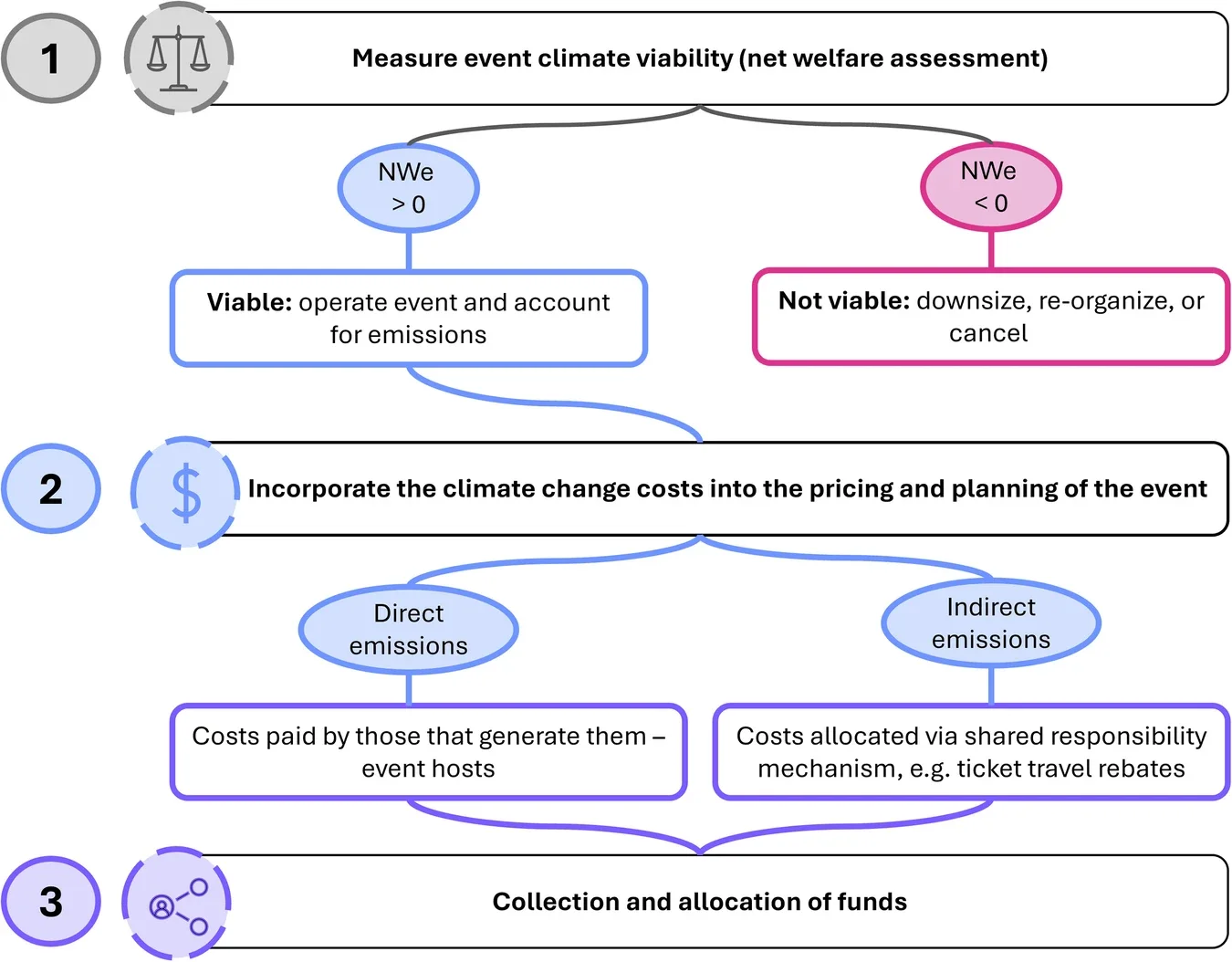
The findings appeared in the journal Communications Sustainability. The team developed an economic framework for deciding whether large entertainment events generate enough public value to justify their climate costs.
Researchers Jackson Goldman, Jascha Servi, Sam Vosper and Larcom applied the method to the 2026 World Cup and Coldplay’s 2024 European tour.
The World Cup analysis used FIFA attendance and travel projections. The Coldplay assessment covered 1.9 million tickets sold for 32 concerts in 10 European cities.
Almost all emissions in both cases came indirectly from spectators, suppliers and other activities outside the organisers’ immediate control. These are known as scope 3 emissions.
Travel produced 97 percent of Coldplay’s estimated business-as-usual footprint and 82 percent of the World Cup’s projected footprint. Air travel dominated both totals.
Without reduction measures, Coldplay’s European tour would have generated an estimated 109,100 tonnes of emissions. Around 80,300 tonnes came from flights, while road travel produced about 21,500 tonnes.
The tour’s actual footprint was estimated at 58,500 tonnes, about 46 percent below the business-as-usual scenario.
Coldplay introduced solar-powered stage systems, lower-carbon aviation fuel and other operational changes. Yet researchers calculated that approximately 98 percent of the overall emissions reduction came from fans changing their travel behaviour.
Audience travel emissions fell by 48 percent. The band encouraged those choices through an app that compared transportation options and offered merchandise discounts for lower-carbon journeys.
“As we find with Coldplay’s approach, real sustainability comes when organisers influence the wider system of fan behaviour, from transport and routing to decisions about the scale and design of an event,” Larcom said.
The comparison highlights the limits of concentrating only on venues, lighting and stage production. Coldplay’s own direct operations represented about 2 percent of the tour’s unreduced footprint.
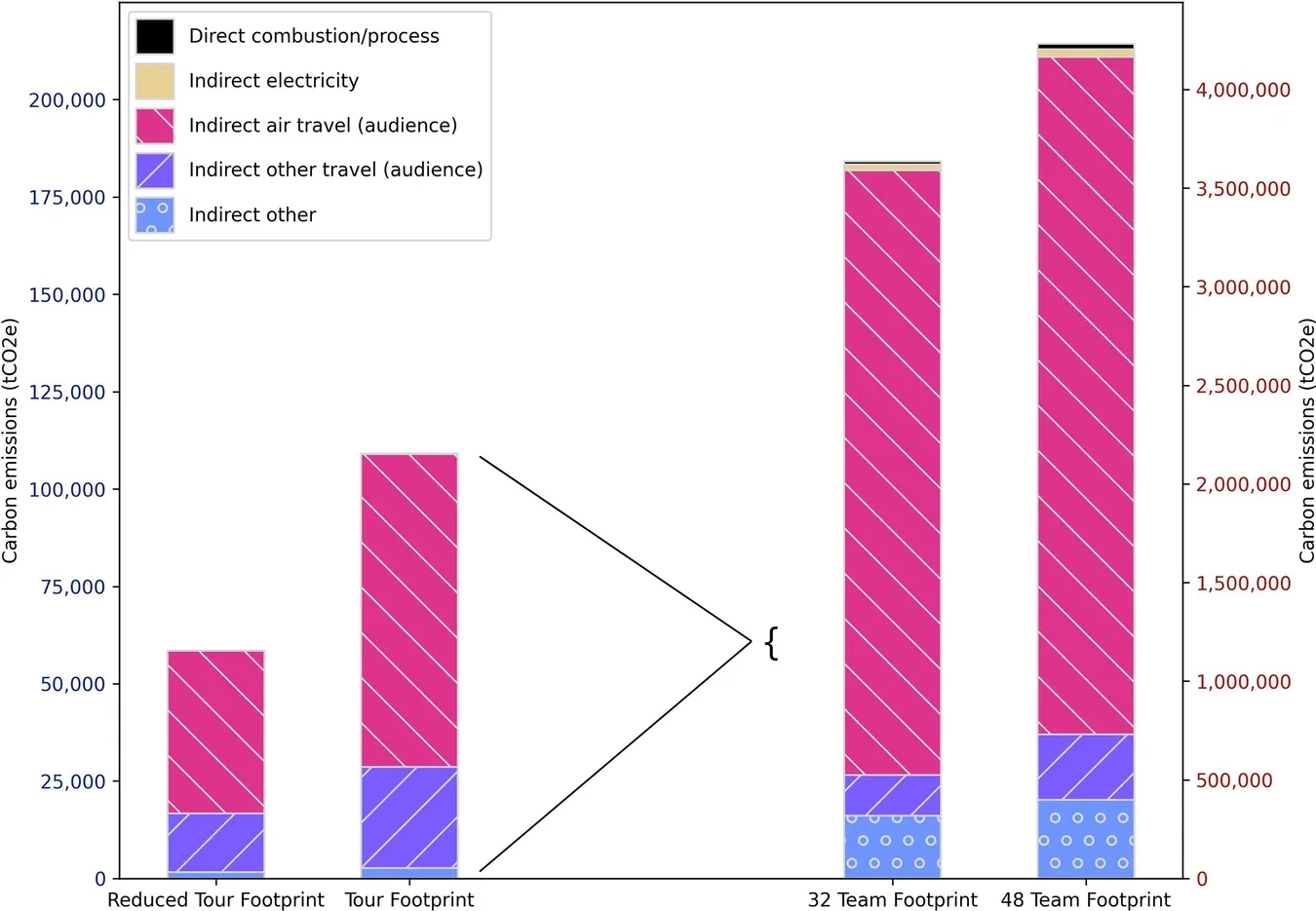
Cutting those direct emissions by 59 percent would have lowered the total by only around 1 percent without changes in audience transportation.
The researchers argue that organisers should accept responsibility for emissions they directly control while sharing responsibility for spectator travel with fans.
That approach could include higher ticket prices paired with rebates for rail journeys, public transportation or shared vehicles. Event apps could verify eligible travel choices.
The team converted emissions into financial costs using a social cost of carbon of $186 per tonne. This measure estimates the wider economic harm caused by releasing an additional tonne of greenhouse gases.
At that rate, the expanded World Cup’s emissions would cause about $787 million in climate damage. Dividing that amount equally among tickets would add an average of $114 to each ticket.
Applying the same approach to Coldplay’s unreduced European tour would add about $11 per ticket.
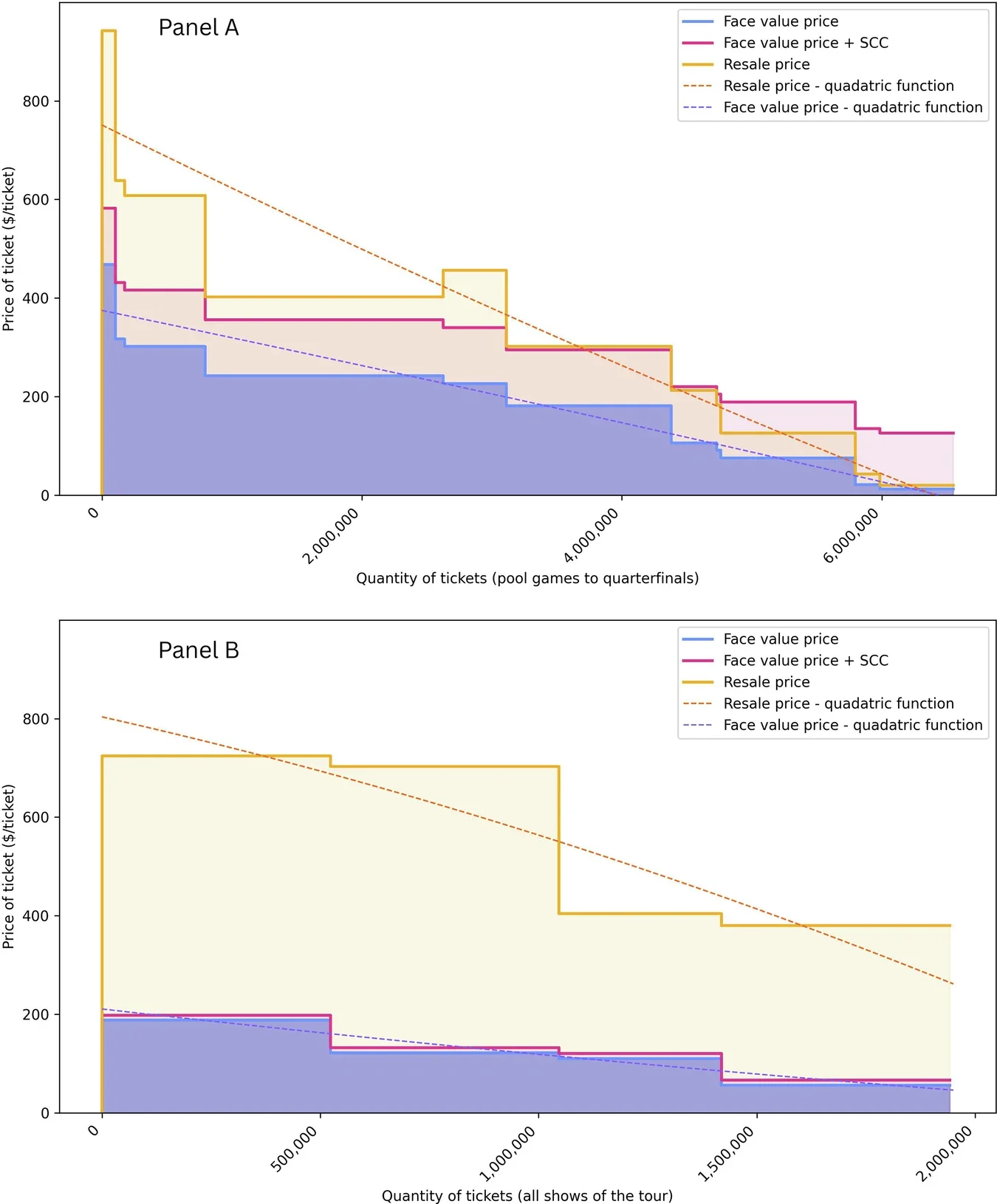
A flat charge could create fairness concerns. The same fee would consume a much larger share of the value of a low-cost ticket than a premium seat.
The authors therefore suggest that higher-priced ticket categories should absorb larger absolute carbon charges. This could prevent climate pricing from falling most heavily on spectators with less ability to pay.
Another option would spread the cost among television viewers. Goldman calculated that a $4.50 fee per viewer could cover the World Cup’s estimated $787 million climate cost.
Money collected through such measures could fund cleaner aviation research, climate adaptation or verified carbon removal. The authors argue that offsets should remain a final option after direct reductions and changes within the event’s own value chain.
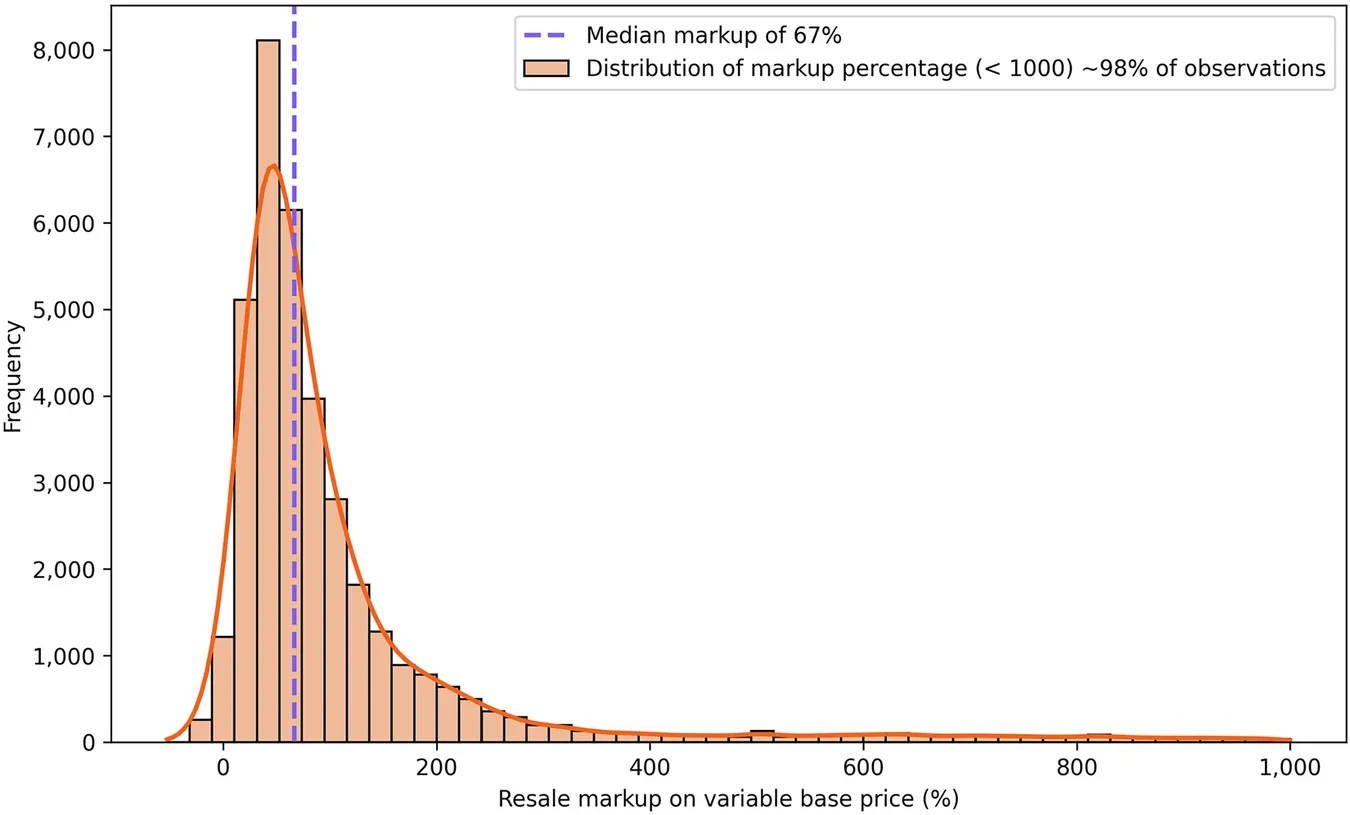
The researchers first tested whether each event produced more economic and social value than climate damage. They estimated audience willingness to pay by comparing ticket face values with prices advertised on resale markets.
Coldplay’s tour generated an estimated total economic surplus of $987 million. Its unreduced emissions cost about $20.3 million, producing a benefit-to-cost ratio of roughly 49 to one.
The 48-team World Cup produced an estimated surplus of $2.33 billion. After subtracting $787 million in climate costs, the projected net benefit remained around $1.54 billion.
The World Cup’s benefit-to-cost ratio was about three to one. Its margin was far narrower than Coldplay’s and became less favorable as the tournament expanded.
“Large entertainment events are likely producing more than enough welfare to account for their emissions costs,” Goldman said. “What’s needed now is for organizers and fans to work together to take responsibility for these emissions.”
The calculation does not mean every proposed event should proceed unchanged. The researchers argue that organisers should reduce, redesign or cancel events when climate costs outweigh economic and social benefits.
Where an event takes place can strongly influence how far audiences travel. Around 40 percent of international visitors to the 2026 World Cup are expected to come from Europe.
Hosting the tournament in Europe instead of North America would therefore have reduced long-distance travel, according to the analysis.
Organisers could also hold more events across regional centres, allowing audiences to attend closer to home. A tour’s routing and venue selection could reduce repeated flights and lengthy road journeys.
The researchers acknowledge that their calculations rely on simplifying assumptions. Some visitors may replace another holiday with a World Cup trip, meaning the estimated footprint could represent an upper limit on additional emissions.
Their framework also focuses on consumer welfare and climate damage. It does not fully measure displacement, public infrastructure spending, waste or habitat loss.
The analysis gives sports organisations, musicians and regulators a method for assessing an event before tickets go on sale. It also shifts attention toward transportation, where the largest reductions may be possible.
Ticket rebates, regional scheduling and lower-carbon travel information could help audiences make different choices without placing the entire burden on them.
Organisers could publish emissions audits and adopt common standards through sporting federations or entertainment industry groups. That would make climate claims easier to compare and reduce doubts about greenwashing.
“Live entertainment is environmentally consequential,” Servi said. “But unlike many carbon-intensive industries that operate under thin margins and at a distance from consumers, mega-events generate substantial economic value and are uniquely close to their audiences.”
That connection gives entertainers and sports organisations unusual influence. Their most important climate tool may not be a solar-powered stage or efficient stadium. It may be the ability to change how millions of people choose to arrive.
Research findings are available online in the journal Communications Sustainability.
The original story “The 2026 FIFA World Cup could emit as much carbon as an entire country” is published in The Brighter Side of News.
Like these kind of feel good stories? Get The Brighter Side of News’ newsletter.
The post The 2026 FIFA World Cup could emit as much carbon as an entire country appeared first on The Brighter Side of News.

