Matter looks calm and solid, but its atoms hold immense energy locked inside tiny nuclei. That hidden reserve rarely escapes because powerful forces keep matter stable, yet when the lock breaks, it can light stars or level cities.
A stone in your palm feels steady and complete. A coin seems dense, cold, and unmistakably solid. A phone looks like a finished object, built from metal, glass, and circuitry that stay neatly in place.
Modern physics tells a far stranger story. What looks solid is mostly empty space, and what looks quiet contains an enormous reserve of energy.
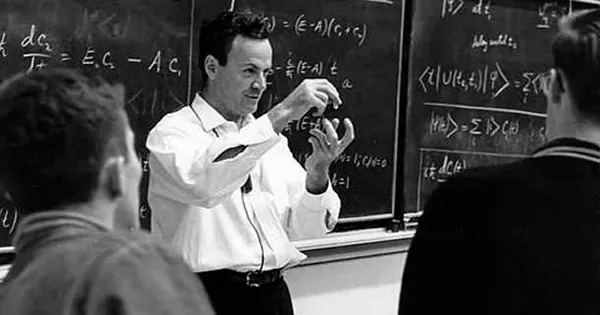
That contrast gripped physicists for generations, including Richard Feynman. Once the atom came into focus, matter no longer seemed like simple stuff packed tightly together. It began to look more like energy held in stable arrangements, hidden behind forces strong enough to keep the world from flying apart.
The fact that everyday objects stay calm is part of the mystery. A table does not erupt when it supports a cup. A mountain does not spill its inner energy as it sits through ages of wind and rain. Nature has found a way to lock that energy away.
For most of human history, it was easy to picture atoms as tiny solid pellets. That image did not survive the 20th century.
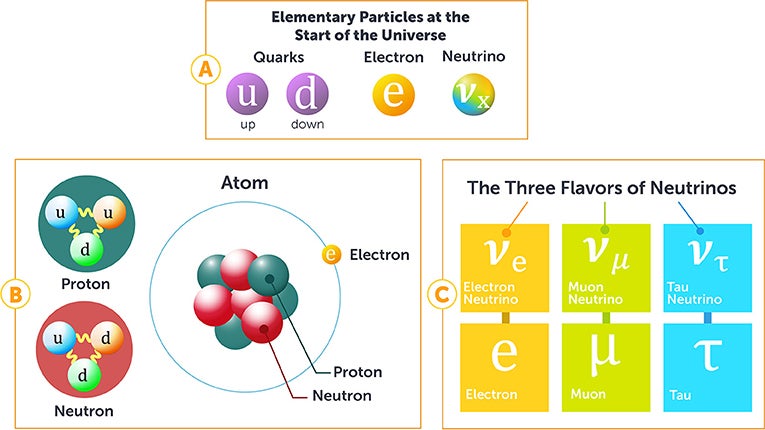
An atom is mostly empty space. At its center lies the nucleus, a tiny region containing protons and neutrons. Electrons surround that center, though not like planets circling in clean rings. Under quantum mechanics, they occupy probability clouds rather than tidy orbits.
The scale is hard to grasp. If an atom were expanded to the size of a stadium, the nucleus would be like a grain of sand at midfield. The electrons would sit near the outer seats, and almost everything in between would be empty.
That means the solidity of rocks, tables, and human bodies is not solidity in the everyday sense. Their firmness comes from interactions among electrons and electromagnetic forces that stop atoms from slipping through one another.
Yet nearly all an atom’s mass sits in its nucleus. Electrons contribute very little. Matter is roomy at one scale and astonishingly concentrated at another, with almost all its weight squeezed into a tiny core.
That core should be unstable. Protons carry positive charge, and like charges repel. If electromagnetism were the only force operating there, the nucleus would tear itself apart.
Something stronger takes over at very short distances. The strong nuclear force binds protons and neutrons together when they are packed closely enough, overcoming the electric repulsion between protons and holding the nucleus intact.
Its range is extremely short, roughly the size of the nucleus itself. That is why atomic nuclei are so small and so dense. Particles must stay almost unimaginably close for the force to work.
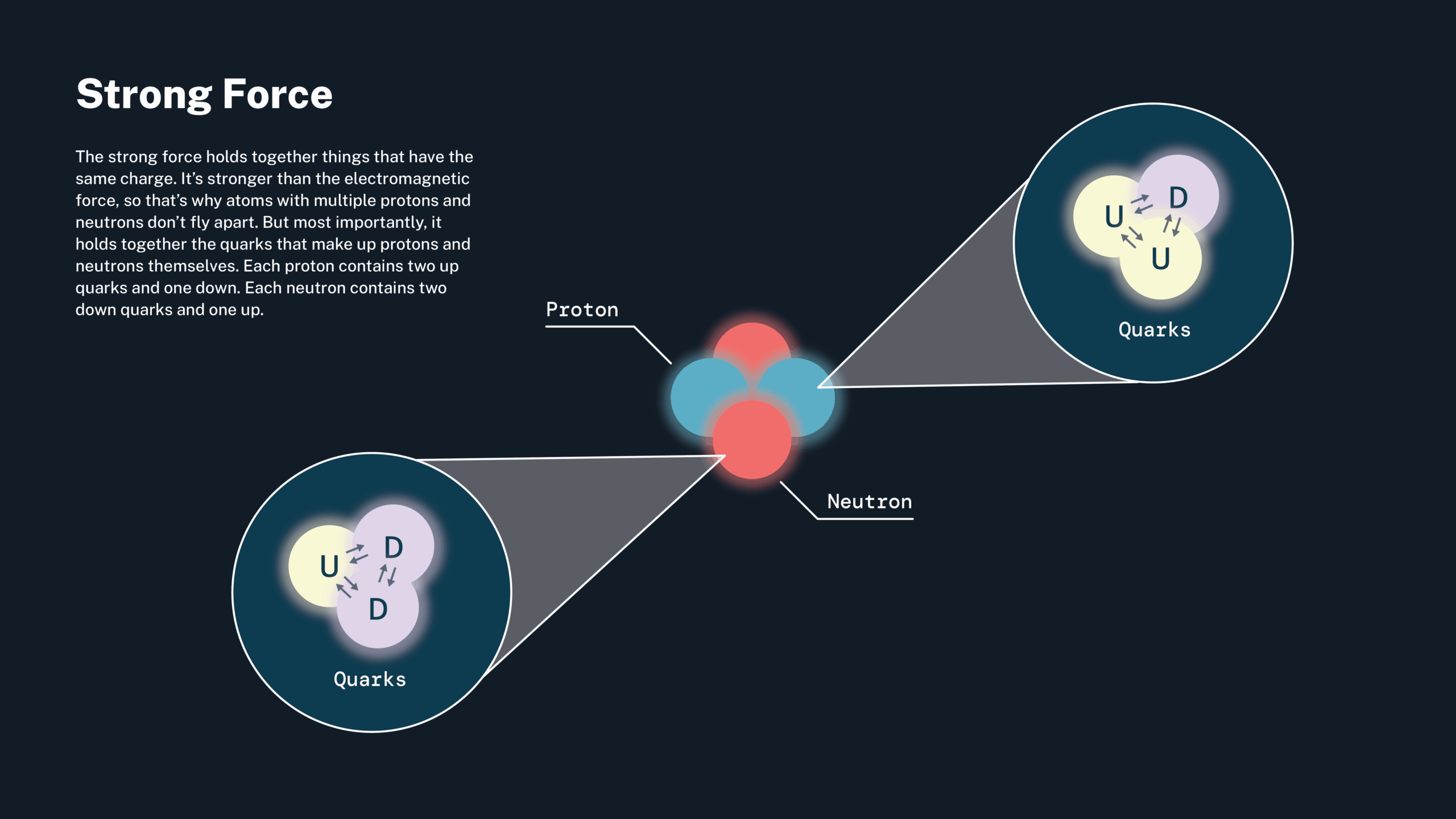
This is where nuclear energy enters the picture. Protons and neutrons are held together by binding energy, a hidden part of the nucleus’s structure. Under ordinary conditions, that energy remains trapped.
Chemical reactions do not reach it. Burning wood, rusting iron, or charging a battery rearranges electrons around atoms. The nucleus stays untouched.
Nuclear reactions are different because they alter the nucleus itself. When a nucleus changes shape, splits apart, or merges with another nucleus, the balance of binding energy changes too, and some of the stored energy can be released.
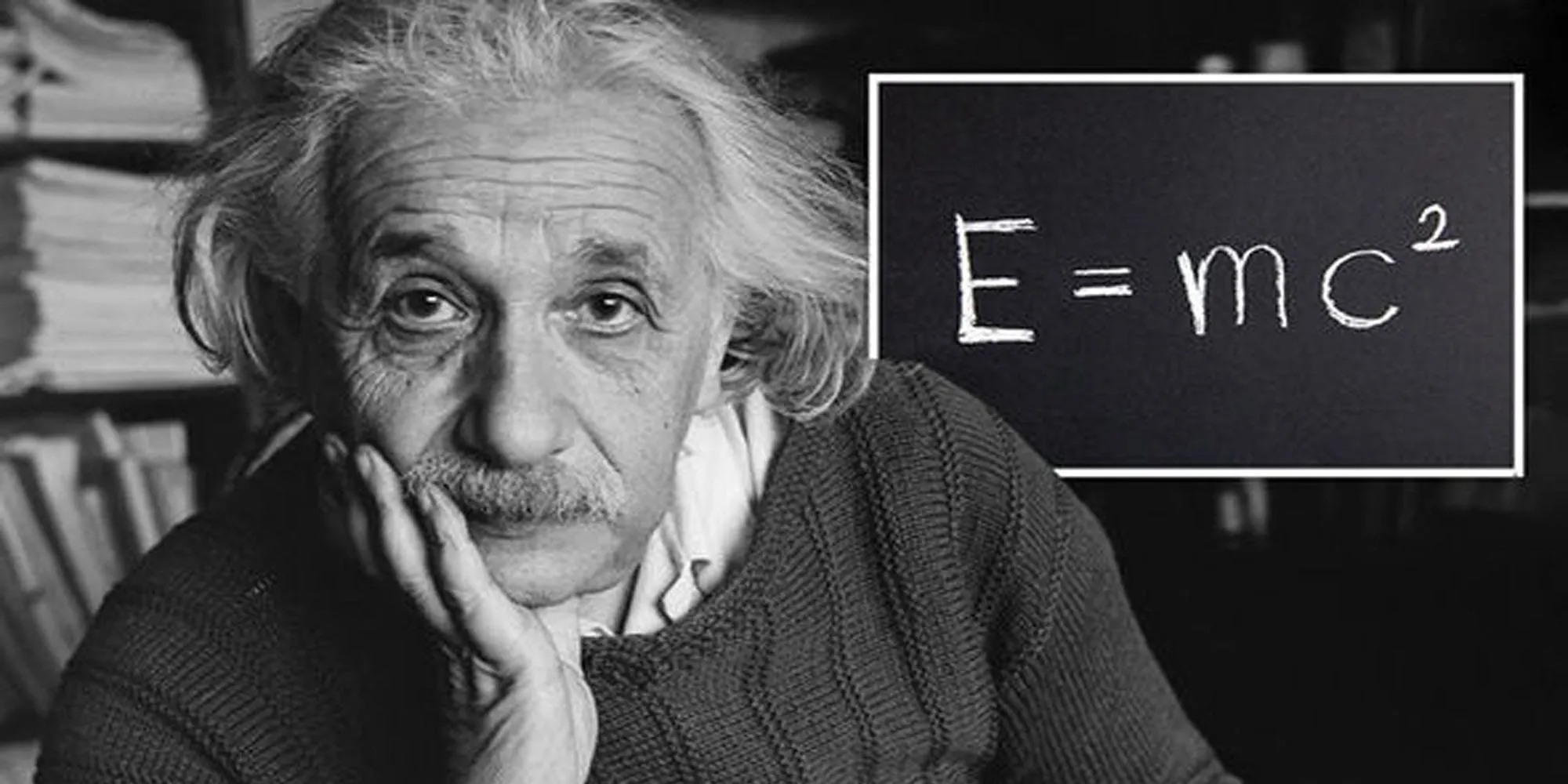
Einstein supplied the key link in 1905 with E=mc², the equation showing that mass and energy are two forms of the same thing. Mass can become energy, and energy can appear as mass.
Physicists later applied that idea to atomic nuclei and found a surprise. If you add up the masses of the separate protons and neutrons that make a nucleus, the total is slightly larger than the mass of the completed nucleus.
That difference is called the mass defect.
It has not disappeared. It has been converted into binding energy. When protons and neutrons lock together, a little mass turns into the energy that holds the nucleus in place. Because the speed of light squared is such a huge number, even a tiny amount of mass corresponds to an enormous amount of energy.
That is why nuclear reactions dwarf chemical ones. Fire changes electron arrangements. Nuclear reactions change the core of matter.
If every atom contains so much energy, why does the world not explode?
The answer is stability. Inside a stable nucleus, the electromagnetic force pushes protons apart while the strong force pulls protons and neutrons together. At very short distances, the strong force wins and creates a durable arrangement.
Physicists often describe this in terms of an energy barrier. A marble resting at the bottom of a bowl stays there unless something gives it enough energy to get over the rim. Nuclei behave in a similar way. Their particles sit in low-energy configurations that are hard to disturb.
So atoms can endure for billions of years. Even radioactive nuclei, which are unstable, may decay slowly over immense stretches of time.
That stability is why everyday events cannot unlock nuclear energy. Dropping a stone, lighting a flame, or smashing two objects together does not come close to disturbing the nucleus. The energies involved are far too small.
The strongest energy in matter is also the hardest to reach.
One route to reaching it is nuclear fission, where a heavy nucleus splits into two smaller ones. Uranium-235 is the classic example. A neutron, which carries no electric charge, can approach and be absorbed by the nucleus without being repelled by its positive protons.
For a moment, the nucleus becomes heavier and less stable. It stretches and deforms, often compared to a wobbling liquid drop. If the disturbance is great enough, it splits.
The original nucleus breaks into two lighter nuclei, those fragments fly apart at high speed, extra neutrons are released, and energy comes out with them. The energy comes from a change in binding energy. The total mass of the products is slightly smaller than the mass of the original nucleus plus the incoming neutron, and that small difference appears as energy.
A typical chemical reaction releases only a few electron volts per atom. A single fission event releases around 200 million electron volts.
That is why fission can produce such immense power. It also creates the possibility of a chain reaction, because each fission event releases two or three neutrons that can trigger more splits. In a weapon, that energy is released almost instantly. In a nuclear reactor, engineers slow the process with control rods that absorb neutrons, allowing the energy to emerge gradually as heat for electricity generation.
The same underlying physics can destroy a city or help power one.
Fission releases energy by breaking heavy nuclei apart. Stars use the opposite route. They shine through fusion.
A star begins as a collapsing cloud of gas. As gravity squeezes the cloud, the core grows hotter and denser until atoms can no longer remain intact. Electrons are stripped away, leaving bare nuclei moving at tremendous speeds.
In the sun, those nuclei are mostly hydrogen nuclei, each consisting of a single proton. Under normal conditions, two protons repel each other. Inside a star, extreme heat and pressure keep forcing them into close encounters. Occasionally they come close enough for the strong force to take over.
Then fusion begins.
In the sun, a chain of reactions eventually turns hydrogen into helium. Four hydrogen nuclei ultimately become one helium nucleus. The helium nucleus has slightly less mass than the four hydrogen nuclei that went in. The missing mass becomes energy.
That energy starts deep in the solar core as high-energy particles and radiation. Over time, it works its way outward and escapes into space as light and heat. Every second, the sun converts roughly 4 million tons of mass into energy through fusion.
Sunlight, in that sense, is nuclear energy that has traveled a long way.
Fusion also shaped the material world closer to home. The carbon in human bodies, the oxygen in the air, and the calcium in bones were forged through nuclear reactions inside stars. Matter on Earth carries that stellar history within it.
Bringing fusion under control on Earth has proved far harder than using fission. The attraction is obvious: fusion offers huge energy potential, and reactions involving hydrogen isotopes such as deuterium and tritium could provide abundant fuel while producing far less long-lived radioactive waste than traditional fission.
But the same electric repulsion that makes nuclei hard to fuse inside stars also blocks them in the lab. On Earth, scientists must heat fuel to temperatures even hotter than the sun’s core. At those temperatures, matter becomes plasma, and no ordinary container can hold it.
Some experiments use magnetic fields to trap plasma in donut-shaped chambers called tokamaks. Others use powerful lasers to compress tiny fuel pellets to star-like conditions for a brief instant. The goal is ignition, the point where fusion produces enough energy to sustain itself.
That remains difficult because plasma is unstable. Turbulence and small disruptions can let energy leak away too quickly.
The original story “The astonishing amount of energy locked inside ordinary matter” is published in The Brighter Side of News.
Like these kind of feel good stories? Get The Brighter Side of News’ newsletter.
The post The astonishing amount of energy locked inside ordinary matter appeared first on The Brighter Side of News.

