Most materials stop changing once they leave the factory. A new fungal textile takes almost the opposite approach.
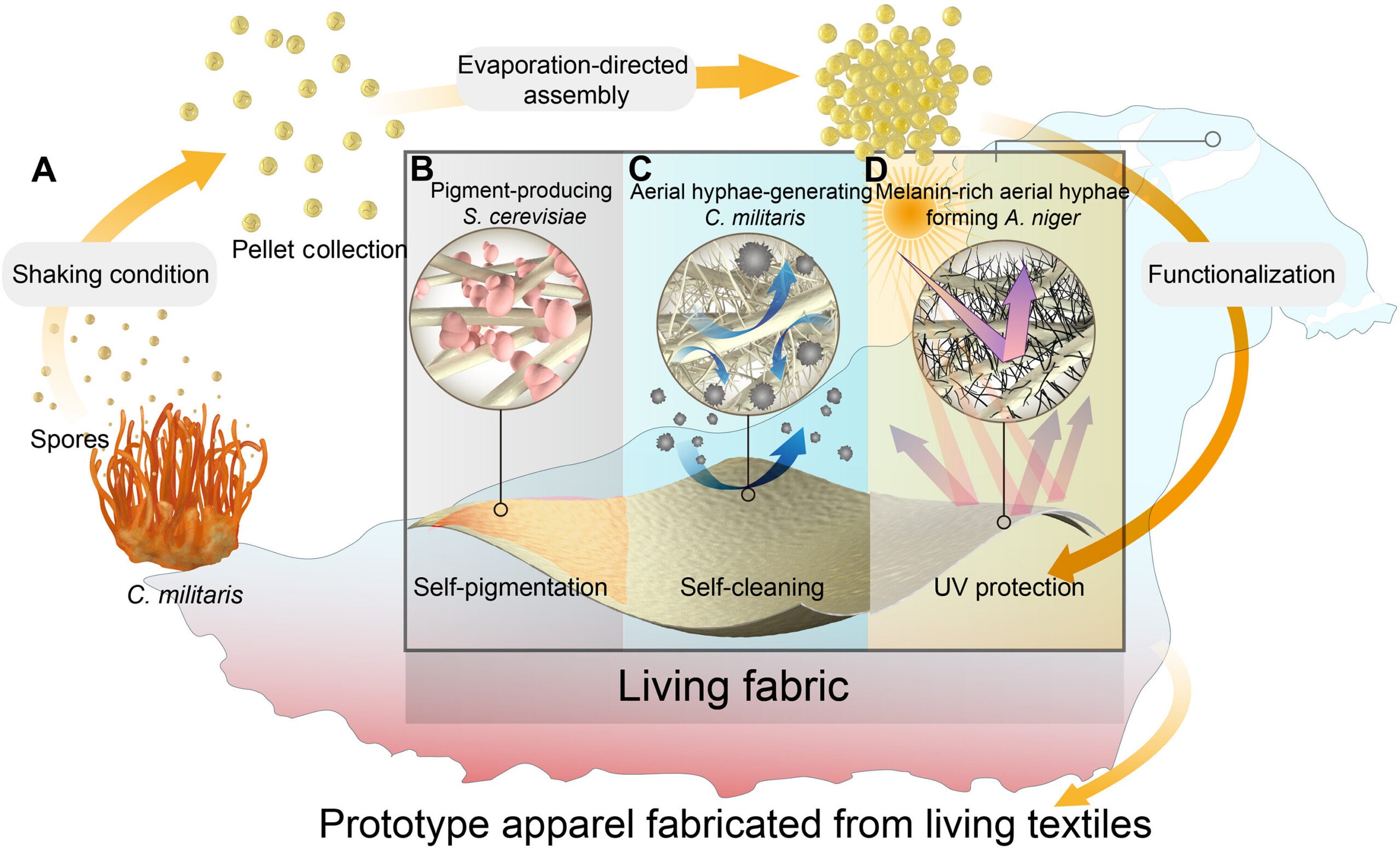
Made from the living mycelium of Cordyceps militaris, the flexible material can retain cells capable of renewed growth. It can repair damage, develop water-repelling surfaces and support other microbes that add color or ultraviolet protection.
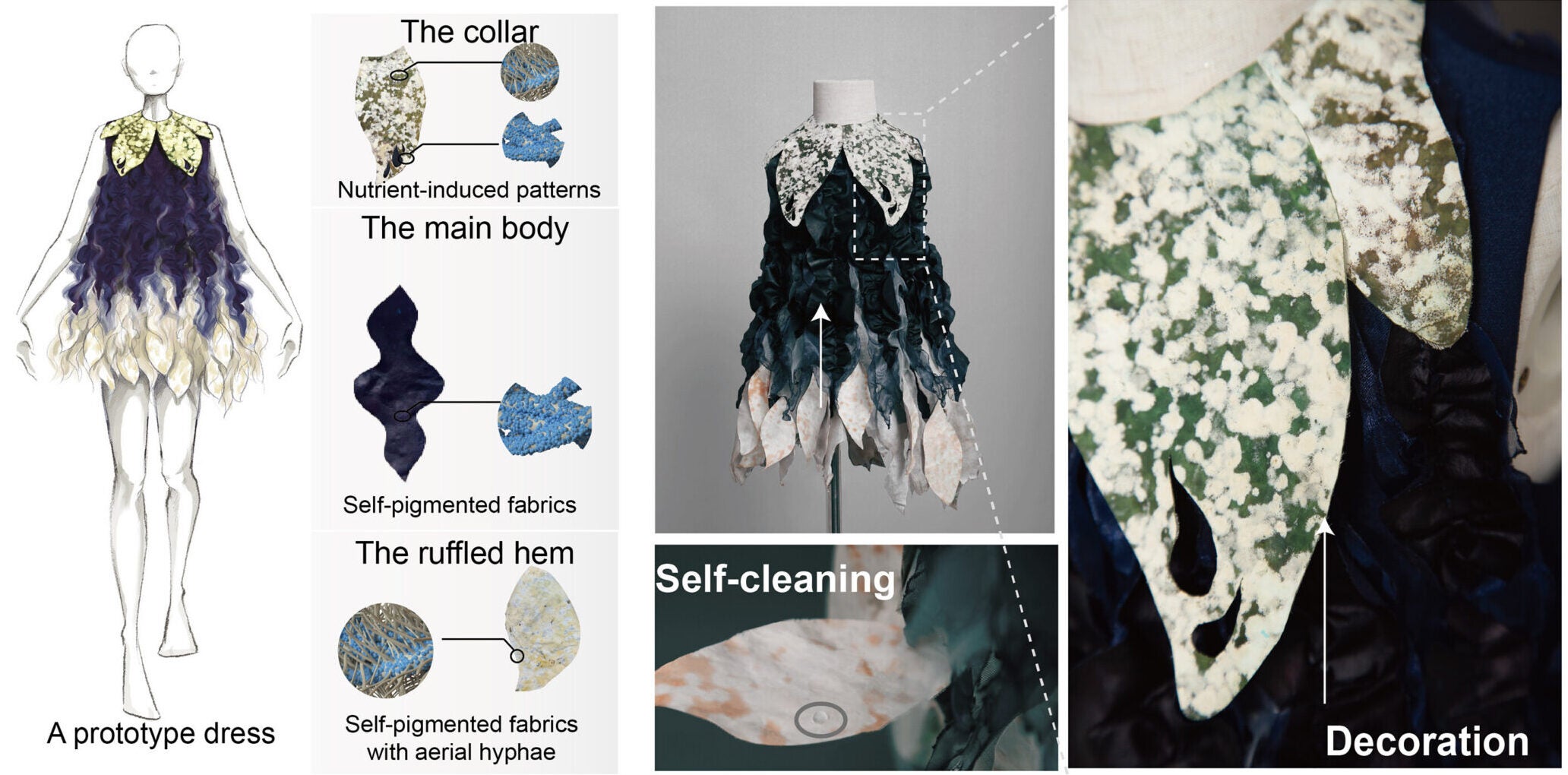
Researchers even cut and sewed the fungal sheets into a prototype dress.
The work was led by Zhong Chao at the Shenzhen Institutes of Advanced Technology, part of the Chinese Academy of Sciences. The researchers designed the material to address a basic limitation of existing mycelium products: manufacturing often kills the fungus.
That makes conventional fungal materials easier to handle, but it removes the biological activity that could allow them to regenerate or respond to their surroundings.
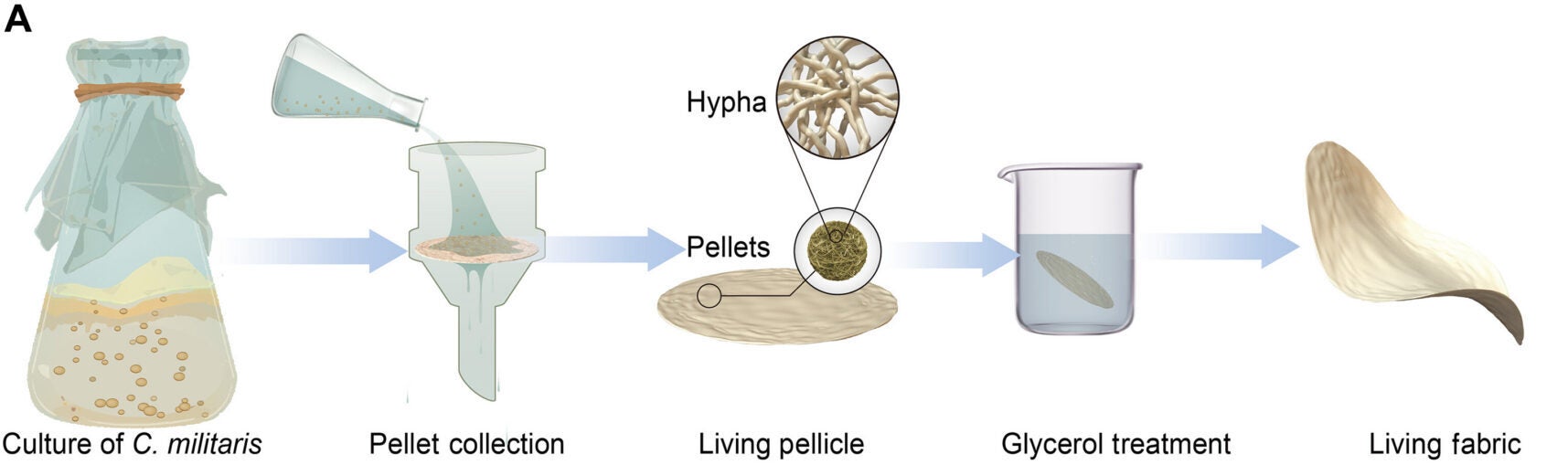
Instead of producing a conventional flat fungal mat, the team grew C. militaris spores in liquid culture.
Under optimized conditions, the fungus developed into spherical pellets made from intertwined microscopic filaments called hyphae. The researchers collected those pellets, placed them into molds and dried them at 45 degrees Celsius for six hours.
The fungal network naturally consolidated as it dried, producing solid structures shaped like the molds. No external scaffold or adhesive was required.
The resulting material had one major weakness: brittleness.
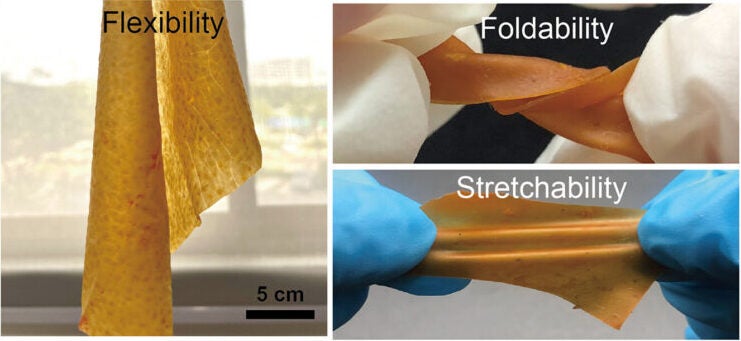
To make it more flexible, the researchers added glycerol, which interacts with polysaccharides such as chitin in fungal cell walls. Tests and molecular simulations indicated that moderate glycerol concentrations disrupted some of the internal hydrogen bonding that made untreated sheets stiff.
A formulation containing 10% glycerol increased ductility by 50% compared with untreated material while maintaining useful strength.
The sheets could then be folded, twisted, cut and shaped without cracking. Four strips, each just 1 millimeter wide, were twisted into a rope that supported a one-kilogram weight.
The fungal sheets also displayed two forms of repair.
Fresh wet pellets could fill larger damaged sections and bond with the existing material as they dried. For smaller cuts in glycerol-treated sheets, researchers added only a few microliters of water and allowed the material to dry again.
After 10 water-assisted repair cycles, samples retained about 68% of their original stiffness.
Because viable fungal cells remained in the material, nutrients could trigger another type of regeneration.
Researchers placed nutrient droplets onto selected portions of the textile. New aerial hyphae then grew outward from those areas, allowing the team to create patterns including mushrooms, leaves, snowflakes, honeycombs and the logo of the Shenzhen Institute of Advanced Technology.
Adding fresh mycelial pellets and nutrients to damaged areas could also restore the hyphal surface. After 10 repair cycles, regenerated surfaces retained water contact angles around 145 degrees and about 89% of their original Young’s modulus.
Those aerial hyphae did more than change the textile’s appearance.
Their microscopic structure made the surface highly water-repellent. Water contact angles reached about 145 degrees, causing wastewater droplets to remain rounded and roll away while leaving little residue.
The effect survived repeated wetting and drying, 24 hours of soaking and compression, although abrasion caused some decline.
Rather than applying a separate synthetic coating, the material grows its own textured, water-repelling surface when supplied with nutrients.
The researchers could control where that growth occurred by applying nutrients only to selected locations. Physical barriers helped produce sharper patterns during active growth.
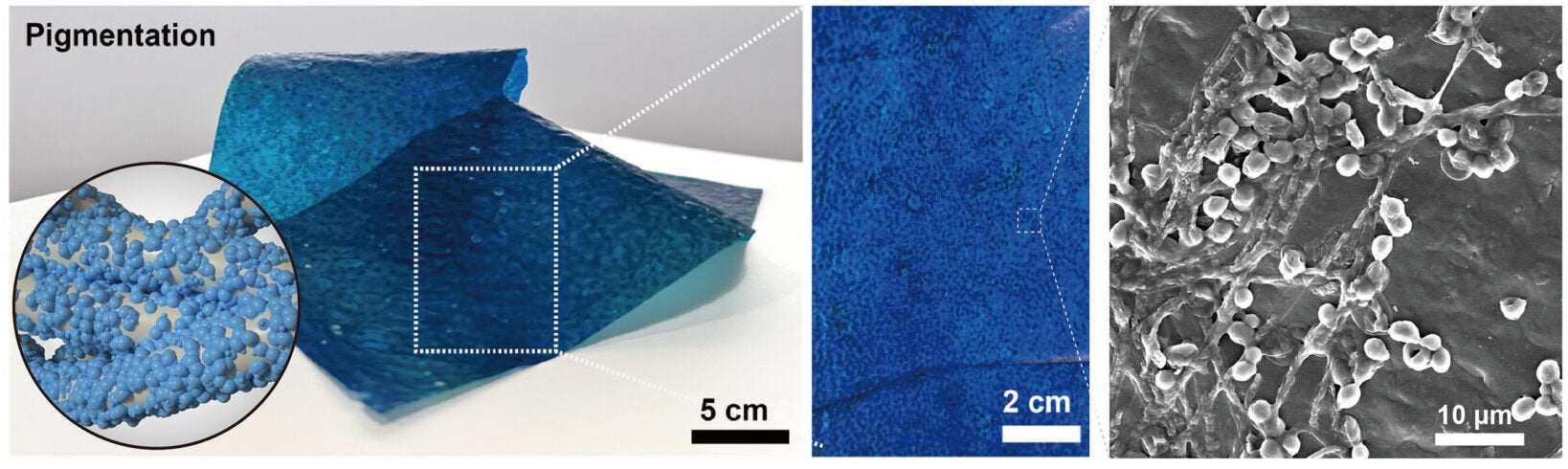
The team also introduced engineered Saccharomyces cerevisiae yeast cells to provide biological coloration.
The yeast displayed proteins that bind to chitin, helping the cells attach firmly to the fungal filaments. After six hours of ultrasonic treatment, yeast engineered with the chitin-binding system retained about 75% binding efficiency, compared with 18% for yeast without it.
Different engineered yeast strains produced pale blue, red, orange and deep purple pigmentation. Mixing strains created intermediate colors.
The researchers incorporated the pigment-producing cells into fungal pellets before the sheets were fully formed. The finished colored materials remained flexible, and adding yeast produced little change in their measured mechanical performance.
Color intensity gradually declined during 14 days of testing, although saturation remained largely stable.
A second fungus supplied another function.
The researchers sprayed Aspergillus niger spores and nutrients onto the textile. The spores germinated into a surface layer rich in melanin, a pigment capable of absorbing ultraviolet radiation.
Measurements showed increased UV absorption after the fungal layer formed.
In another experiment, the researchers placed the coated material over fungal spores and exposed them to 254-nanometer ultraviolet light for three hours. Spores protected by the material showed near-normal germination, while unprotected spores had sharply reduced germination.
The added hyphae also showed antioxidant activity without significantly changing the material’s stiffness or tensile strength.
To demonstrate that the sheets could function as textile-like components, the researchers assembled them into a dress.
About 20 self-pigmented blue fungal modules formed the main body. Leaf-shaped pieces with nutrient-induced patterns made up the collar, while petal-shaped pieces covered with aerial hyphae formed the ruffled hem.
The prototype demonstrated sewing and assembly rather than readiness for everyday clothing.
The authors said these materials may be better suited to short-lived uses where biodegradability matters, including temporary textiles, packaging, artistic displays and architectural installations.
Washability, abrasion resistance, breathability, comfort and manufacturing consistency still require further study.
Environmental impacts also do not disappear simply because the material is biological. A life-cycle assessment found that pretreatment consumed substantial water, filtration contributed heavily to global warming potential, and glycerol production created other environmental burdens. Raw materials, particularly growth media, accounted for more than 95% of estimated production costs.
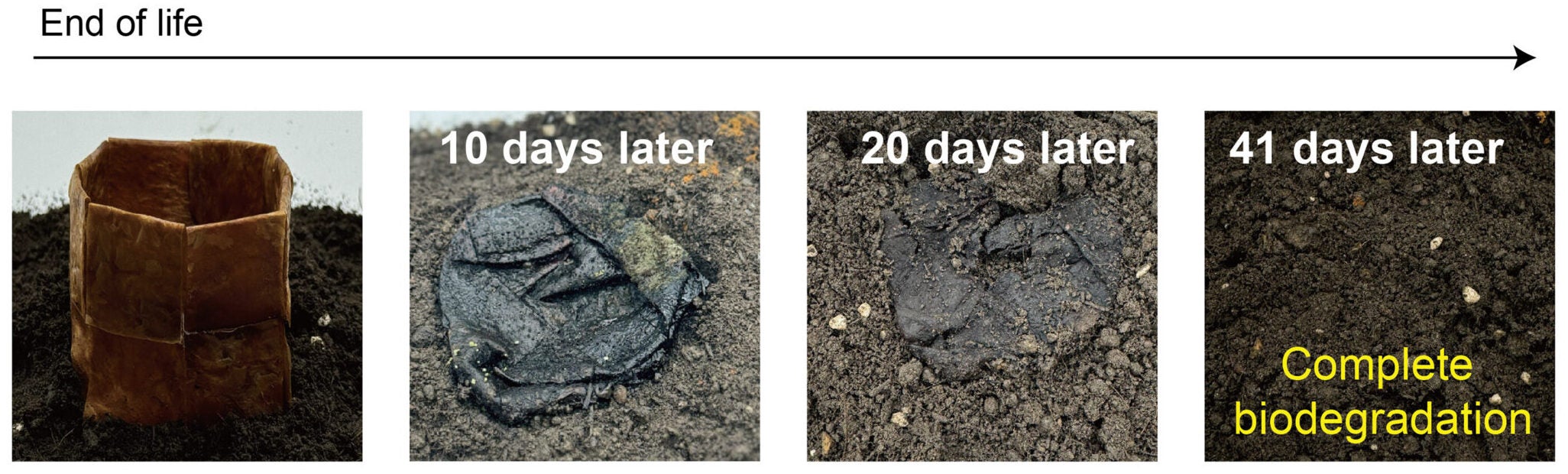
Still, the material’s end of life looked very different from that of many synthetic alternatives. A small structure made from the fungal sheets showed near-complete degradation after 41 days in soil.
The researchers now envision fungal platforms whose biological functions can be more tightly controlled and expanded.
As the authors wrote, “Beyond textile analogs, this paradigm provides a foundation for the broader development of adaptive, living material platforms across biomedical, environmental, and architectural domains.”
These resources explore the wider effort to turn fungal growth into functional materials, including self-regenerating structures, engineered living systems and new approaches to sustainable manufacturing.
Living co-culture fabrication for biologically crosslinked mycelium–cellulose hydrogels and films: This work combines fungal mycelial microfibers with bacterial cellulose to create living hydrogels and films, showing another route toward materials that retain biological growth and self-healing capabilities while developing useful mechanical properties. (Nature Communications, 2026)
Fungal diversity used to produce mycelium materials: This review examines 92 fungal species reported in mycelium-material research and finds that species and strain selection can substantially influence mechanical performance, highlighting how biological diversity could broaden future material properties. (Fungal Biology Reviews, 2026)
Tailoring structure-property relationships of fungal mycelium for material applications: A process engineering approach for pure mycelium-based biomaterials: This review examines how growth conditions, substrates, fermentation and post-processing determine the structure and performance of pure mycelium materials, while also addressing scale-up, life-cycle assessment and regulatory challenges. (New Biotechnology, 2026)
Gradients of Aliveness and Engineering: A Taxonomy of Fungal Engineered Living Materials: The authors propose a framework for classifying fungal engineered living materials according to biological state and engineering intervention, while outlining challenges involving viability, contamination, genetic control and responsible scale-up. (Advanced Science, 2025)
Three-dimensional printing of mycelium hydrogels into living complex materials: Researchers demonstrated that fungal mycelium embedded in printable hydrogels can create living structures capable of regeneration and environmental response, including a self-cleaning robotic skin that repaired itself after damage. (Nature Materials, 2023)
Research findings are available online in the journal Science Advances.
The original story “The future of fashion: Living fungal fabric that repairs itself and blocks UV light” is published in The Brighter Side of News.
Like these kind of feel good stories? Get The Brighter Side of News’ newsletter.
The post The future of fashion: Living fungal fabric that repairs itself and blocks UV light appeared first on The Brighter Side of News.


Leave a comment
You must be logged in to post a comment.