Women in the Sardinian village of Bolotana show an unusually favorable pattern of survival after age 70. Researchers estimated that 13.8% would reach 100 under the mortality conditions recorded during 2021–2025. The corresponding figures cited for Italy and the United States were approximately 3.5% and 3.6%.
The findings make the mountain community a candidate “blue zone,” an area distinguished by exceptional longevity. Published in Frontiers in Aging, the study involved an international team including University of Sassari researcher Giovanni Mario Pes. Co-author S. Jay Olshansky is professor emeritus of epidemiology at the University of Illinois Chicago School of Public Health.
The analysis focused on two measures: remaining life expectancy at 70 and the probability of surviving from 70 to 100. For Bolotana women, remaining life expectancy was 20.85 years, compared with 18.06 years nationally in Italy. These estimates describe people who have already reached 70, rather than life expectancy at birth.
The 13.8% figure also requires careful interpretation. Researchers constructed a period life table, a demographic model applying mortality rates observed during a particular window across successive ages. It describes survival under those conditions, rather than following today’s 70-year-olds for the next three decades.
That distinction prevents the estimate from becoming a prediction about any individual woman’s future. Mortality conditions can change, and a small community’s estimates can fluctuate substantially. The reported 95% confidence interval for female survival from 70 to 100 stretched from 7.33% to 23.75%, reflecting considerable uncertainty. Because the village is small, a few additional deaths or survivors can substantially alter an estimate without indicating a lasting change in aging.
Even with those qualifications, women were the clearest distinguishing feature of Bolotana’s recent demographic profile. Their estimates exceeded contemporary values for Nuoro Province, Sardinia, and Italy. Among the international benchmarks examined, they ranked second only to Hong Kong, although that comparison does not establish a comprehensive worldwide ranking.
Comparisons with Nuoro Province, Sardinia, and Italy used the same 2021–2025 window. Some external longevity benchmarks instead came from 2015–2019, so they describe a different period. These differences matter when interpreting international rankings or comparing Bolotana with established longevity hotspots.
Bolotana’s approximately 2,300 residents attracted attention partly because the village contained six centenarians in 2024. A concentration like that invites investigation, but counting unusually old residents is only the beginning. Researchers must establish that reported ages are accurate and assess survival across the wider population.
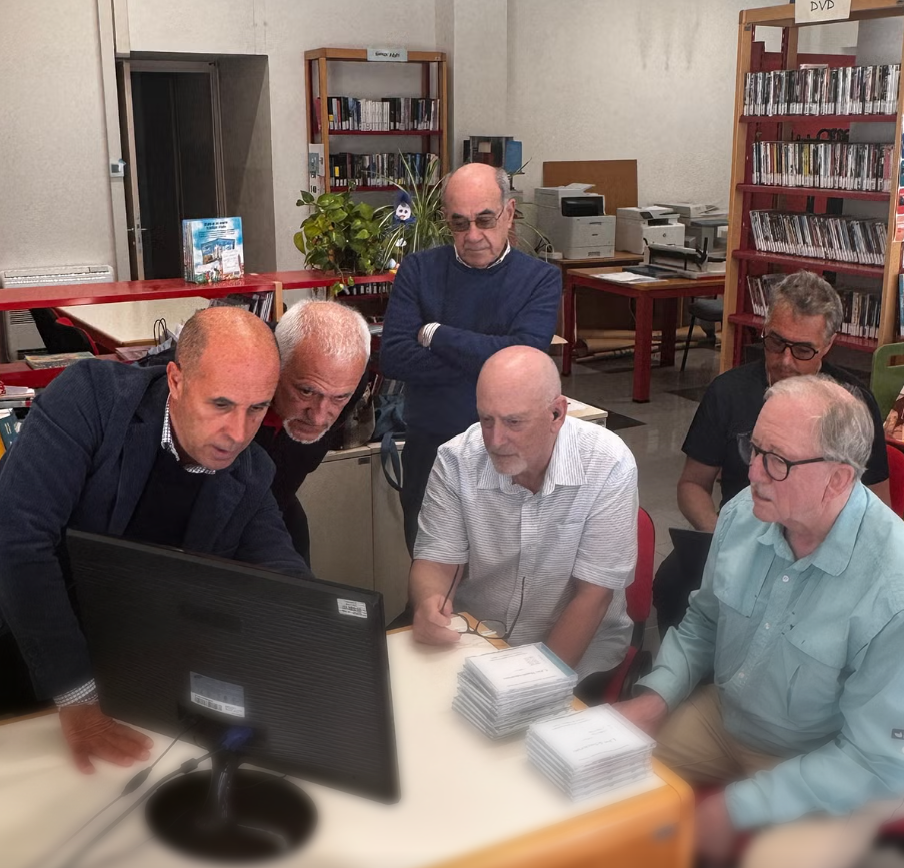
The team linked civil birth records with later records of deaths, residence, and family relationships. Parish archives supplied independent evidence from baptisms, deaths, and burials. Names, dates, parentage, and genealogical timelines helped distinguish individuals from relatives or other residents with similar names.
“What makes Bolotana extraordinary is that it has an incredible historical record that allows us to definitively evaluate ages at birth and death,” Olshansky said. “The municipal and baptismal records date back centuries and allowed us to independently verify ages.” This documentation gave the team a basis for checking exceptional ages.
Civil birth documentation was available for every identified centenarian. Researchers independently cross-checked 97% of recorded centenarian deaths against parish archives and validated the ages of all identified centenarians. None was excluded because age documentation was insufficient, although following emigrants presented a separate challenge.
A complementary analysis identified 38 centenarians among 3,060 people born in Bolotana between 1900 and 1925. That historical count measures actual survival from birth, unlike the contemporary model beginning at age 70. Deaths earlier in life therefore influence it, making the two measures informative but distinct.
Approximately 3% of people born in the village could not be followed to a documented death date and location, principally because they moved away. Some might have reached 100 elsewhere without being counted. The researchers therefore acknowledged possible undercounting in this historical analysis.

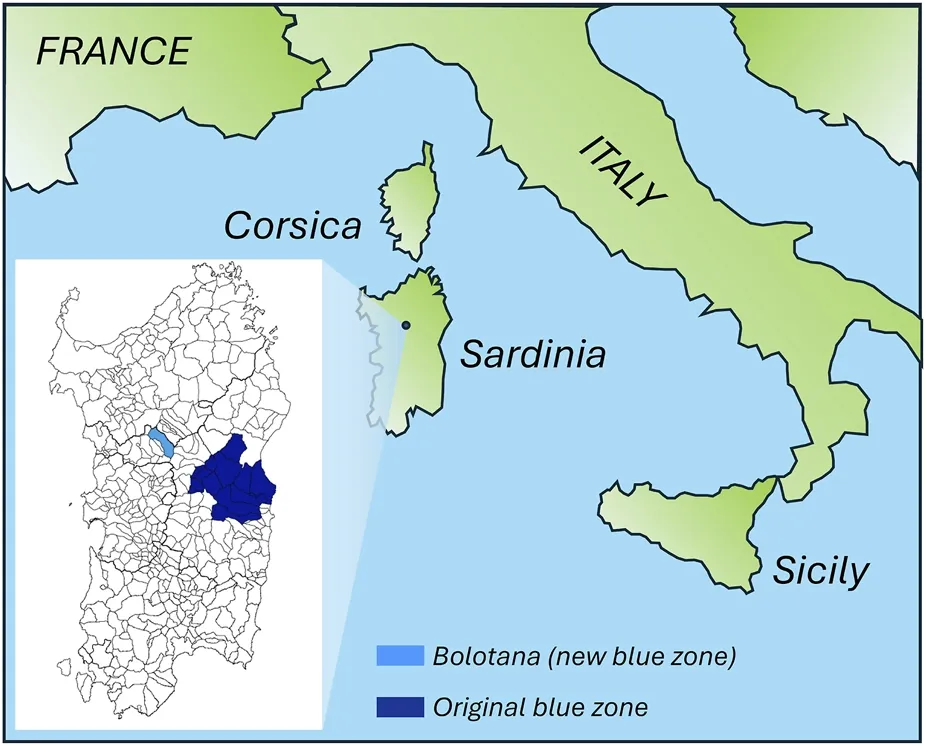
Bolotana’s female advantage also differs from the pattern that originally drew attention to Sardinian longevity. The island’s established blue zone became known particularly for exceptional male survival and a comparatively small difference between the sexes. Bolotana lies outside that original area, approximately 110 kilometers away.
Men in Bolotana also showed favorable indicators during 2021–2025, but their advantage was less consistent. Their remaining life expectancy at 70 was approximately 16 years, only modestly above the Italian comparison. The estimated probability of reaching 100 was 4.92%, with particularly wide uncertainty.
The strongest caution comes from examining an earlier period. When researchers analyzed Bolotana during 2015–2019, the village’s survival estimates were less favorable. They were also lower than the published figures for the original Sardinian blue zone during those same years.
Sparse records of time lived at the oldest ages required different age grouping and calculation methods for that earlier analysis. Consequently, the comparisons remain descriptive rather than formal tests establishing which community has superior survival. Nevertheless, the change shows why a recent five-year snapshot cannot establish a permanent advantage.
Adding 2020 to the main observation window produced smaller changes. Women’s remaining life expectancy at 70 declined to 20.37 years, while estimated survival to 100 fell to 12.48%. The female advantage persisted, but the study lacked individual infection, vaccination, and other data needed to examine pandemic-related explanations.

The village offers several possibilities for future investigation. Its steep streets encourage walking, locally produced food remains important, and relatives often live near one another. Olshansky described a community where close relationships and everyday movement appear woven into ordinary life.
“You’ve got this close-knit community where people take care of each other,” he said. “Movement is largely done by walking, not by driving.” Those observations suggest questions about physical activity and social support, but they do not identify what caused the survival pattern.
Diet, genetics, access to care, family support, and residential continuity could all contribute. The demographic analysis could not determine whether any of these factors explained the results or estimate their relative importance. Reliable age records establish confidence in the underlying ages; they do not establish a lifestyle prescription.
The authors therefore stop short of calling Bolotana an established blue zone. Longer observation, continued age validation, and comparative studies of individuals are needed to test whether its advantage persists. Those studies must also separate the characteristics associated with exceptional survival from the factors that actually help produce it.
These five resources explain how researchers validate ages, identify longevity hotspots, and assess whether their advantages persist.
Research findings are available online in the journal Frontiers in Aging.
The original story “The Sardinian village of Bolotana may be a new blue zone for women” is published in The Brighter Side of News.
Like these kind of feel good stories? Get The Brighter Side of News’ newsletter.
The post The Sardinian village of Bolotana may be a new blue zone for women appeared first on The Brighter Side of News.


Leave a comment
You must be logged in to post a comment.