For more than a century, Tyrannosaurus rex has carried one of paleontology’s most stubborn visual jokes: a giant body, a massive skull, and arms so short they seem almost absurd.
Kevin Padian, a paleontologist at the University of California, Berkeley, argues that the joke may point to something serious. In a study published in Acta Palaeontologica Polonica, he suggests the tiny forelimbs of large tyrannosaurs may have shrunk not because they were useful, but because they were dangerous to keep around.
His idea is blunt. When several tyrannosaurs crowded around a carcass, long arms may have become a liability. In that kind of violent feeding scene, with huge skulls and bone-crushing jaws working close together, an arm placed too near the action could be bitten, torn, or even amputated.
“What if several adult tyrannosaurs converged on a carcass?” Padian said. “You have a bunch of massive skulls, with incredibly powerful jaws and teeth, ripping and chomping down flesh and bone right next to you.”
He pushed the image further. If another animal thought you were too close, he said, “They might warn you away by severing your arm.”
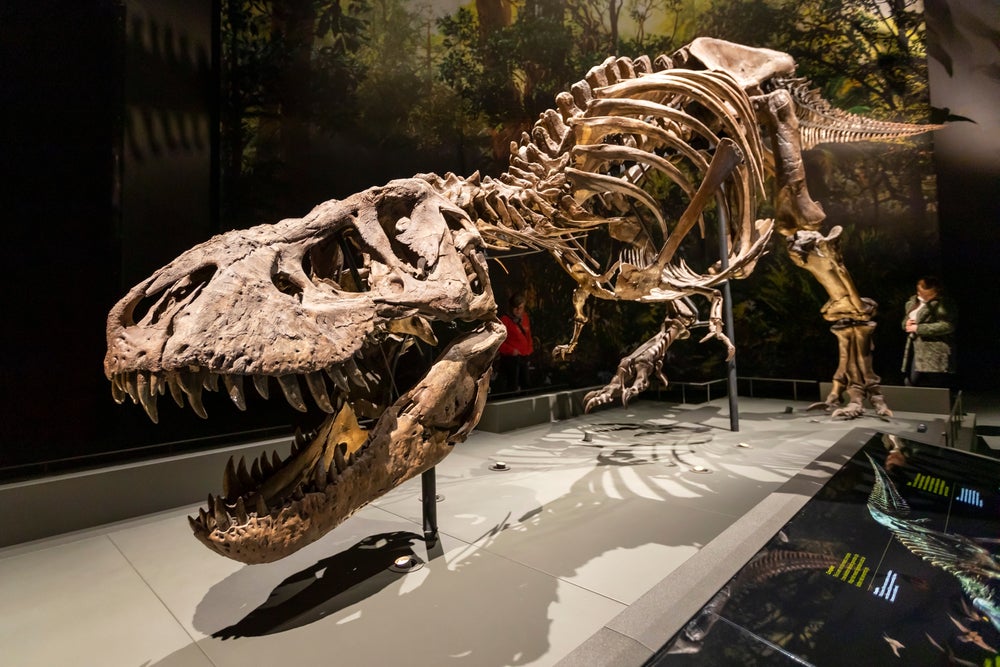
Padian said students in his freshman seminar, The Age of Dinosaurs, kept returning to the same question whenever they stood before a life-size Tyrannosaurus cast: why were the arms so ridiculously short?
The standard answers never seemed satisfying. Over the years, paleontologists proposed that the limbs helped hold mates during sex, pinned down prey, pushed the animal off the ground, signaled to others, or even stabbed enemies. Some went further, suggesting the limbs had no real purpose at all.
Padian took a different route. Instead of asking what the arms were for, he asked what advantage the reduction of the arms might have given the whole animal.
That shift matters because the ancestors of tyrannosaurids had longer forelimbs. Early tyrannosauroids such as Dilong, Guanlong, Yutyrannus, and Sinotyrannus did not show the same extreme reduction seen in later giants. In those older forms, forelimbs were more proportionate, and the hand still retained three fingers. Somewhere along the evolutionary line, the limbs shrank and their mobility dropped with them.
Padian argues that any convincing explanation has to address that change itself, not just imagine a small use for an already tiny arm.
“All of the ideas that have been put forward about this are either untested or impossible because they can’t work,” he said.
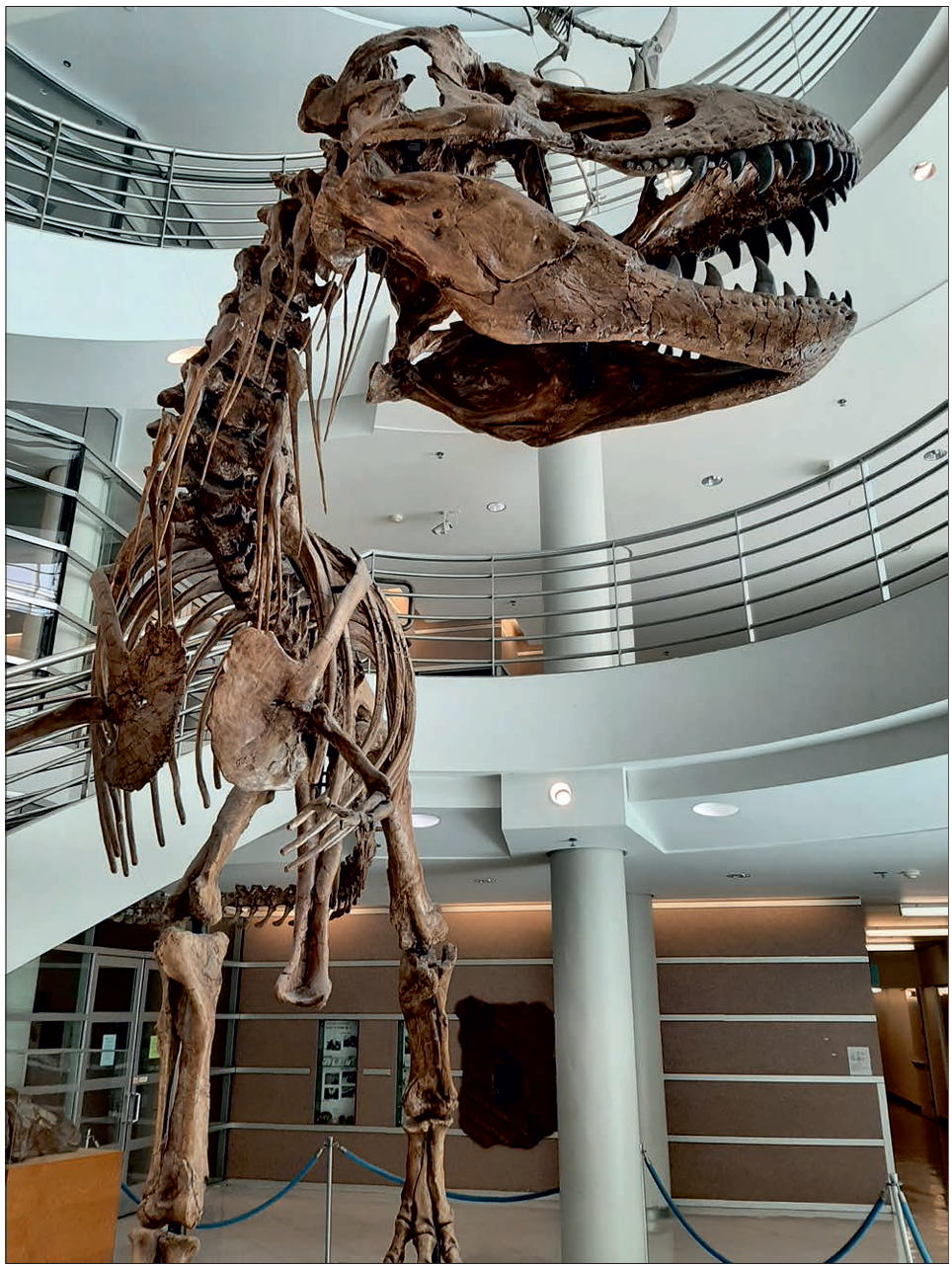
To test older ideas, Padian measured a mounted T. rex skeleton at the UC Museum of Paleontology, based mainly on the well-known specimen MOR 555 from Montana’s Hell Creek Formation. The numbers reinforced what earlier anatomical studies had suggested.
The skull was about 120 centimeters long. The shoulder girdle measured 127 centimeters, but the humerus only 37 centimeters, the ulna 20 centimeters, and the digits about 22 to 25 centimeters. Even in generous “best case” reconstructions of motion, the hands could not properly reach the mouth, could not truly reach each other, and could not get in front of the head in any practical way.
That creates problems for nearly every old hypothesis.
If the arms held prey, they were too short to reach it once the jaws were engaged. If they helped the animal rise from the ground, bigger arms would have been more useful than smaller ones. If they acted as mating claspers, they would have been too weak and too stubby to control a partner that weighed several tons. Even the suggestion that the animal could “bench press” around 400 pounds with its forelimbs runs into a simple obstacle: it could not get close enough to much of anything to lift it.
“The arms are simply too short,” Padian said. “They can’t touch each other, they can’t reach the mouth, and their mobility is so limited.”
His alternative depends on behavior as much as anatomy.
Several fossil sites discovered over the past few decades have preserved tyrannosaurs of different ages together. Padian is careful not to claim that burial together automatically proves they lived together. But repeated finds of adults and juveniles in the same sites strengthen the possibility that some tyrannosaurids hunted or fed in groups.
If that happened, carcasses would have become crowded, risky places.
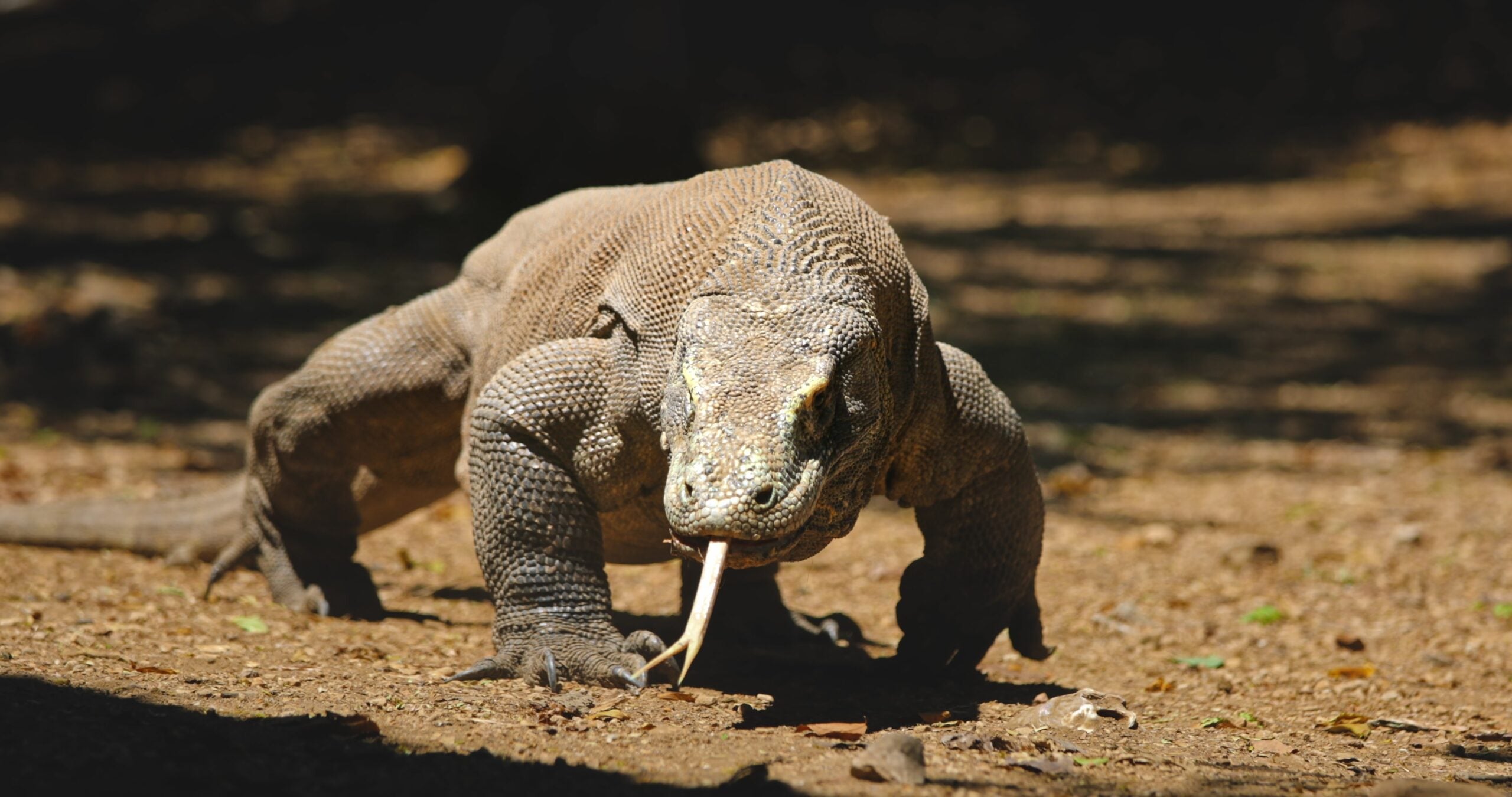
Padian points to living analogies, cautiously. Komodo dragons often converge on prey, with larger animals feeding first and smaller ones staying back. Crocodilians also injure one another during feeding. Neither case is direct evidence for tyrannosaurs, but both show how dangerous communal feeding can become when large predators compete at close range.
In that setting, forelimbs offer little help and a lot of exposure.
A longer arm, set somewhat forward of the body, would place vulnerable tissue within reach of the deadliest bite known on land. Tyrannosaurs could crush bone. Padian notes that severe bites could lead to hemorrhage, infection, shock, and death. If shorter arms reduced that risk, natural selection may have favored reduction.
The idea also fits a broader pattern. Other large predatory theropods, including abelisaurids and carcharodontosaurids, independently evolved reduced forelimbs, though not in identical ways. That does not prove a single cause, Padian argues, but it suggests that limb reduction in giant carnivores is a real evolutionary problem worth explaining.
Padian readily admits that his hypothesis will be difficult to confirm 66 million years after the last T. rex died.
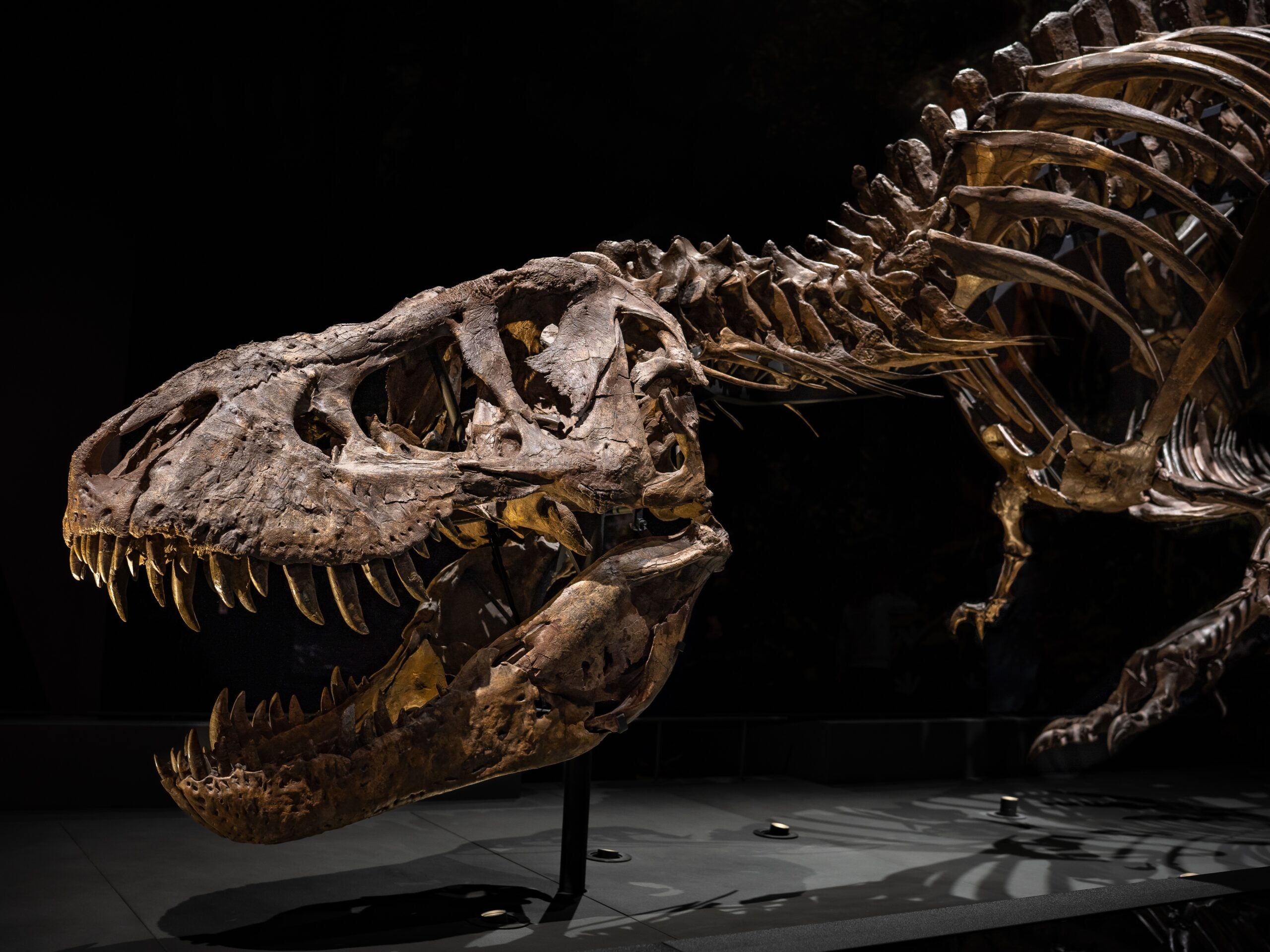
Still, he thinks it is more testable than many earlier stories. One way would be to examine museum specimens worldwide for bite marks. Tyrannosaur skeletons already show wounds on skulls and other bones. If reduced forelimbs show relatively fewer bite injuries than expected, that pattern might support the idea that shortening the limbs helped keep them out of danger.
He also expects younger animals to show different damage patterns than adults, since juveniles may have fed differently or waited until larger individuals finished. And he does not think all groups with shortened forelimbs would need to show the same exact anatomy. Different lineages could arrive at similar outcomes by different evolutionary routes.
Padian’s larger point goes beyond one famous dinosaur. He sees the debate over T. rex arms as a lesson in how science builds explanations, and how easily researchers can drift into stories that sound plausible but do not really answer the right question.
“What I first wanted to do was to establish that the prevailing functional ideas simply don’t work,” he said. “That gets us back to square one.”
This research does not settle the mystery of T. rex arms, but it changes the terms of the debate. Instead of treating the limbs as miniature tools that must have had some direct job, it asks whether losing size itself improved survival.
That shift could influence how paleontologists study other reduced structures in extinct animals, especially when old explanations focus too narrowly on what a body part did rather than why evolution allowed it to shrink.
It also gives museums and fossil collections a concrete next step: look more systematically for bite damage patterns across skeletons, age groups, and species.
Research findings are available online in the journal Acta Palaeontologica Polonica.
The original story “The surprising reason why T. rex had short arms” is published in The Brighter Side of News.
Like these kind of feel good stories? Get The Brighter Side of News’ newsletter.
The post The surprising reason why T. rex had short arms appeared first on The Brighter Side of News.

