For people with Type 1 diabetes, changing when food is eaten can raise an immediate concern: blood sugar can move too high or too low. A six-month trial in Chicago suggests a carefully monitored eating schedule may improve blood sugar control without increasing those dangers.
The University of Illinois Chicago study tested time-restricted eating in adults with Type 1 diabetes who were also classified as obese. Participants assigned to the eating schedule consumed food only between noon and 8 p.m. They did not have to count calories.
After six months, their HbA1c levels fell compared with participants assigned to calorie restriction. HbA1c is a blood test used to measure longer-term blood sugar levels. The average reduction between the time-restricted eating and calorie-restriction groups was 0.46 percentage points.
“This is the first study to examine the effects of intermittent fasting on people with Type 1 diabetes, and the results are extremely promising,” said Krista Varady, a UIC professor of kinesiology and nutrition who led the research.
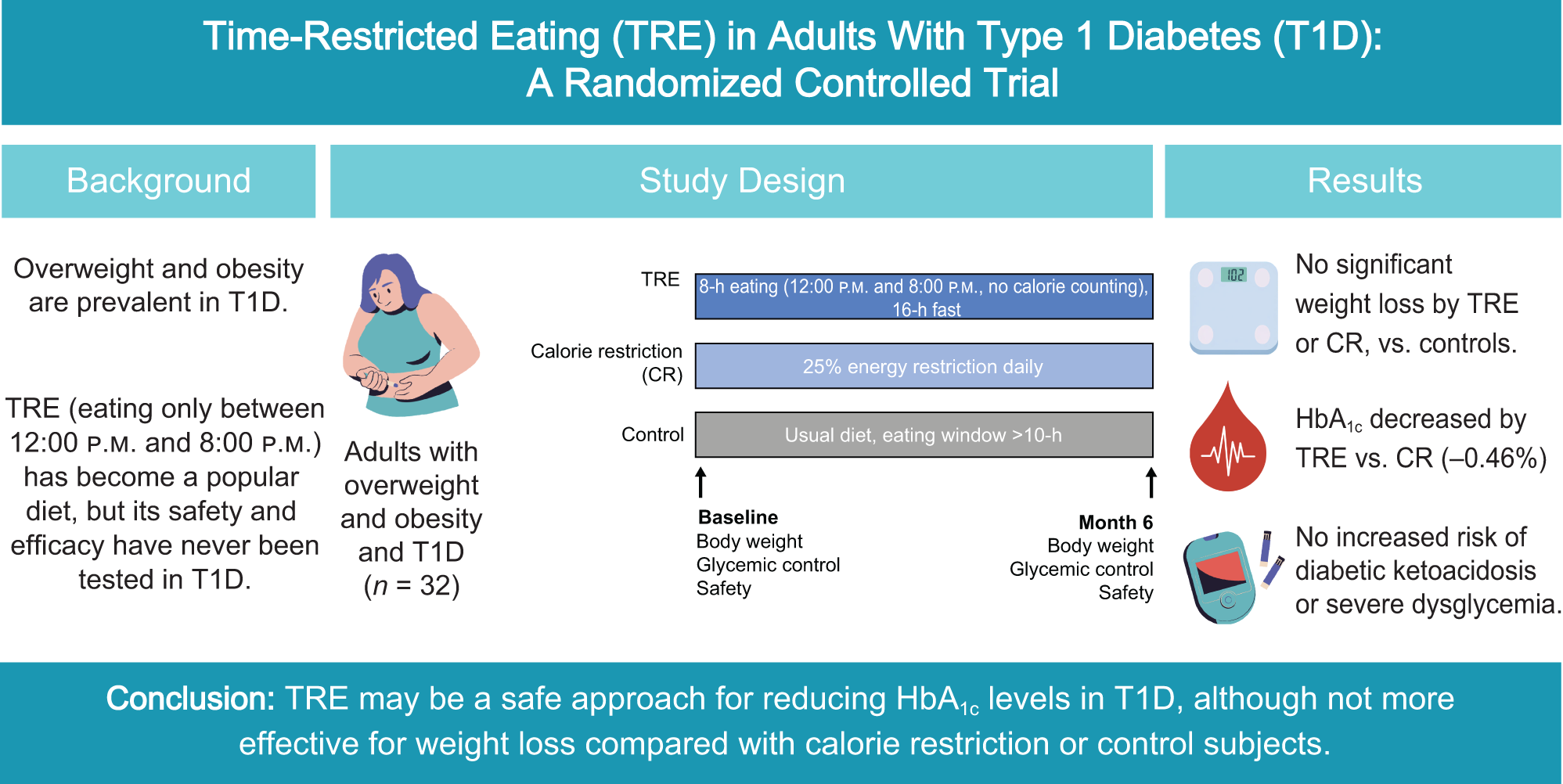
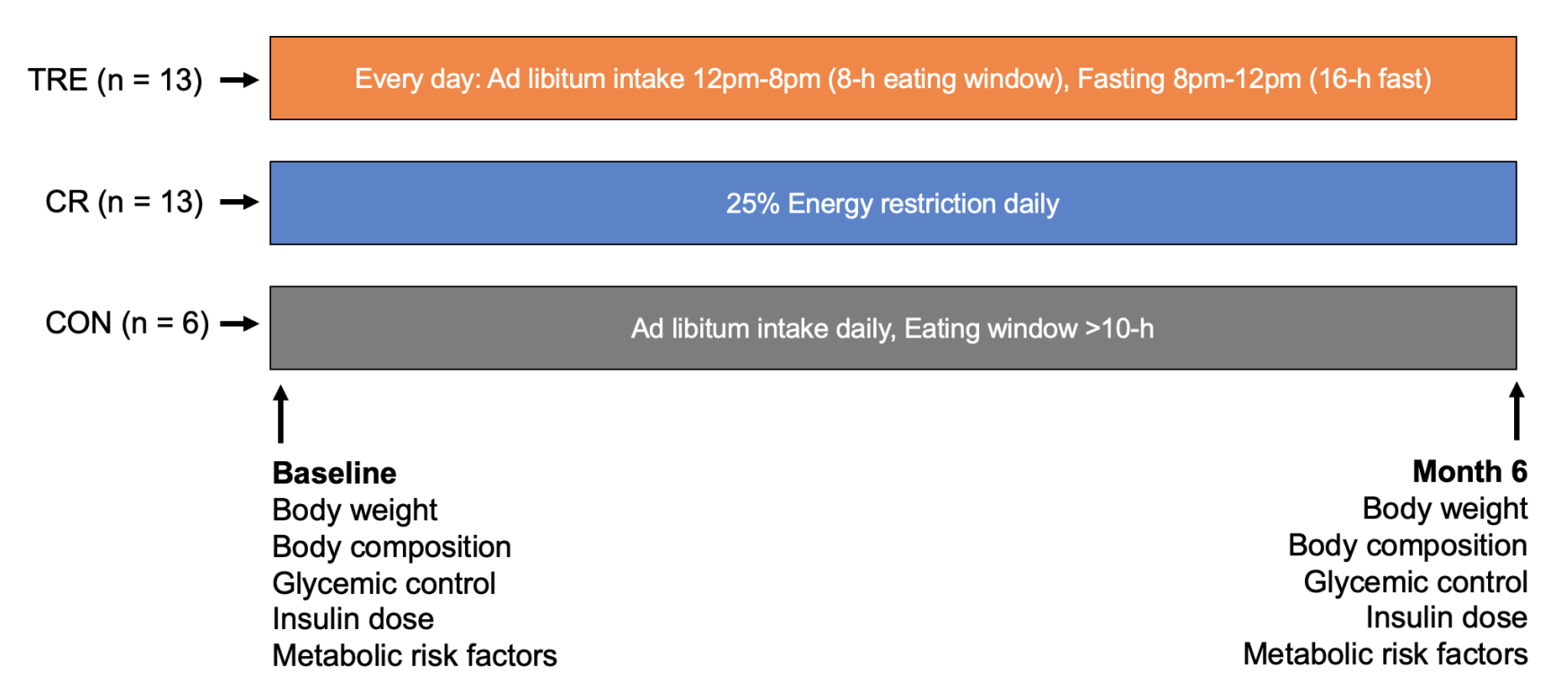
The trial enrolled 32 participants from around Chicago. Each person was randomly assigned to one of three groups for six months.
One group followed time-restricted eating, limiting food intake to the eight-hour period from noon to 8 p.m. A second group reduced calorie intake by 25%. The third continued its usual behavior and served as the control group.
Weight loss was not significantly different among the groups.
Participants following time-restricted eating had a 2.19% reduction in body weight relative to the control group, but the difference was not statistically significant. The calorie-restriction group had a 0.47% reduction relative to the control group. The difference between the two diet groups also was not significant.
Blood sugar control produced a different result.
HbA1c declined significantly in the time-restricted eating group compared with the calorie-restriction group. The difference was 0.46 percentage points, with a 95% confidence interval ranging from a reduction of 0.80 to 0.12 percentage points.
There were no significant differences among the groups in total insulin dose or average glucose levels.

“This is the first step to showing time-restricted eating could be a safe, potentially effective method for people with Type 1 diabetes to manage their blood sugar levels,” Varady said.
Type 1 diabetes is a chronic condition in which the body produces little or no insulin. It affects less than 1% of people in the United States.
The trial focused specifically on people with Type 1 diabetes who were also classified as obese according to Centers for Disease Control and Prevention body mass index standards. Varady said that combination represents about 0.5% of the U.S. population.
Because changes in eating patterns can affect glucose levels and insulin needs, safety monitoring formed a major part of the study.
Every participant wore a Dexcom G7 continuous glucose monitor throughout the six-month trial. The devices measured interstitial glucose every five to 10 minutes and sent the information to a secure cloud-based system that study staff could access.
During the first two weeks, the team reviewed glucose data twice a week. After that, it reviewed the data every two weeks.
The monitoring system flagged potentially concerning changes. These included increases of at least 5% in the time spent above 250 milligrams per deciliter or between 181 and 250 milligrams per deciliter. It also flagged increases of at least 1% in time spent between 55 and 69 milligrams per deciliter or below 55 milligrams per deciliter.
When concerning patterns appeared, the information went to the study endocrinologist. The endocrinologist could then work with the participant and the participant’s medical practitioner to adjust insulin treatment when appropriate.
Participants were also encouraged to contact the study staff if they noticed unusually high or low glucose readings between scheduled reviews.
One of the central safety questions was whether limiting food to an eight-hour window would increase dangerous complications.
It did not.
Time-restricted eating did not increase the risk of diabetic ketoacidosis, severe hypoglycemia or severe hyperglycemia during the study. Diabetic ketoacidosis is a potentially life-threatening condition caused by a severe lack of insulin.
The trial relied on a multidisciplinary clinical team to supervise participants. Endocrinologists reviewed medical histories and could adjust medications. Registered dietitians met weekly with participants in the time-restricted eating and calorie-restriction groups.
Those meetings included nutrition counseling and reviews of treatment adherence, medication changes and adverse events.
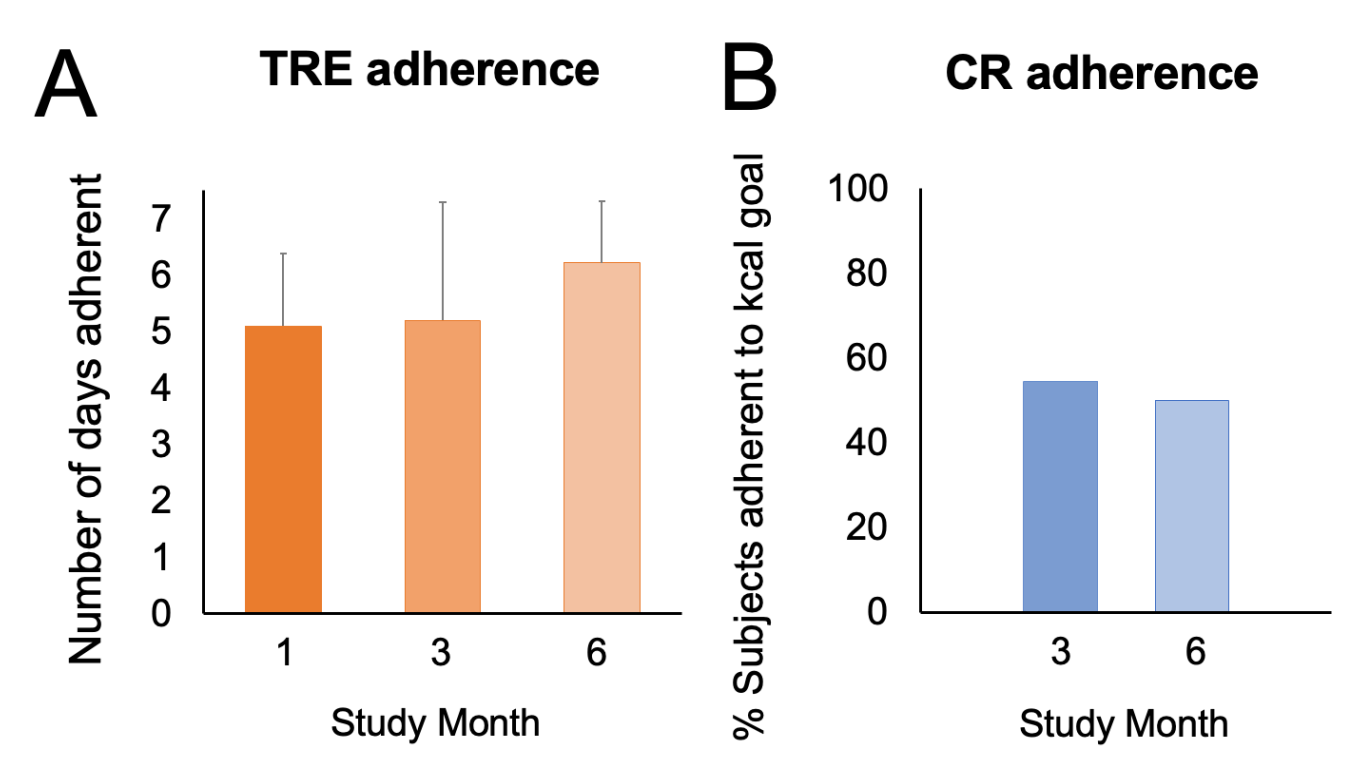
The level of supervision is important when interpreting the findings. Participants were not simply asked to change their eating schedules on their own. Their glucose levels were continuously monitored, and clinical staff could intervene when readings became concerning.
“Of course, this is just the first step,” Varady said. “Anyone making changes to their eating habits, especially those with diabetes, must work closely with their endocrinologist or healthcare provider to find a solution that works for them.”
The trial provides early evidence that restricting eating to a set daily window could help some adults with Type 1 diabetes improve HbA1c without increasing serious glucose-related events.
It does not show that the method is better for weight loss.
Neither time-restricted eating nor calorie restriction produced a statistically significant change in body weight compared with the control group after six months. Time-restricted eating also did not outperform calorie restriction for weight loss.
The small sample is another limitation. With only 32 participants, the results cannot establish how well the approach would work across a much larger population.
Varady hopes to conduct larger studies at multiple sites to determine whether the same pattern appears across a broader group of people.
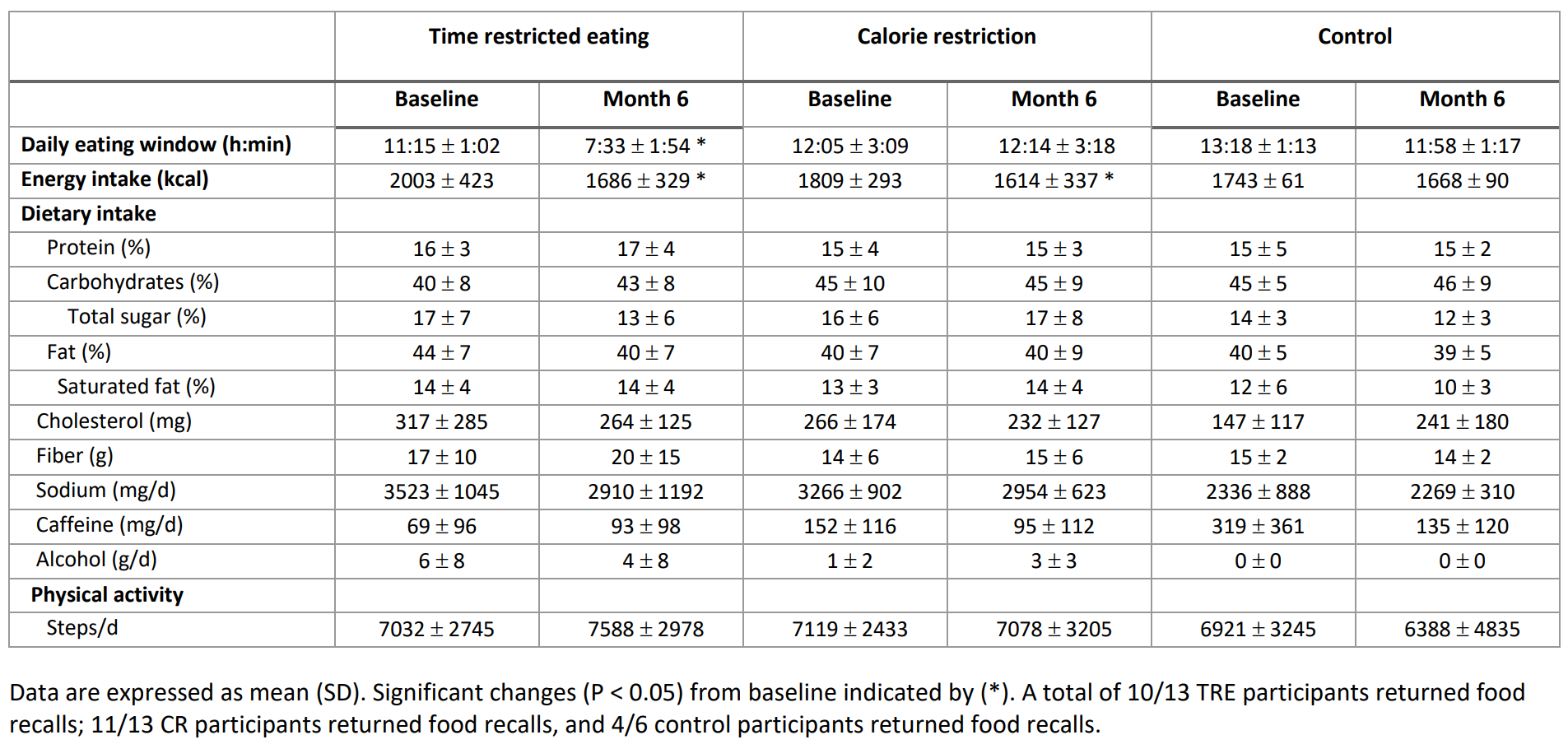
The findings could give clinicians another dietary strategy to investigate for adults with Type 1 diabetes who are also classified as obese.
Unlike calorie restriction, time-restricted eating changes when food is consumed rather than requiring people to continuously count calories. In this trial, that approach was associated with lower HbA1c compared with calorie restriction.
The results also offer an initial safety signal under intensive medical supervision. Continuous glucose monitoring, medication review and access to endocrinologists allowed the team to detect potentially dangerous changes and respond when necessary.
That means the findings support further clinical testing rather than unsupervised changes in eating behavior.
Larger, multisite studies could determine whether the reduction in HbA1c holds across more participants and whether similar safety results appear outside a small trial. For now, the research suggests that meal timing deserves closer attention as one possible way to improve blood sugar management in Type 1 diabetes.
These resources examine fasting, dietary strategies, glucose monitoring and weight management in Type 1 diabetes, helping place the findings within the broader evidence on nutrition and metabolic control.
The effects of low carbohydrate diets including intermittent fasting on body weight, glycaemia, and quality of life measures in adults with type 1 diabetes and overweight/obesity: a systematic review
This systematic review examines low-carbohydrate diets and intermittent fasting in adults with Type 1 diabetes and overweight or obesity. It found limited but generally encouraging evidence for weight and metabolic benefits, while emphasizing the need for larger randomized trials. (Nutrition, Metabolism and Cardiovascular Diseases, 2026)
Dietary Patterns for Weight and Glycemic Management in Persons With Type 1 Diabetes: A Meta-analysis of Clinical Trials
This meta-analysis of 12 studies involving 668 participants found no clear advantage for any single dietary pattern in randomized trials, highlighting how limited the evidence remains for choosing one diet to improve HbA1c or weight in Type 1 diabetes. (The Journal of Clinical Endocrinology & Metabolism, 2025)
Effects of different dietary patterns on glucose management in type 1 diabetes: a systematic review and meta-analysis of randomized controlled trials
Researchers analyzed 35 randomized trials and found evidence that some higher-fiber and carbohydrate-restricted diets improved measures of glucose control, while evidence for intermittent fasting remained limited and uncertain. (eClinicalMedicine, 2025)
Clinical potential of fasting in type 1 diabetes
This expert review focuses specifically on intermittent fasting and time-restricted eating in Type 1 diabetes, examining possible effects on HbA1c, body weight and safety risks such as hypoglycemia and diabetic ketoacidosis. (Trends in Endocrinology & Metabolism, 2024)
Obesity and Weight Management for the Prevention and Treatment of Diabetes: Standards of Care in Diabetes—2026
The American Diabetes Association’s current guidance addresses the growing problem of obesity among people with Type 1 diabetes and reviews evidence-based approaches to weight management, emphasizing individualized treatment and shared decision-making. (Diabetes Care, 2026)
Research findings are available online in the journal Diabetes Care.
The original story “Time-restricted eating shows promise for blood sugar control in type 1 diabetes” is published in The Brighter Side of News.
Like these kind of feel good stories? Get The Brighter Side of News’ newsletter.
The post Time-restricted eating shows promise for blood sugar control in type 1 diabetes appeared first on The Brighter Side of News.


Leave a comment
You must be logged in to post a comment.