A new medical breakthrough may soon change how doctors treat chronic pain and neurological conditions. Researchers from New York University Abu Dhabi, working with Cleveland Clinic Abu Dhabi, have developed a device so small it can be injected through a needle, yet powerful enough to control nerve activity inside the body.
The study introduces a new approach to therapy that avoids surgery, wires, and batteries. Instead, it offers a simpler, less invasive way to treat conditions that affect how the nervous system functions.
Chronic pain and movement disorders often stem from abnormal nerve signals. Doctors have long used electrical stimulation to manage these conditions. These treatments can block pain, restore movement, or regulate organ function.
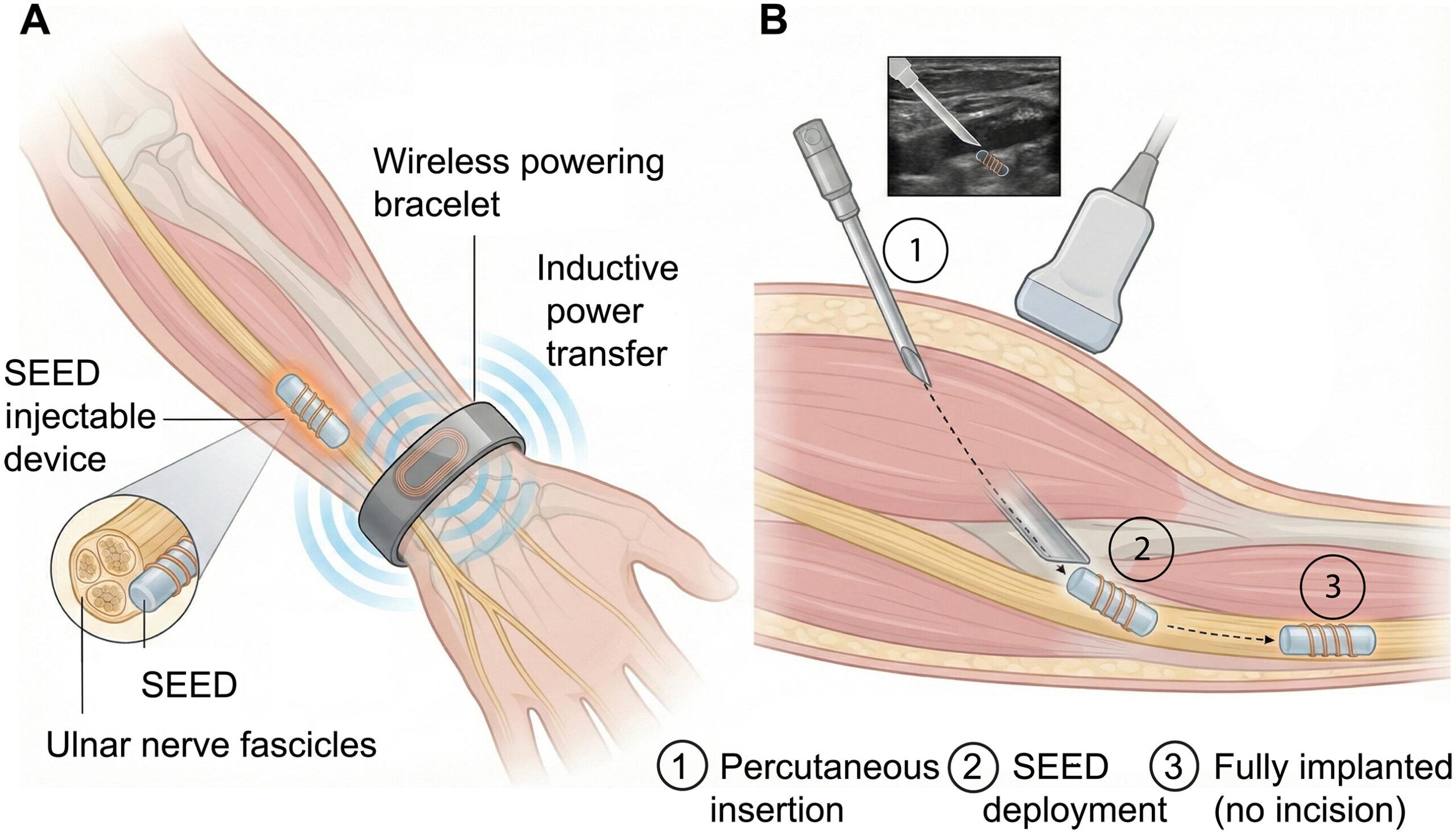
However, existing methods come with trade-offs. Noninvasive devices are easy to use but struggle to reach deep nerves. Implanted systems can target those nerves, but they require surgery and carry risks.
Prof. Khalil Ramadi, senior author of the study, described the change clearly. “By creating a device that can be injected rather than surgically implanted, we are making these therapies simpler, safer, and more accessible, while still maintaining precise control over nerve activity,” he said.
This new device aims to bridge that gap. It combines the ease of injection with the precision of implanted systems.
The device is about the size of a small seed. Doctors can deliver it using a standard needle, placing it near a target nerve without surgery.
Once inside the body, the device begins working when powered from outside. It sends small electrical pulses to nearby nerves, influencing how they behave.
Despite its size, the device contains key components. It includes a tiny coil that receives energy wirelessly, electrodes that deliver signals, and a protective outer shell.
The shell keeps the device stable and shields it from the body’s environment. It also helps ensure that electrical signals are delivered in a controlled way.
This compact design allows the device to be both effective and minimally invasive.
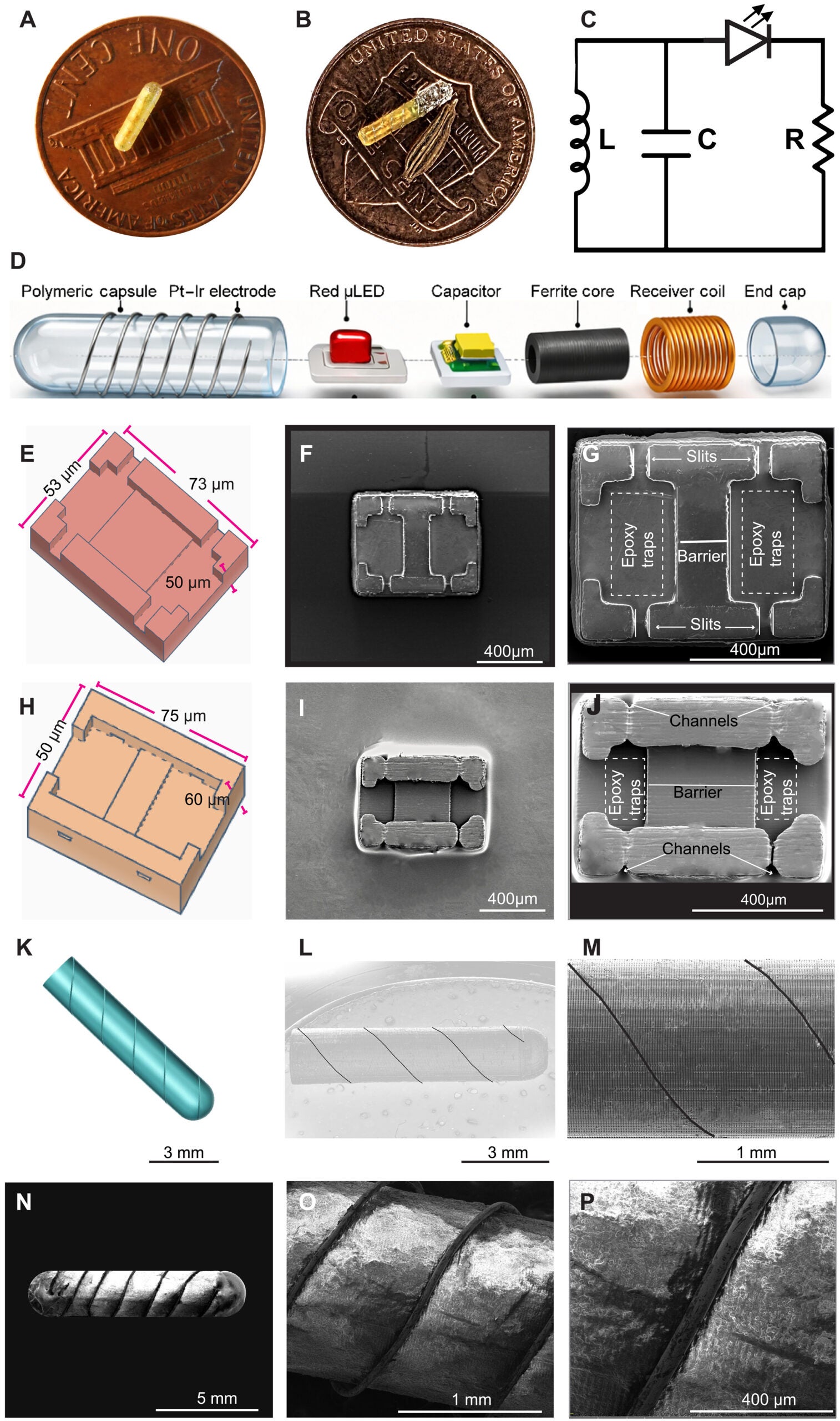
One of the most important features is how the device is powered. It does not contain a battery. Instead, it receives energy wirelessly from an external source.
A coil placed outside the body generates a magnetic field. The implanted device captures this energy and converts it into electrical signals.
This approach removes the need for bulky components. It also eliminates concerns about battery life or replacement.
Doctors or patients can adjust the device in real time. By changing the external signal, they can control the strength and timing of nerve stimulation.
This level of control allows treatments to be tailored to each individual.
Injectable devices face a unique challenge. Once placed, their exact position cannot be perfectly controlled.
To address this, researchers tested different designs to find one that works effectively in any orientation. They used computer simulations to study how electrical fields spread around the device.
The final design uses a spiral arrangement of electrodes. This pattern produces a focused electrical field along the nerve.
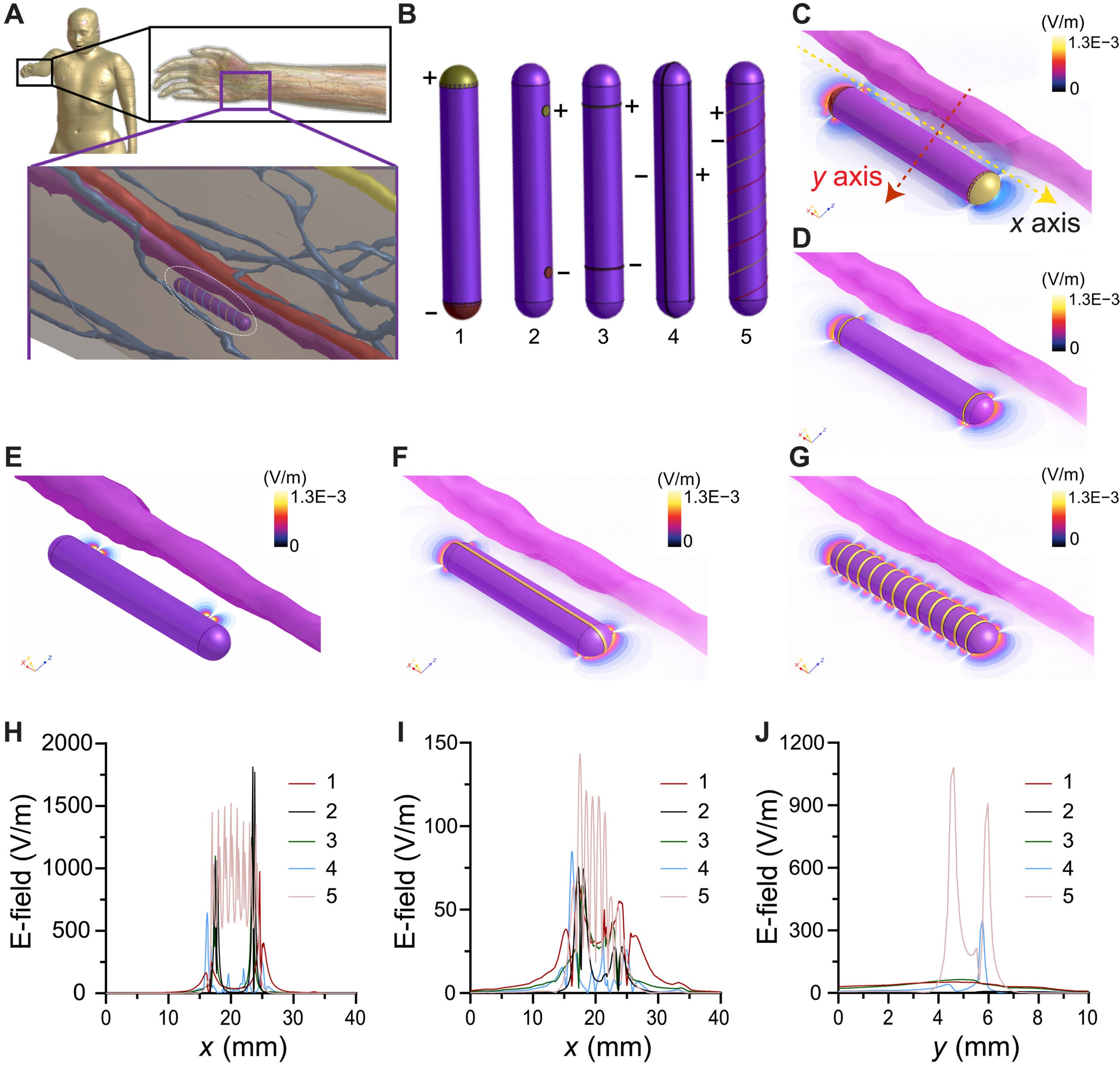
Compared to other designs, it delivers stronger signals where they are needed while reducing unwanted effects in nearby tissue.
This ensures that the device remains effective even when placement is not exact.
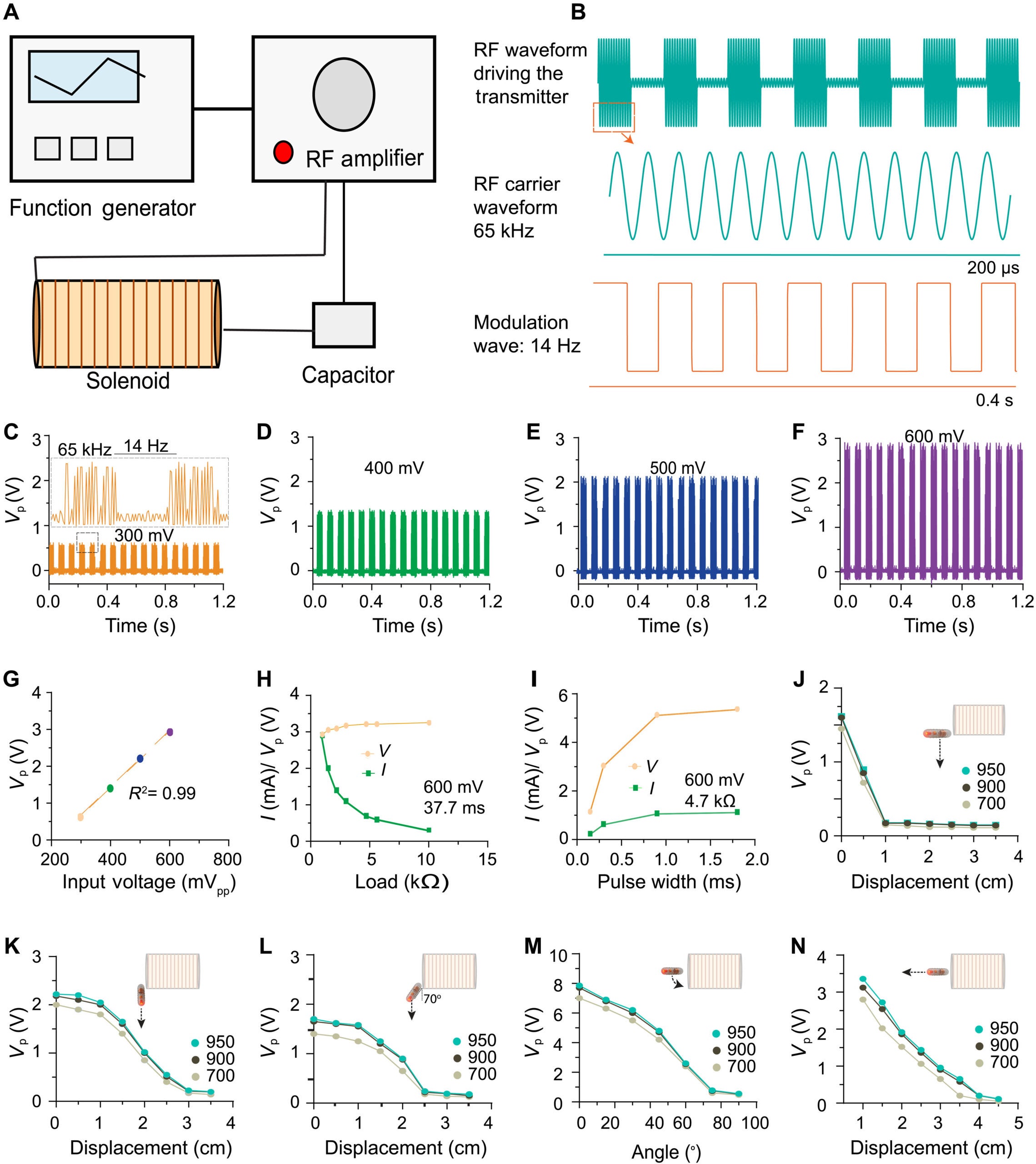
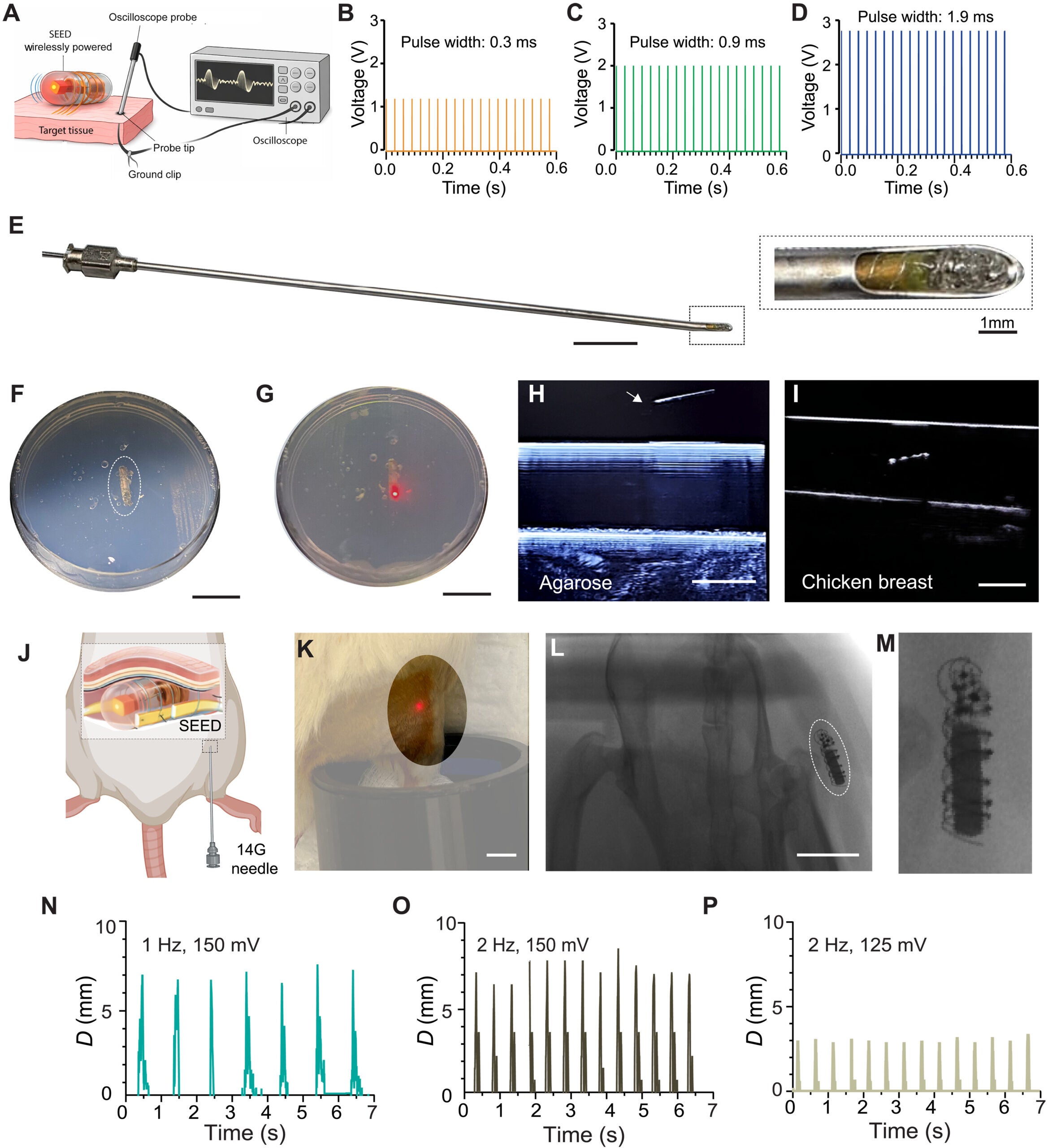
In controlled experiments, the device showed reliable performance. Researchers tested how it responds to different levels of input energy.
As input increased, the device delivered stronger electrical signals. It also maintained stable output across a range of conditions.
The system allowed precise control of pulse timing and intensity. This is critical for treating different conditions, which may require different stimulation patterns.
Tests on biological tissue confirmed that the device works in environments similar to the human body. It delivered safe levels of electrical charge without damaging tissue.
These results suggest that the device can operate safely and effectively in real-world settings.
Accurate placement is essential for nerve stimulation. The device is designed to work with common imaging tools.
Doctors can track it using ultrasound during injection. They can also confirm its position using CT scans after placement.
This visibility helps ensure that the device is located near the target nerve.
It also allows doctors to monitor the device over time without invasive procedures.
These features make the technology practical for clinical use.
Researchers tested the device in live animals to evaluate its performance. They placed it near a major nerve and powered it wirelessly.
The results were clear. The device activated the nerve and produced controlled muscle movements.
When researchers increased the signal strength, the movements became stronger. When they adjusted timing, the response changed accordingly.
This demonstrated precise control over nerve activity in a living system.
The device performed consistently, showing that it can function under real biological conditions.
Dr. Mohamed Elsherif, first author of the study, highlighted the broader impact. “It opens the door to treatments that are both effective and easy to deliver, which could significantly improve patient care,” he said.
The technology represents a new direction for bioelectronics. Instead of large implants, it uses small, simple devices powered from outside the body.
This reduces risks associated with surgery. It also lowers recovery time and makes treatment more accessible.
The approach could be especially valuable for patients who cannot undergo major procedures.
Despite the promise, some challenges remain. Researchers are working to improve long-term stability and ensure consistent performance over time.
They also aim to refine how the device stays in place after injection. Small shifts could affect how it interacts with nerves.
Future versions may include features that help anchor the device more securely.
Another area of focus is improving external power systems. Smaller, wearable devices could make the technology easier to use in daily life.
These developments will be important for bringing the technology into widespread use.
This research points to a future where advanced treatments do not require major procedures. Instead, therapies could be delivered quickly and safely with minimal disruption.
By combining wireless power, precise control, and simple delivery, the device offers a new way to treat complex conditions.
It also reflects a broader trend in medicine. Researchers are moving toward treatments that are both effective and easy to access.
For patients living with chronic pain or movement disorders, this approach could offer new hope.
This technology could significantly improve how nerve-related conditions are treated. By eliminating the need for surgery, it reduces risks, recovery time, and healthcare costs. Patients may receive treatment more quickly and with less discomfort.
The ability to adjust stimulation in real time allows for personalized care. Doctors can tailor treatments to each patient’s needs, improving outcomes and reducing side effects.
The device could expand access to advanced therapies. Patients who cannot undergo surgery may still benefit from precise nerve stimulation. This is especially important for older adults or those with complex medical conditions.
In the long term, this approach may lead to new treatments for a wide range of disorders. These include chronic pain, paralysis, and neurological diseases. It may also support research into how the nervous system functions.
By making advanced therapies simpler and safer, this innovation has the potential to transform patient care and improve quality of life for many people.
Research findings are available online in the journal Science Advances.
The original story “Tiny injectable device could transform treatment for chronic pain and nerve disorders” is published in The Brighter Side of News.
Like these kind of feel good stories? Get The Brighter Side of News’ newsletter.
The post Tiny injectable device could transform treatment for chronic pain and nerve disorders appeared first on The Brighter Side of News.


Leave a comment
You must be logged in to post a comment.