Sleep has long been tied to memory, mood, and heart health. A new analysis suggests its reach may be even broader, touching the pace of aging across much of the body.
In a study led by researchers at Columbia University Vagelos College of Physicians and Surgeons, both too little sleep and too much sleep were linked to signs of faster biological aging in several organs, including the brain, lungs, liver, immune system, and pancreas. Importantly, the pattern held across different kinds of biological data, from blood-based proteins and metabolites to MRI scans.
“Previous studies have found that sleep is largely linked to aging and the pathological burden of the brain. Our study goes further and shows that too little and too much sleep are associated with faster aging in nearly every organ. This supports the idea that sleep is important in maintaining organ health within a coordinated brain-body network, including metabolic balance and a healthy immune system,” said Junhao Wen, assistant professor of radiology at Columbia and the study’s leader.
The findings were published in Nature.
At the center of the work are so-called aging clocks, machine learning tools that estimate whether a person’s biology looks older or younger than expected for their age. Most such clocks aim to summarize aging across the whole body. However, Wen’s group instead built clocks for specific organs. They hoped to capture a more detailed picture of how different systems wear down over time.
“Everyone is excited by these aging clocks and their ability to predict disease and mortality risk,” Wen said. “But to me, the more exciting question is, can we link aging clocks to a lifestyle factor that can be modified in time to slow aging?”
To explore that question, the team turned to sleep duration. Using UK Biobank data from roughly half a million participants, the researchers examined self-reported sleep and compared it with 23 biological aging clocks spanning 17 organ systems. Those clocks were built from several kinds of data, including organ-specific proteins, metabolites, and structural imaging.
The result was not a straight line. It was a U-shape.
People who slept less than 6 hours and those who slept more than 8 hours tended to show signs of faster biological aging. By contrast, the lowest aging burden appeared among people sleeping in a narrower middle range. Across the nine clocks that showed significant nonlinear patterns, the sample minimum values ranged from 6.5 to 7.8 hours in women. In men, the range was 6.4 to 7.7 hours.
That does not prove that sleep duration itself is directly causing organs to age faster or slower. The researchers are careful on that point. Nevertheless, what it does show is that unusually short and unusually long sleep track with poorer biological aging profiles across much of the body.
The strongest pattern among blood-protein clocks appeared in the brain. Similar U-shaped associations also turned up in proteomic clocks for the lungs, liver, immune system, and skin. In metabolomics, the endocrine system stood out. Meanwhile, in MRI-based measures, the brain showed the clearest signal, with additional associations in adipose tissue and the pancreas.
“In the liver, for example, we have an aging clock built with protein data, an aging clock of metabolic data, and an aging clock of imaging data,” Wen said. “This allows us to see whether sleep is distinctively associated with aging clocks derived from multiple omics and molecular layers.”
The same broad pattern appeared when the team looked beyond aging clocks to disease and mortality.
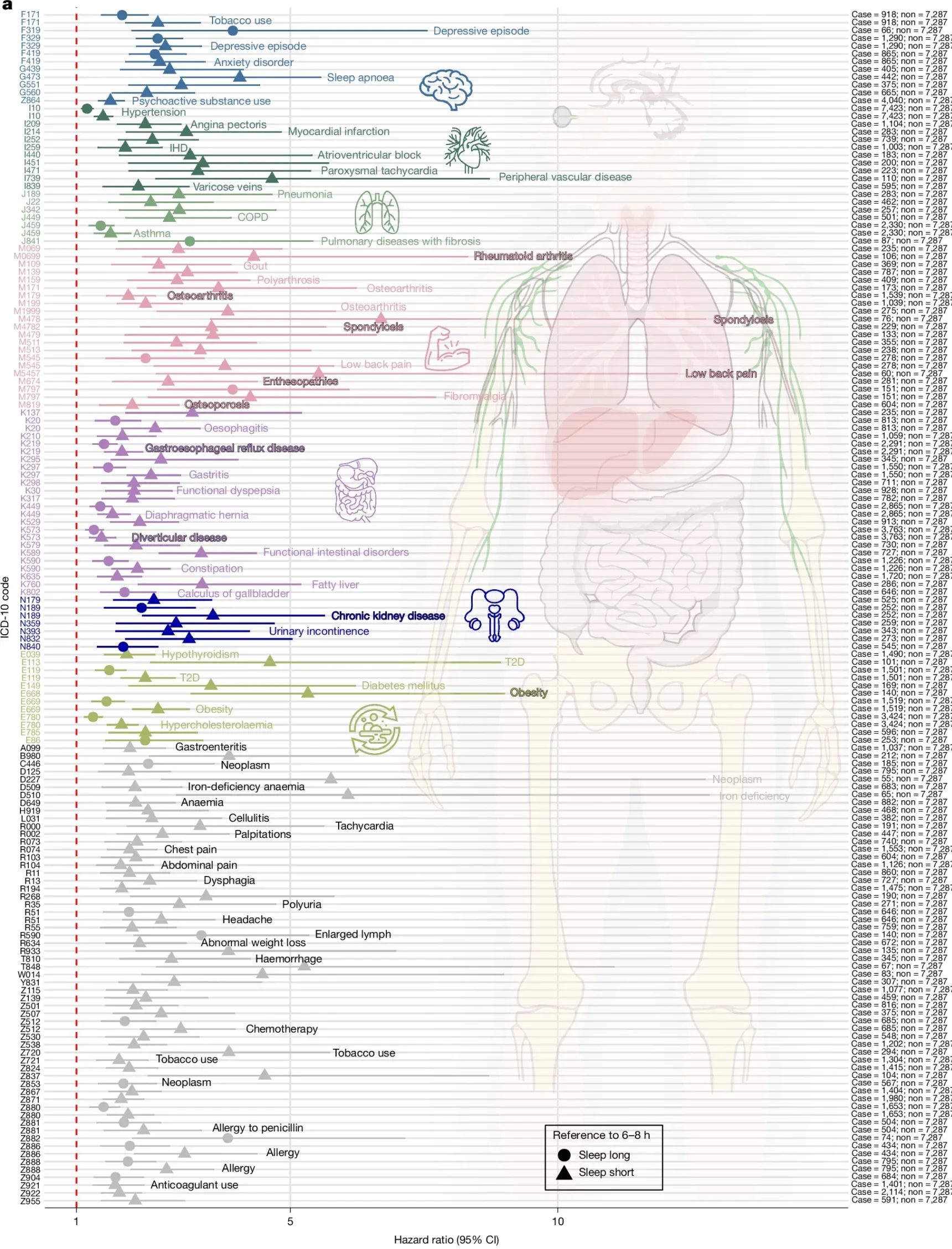
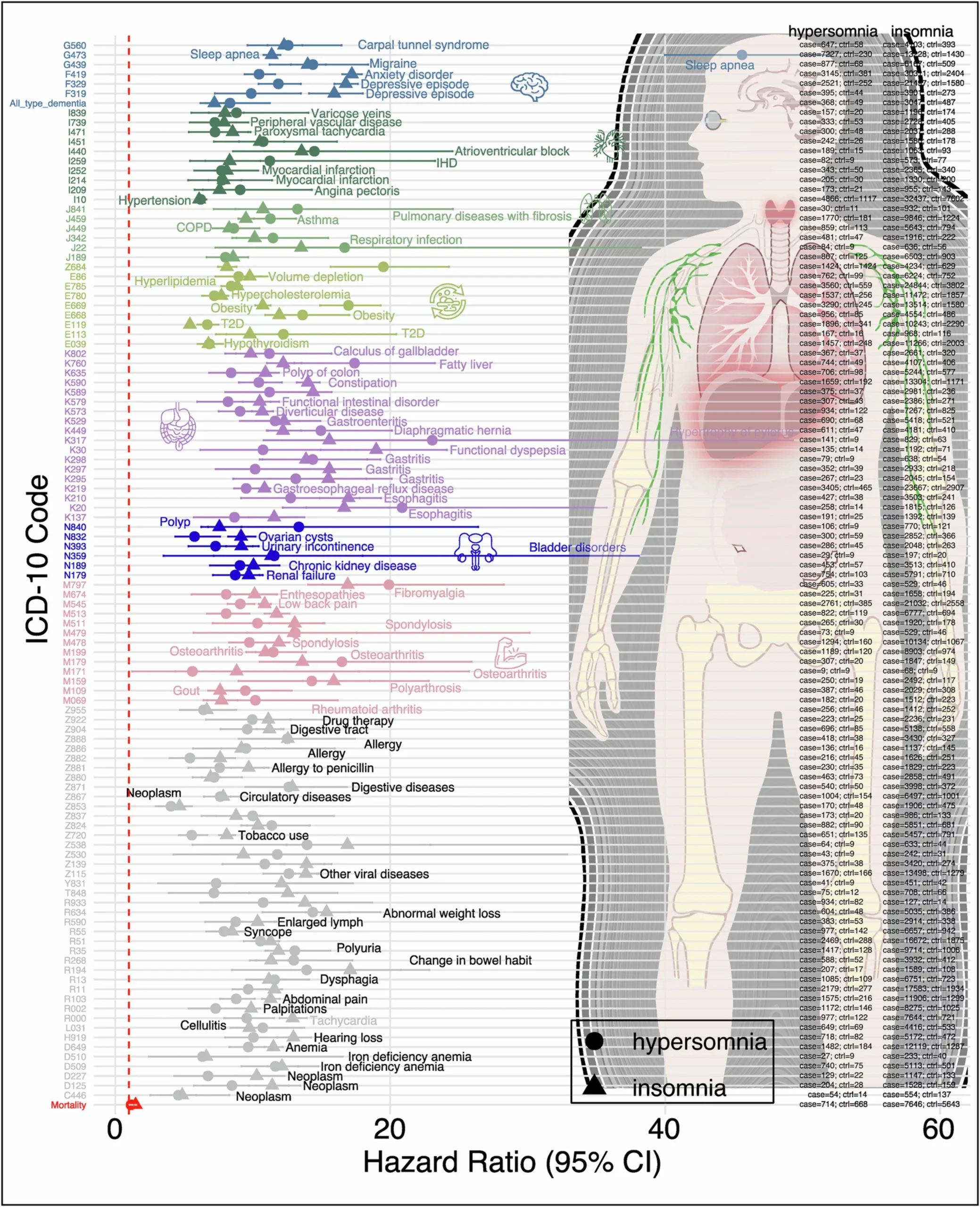
Short sleep was linked to a long list of later health problems in the UK Biobank data, including depressive episodes, anxiety disorders, obesity, type 2 diabetes, hyperlipidaemia, hypertension, ischemic heart disease, and arrhythmias. Both short and long sleep were tied to chronic obstructive pulmonary disease and asthma. There were also links to digestive conditions such as gastritis, gastroesophageal reflux disease, and functional intestinal disorders.
For all-cause mortality, the pattern was also unfavorable at both ends. Compared with people sleeping 6 to 8 hours, short sleep was associated with a 50 percent higher risk of death from any cause. In contrast, long sleep was associated with a 40 percent higher risk.
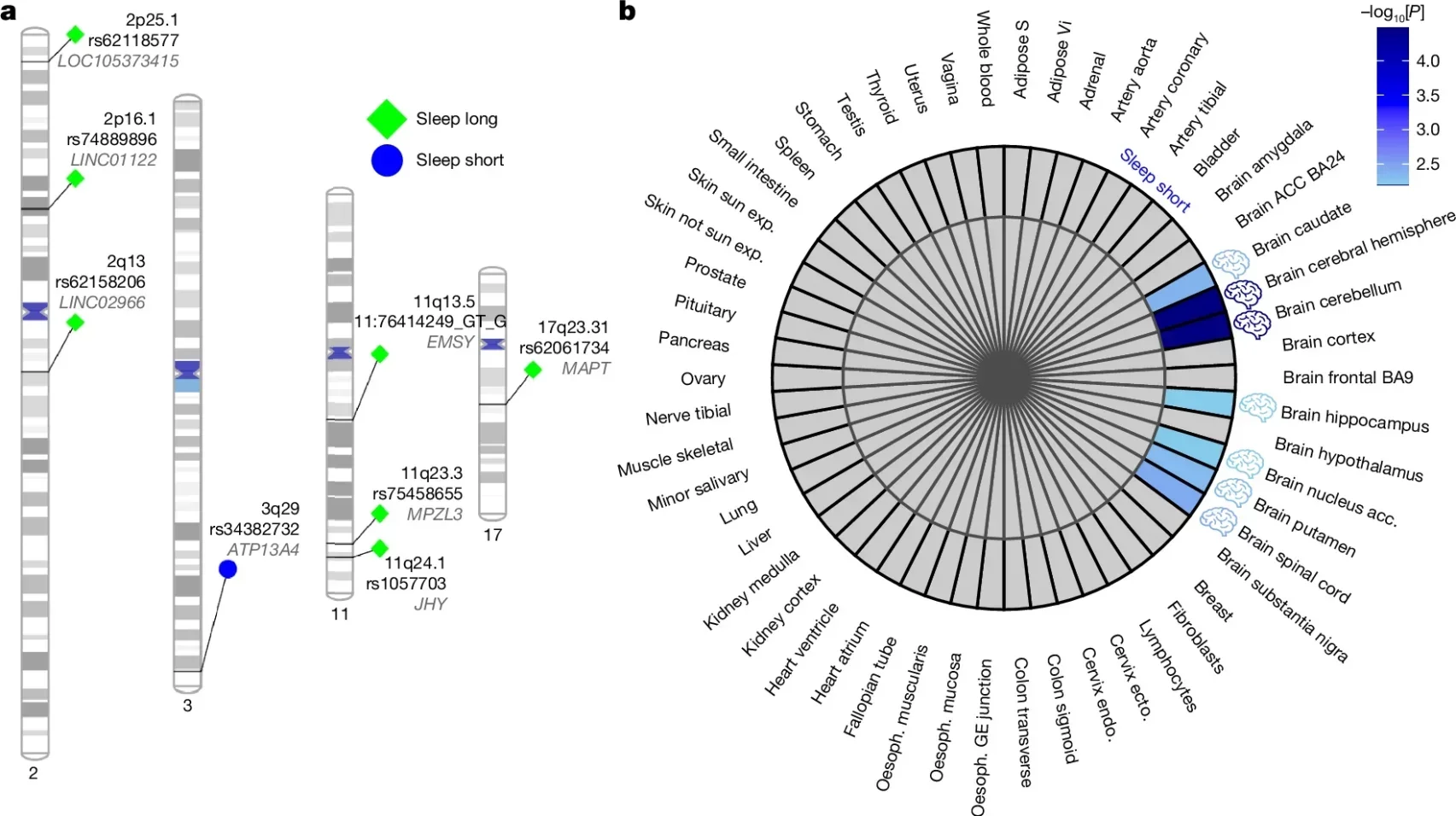
The genetic analyses pointed in the same general direction, though not always in the same way. Short sleep showed broader genetic correlations with cardiovascular, metabolic, psychiatric, musculoskeletal, pulmonary, and gastrointestinal disorders. Long sleep had a narrower profile and was more closely tied to brain-related traits such as major depressive disorder, schizophrenia, bipolar disorder, ADHD, alcohol dependence, and migraine.
That split hints that short and long sleep may not be two versions of the same problem. They may reflect different biological routes into illness.
“The broad brain-body pattern is important because it tells us that sleep duration is a deeply embedded part of our entire physiology, with far-reaching implications across the body,” Wen said.
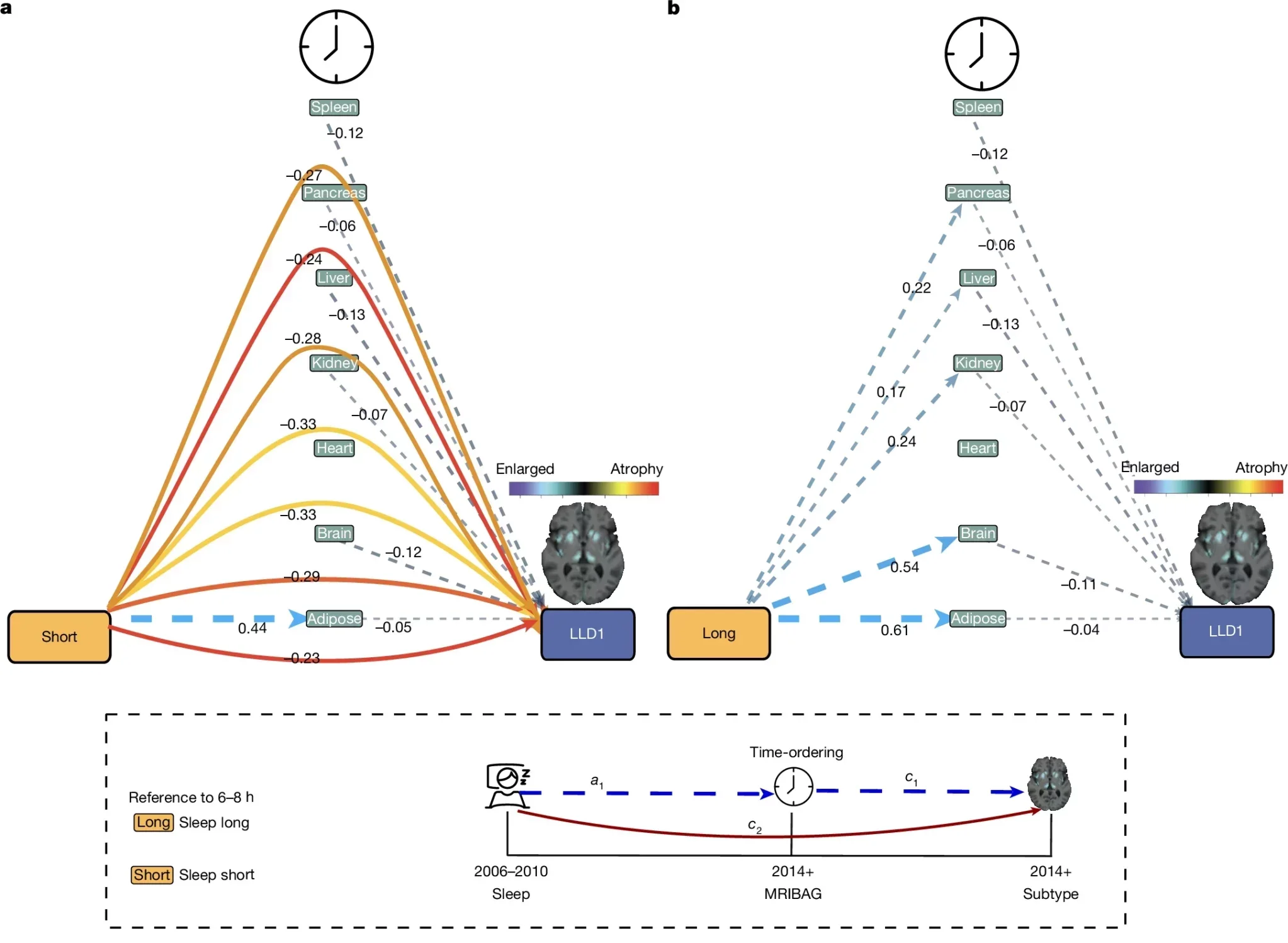
The researchers took a closer look at one condition in particular, late-life depression. Here, the organ-specific clocks offered a way to probe how sleep might connect to disease through different tissues.
Their mediation analyses suggested that short sleep may act more directly on late-life depression. Long sleep, by contrast, appeared to be linked through indirect pathways involving aging in the brain and adipose tissue.
“This has a strong implication for future sleep management and future therapeutics,” Wen said. “Our study suggests there may be different biological pathways between long and short sleepers that lead to the same outcome, late-life depression, and we shouldn’t treat them the same way.”
That distinction matters because long sleep is often harder to interpret. It may reflect compensation, latent disease, or broader physiological strain rather than a simple harmful exposure on its own. Therefore, the authors argue that this is one reason long sleep should not automatically be treated as the mirror image of short sleep.
The study also found hints of sex differences in some of the aging clocks, though the general U-shaped pattern appeared in both men and women.
The work is large and ambitious, but it has limits. Sleep duration was self-reported rather than measured with devices such as actigraphy or polysomnography. The main analyses were cross-sectional, which means they cannot settle cause and effect. Additionally, proteomic and metabolomic signals can shift with illness, diet, medication, and time, making single snapshots less stable than repeated measures would be.
The authors also note that the sample was made up mostly of people of European ancestry, which limits how widely the findings can be applied. And while some sensitivity analyses pointed in the same direction, the results still need outside validation in other cohorts.
One more caution is built into the U-shape itself. Long sleep may sometimes be a marker of underlying illness rather than a driver of it. The team used additional analyses to test reverse causality and did not find evidence for a widespread effect of disease causing sleep disturbances. Still, they do not rule out bidirectional relationships.
The findings do not support a simple rule that everyone should sleep the exact same number of hours. But they do reinforce the idea that sleep duration can serve as a meaningful health signal, not just for the brain, but for organ systems throughout the body.
For clinicians, that may eventually make sleep patterns more useful in identifying people at risk for faster biological aging or age-related disease. For researchers, the study offers a framework for tracking how sleep connects to aging across different tissues and molecular layers.
And for patients, it adds weight to the view that chronically sleeping too little, or consistently sleeping far longer than average, may be worth discussing as part of overall health, especially when other symptoms are present.
Research findings are available online in the journal Nature.
The original story “Too much and too little sleep linked to faster aging” is published in The Brighter Side of News.
Like these kind of feel good stories? Get The Brighter Side of News’ newsletter.
The post Too much and too little sleep linked to faster aging appeared first on The Brighter Side of News.

