A gentle electric field may one day help fight one of the most aggressive forms of breast cancer. New research from The Ohio State University Comprehensive Cancer Center, Arthur G. James Cancer Hospital and Richard J. Solove Research Institute shows that low-intensity electric fields reduced tumor growth and spread in preclinical models of triple-negative breast cancer.
The findings point to a possible drug-free treatment approach. The technology is still early and has not yet been proven in patients. But in mouse models, it slowed tumors, reduced lung metastases and changed the tumor environment in ways that may help the immune system respond.
Triple-negative breast cancer remains especially difficult to treat. It lacks the hormone or protein targets used in many modern breast cancer therapies. It also carries a higher risk of recurrence and often spreads to the lungs or brain.
The new approach uses low-intensity electric fields, which could eventually come from a wearable device outside the body. Unlike some existing electric-field treatments, this method does not require contact electrodes placed on the skin.
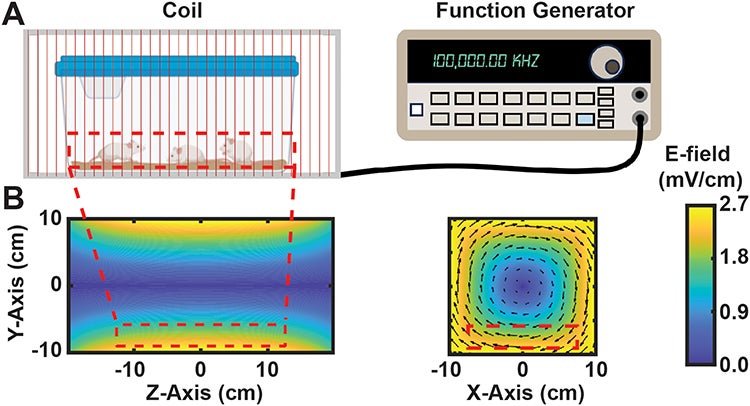
“When people hear ‘electric fields,’ they may picture something like being shocked or zapped. That is not what we are talking about. The current does not run through the body. Instead, a wearable device can generate low-intensity fields that interact with cancer cells in a controlled way,” said Jonathan Song, PhD, co-corresponding author of the study.
Song is a researcher with the OSUCCC, James Cancer Biology Research Program. He also co-directs the Center for Cancer Engineering-CURES and teaches mechanical and aerospace engineering at Ohio State College of Engineering.
The treatment uses induced electric fields, or iEFs. These fields come from low-intensity, changing magnetic fields that create very weak electric fields inside tissue.
Triple-negative breast cancer makes up about 10% to 15% of all reported breast cancers. Yet it causes deep concern because it often grows and spreads quickly.
Many breast cancers can be treated with drugs that target estrogen receptors, progesterone receptors or HER2 proteins. Triple-negative tumors lack those markers. That leaves doctors with fewer targeted choices, and chemotherapy remains important for many patients.
As the disease advances, the area around the tumor can become immunosuppressive. That means immune cells that should attack cancer may become blocked, exhausted or redirected.
Researchers often describe this as a “cold” immune landscape. These tumors tend to have fewer active cancer-fighting T cells and more suppressive immune cells.

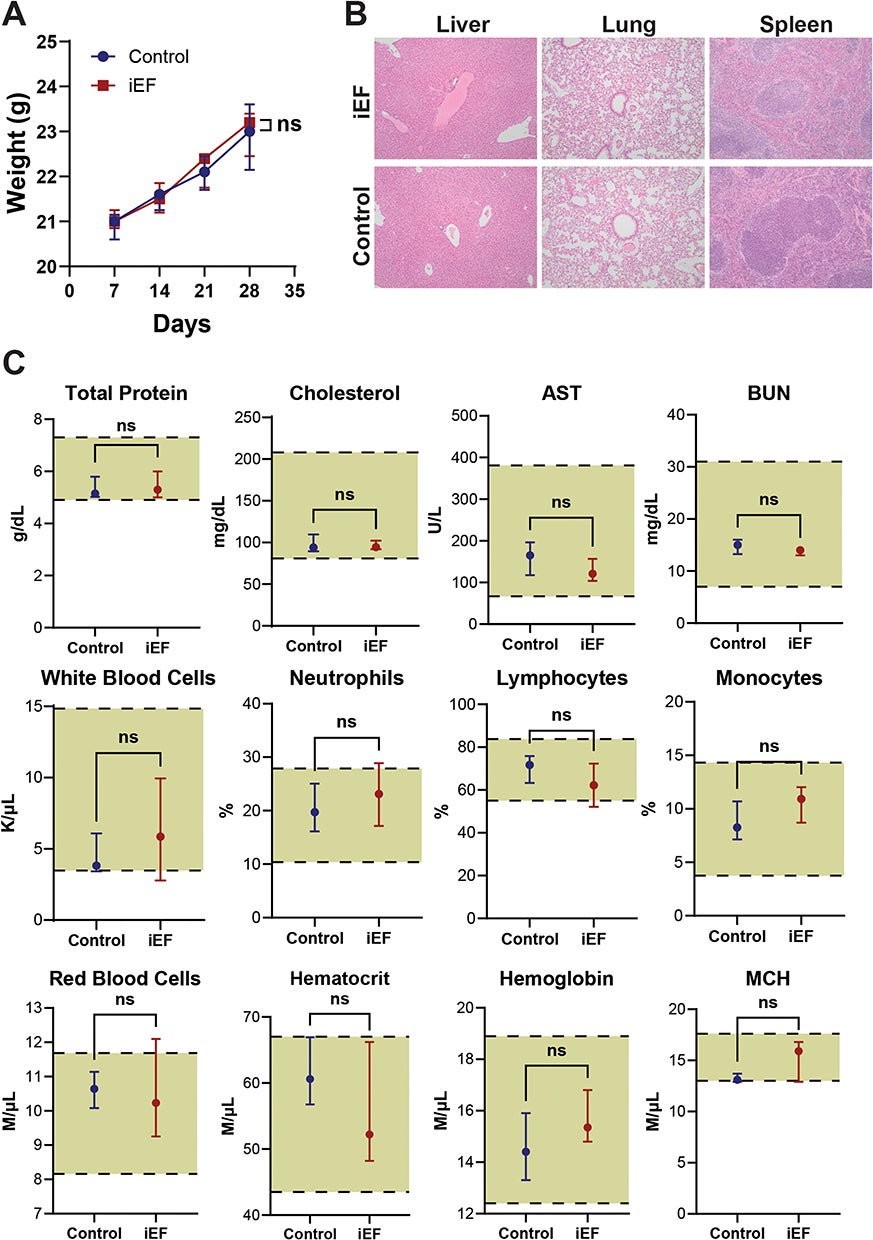
Before testing iEFs against cancer, the team studied healthy mice. They exposed non-tumor-bearing female BALB/c mice to treatment or sham conditions for 30 days.
The treated mice showed no major changes in body weight. Researchers also saw no clear behavioral differences, such as hunching or aggression.
The team examined organs, including the liver, lungs and spleen. Tissue studies showed no significant structural or disease-related changes compared with controls.
Blood counts and blood chemistry also showed no major harmful differences. That early safety result allowed researchers to move into tumor studies.
The main experiment used the 4T1 mouse breast tumor model. Scientists often use this model to study triple-negative breast cancer because it spreads aggressively.
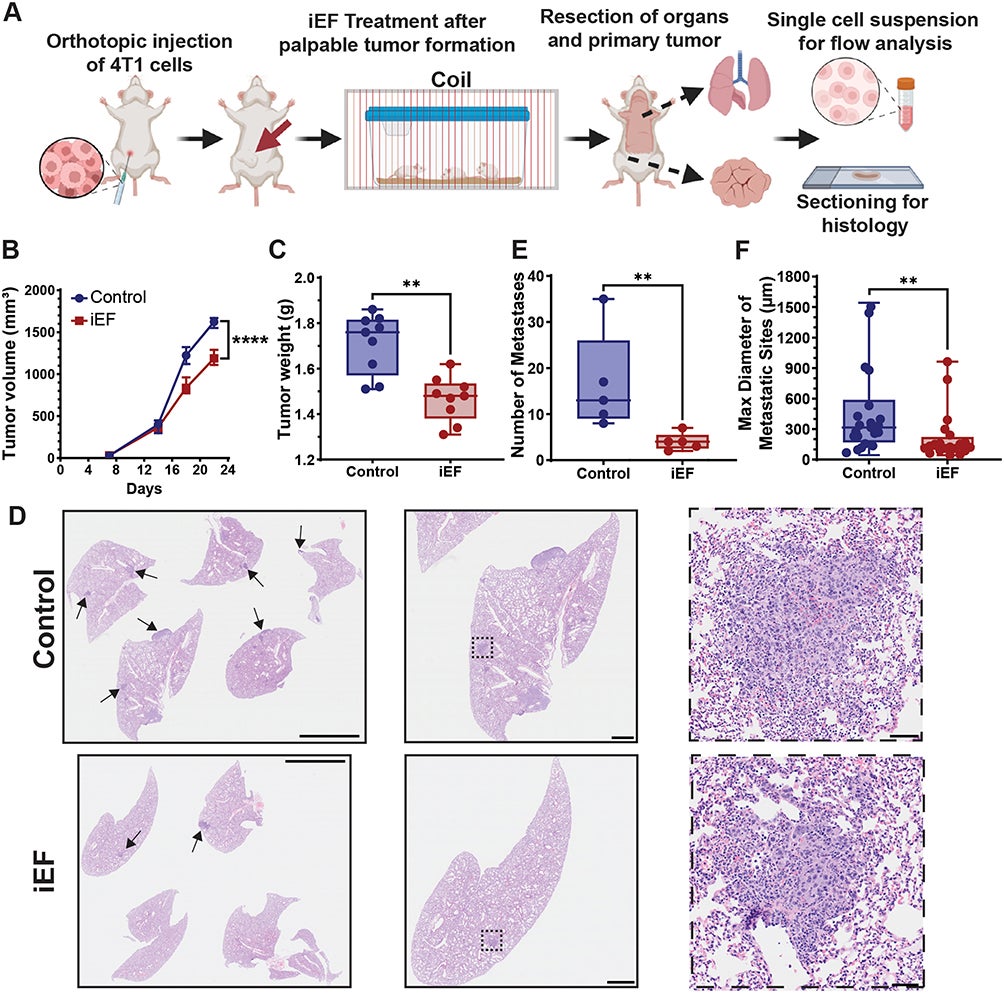
Researchers injected 100,000 4T1 cancer cells into the mammary fat pad of female BALB/c mice. Once tumors could be felt, mice entered either the treatment group or a sham control group.
The treated animals showed significantly smaller tumors. Tumor weights at the end of the experiment were also lower in the iEF group.
The findings suggest that the electric fields affected several cancer-related processes. These included how cancer cells move, spread and use energy.
Triple-negative breast cancer becomes especially dangerous when it spreads. In this study, researchers looked closely at the lungs, a common site of metastasis in the 4T1 model.
They stained lung tissue and counted metastatic sites in a blinded review. That means the person counting did not know which mice received treatment.
The treated mice had significantly fewer lung metastases than controls. The lung lesions that did appear were also smaller.
This result matters because reducing spread can change the course of aggressive cancer. In patients, metastasis often makes treatment far more difficult.
The researchers also studied a process that helps cancer cells invade and migrate. Scientists call it epithelial-to-mesenchymal transition, or EMT.
During this process, cancer cells become more mobile and better able to leave the original tumor. One signal of EMT involves lower E-cadherin and higher N-cadherin.
In this study, iEF treatment increased E-cadherin and reduced N-cadherin. That pattern suggests the treatment may help keep cancer cells in a less invasive state.
This finding fits earlier cell studies. Previous work showed that iEFs reduced cancer cell migration and disrupted structures that help cells move.
One of the most striking findings involved the immune system. The electric fields did not appear to act only on cancer cells.
“One unexpected finding was that these electric fields did not appear to act only on cancer cells. They also seemed to change the area around the tumor in a way that may help the body recognize and fight cancer,” Song said.
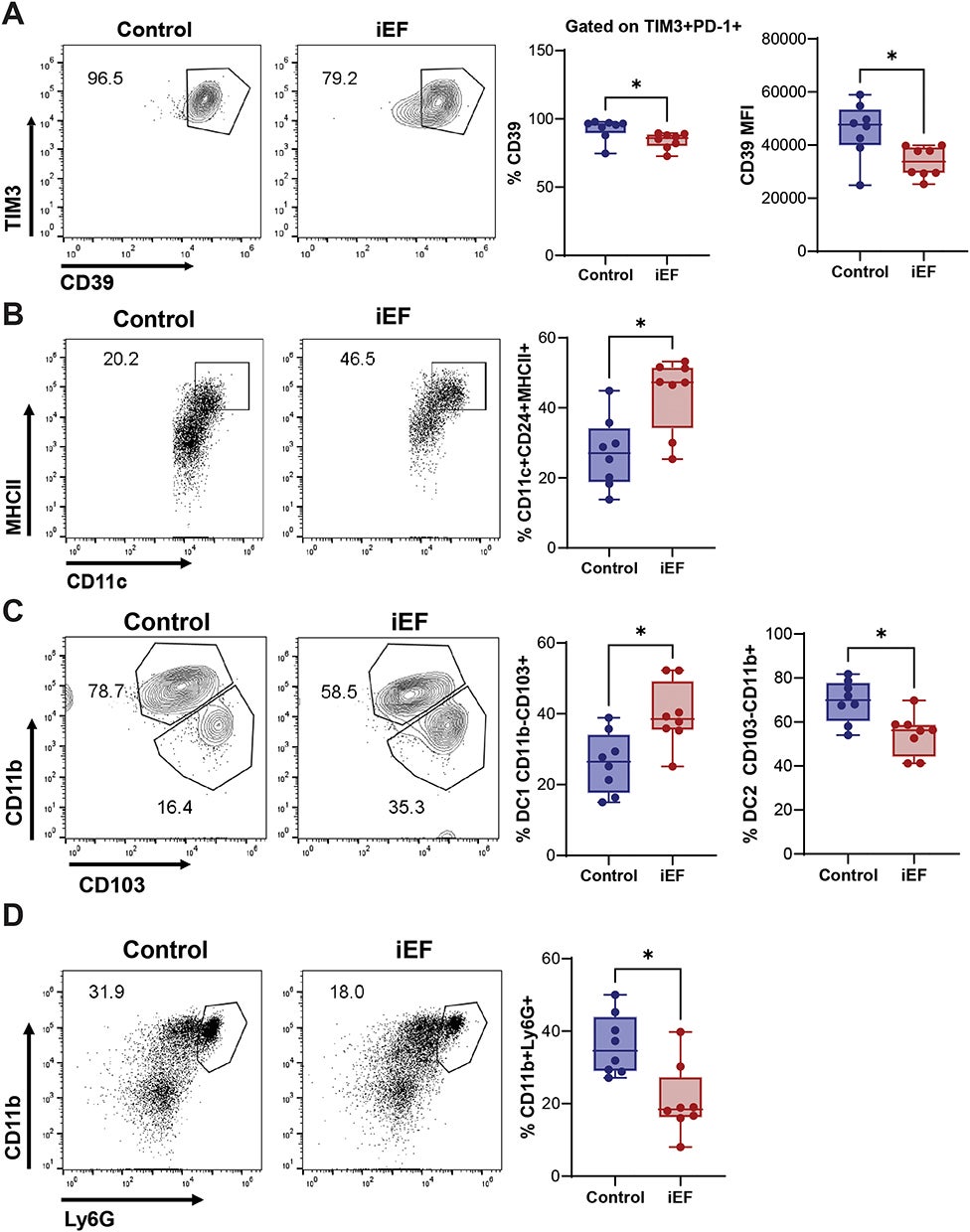
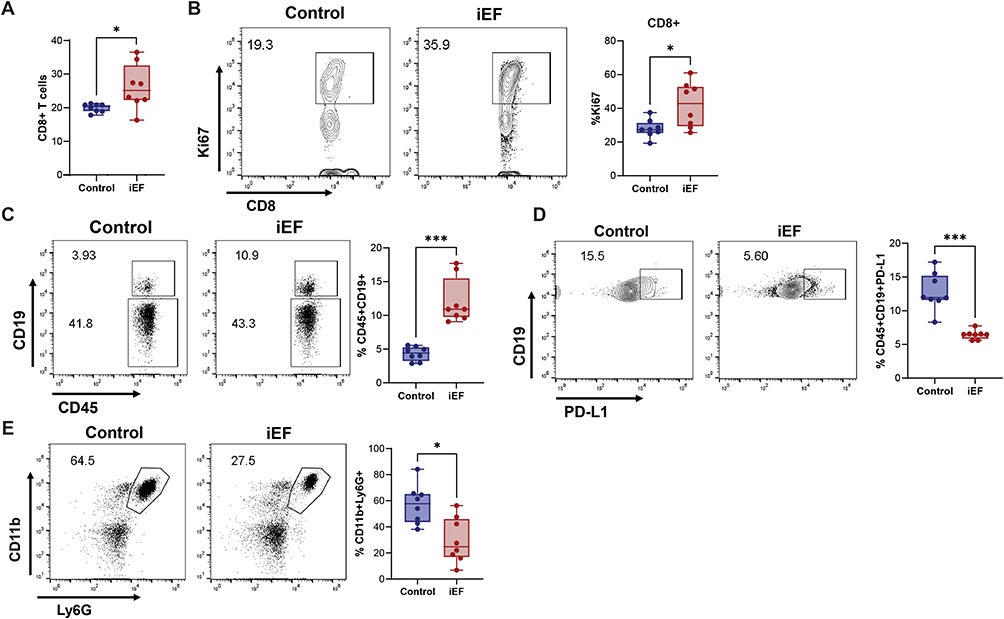
In primary tumors, the treatment reduced signals linked to exhausted CD8-positive T cells. These T cells help kill cancer cells, but exhaustion makes them less effective.
The treatment also increased certain dendritic cells. These cells help show cancer-related signals to T cells, which can guide a stronger immune response.
The therapy also changed immune patterns in the lungs. Treated mice had more CD8-positive T cells in lung tissue. These cells also showed signs of active growth.
At the same time, the treatment reduced suppressive granulocytic myeloid cells. These cells can help create conditions that allow cancer cells to survive and spread.
The researchers also found lower PD-L1 expression on B cells in the lungs. PD-L1 can weaken T cell activity, which may help cancer evade immune attack.
Together, these changes suggest that iEF treatment may make both tumors and metastatic sites less friendly to cancer.
The current findings come from preclinical models, not human patients. That means the treatment still needs much more testing before doctors know whether it can help people.
OSUCCC, James researchers partnered with EMBioSys, Inc. to develop a wearable investigational device. The device will be tested in an upcoming National Institutes of Health-sponsored human clinical trial.
“This technology is still in an early stage, and the next step is clinical testing. But the idea that a wearable, low-powered device could one day help treat breast cancer as part of a patient’s daily life is very compelling,” Song said.
Researchers still need to study dose, treatment schedule and long-term safety. They also need to learn whether the method works best alone or with chemotherapy or immunotherapy.
This research could open a new path for treating aggressive cancers without relying only on drugs. If future human trials support the findings, low-powered wearable devices may one day help slow tumor growth as part of daily care.
The approach could also improve cancer immunotherapy research. By changing the tumor environment, iEFs may help turn cold tumors into more active immune targets. That would matter for cancers that resist current immune-based treatments.
The technology may benefit patients because it is noninvasive and designed for external use. A wearable device could become easier to tolerate than some traditional treatments, though human testing must confirm safety and benefit.
More broadly, the study shows how engineering and cancer biology can work together. Physical forces, not only drugs, may help reshape cancer behavior. That insight could inspire new treatments for other hard-to-treat tumors.
These resources provide current clinical, biological and technological context for understanding electric-field therapies and the immune environment of triple-negative breast cancer.
Epigenetic modulations in triple-negative breast cancer: Therapeutic implications for tumor microenvironment: Reviews molecular mechanisms that influence the tumor microenvironment, treatment resistance and potential therapeutic targets in triple-negative breast cancer. (Pharmacological Research, 2024)
Triple-Negative Breast Cancer Treatment: Explains current treatment approaches for early, metastatic and recurrent triple-negative breast cancer, including chemotherapy, immunotherapy and targeted therapies. (National Cancer Institute, 2025)
Electric fields to enhance drug delivery to non-superficial tumors: Reviews emerging ways electric fields may influence cancer treatment, including tumor treating fields, electrochemotherapy and electrically enhanced transport in deeper tumors. (Advanced Drug Delivery Reviews, 2026)
Research findings are available online in the journal Breast Cancer Targets and Therapy.
The original story “Wearable electric field therapy slows aggressive breast cancer, study finds” is published in The Brighter Side of News.
Like these kind of feel good stories? Get The Brighter Side of News’ newsletter.
The post Wearable electric field therapy slows aggressive breast cancer, study finds appeared first on The Brighter Side of News.


Leave a comment
You must be logged in to post a comment.