The writeup distinguishes calculated appearances from direct photographs and uses the paper’s sample of 152 stars. The study investigates how dense atmospheres produce unusual stellar colors. arxiv.org
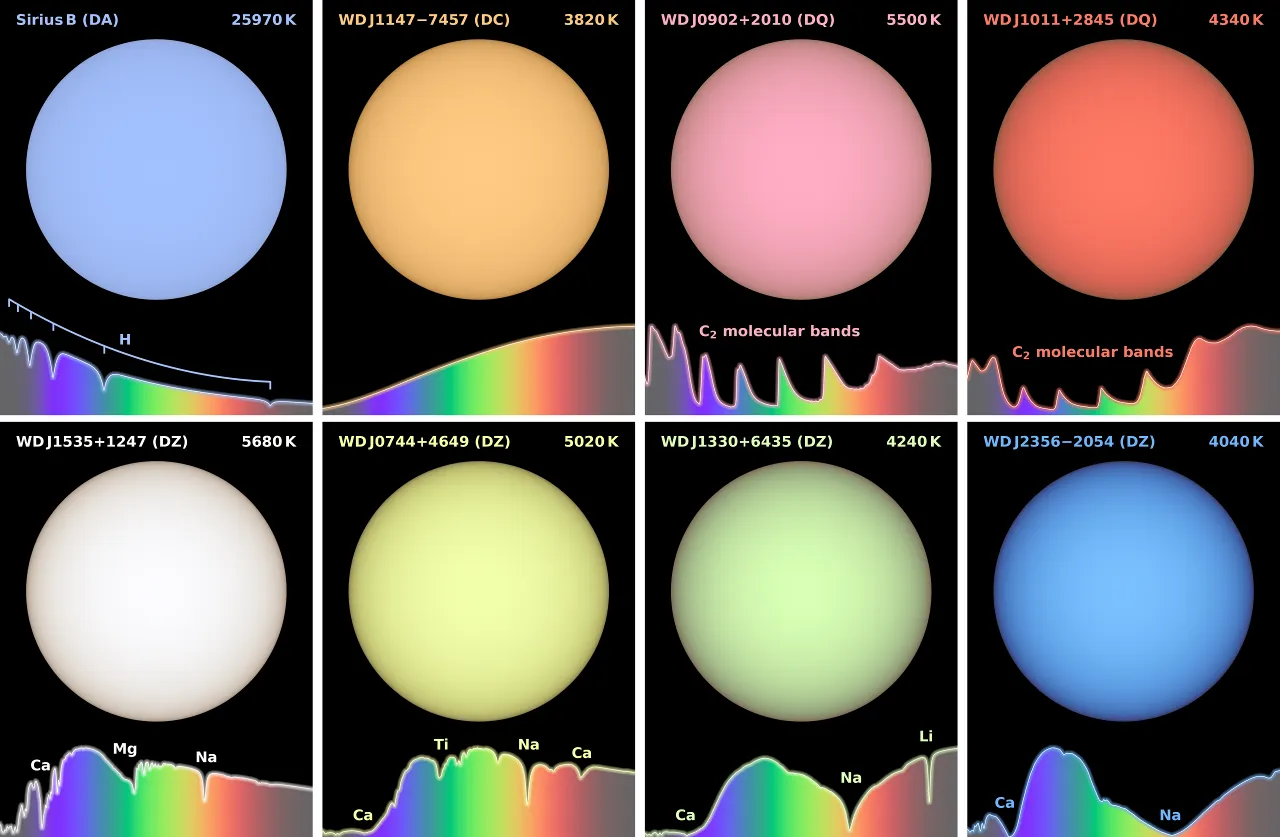
A stellar remnant with traces of swallowed planetary material would look green to a nearby human observer. Its unexpected appearance emerges from an analysis showing that white dwarf stars can display colors far beyond their familiar white and pale blue.
The University of Warwick-led study, published in RAS Techniques and Instruments, calculated how these stars’ light would register in human vision. The results include yellow, cyan, pink and purple examples, alongside the striking green object WD J1330+6435.
These are calculated appearances based on spectra and atmospheric models, rather than close-up photographs. The team identifies WD J1330+6435 as its most vivid green example and reports two paler green stars. The findings suggest that exceptionally dense stellar atmospheres can produce a wider visual palette than temperature alone would predict.
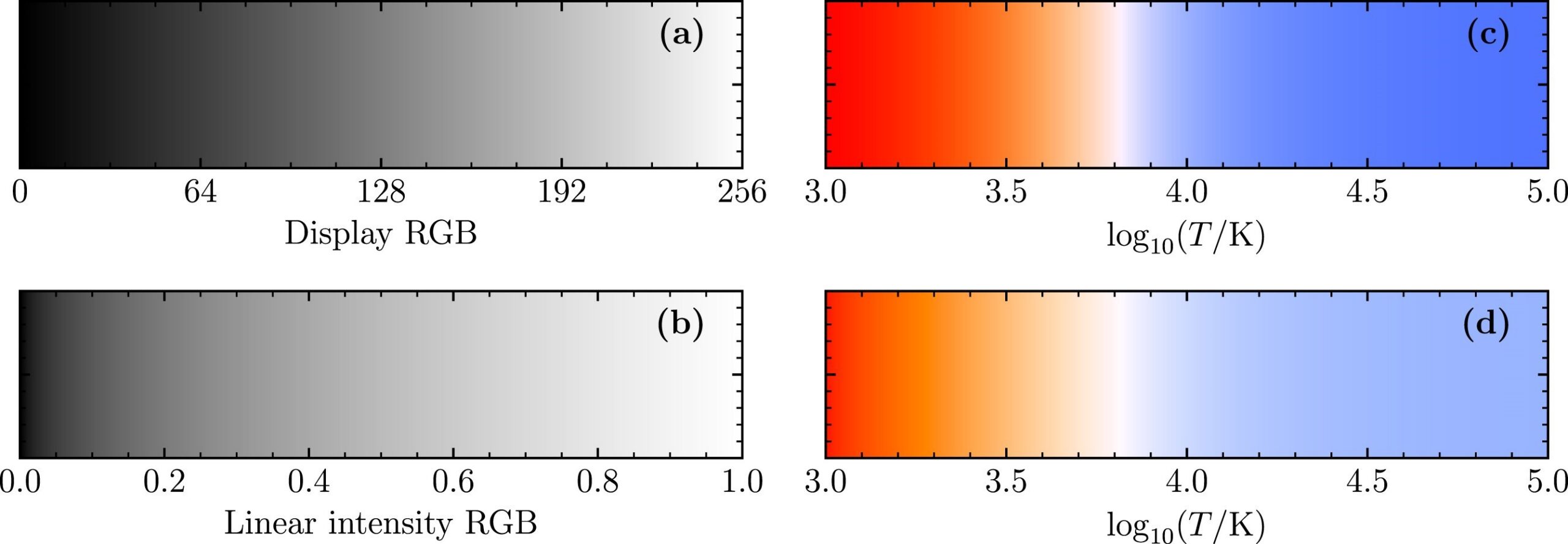
For most stars, color broadly tracks temperature. Cooler stars appear orange, Sun-like stars look white, and hotter stars shine pale blue. Their light approximately resembles radiation from an idealized object called a blackbody, whose color depends on temperature.
White dwarfs are the dense remnants left when most stars finish their ordinary stellar lives. Many follow that familiar color sequence. However, their atmospheres can also reach conditions unlike those at the visible surface of the Sun.
The coolest examples can have atmospheric densities approaching one gram per cubic centimeter, roughly the density of water. In such dense surroundings, interactions between particles broaden the wavelengths absorbed by atoms and molecules. Trace chemicals can therefore remove substantial portions of the visible spectrum.
“It turns out these incredibly dense stars can produce colours nobody expected, and some of them genuinely surprised me,” said lead author Mark Hollands. A Warwick Prize Fellow in astronomy and astrophysics, Hollands investigated how temperature and atmospheric composition combine to shape the stars’ perceived colors.
A spectrum records how much light arrives at different wavelengths. Astronomers routinely use spectra to investigate stellar temperatures and chemical ingredients. Here, the team also used them to calculate the balance of light that determines perceived color.
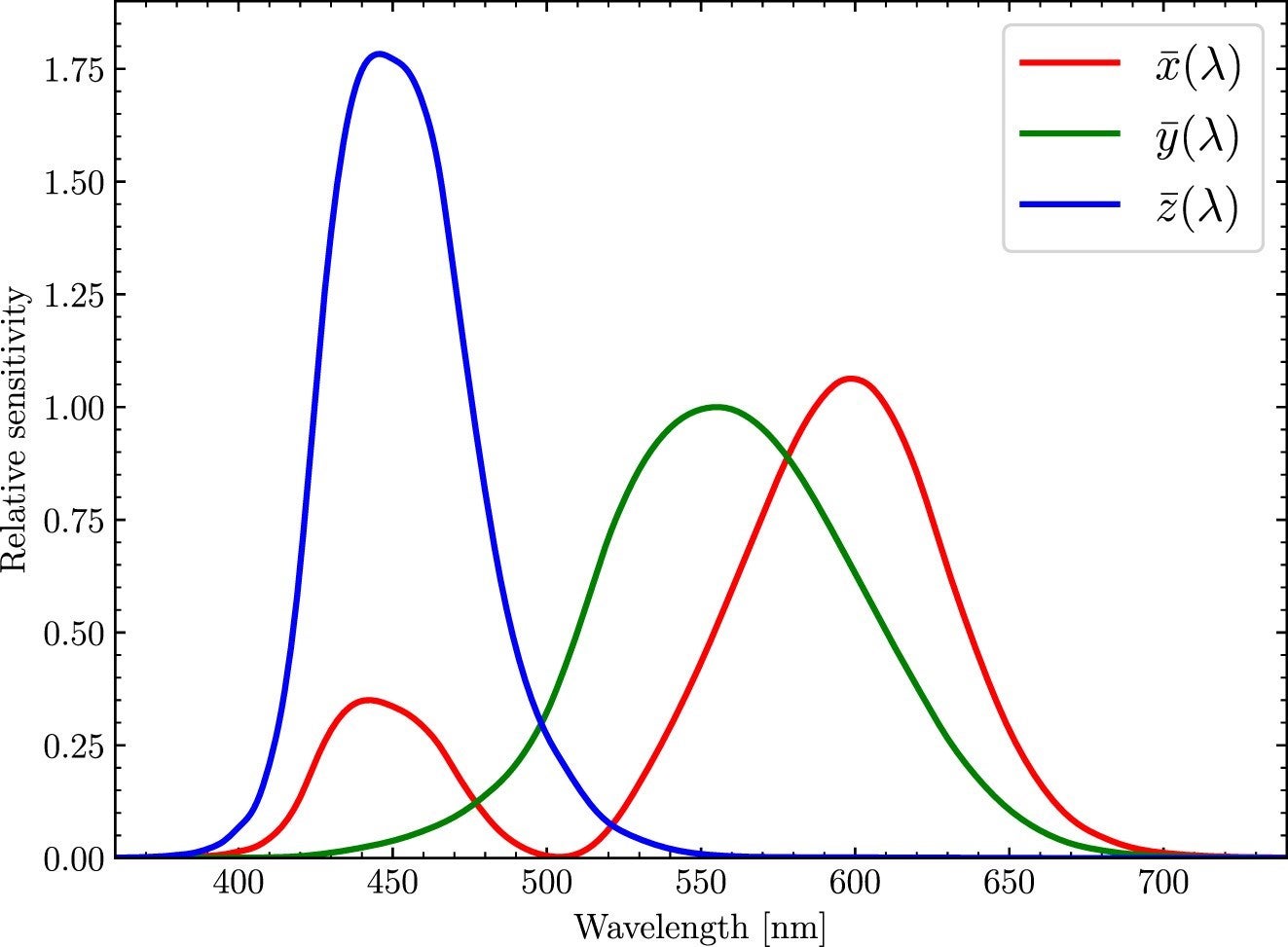
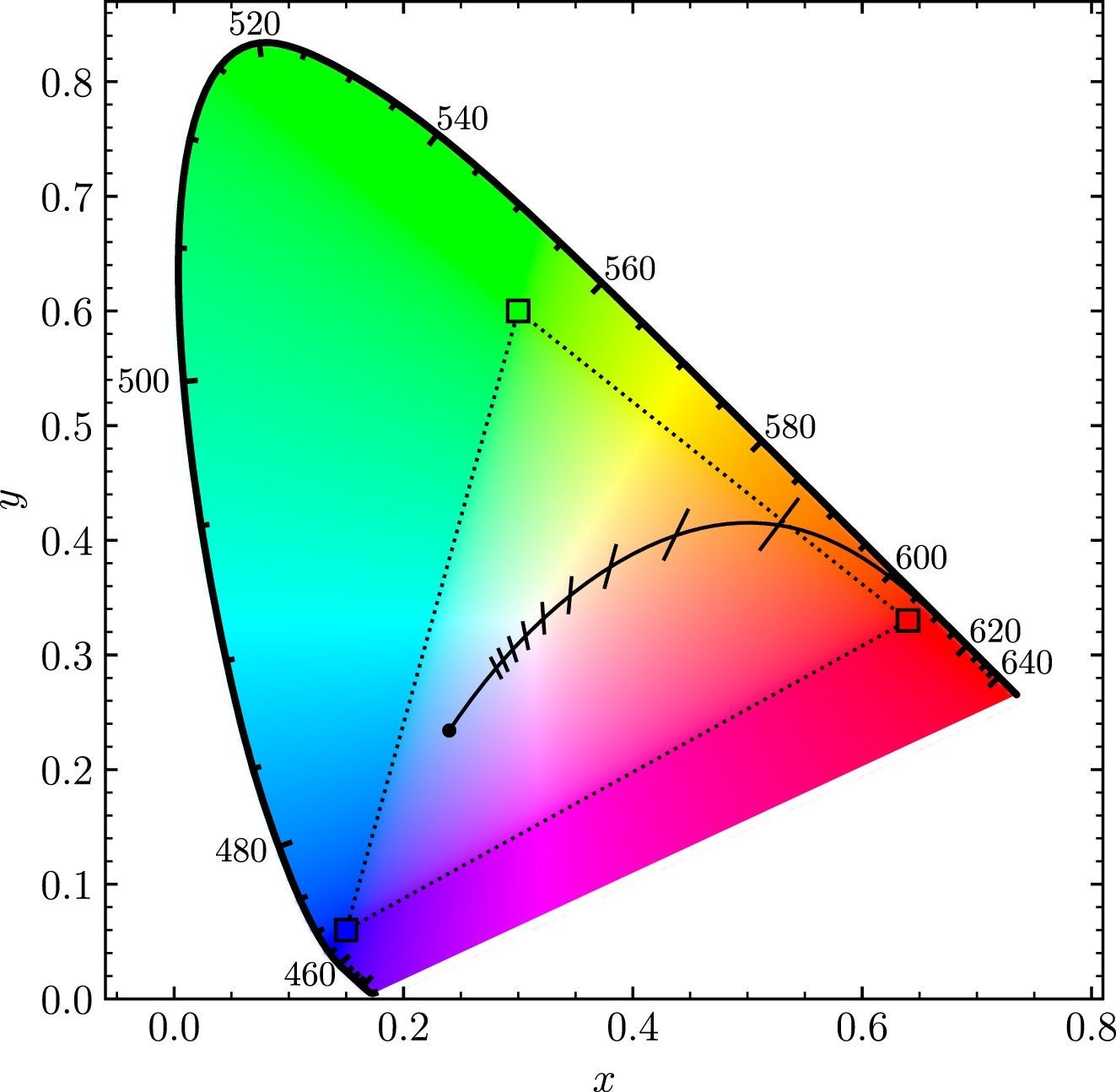
The researchers applied established color-science methods that describe human vision under bright conditions. They converted observed or modeled spectra into color coordinates, then into values suitable for ordinary computer displays. This distinguished the light’s color from its overwhelming brightness.
That distinction matters because no monitor can reproduce a star’s actual surface brightness. The calculations instead preserve the relative contributions that give the light its hue. They describe what the stars would resemble under suitable viewing conditions, not how clearly their colors appear in Earth’s night sky.
The team also accounted for how displays and eyes respond nonlinearly to light intensity. Omitting that correction can make stellar colors look excessively saturated. Many astronomical images also assign wavelengths to display channels for scientific purposes, so their colors do not necessarily reproduce human vision.
WD J1330+6435 has taken in rocky debris from its planetary system, enriching its atmosphere with elements including calcium, lithium and sodium. Its cool, helium-dominated atmosphere allows strong absorption features to spread across broad wavelength ranges. The resulting balance favors a chartreuse green appearance.
Sodium removes much of the orange light, while calcium absorbs at violet wavelengths. Together, those effects leave a prominent portion of the emerging light around 500 nanometers. The star’s unusual hue therefore reflects absorption that reshapes its spectrum, rather than a new kind of green energy source.
“The traces of sodium in the atmosphere of this white dwarf absorb the orange part of the spectrum, leaving behind a ghostly green glow,” Hollands said. The team presents the result as evidence that white dwarfs can produce genuinely green stellar light.
The exact shade remains somewhat uncertain because the available spectrum is noisy. Nevertheless, different atmospheric models produce a similar green appearance. The study also identifies WD J0851+1543 and WD J1351+2645 as paler green examples, with stronger spectral data supporting the former’s classification.
Other white dwarfs acquire distinctive colors through material rising from within. In cool carbon-bearing examples, convection mixes carbon into their outer helium layers. Carbon molecules then absorb broad bands of visible light, shifting the appearance toward pink or purple.
One standout is WD J1011+2845, also called LHS 2229, around 48 light-years away. Its strongly distorted molecular absorption features suppress much of the light between 400 and 600 nanometers. Most of its remaining visible emission falls beyond 600 nanometers, producing a deep salmon-pink hue.
The researchers describe it as likely the reddest known star in terms of perceived color. That qualification concerns its calculated appearance, rather than proving it has the lowest stellar temperature. Atmospheric density and possibly a strong magnetic field help explain its unusual spectrum.
Cool white dwarfs containing both hydrogen and helium provide another surprise. Collisions involving hydrogen molecules and helium create absorption that suppresses infrared light and can extend into visible wavelengths. Some consequently appear cyan or blue despite temperatures that would ordinarily suggest a warmer-looking hue.
The team also examined a sample selected by distance rather than brightness: 152 white dwarfs within 20 parsecs, approximately 65 light-years. Five departed strongly from ordinary blackbody colors. Two appeared yellow and three pink, suggesting an unusual-color fraction of roughly one in thirty in this local sample.
The separate selections used to demonstrate extreme colors were deliberately chosen for their unusual spectra. They therefore cannot establish how common green or cyan stars are. That distinction separates striking individual examples from the population estimate.
After excluding those five, the remaining 147 had a median correlated color temperature of 6,768 kelvin, approximately 6,800 kelvin. This quantity describes which ideal radiator most closely matches the light’s color. It is different from the physical effective temperature derived from the star’s overall emission.
That median corresponds to a nearly white appearance. Hotter, bluer white dwarfs are easier to detect at greater distances, which can make brightness-selected surveys give a misleading impression. A nearby sample provides a more representative view.
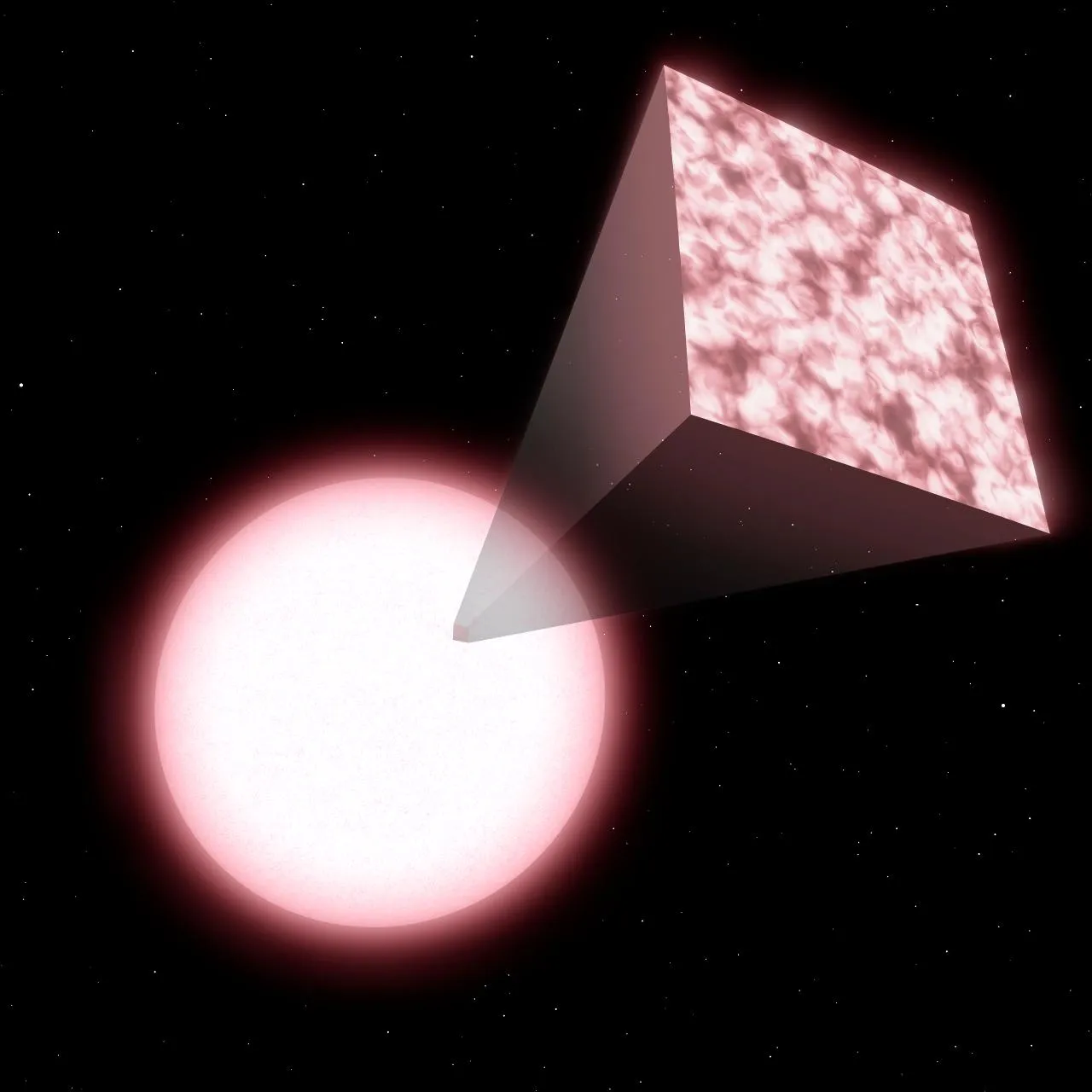
The study also generated stellar images that account for changes in brightness and hue toward the visible edge. These renderings offer a way to communicate what extreme atmospheres do to starlight. Their varied colors reveal atmospheric physics and chemistry that the name “white dwarf” alone cannot convey.
These resources explore atmospheric chemistry, nearby stellar samples and the challenge of reproducing astronomical colors accurately.
The Gaia 20 pc white dwarf sample: Establishes a nearby white dwarf census using Gaia data, providing a foundation for studying representative stellar populations. (Monthly Notices of the Royal Astronomical Society, 2018)
Alkali metals in white dwarf atmospheres as tracers of ancient planetary crusts: Investigates lithium and other elements in white dwarfs that have accreted planetary debris. (Nature Astronomy, 2021)
Spectral analysis of ultra-cool white dwarfs polluted by planetary debris: Examines extremely cool stellar remnants and the atmospheric effects that complicate their interpretation. (Monthly Notices of the Royal Astronomical Society, 2022)
The spectral evolution of white dwarfs: where do we stand?: Reviews how white dwarf atmospheres change as these remnants cool and evolve. (Astrophysics and Space Science, 2024)
Modelling the seasonal cycle of Uranus’s colour and magnitude, and comparison with Neptune: Demonstrates why carefully reconstructed astronomical colors can differ from familiar processed images. (Monthly Notices of the Royal Astronomical Society, 2024)
Research findings are available online in the journal RAS Techniques and Instruments.
The original story “A white dwarf’s unusual atmosphere gives it a ghostly green glow” is published in The Brighter Side of News.
Like these kind of feel good stories? Get The Brighter Side of News’ newsletter.
The post A white dwarf’s unusual atmosphere gives it a ghostly green glow appeared first on The Brighter Side of News.


Leave a comment
You must be logged in to post a comment.