Human evolution may need a new name for much of its family tree. Fossils once separated into Homo, Australopithecus and Paranthropus increasingly resist those neat divisions, raising a basic question about whether the labels still match ancestry.
A new analysis from Monash University argues that species assigned to those three groups, along with Kenyanthropus, should instead be placed within an expanded genus Homo. The proposal would stretch Homo back roughly 4 to 5 million years, far beyond its usual range.
The research, published in the American Journal of Biological Anthropology, comes from Dr Ian Towle, a Research Fellow at the Monash Biomedicine Discovery Institute. He argues that modern fossil discoveries, genetics and phylogenetic methods have exposed weaknesses in a classification system built around traits such as brain size, tool use and diet.
“Recent fossil discoveries and advances in evolutionary and genetic analysis make this an ideal time to reconsider whether our traditional taxonomy still accurately reflects human evolution,” Dr Towle said.
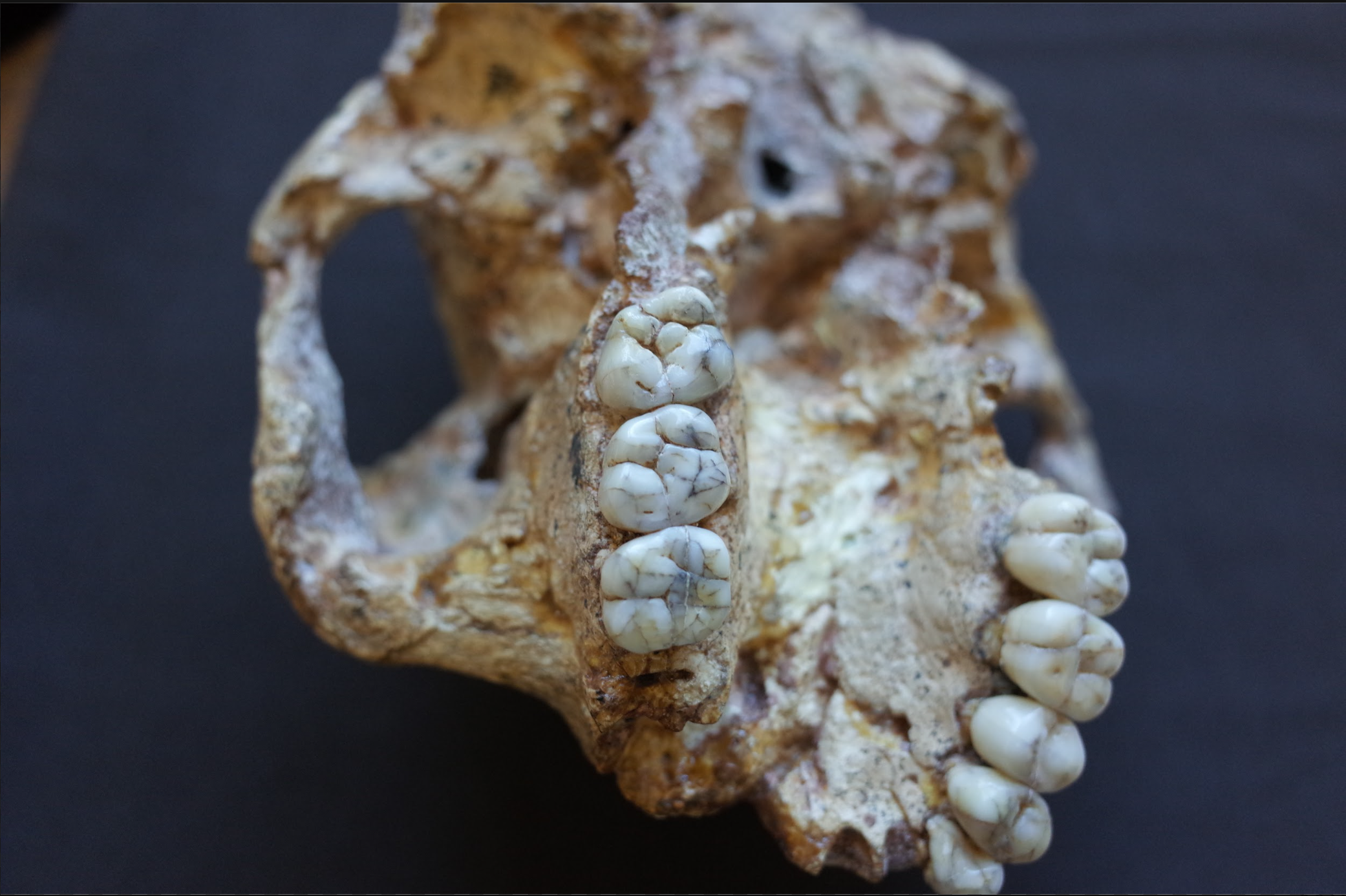
Modern biological classification increasingly aims to recognize clades, groups made up of a common ancestor and all of its descendants. Yet commonly used human fossil genera often fail that test. Australopithecus is a major example because phylogenetic studies repeatedly recover some of its species as more closely related to Homo or Paranthropus than to other australopiths.
That creates a basic problem. If Australopithecus excludes descendants that belong to Homo or Paranthropus, it becomes a paraphyletic group rather than a complete evolutionary branch. One possible fix would split Australopithecus into several genera, but Towle argues that approach could produce numerous small or even single-species genera.
The traits traditionally used to separate the groups have also become less reliable. Homo was long associated with larger brains, sophisticated tools and particular anatomical or behavioral features. Yet Homo floresiensis and Homo naledi had small brains, while evidence for complex behavior and tool use is no longer confined to Homo.
Paranthropus has faced similar pressure. It was traditionally viewed as a robust-jawed specialist adapted to hard foods. Research now points to more varied diets among its species, while some Australopithecus fossils show exceptionally large teeth. Australopithecus garhi, for example, had teeth larger than those of the highly megadont Paranthropus boisei.
“These groups do not necessarily represent distinct evolutionary branches, or ‘clades’, and differences in behaviour and ecology once used to distinguish them have also become increasingly difficult to maintain,” Dr Towle said.
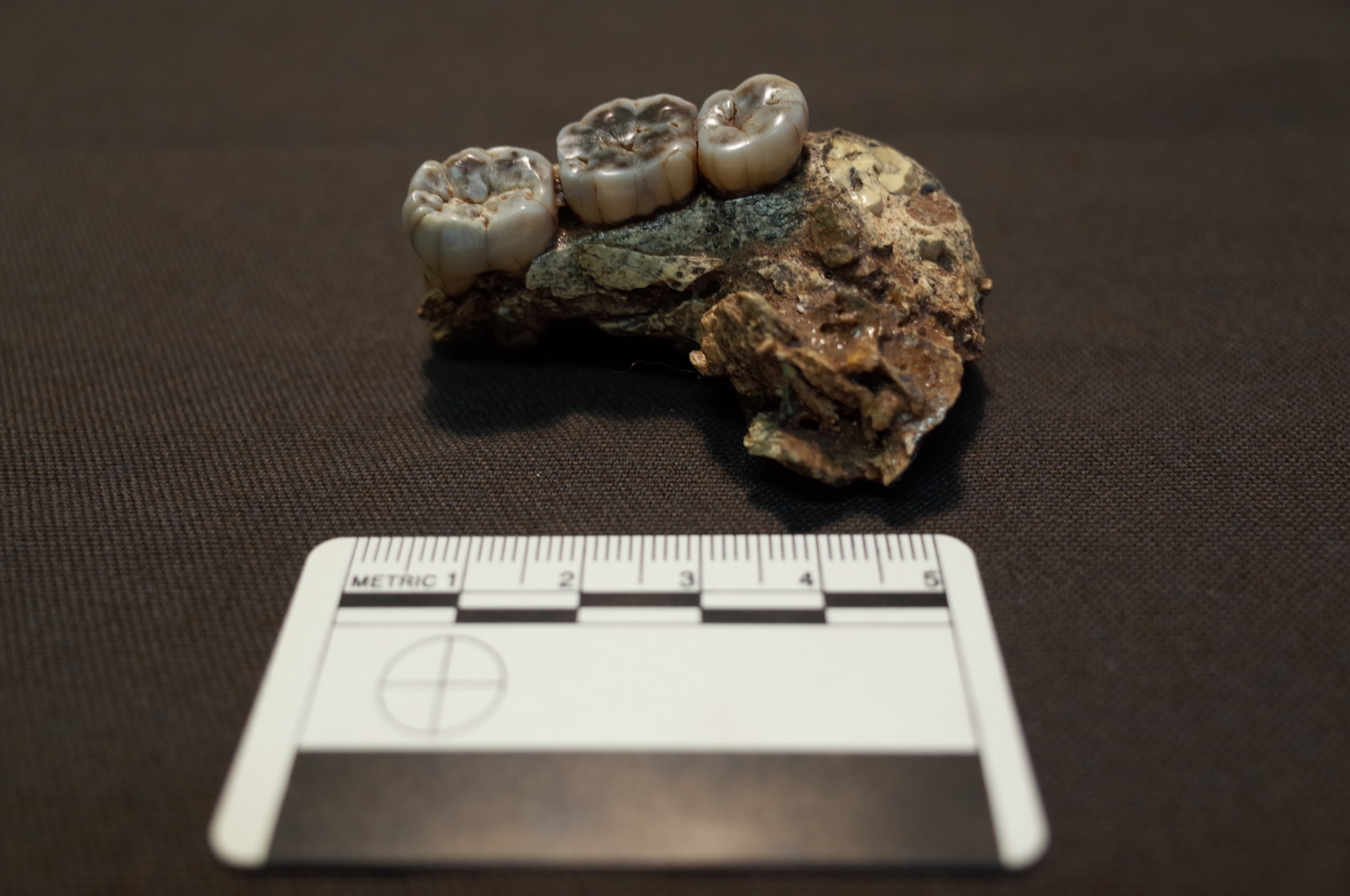
Towle proposes placing Australopithecus, Paranthropus and Kenyanthropus within Homo. Under that arrangement, the genus would cover a major radiation of closely related human ancestors and fossil relatives extending back about 4 to 5 million years.
The approach is meant to create a more stable genus instead of repeatedly moving fossils as new specimens change the picture. It would also reduce problems caused by uncertain relationships among early Homo species and later small-brained forms such as H. floresiensis and H. naledi.
“I propose expanding Homo to include these other groups to provide a more accurate and stable way to represent the complex evolutionary relationships revealed by the growing fossil record,” Dr Towle said.
Comparisons with living primates support the argument that recently separated genera can become difficult to define. Baboons and related African monkeys show complicated histories of hybridization and gene flow across closely related lineages. Orangutans and gorillas also preserve evidence of deep splits followed by later gene flow.
Such examples matter because human evolution also involved branching, contact and introgression. The fossil record lacks genetic data for most ancient species, making those relationships even harder to reconstruct. Towle argues that giving Homo greater temporal depth could better accommodate that complexity.
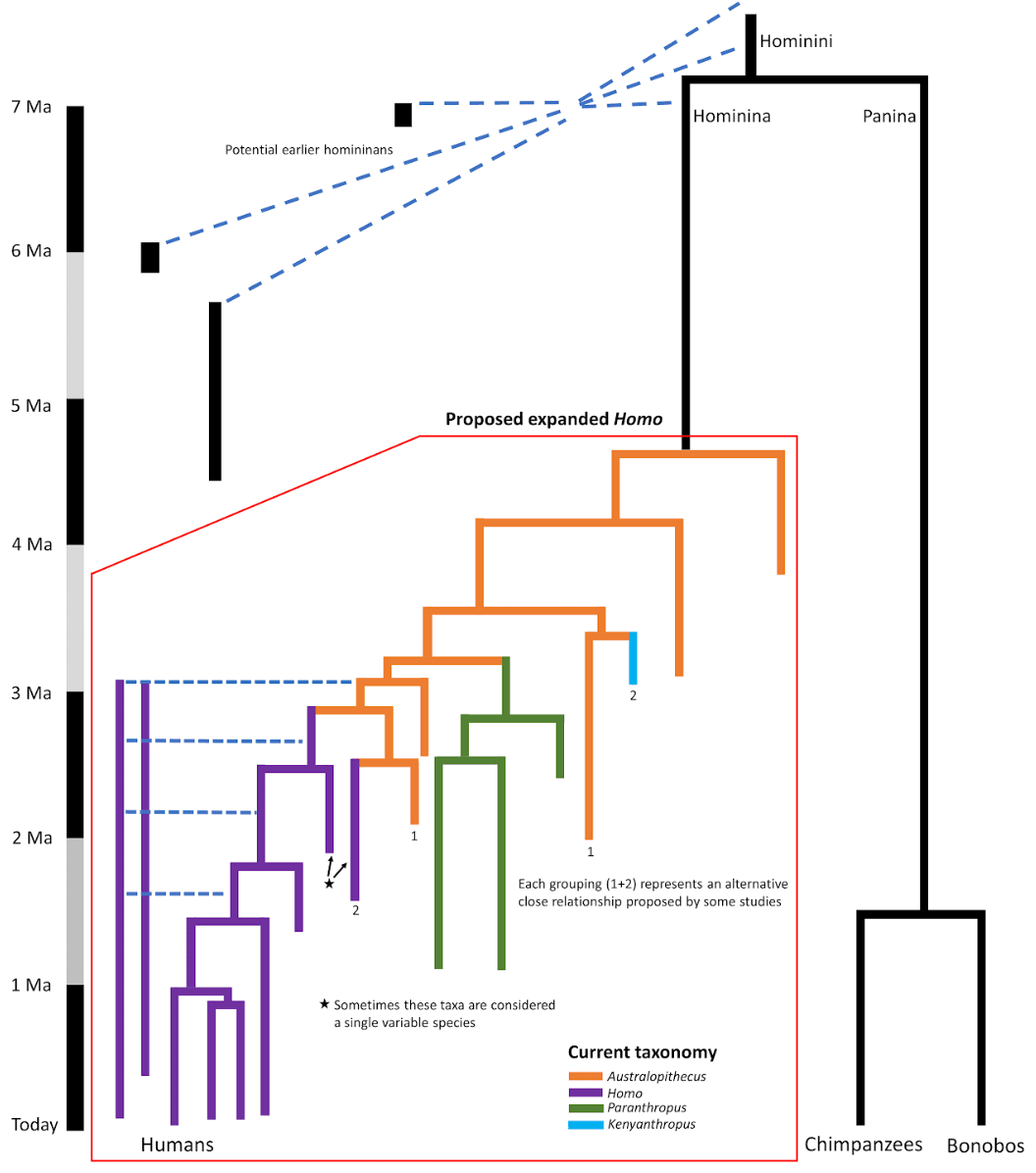
The expanded genus would not automatically include every proposed member of the human lineage. Sahelanthropus, Orrorin and Ardipithecus would remain outside the proposed Homo grouping because their exact positions are still debated and evidence does not clearly place them inside the same clade.
That boundary is important. Extending Homo too far back could eventually force chimpanzees, and potentially gorillas, into the same genus under some time-based classification schemes. Towle instead describes a roughly 4- to 5-million-year span as a practical middle ground.
The proposal also changes higher-level terminology. Towle argues that the broader human lineage more closely related to Homo than to Pan should be called Hominina, making its members “homininans.” Under this framework, Hominini would refer to the larger Pan-Homo clade, while Panina would designate the chimpanzee branch.
“The more we learn about our ancestors and close fossil relatives, the more we realise how complex and non-linear our family tree is,” Dr Towle said.
Reclassifying these fossils would not change the bones themselves or settle every disputed relationship. It would change how scientists organize and discuss them. A broader Homo could reduce the need to redraw genus boundaries whenever a new fossil combines traits once associated with different groups.
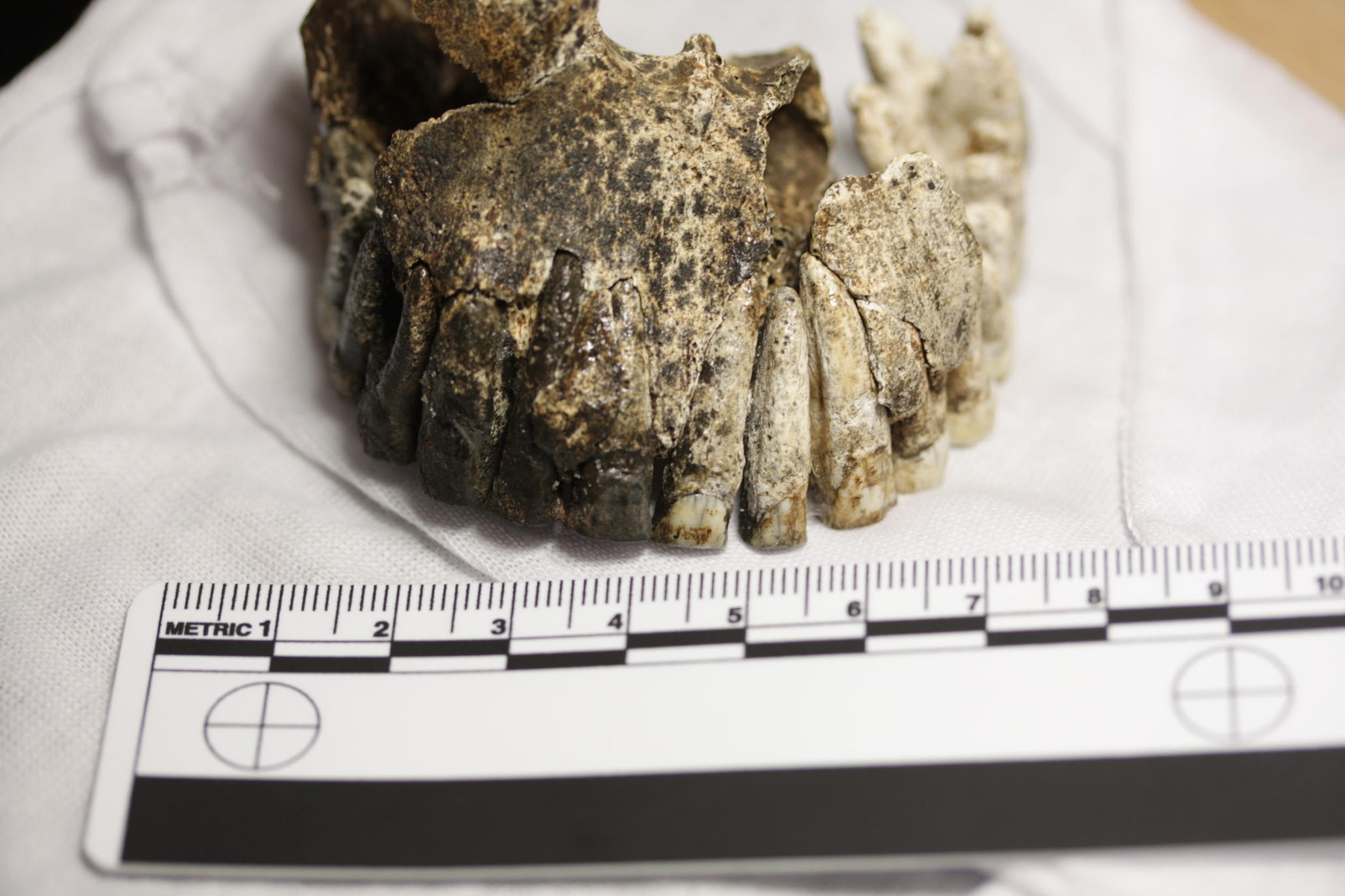
It could also make taxonomy more consistent with the clade-based principles already used across much of biology. Towle’s proposal remains one possible solution among several, including splitting existing genera into smaller groups or narrowing Homo instead. It also cannot remove uncertainty from the fossil record, especially where relationships remain unresolved and genetic evidence is unavailable. The debate over where genus boundaries belong is therefore likely to continue.
“Expanding the Homo genus to also include species of Australopithecus and Paranthropus will allow us to account for differences without regularly reclassifying particular groups.”
These resources explore how new fossils, phylogenetic methods and evidence of unexpected behavior are complicating traditional divisions among Homo, Australopithecus and Paranthropus.
New discoveries of Australopithecus and Homo from Ledi-Geraru, Ethiopia
Fossils from Ethiopia show that early Homo and a distinct Australopithecus lineage coexisted before 2.5 million years ago, adding evidence that early human evolution involved several overlapping lineages rather than a simple succession. (Nature, 2026)
Phylogeny of Homo and its Implications for the Taxonomy of the Genus
This phylogenetic analysis examines the diversity and classification of Homo and finds several deep evolutionary lineages, while also identifying traditionally recognized groups that may be paraphyletic and need taxonomic revision. (PaleoAnthropology, 2025)
New finds shed light on diet and locomotion in Australopithecus deyiremeda
New Ethiopian fossils clarify the anatomy of Australopithecus deyiremeda and reveal a mixture of dental and locomotor traits that differs from Australopithecus afarensis, illustrating the mosaic nature of early hominin evolution. (Nature, 2025)
A lineage perspective on hominin taxonomy and evolution
The authors argue that relying too heavily on anatomical differences can inflate the number of recognized fossil species and propose combining morphology with chronology to reconstruct evolutionary lineages more realistically. (Evolutionary Anthropology, 2024)
Expanded geographic distribution and dietary strategies of the earliest Oldowan hominins and Paranthropus
Nearly 3-million-year-old Oldowan tools from Kenya were found with Paranthropus fossils, challenging the traditional association between early stone-tool technology and Homo alone and further weakening behavioral boundaries between ancient hominin groups. (Science, 2023)
Research findings are available online in the journal American Journal of Biological Anthropology.
The original story “Australopithecus findings could rewrite how we classify millions of years of human evolution” is published in The Brighter Side of News.
Like these kind of feel good stories? Get The Brighter Side of News’ newsletter.
The post Australopithecus findings could rewrite how we classify millions of years of human evolution appeared first on The Brighter Side of News.


Leave a comment
You must be logged in to post a comment.