A missed shot turned into a math problem, and that shift appears to have mattered.
In an eight-week program linking basketball drills to fraction lessons, pupils ages 11 to 13 improved their performance on fraction tests and reported a more engaging experience than they usually had with mathematics. The study, led by University of Copenhagen researchers and carried out with schools in Norway, suggests that a gym class can do more than build fitness if the academic work is tied directly to the activity.
The program, called Basketball Mathematics, involved more than 300 pupils from 16 sixth- and seventh-grade classes. During one 60-minute physical education lesson each week, students practiced basketball while also collecting and calculating their own mathematical data. A pupil might take 10 shots, count how many went in, turn that result into a fraction, and then convert it into a percentage.
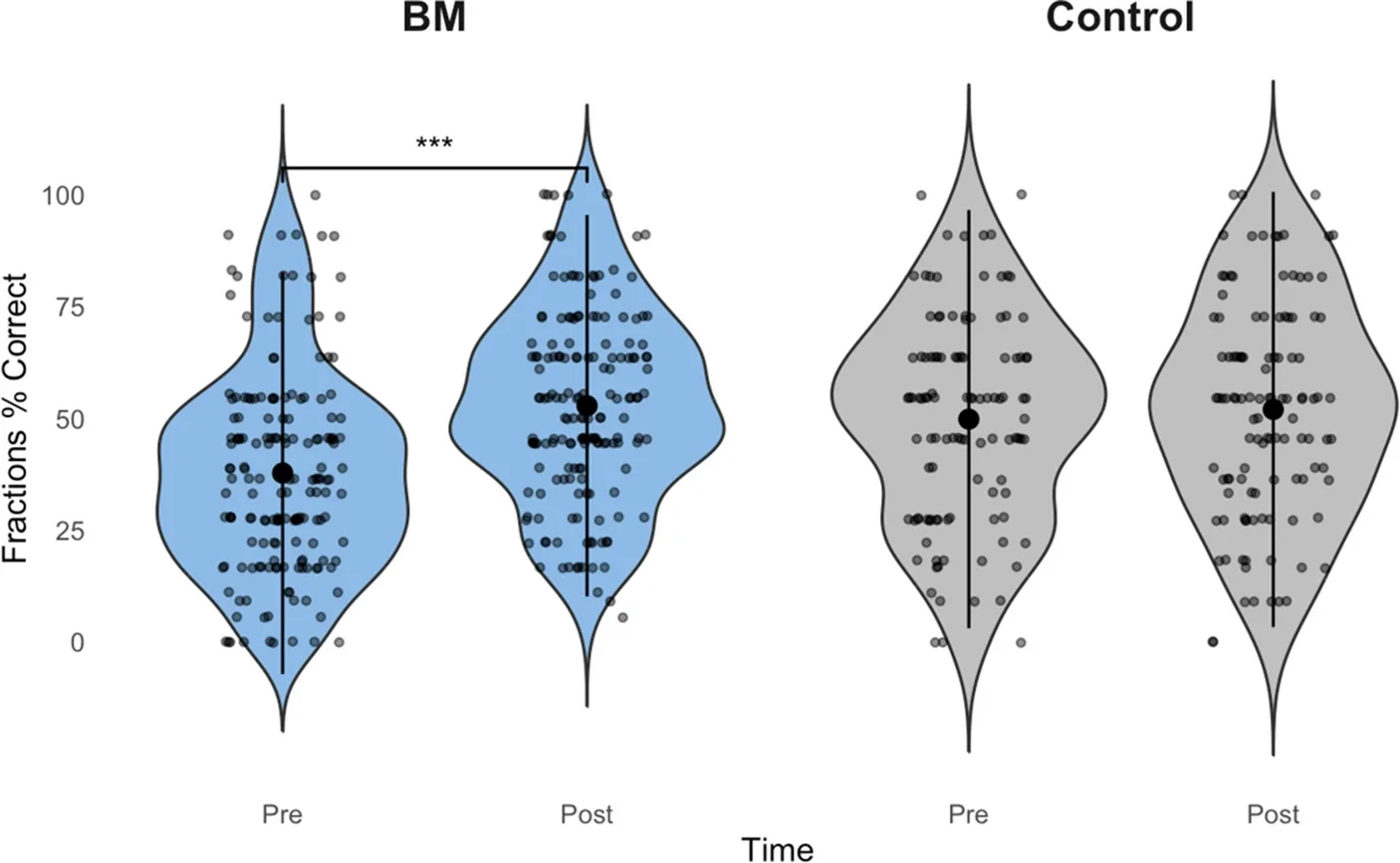
After the program, pupils in Basketball Mathematics performed 15 percent better on a fractions test than a control group that received standard physical education, according to the researchers’ summary of the findings. In the formal analysis, the intervention group also showed significantly greater improvement over time on fraction questions and on other math questions not directly tied to fractions.
“I am convinced that sport and physical activity can open up mathematics for pupils who are not otherwise engaged by the subject,” said Jacob Wienecke, an associate professor at the Department of Nutrition, Exercise and Sports at the University of Copenhagen and the study’s lead researcher.
Fractions are a sticking point for many children, and that matters because fraction skills are often linked to later success in mathematics more broadly. The team built the intervention around that challenge, folding math into basketball rather than adding separate lessons outside the school day.
The study included 309 children with parental consent, drawn from two schools outside Oslo over two school years. Some classes received Basketball Mathematics. Others served as controls, either continuing regular physical education or taking part in basketball sessions without the math component.
That design let the researchers ask several questions at once. Could pupils improve on the math topic being practiced? Would anything carry over into other math tasks? And would the added academic content come at the expense of learning basketball itself?
The answer to that last question, at least in one important skill, was no. Pupils in Basketball Mathematics improved their slalom dribbling times, and so did the basketball-only control group. The gains were similar, suggesting that combining math with the drills did not blunt motor learning.
“At the same time, the pupils also improved their basketball skills which shows that integrating academic content into physical education does not come at the expense of learning a new sport,” the researchers wrote in their summary of the work.
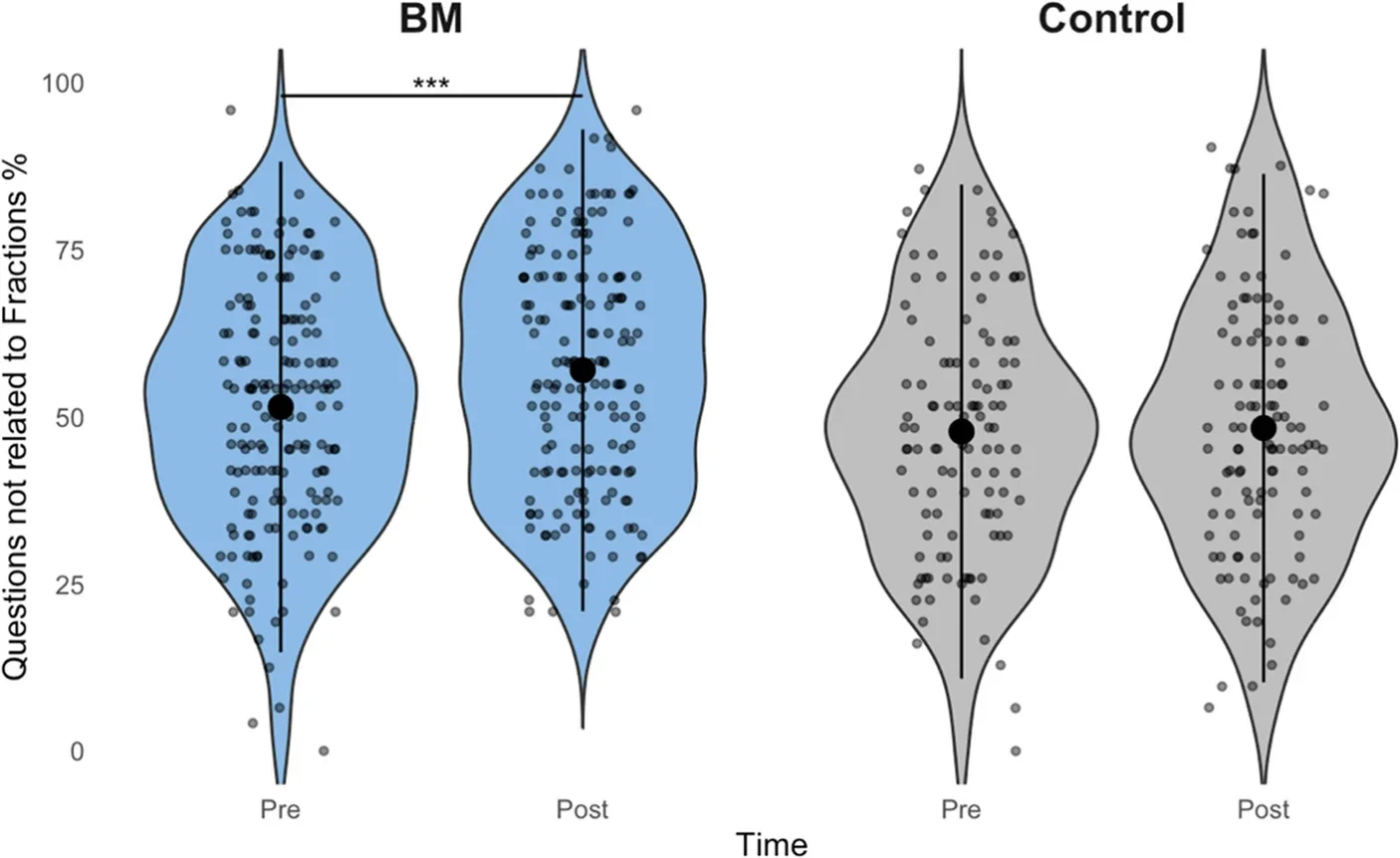
The strongest academic gains appeared where the teaching was most direct. On fraction questions, the group-by-time interaction was significant, and the Basketball Mathematics group improved from pre-test to post-test while the combined control group did not. A similar pattern appeared on non-fraction questions, which the authors described as a possible transfer effect.
That broader lift is one of the more interesting parts of the study. The intervention focused on fractions, yet pupils also did better on other mathematical tasks, by around 5 percent in the researchers’ summary. The paper argues that this may reflect more than repetition. Students were moving, playing, and working with numbers generated by their own actions, which could have made the ideas feel more concrete and easier to hold onto.
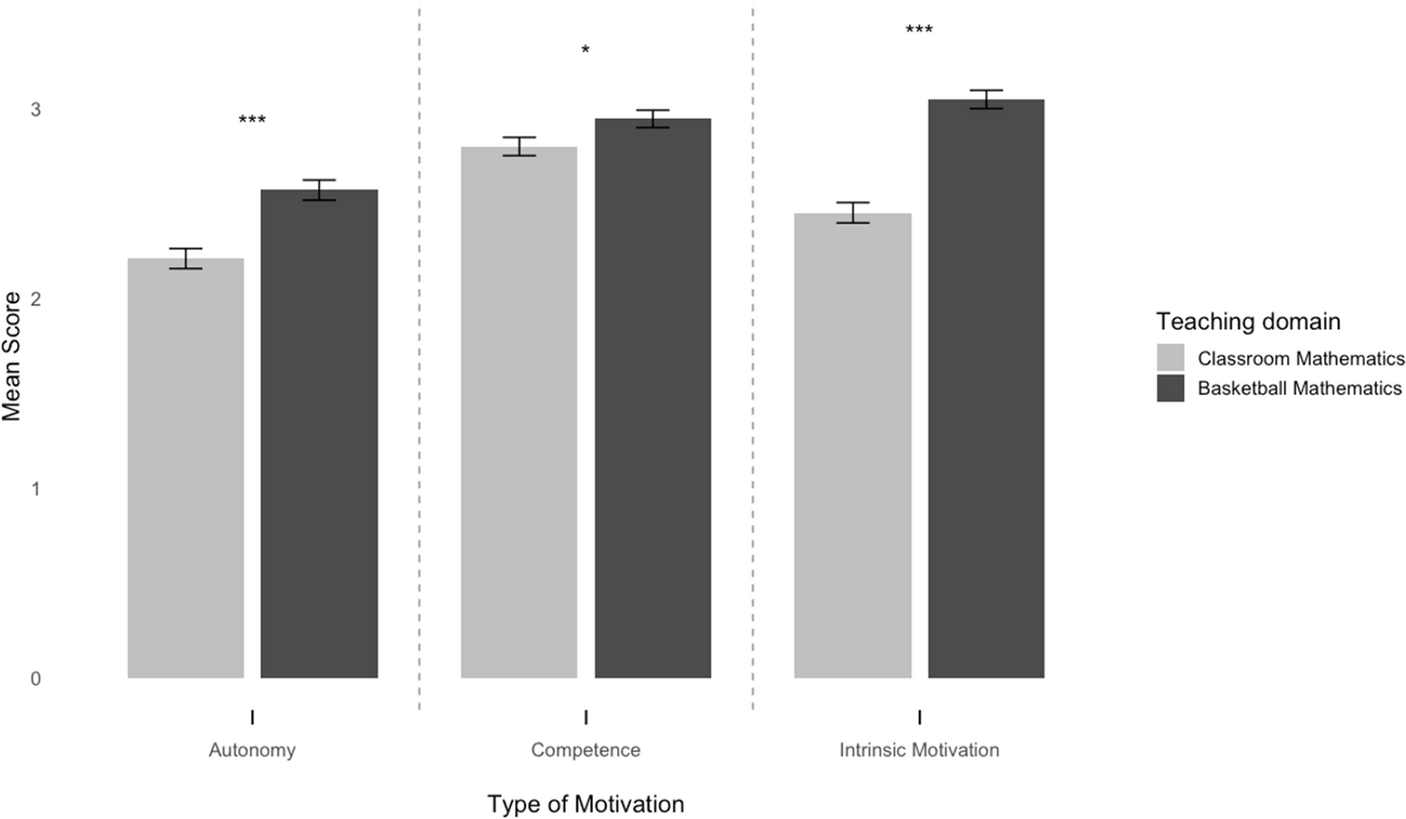
The children also experienced the sessions differently from ordinary classroom math. Immediate, in-session measures found significantly higher feelings of autonomy, competence, and intrinsic motivation during Basketball Mathematics than during classroom-based mathematics. Intrinsic motivation during the basketball lessons was 24.37 percent higher, autonomy was 16.33 percent higher, and competence was 5.21 percent higher.
“Our hypothesis is that the children get positive experiences with mathematics, and that this may encourage them to put more effort into math in the classroom as well,” Wienecke said.
Still, the results came with an important limit. Those more positive in-the-moment experiences did not translate into a measurable long-term change in pupils’ general motivation toward classroom mathematics over the eight-week period. On that broader measure, motivation stayed largely stable.
The researchers were careful not to oversell the findings. The intervention group received more math-focused activity than the control groups, even though the school timetable itself did not gain extra hours. That makes it hard to separate the effects of movement-based learning from the effects of simply spending more time on fractions.
The study was also shaped by the pandemic. COVID-19 restrictions changed part of the original randomization plan at one school, leaving the final dataset as a mix of cluster-randomized and quasi-experimental allocation. The authors said sensitivity analyses suggested the main results were consistent across those different conditions, but the design still calls for caution.
There was no long-term follow-up, so the study cannot say whether the gains lasted. And while the paper discusses possible mechanisms such as embodied learning, executive function, and attention, it did not directly measure the physiological pathways that might explain why the program worked.
“But we know from other studies that pupils’ level of math at this stage is often linked to their later performance. So, if you can raise their level here, it may potentially influence their educational trajectory long term,” Wienecke said.
The researchers also noted that the instructors included basketball experts from outside the schools, a setup that may be hard to scale unless teachers are trained to run the program on their own.
The study points to a practical idea that many schools could test without redesigning the entire week: use part of physical education to reinforce a specific academic concept through purposeful movement. In this case, basketball gave pupils a way to generate numbers, compare outcomes, and work with fractions in a setting that felt active rather than abstract.
The findings do not show that every math topic belongs in the gym, or that movement alone will raise achievement. But they do suggest that a well-matched activity can support learning without undermining physical education itself. The researchers have developed a teaching compendium that teachers can use freely, and they say the same principles could be adapted to other sports, including volleyball.
“If it were up to me, one out of five math lessons each week would be active math. The most important thing is that the movement makes sense in relation to what the pupils are meant to learn, so that they are not just solving a task and then running a lap around the school,” Wienecke said.
Research findings are available online in the journal Educational Psychology Review.
The original story “Basketball drills help middle schoolers improve fractions skills” is published in The Brighter Side of News.
Like these kind of feel good stories? Get The Brighter Side of News’ newsletter.
The post Basketball drills help middle schoolers improve fractions skills appeared first on The Brighter Side of News.


Leave a comment
You must be logged in to post a comment.