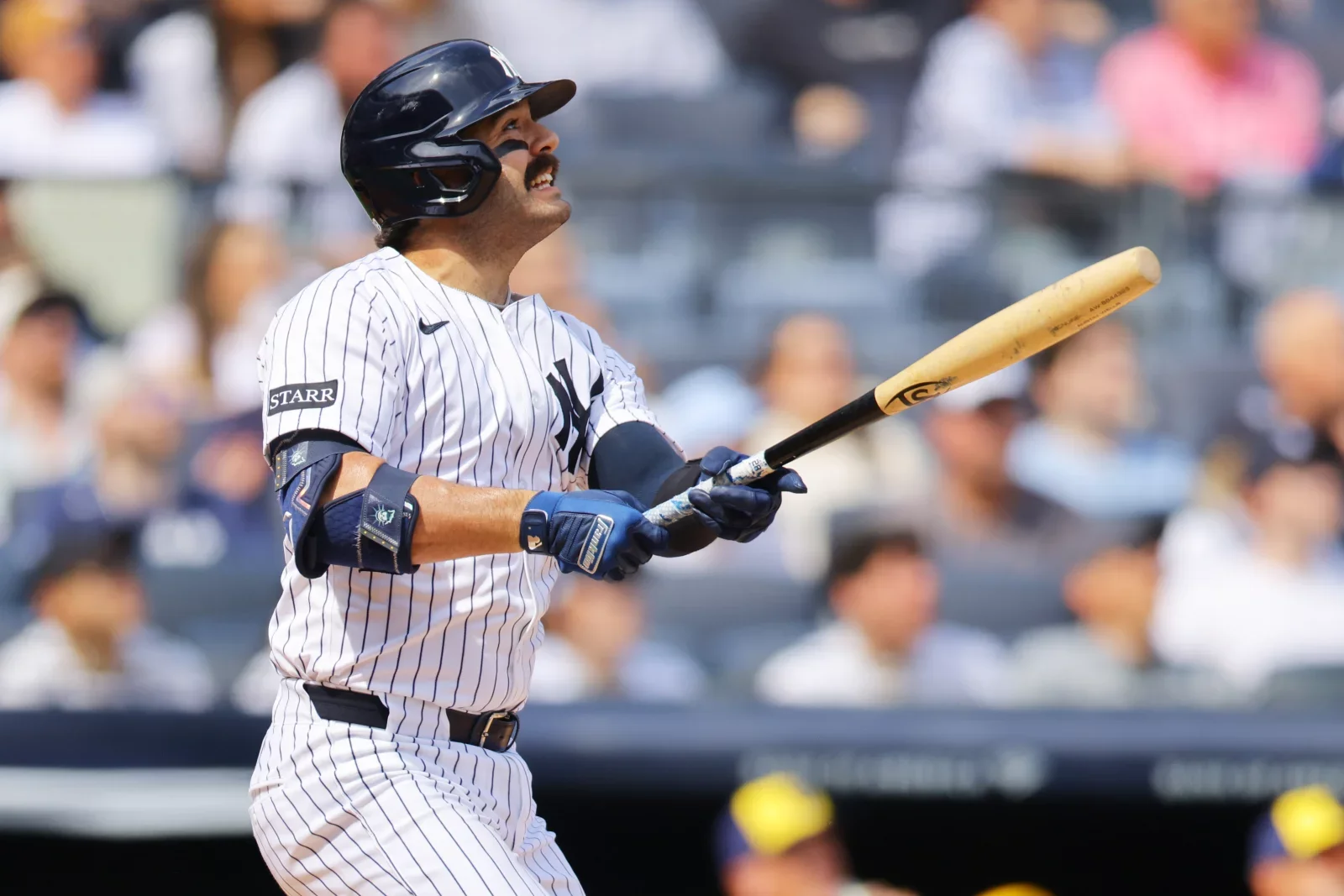
On opening weekend, some New York Yankees stepped to the plate with bats that looked slightly off, thick in an unusual place, tapered in a way baseball fans are not used to seeing. Then came the home runs, and suddenly one oddly shaped piece of lumber became one of the first big talking points of the new MLB season.
The bat is now widely known as the torpedo bat.
Its shape has drawn comparisons to what might happen if someone started turning a bowling pin on a lathe and then switched midway to making a baseball bat. That unusual profile, with a swollen area set farther down the barrel, has caught the attention not only of fans and teams but also of physicists and engineers who study how baseball equipment works.
“The same bat design has been in existence for a century and a half, maybe,” Alan Nathan, professor emeritus of physics at the University of Illinois Urbana-Champaign, says. “And to come up with something new, to me, is always very exciting.”
That reaction says something about the sport. Baseball has spent decades measuring nearly everything, yet the shape of the bat itself has remained mostly familiar. Even the rulebook treats it in plain language, calling it a “stick.”
Nathan and other specialists say that is part of what makes this moment so interesting.
Lloyd Smith, a professor of mechanical engineering at Washington State University, says wood usually is not the most thrilling subject in his field. “There’s just not a whole lot you can do with this stuff,” he tells NPR. But in this case, he adds, “I was proven wrong.”
The reasoning behind the torpedo bat starts with a practical question: Where do hitters actually make contact?
If a batter tends to strike the ball in the same area over and over, then reshaping the bat around that contact point could, in theory, improve performance. Dan Russell, an acoustics professor at Penn State University, says that idea is straightforward enough to sound obvious once stated.
“If they’re making contact at the same place in the barrel all the time, what can we do about the bat to try and give them better performance at that specific location?” Russell says.
Russell, Smith and Nathan did not design the torpedo bat, but all three have spent years studying baseball equipment and ball-bat collisions. They have even worked together on research involving illegal corked bats. These new bats are not in that category.
Under Major League Baseball rule 3.02, a bat must be “a smooth, round stick not more than 2.61 inches in diameter at the thickest part and not more than 42 inches in length.” The torpedo bat fits within those rules.
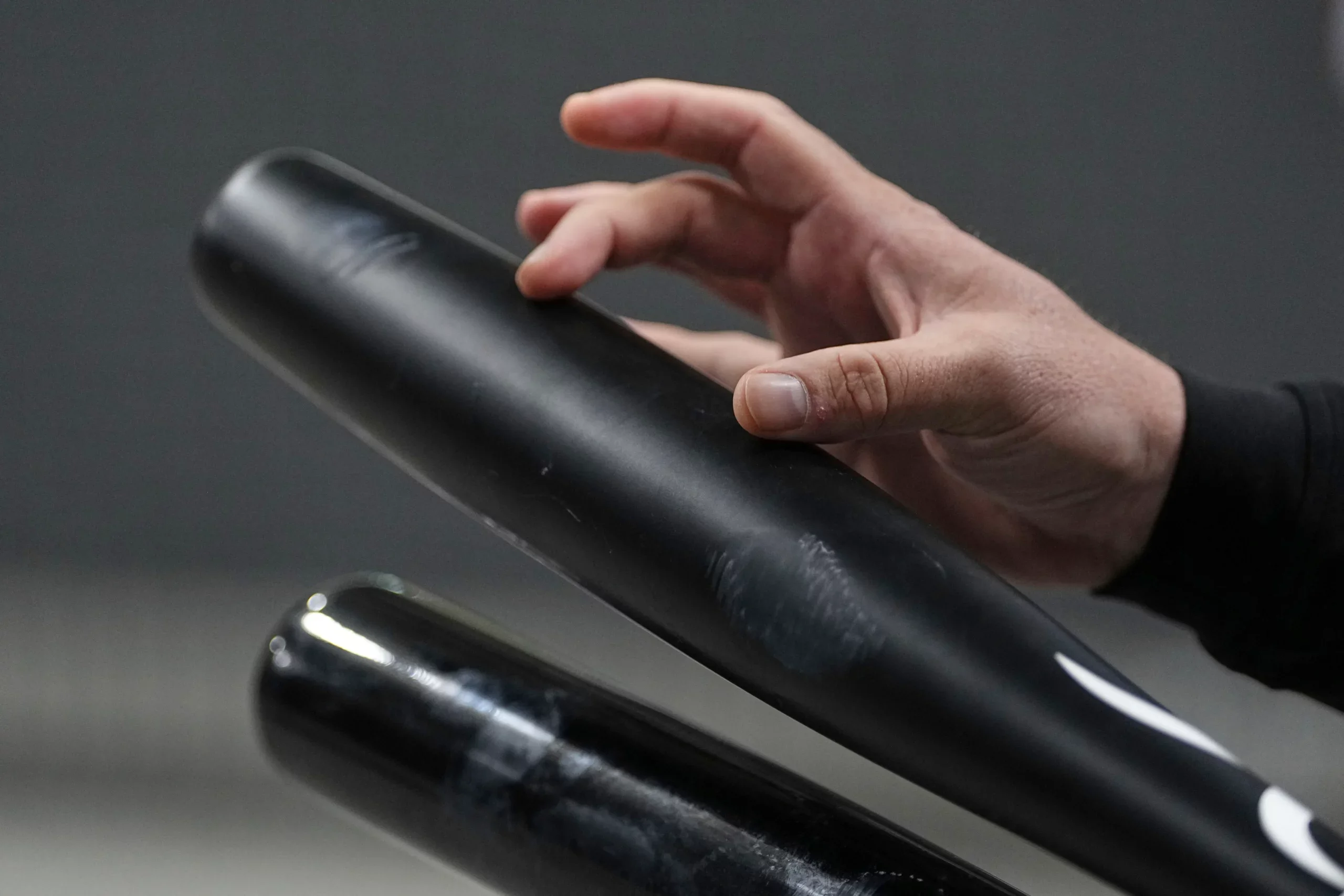
Weight matters too, and in modern baseball it may matter more than ever. Babe Ruth famously swung bats that weighed more than 40 ounces. Today, the norm sits closer to 31 or 32 ounces, with Hank Aaron having used a 33-ounce bat, according to the Louisville Slugger Museum. Against pitchers throwing harder than ever, reducing weight can make a real difference.
That helps explain why the new design has generated so much interest.
The concept is tied to Aaron Leanhardt, a former MIT physicist who later worked as a Yankees analyst and now works for the Miami Marlins. Nathan says Leanhardt’s background helps explain why someone finally challenged one of baseball’s oldest design habits.
“The guy who had the idea, of course, has a physics background,” Nathan says. “So that’s why I am, in a way, I’m jealous.”
To understand what changed, it helps to think about a more familiar bat variation: the cupped bat. Instead of ending in a full rounded tip, a cupped bat has a hollowed-out indentation at the barrel’s end. That small change removes weight from the farthest part of the bat.
“That’s important weight” to eliminate, Smith says. “That’s at the end of the bat, that’s going to be much more important than weight near the handle. It makes the bat a little easier to swing.”
Nathan puts it more simply. “You want to remove the weight where it doesn’t do you any good,” he says.
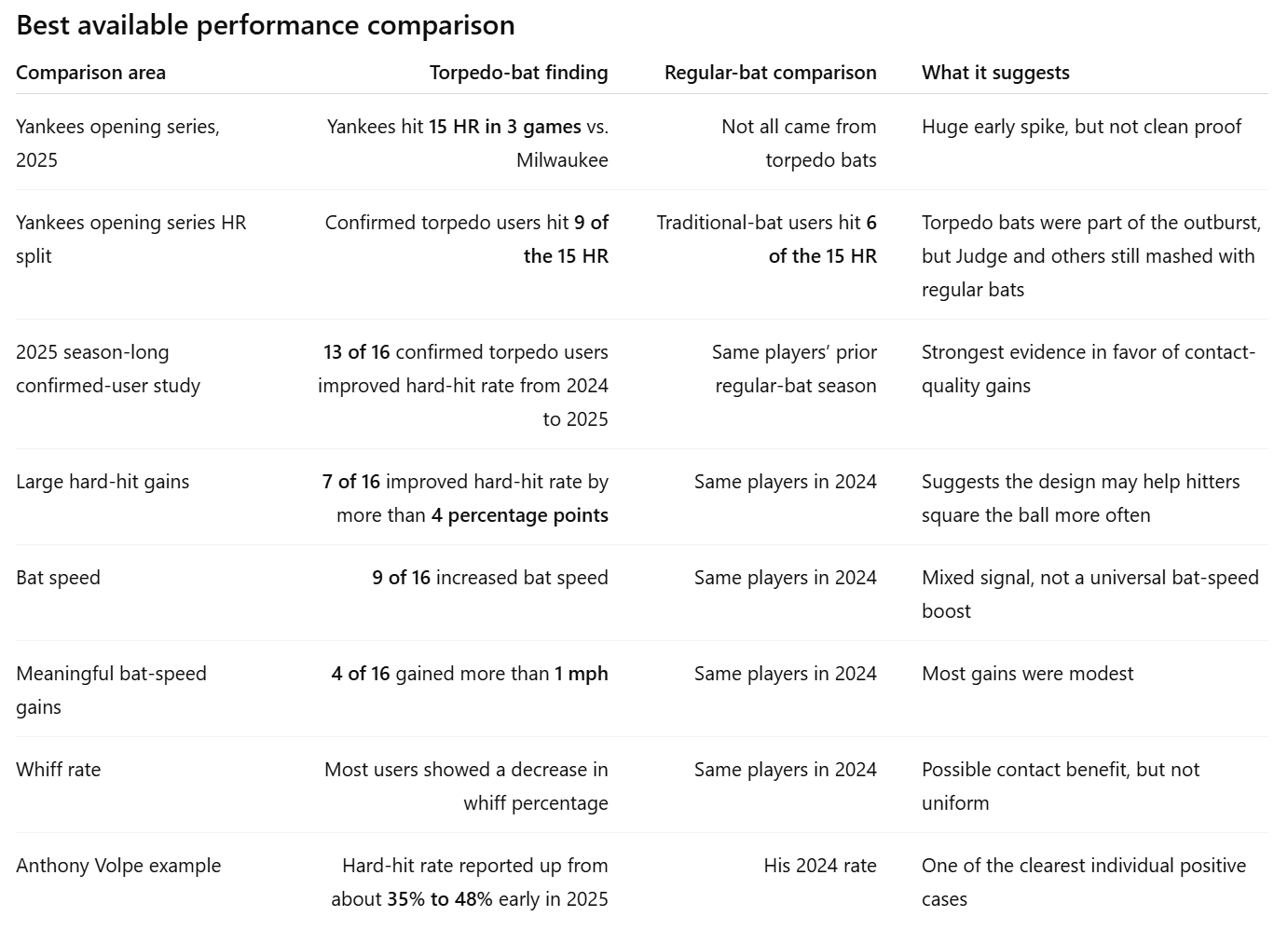
Then comes the next step. Instead of only shaving weight away, designers can move that weight somewhere else.
For decades, Smith says, bat makers followed an unwritten rule. The diameter would increase steadily from the handle to the barrel and then round off at the end. It did not widen and then narrow again. The torpedo bat breaks that pattern. Its diameter expands at one point and then tapers, shifting more wood closer to the hitter’s hands.
That shift affects what physicists call the moment of inertia, often described in baseball as swing weight. Nathan says moving weight inward lowers swing weight, making the bat easier to control and easier to swing.
There may be another benefit as well. If a batter can have a slightly wider sweet contact zone in a favored area without increasing swing weight, the bat could offer a larger surface for useful contact.
Still, that does not automatically mean more power.
Smith says reducing swing weight can increase swing speed, and swing speed is “super important for batted ball speed” and for driving the ball farther. But the tradeoff is unavoidable. Lower the swing weight too much, and the bat carries less mass into the collision.
He describes the exchange plainly: “You swing the bat faster, but you have less mass to hit the ball with.”
Scott Drake, president of PFS-TECO, the wood products company that inspects bats used in Major League Baseball, offers an image that makes the physics easy to picture. Think of a sledgehammer. If someone could somehow swing it fast and strike the ball right at the head, the ball would travel a long way. The problem is controlling that much weight with enough speed and precision.
Move the weight down the handle and closer to the hands, Drake says, and the object becomes easier to swing faster. But at the point of contact near the end, there is less mass behind the hit.
“For the average person, what it means is if you lower the swing weight of a bat, your batted ball speed goes down a little bit,” Smith says.
Major league hitters are not average people, which is part of why the torpedo bat remains an open question rather than a settled answer. Even during the Yankees’ opening 2025 series, the result was not entirely clean evidence of a revolution. Of the team’s nine home runs, three came from Aaron Judge, who was using his regular, non-torpedo bat.
That matters.
Russell, Smith and Nathan all say they want to test the bats directly, especially to see how the design changes the sweet spot, the area where the collision between bat and ball is most efficient.
For all the discussion of inertia, mass and barrel shape, the biggest advantage might not come from laboratory measurements at all.
“I don’t think it’s hitting the ball any faster,” Russell says of the torpedo bat.
What it may do, he and the other experts suggest, is give hitters better control and perhaps something almost impossible to measure cleanly: confidence. Baseball has always left room for ritual, comfort and belief, even at the highest level of performance.
“The game of baseball is so superstitious,” Russell says. “It doesn’t matter what the thing is, if you found something that makes you more confident, it’s going to work.”
That effect may spread beyond the batter’s box. Pitchers seeing a swollen, unfamiliar bat shape for the first time may not love it.
“I’m sure the pitchers are going, ‘What the heck is that thing?’ ” Russell says.
And the design is no longer limited to one clubhouse. While the Yankees drew the headlines, players on at least eight MLB teams have already tried torpedo bats in batting practice, spring training or regular-season games. Several of baseball’s 41 approved bat suppliers are already making versions, including Louisville Slugger, Victus, Chandler and Authentic.
“If all of the manufacturers aren’t already making them, I’m sure they will be soon,” Russell says.
The original story “Do torpedo bats actually give baseball players an edge?” is published in The Brighter Side of News.
Like these kind of feel good stories? Get The Brighter Side of News’ newsletter.
The post Do torpedo bats actually give baseball players an edge? appeared first on The Brighter Side of News.

