An implant that chemically removes glucose lowered blood sugar and reduced body weight in diabetic mice. Instead of releasing insulin, the experimental device uses electricity to drive a reaction on a metal-coated electrode. Its developers envision a treatment that responds to glucose readings, although human testing has not begun.
The Science study comes from a team led by Martin Fussenegger at ETH Zurich’s Department of Biosystems Science and Engineering in Basel. The researchers call their system ECHO, short for electrocatalytic closed-loop health optimization.
Their results combine laboratory chemistry, implanted-device experiments and a separate demonstration of automatic glucose control.
Type 2 diabetes involves difficulty using insulin effectively and insufficient insulin production to maintain normal glucose levels. Genetics, body weight and physical activity can all influence its development. It is not simply a disease of eating too much, nor does insulin act only on muscle.
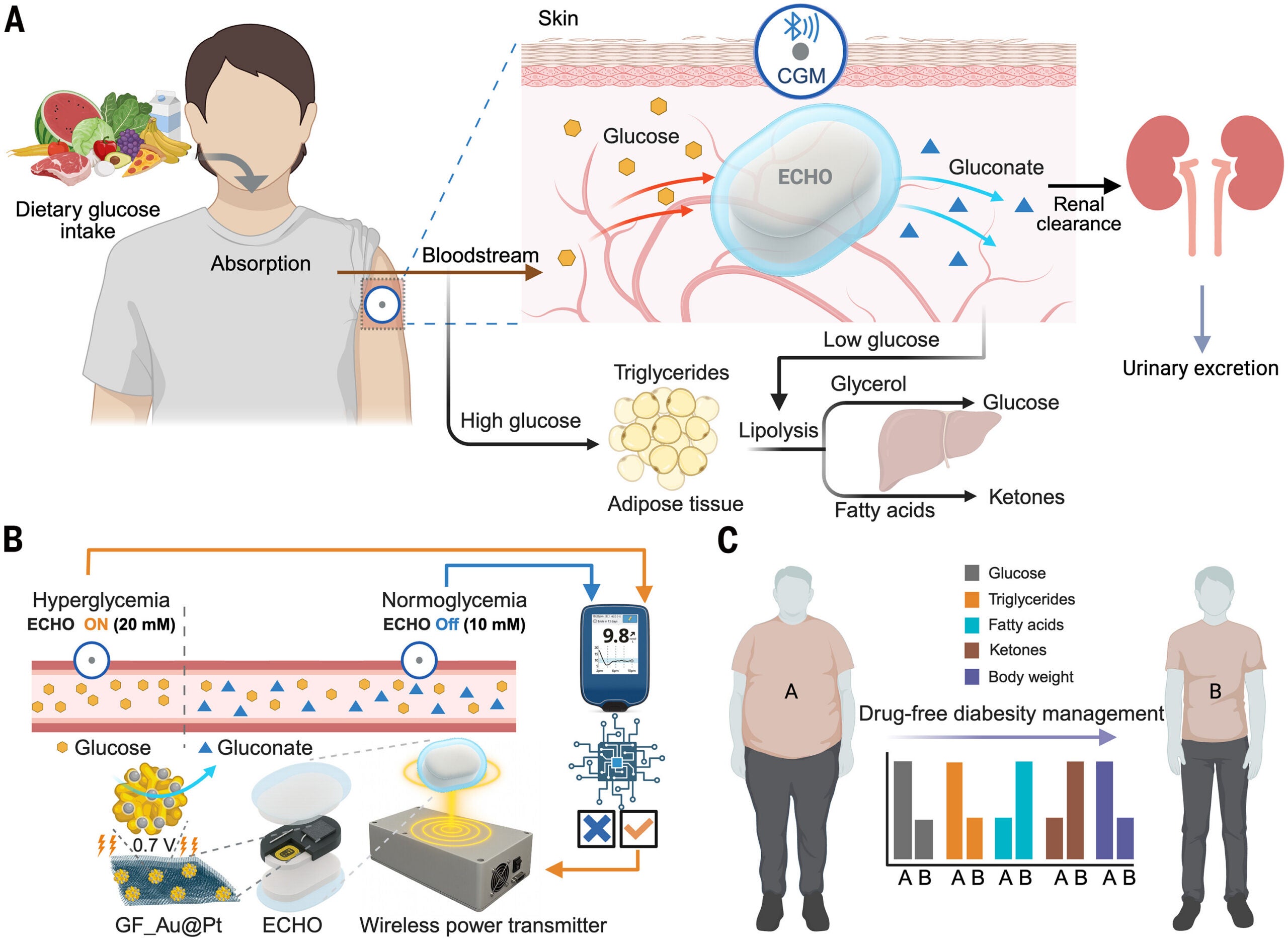
Insulin helps regulate how the body handles glucose, including its use and storage. ECHO takes a different approach by converting glucose into gluconate, a related compound. Much of that gluconate can leave through the kidneys, removing some glucose-derived energy rather than retaining it within normal metabolic pathways.
The distinction does not mean that every converted glucose molecule represents permanently lost energy. A smaller fraction of gluconate can enter metabolism. The authors’ proposed benefit is a net reduction in available metabolic energy alongside lower circulating glucose.
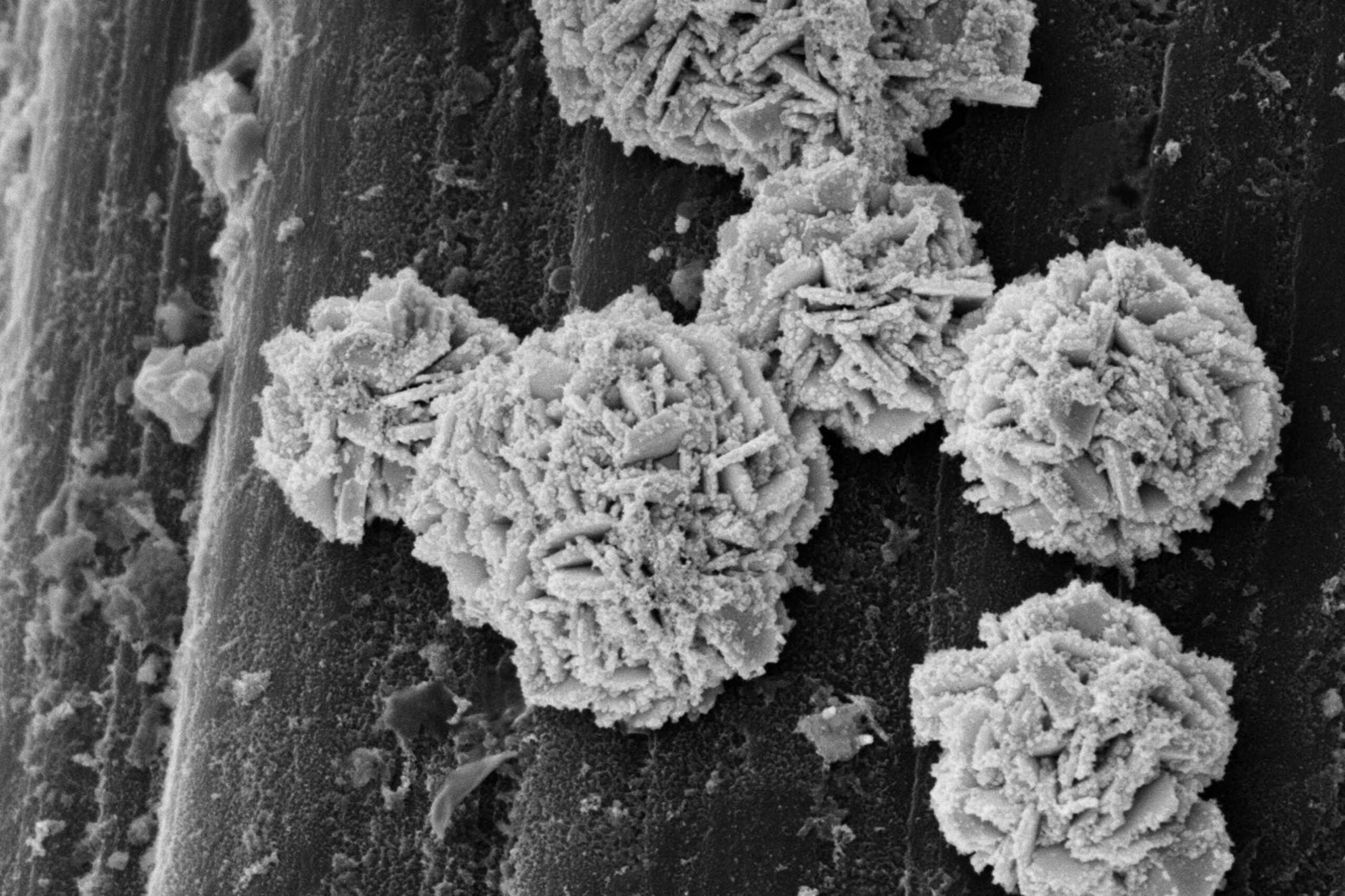
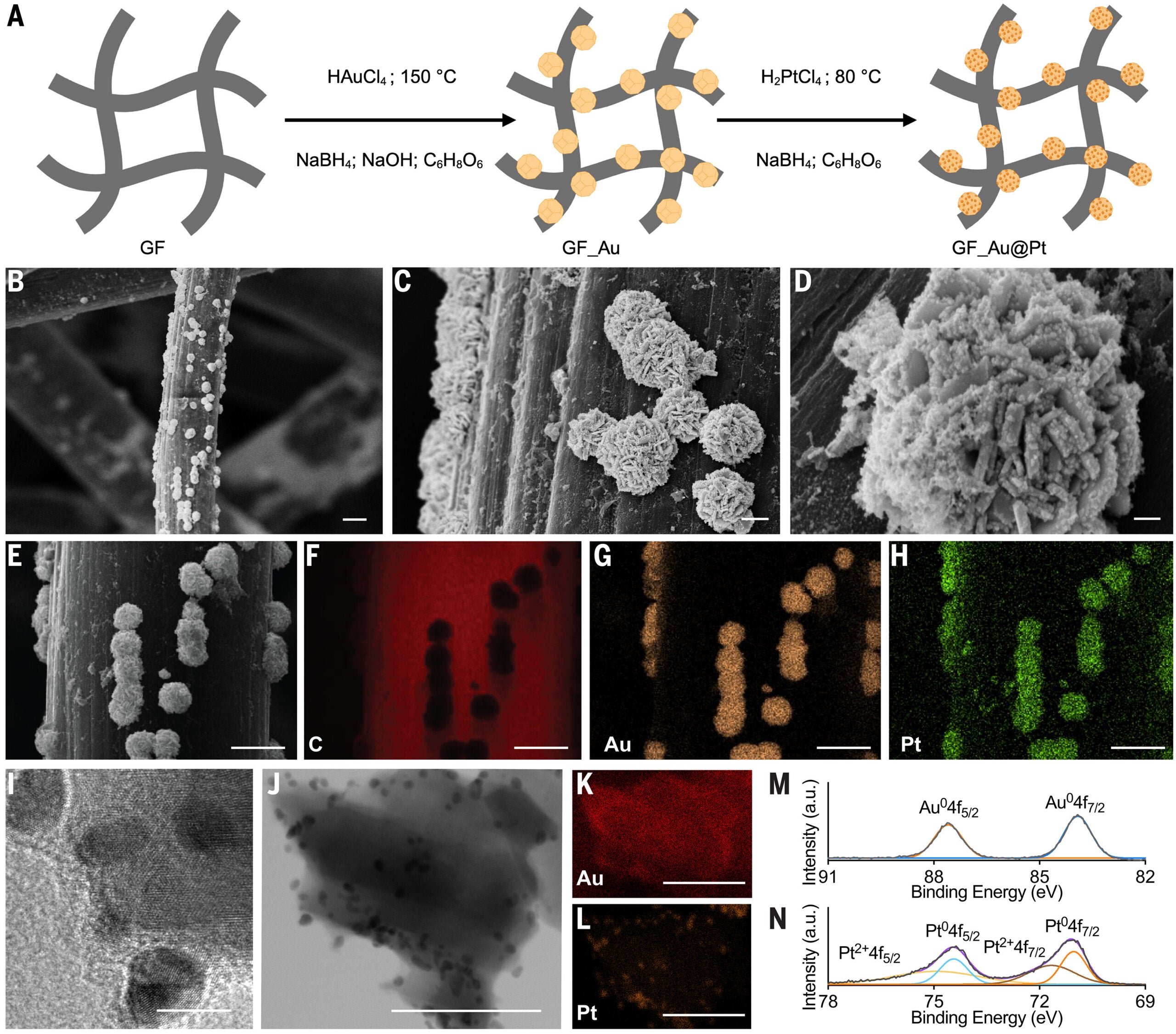
The catalyst consists of porous graphite felt carrying gold nanostructures decorated with much smaller platinum particles. That architecture provides a large surface for the electrically driven reaction. Glucose conversion at this electrode does not require living cells or enzymes.
That feature distinguishes it from earlier experimental systems using genetically engineered cells to release therapeutic proteins. It does not make the entire implant free of coatings or other components used for tissue compatibility. The complete device combines the catalyst, electronics, a protective casing and additional encapsulation layers.
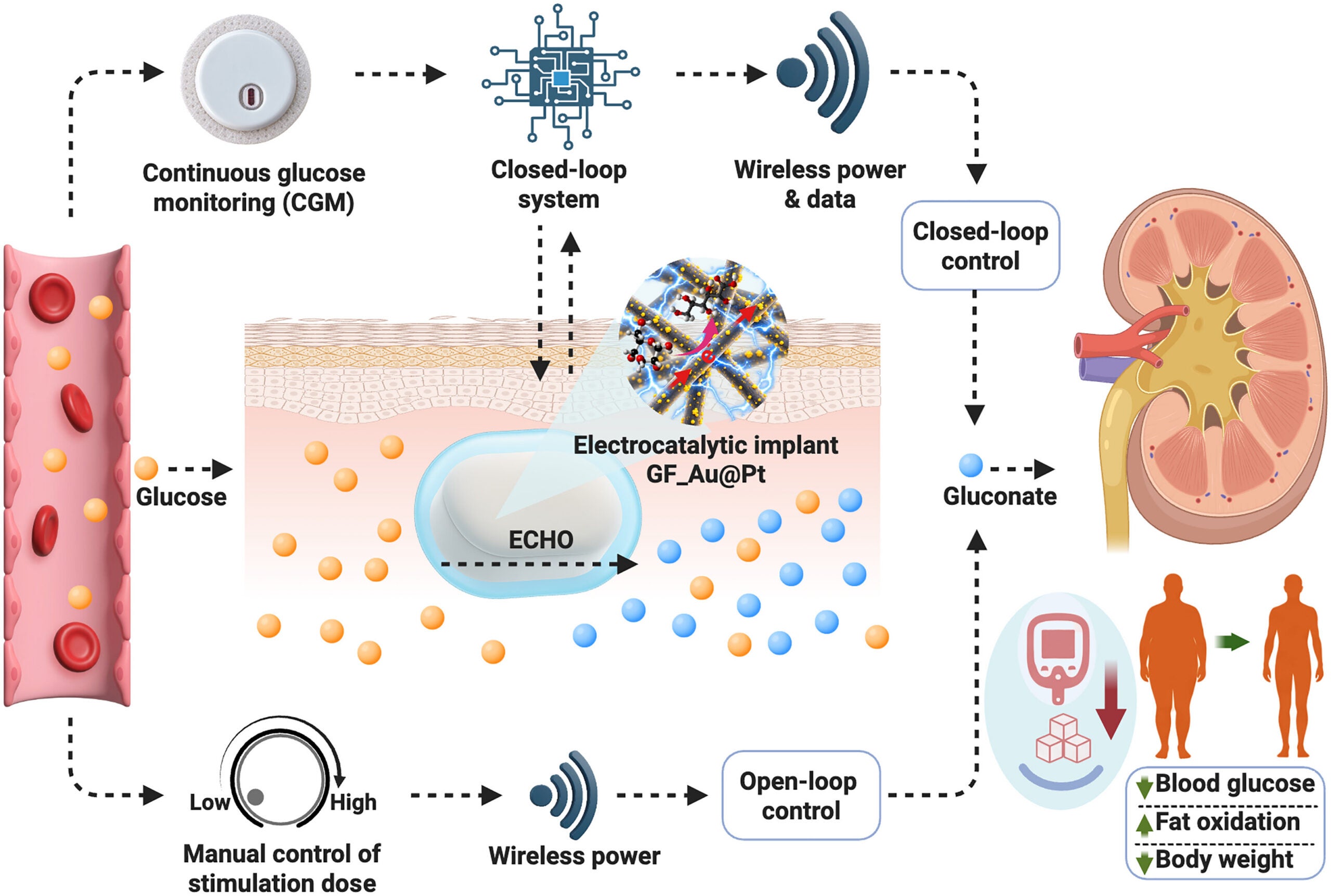
ECHO receives energy wirelessly from an external transmitter operating at 13.56 megahertz. A receiver coil inside the implant supplies its control electronics and electrode. The frequency is used for industrial, scientific and medical applications, rather than indicating that a phone alone powers the implant.
The researchers found that operation at 0.75 volts and 10 milliamperes effectively lowered glucose in their animal experiments. Changing the electrical input, operating time or catalyst area changed the reaction’s performance. This gave the team a way to turn glucose conversion on and off and adjust its intensity.
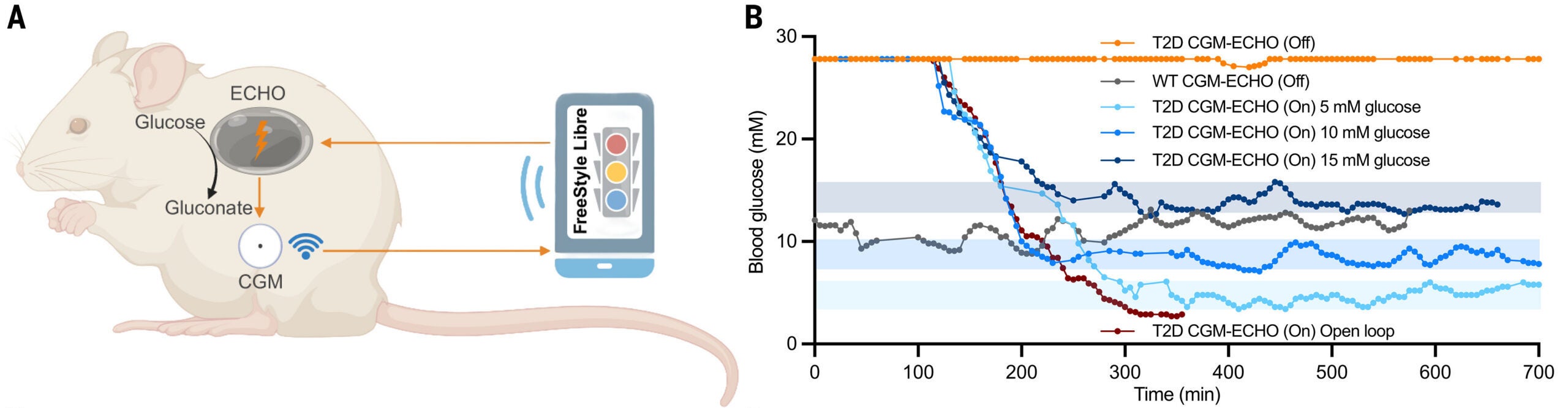
Continuous operation without feedback could remove too much glucose or metabolic energy. The team therefore connected ECHO to a commercial continuous glucose monitor, which measures glucose in fluid between cells. A feedback controller could then activate treatment when readings exceeded a chosen threshold.
The reported animal setup used a practical workaround for proprietary glucose-monitor communications. A sensor detected the glucose reader’s vibration alert and relayed it through a controller to the external power generator. Five-minute activation intervals allowed repeated decisions based on updated glucose information.
The broader connected-device design includes smartphone-compatible monitoring and wireless control. However, the demonstrated reader-and-controller relay is more specific than a fully integrated consumer phone application. That distinction matters when assessing how close the experimental setup is to everyday patient use.
Researchers implanted the device beneath the skin of mice with genetically associated obesity and type 2 diabetes. Experimental groups contained eight animals, and most experiments used males. Additional female-mouse experiments showed comparable glucose-lowering effects under the conditions tested.
When activated at the selected settings, ECHO brought elevated glucose into the study’s normal range within roughly 60 to 90 minutes. Glucose rose again after electrical treatment stopped. The response therefore reflects active control, rather than a permanent correction of the underlying disease.
In the longer scheduled-treatment experiment, the implant operated for 60 minutes per day. Glucose regulation remained effective over at least six weeks. Treated diabetic mice also lost up to 10% of their body weight during that period.
The animals showed no detectable change in food intake. Their blood contained lower triglyceride levels, higher free fatty acids and higher ketone concentrations. The authors interpret that combination as evidence of greater reliance on fat for energy after glucose removal.
Automatic sensor-driven control was demonstrated separately over 12 days. The investigators reported stable glucose profiles without hypoglycemic overshoot under the tested control settings. That result does not establish that dangerously low glucose could never occur in another setting or in people.
A separate circulation experiment tested glucose oxidation in five liters of laboratory solution. That volume is roughly comparable to an adult’s blood volume. Larger electrodes increased catalytic capacity, supporting the possibility of scaling the chemical reaction beyond a mouse-sized system.
The reservoir was not a human circulation study. Matching fluid volume does not reproduce all the transport, tissue and metabolic conditions of an implanted device in a person. The result establishes laboratory processing capacity while leaving human performance unresolved.
A larger catalyst must work within tissue rather than a simple reservoir. Blood flow and diffusion influence how much glucose reaches its surface. Those transport limits are part of the challenge of translating laboratory capacity into treatment.
The researchers also examined compatibility and possible unwanted reaction products. They reported no detectable chlorine or reactive oxygen species at the operating potential in the assays performed. Thermal imaging found no measurable temperature increase during a two-hour laboratory test at the selected electrical settings.
Tissue examinations and inflammatory-marker measurements provided additional evidence of tolerability over the studied intervals. The team also reported no detectable gold or platinum in tested serum and organ samples. These findings support further investigation, rather than establishing lifelong implant safety.
Blood acidity remained stable in the reported animal experiments despite increased ketone production. That is reassuring within this model, but does not settle long-term metabolic effects. The consequences of sustained glucose conversion and gluconate clearance still require evaluation beyond these experiments.
Existing diabetes care already includes multiple treatments and increasingly capable glucose-monitoring systems. The new study does not establish that ECHO outperforms those options in patients. Its contribution is a distinct experimental mechanism that directly changes glucose through controlled electrochemistry.
Fussenegger’s team plans to develop the platform toward a medical device. Commercial sensing and wireless-power components could help that process, but their availability does not establish the readiness of the assembled implant. Longer-term performance, reliable control and compatibility remain central questions.
The mouse findings show that glucose chemistry and electronic feedback can work together to influence both glycemia and energy balance. The next step is to determine whether that combination remains effective over longer periods and under more demanding biological conditions. Only subsequent studies can establish whether the benefits and risks translate to humans.
These resources combine recent clinical and bioelectronic research with foundational work and an authoritative explanation of type 2 diabetes.
Recent Advances in Glucose Fuel Cells for Biomedical Applications
This review explains glucose-powered bioelectronics and their translation challenges, providing context for how fuel-generating devices differ from externally powered glucose conversion. (Advanced Materials Technologies, November 2025)
A Randomized Trial of Automated Insulin Delivery in Type 2 Diabetes
A clinical trial evaluates automated insulin delivery in adults, offering a human-evidence comparison for understanding established feedback-based approaches. (The New England Journal of Medicine, March 2025)
Blood-Glucose-Powered Metabolic Fuel Cell for Self-Sufficient Bioelectronics
Earlier work combined glucose-derived electrical power with engineered insulin-releasing cells in an experimental diabetes model, illustrating a different bioelectronic strategy. (Advanced Materials, March 2023)
Research findings are available online in the journal Science.
The original story “ETH Zurich’s electronic implant lowers blood sugar and body weight” is published in The Brighter Side of News.
Like these kind of feel good stories? Get The Brighter Side of News’ newsletter.
The post ETH Zurich’s electronic implant lowers blood sugar and body weight appeared first on The Brighter Side of News.


Leave a comment
You must be logged in to post a comment.