Religiosity has often been linked with better mental health, but the protection may have less to do with religious identity itself. An Israeli study points instead to meaning in life and digital habits, raising a broader question about resilience.
The research involved 2,907 Jewish adults in Israel during an ongoing period of war. Published in the International Journal of Mental Health and Addiction, it was led by researchers from Hebrew University of Jerusalem and the Israel Center for Addiction and Mental Health.
Religious and ultra-Orthodox participants generally reported fewer problems involving substance use, behavioral addictions, depression, anxiety, and post-traumatic stress than secular and traditional participants. They also reported a stronger sense of meaning, less social media use, and less exposure to harmful online material.
“Our findings suggest that religiosity itself is not the whole story,” said Dr. Aaron D. Cherniak. “Much of its protective effect appears to come from the extent it can help people cultivate meaning in life and reduce potentially harmful digital exposure. The encouraging implication is that these are factors anyone can strengthen, regardless of whether they are religious.”

Researchers focused on three factors that repeatedly tracked with lower psychological vulnerability: a stronger sense of meaning in life, less social media use, and less exposure to harmful content such as hate speech and graphic war material.
People with a stronger sense of purpose tended to report fewer problems across substance use, behavioral addictions, and mental health symptoms. Greater social media use and more frequent exposure to disturbing content showed the opposite pattern.
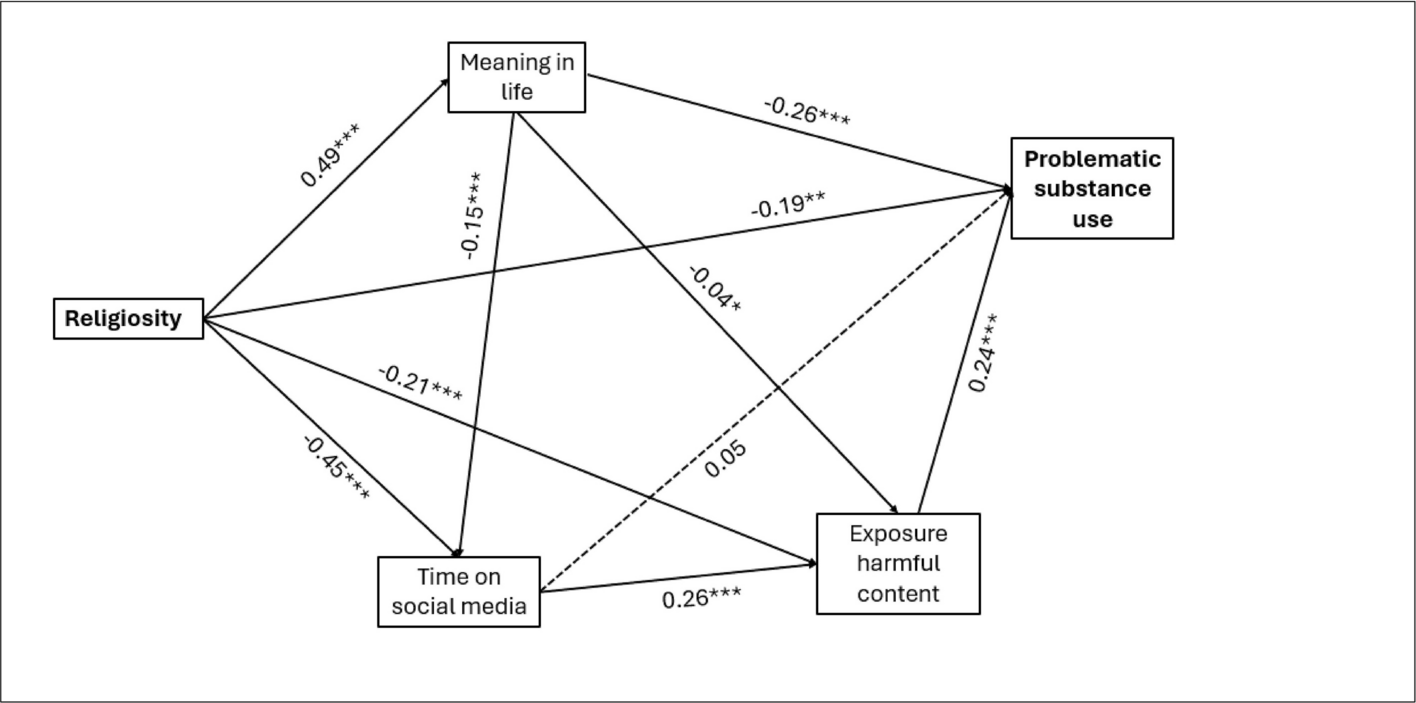
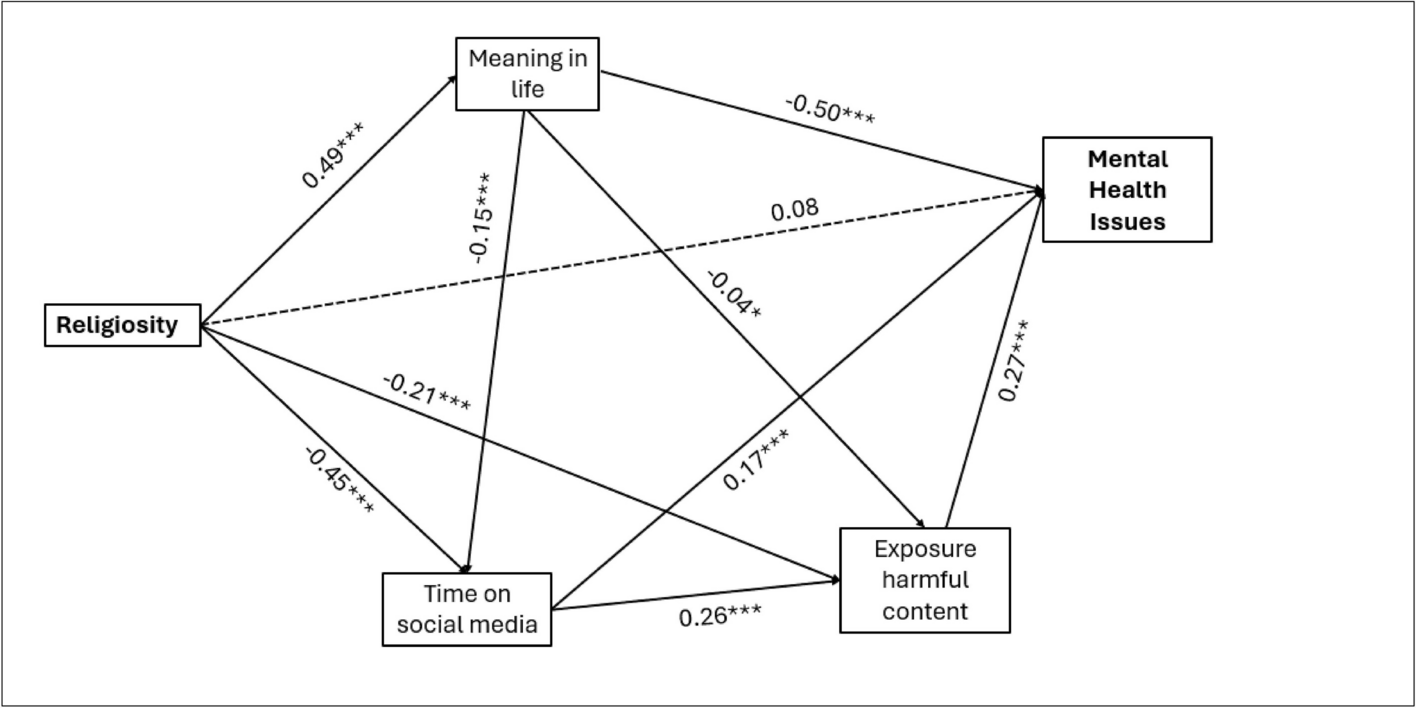
Once those factors entered the statistical models, religiosity no longer independently predicted fewer symptoms of depression, anxiety, and PTSD. Its protective association remained significant for problematic substance use, but the relationship with behavioral addictions reversed direction.
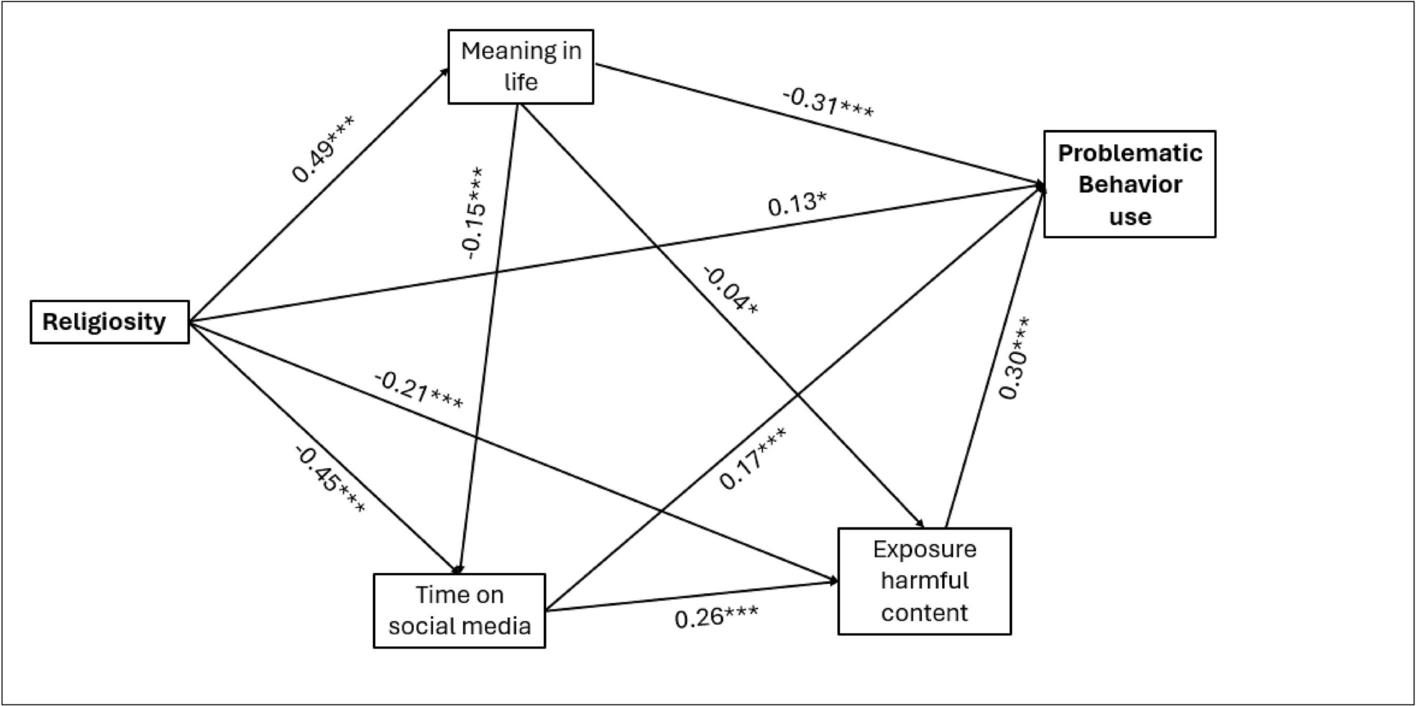
After adjustment for meaning and digital habits, religious participants showed higher shared vulnerability for behavioral addictions. The researchers cautioned that this result requires further study and may reflect complex relationships among religiosity, digital behavior, and private compulsive activity.
“Religion has long been a source of meaning and inspiration for behavior change,” Cherniak added. “Our results show these resources, which are not exclusive to religion, may reduce vulnerability to a variety of psychological difficulties.”
The survey ran from Feb. 5 through Feb. 24, 2025. Participants were ages 18 to 70 and came from an online panel using quotas for gender, age, religiosity, and geographic area to approximate Israel’s adult Jewish population.
The analysis included 2,907 people. About three-quarters identified as secular or traditional. Roughly half were women, half lived in the Tel Aviv or Central region, and around two-thirds were married.
Researchers also measured direct war exposure. Participants reported experiences such as hearing sirens or explosions, feeling that their lives were in danger, or fearing for family members.
Participants also reported how often they encountered hate speech or uncensored material about the war, including graphic content. Among those who had accessed uncensored material, 98% did so through online platforms.
Rather than treating every disorder separately, the team examined shared patterns across three groups. One covered problematic use of tobacco, alcohol, cannabis, prescription sedatives, stimulants, and opioid painkillers. A second covered gambling, gaming, compulsive sexual behavior, and pornography use. The third combined PTSD, anxiety, and depression symptoms.
The statistical components captured 39.3% of shared variance in problematic substance use, 59.1% in behavioral addictions, and 83.7% in mental health symptoms.
Religiosity initially showed a significant association with lower vulnerability in all three groups. Religious participants also reported more meaning in life, less social media use, and less harmful online exposure after adjustment for demographic differences and direct war exposure.
Once meaning and digital variables were added, the picture changed. For substance use, religiosity remained protective, though its effect became smaller. For mental health symptoms, the association disappeared. However, for behavioral addictions, it became significant in the opposite direction.
The authors suggest that religious community norms and social support may help explain why the substance-use association remained. They also note that behavioral addictions can be private and less visible than drinking or drug use.
The findings do not prove that religiosity causes healthier digital habits, greater meaning, or better mental health. The research was cross-sectional, meaning information was collected during the same general period. That prevents researchers from determining which factors came first.
All measures were self-reported. The sample included only Jewish adults able to complete an online survey, limiting how broadly the results can be applied. The findings need testing in populations with different cultural backgrounds and religious traditions.
The study also simplified religiosity into two groups, combining secular with traditional participants and religious with ultra-Orthodox participants. That approach could not separate features such as belief intensity, religious practice, or community involvement.
Social media use was measured mainly by time spent online, without distinguishing among platforms, active or passive use, content types, or intentional versus habitual use. Unmeasured factors, including personality and preexisting vulnerability, could also have influenced the results.
The strongest practical message is that meaning in life and digital exposure may offer useful targets for prevention across several kinds of psychological difficulty. Both factors can be addressed without requiring a person to adopt a religious identity.
The findings support further study of meaning-centered approaches, healthier social media habits, and ways to reduce exposure to graphic or hateful material, especially during collective trauma. They also suggest mental health and addiction prevention may benefit from looking across disorders rather than treating each problem separately.
Longitudinal studies will be needed to determine whether changes in meaning, digital behavior, or religiosity actually lead to later changes in mental health. For now, the research identifies closely linked factors that may help explain why some people show greater resilience during prolonged stress.
These resources explore the major threads behind the story, from religion and addiction to meaning in life and the psychological effects of consuming disturbing content online. They also provide newer evidence that helps place the findings in a broader scientific context.
Research findings are available online in the International Journal of Mental Health and Addiction.
The original story “Faith, purpose, and healthier digital habits linked to better mental health” is published in The Brighter Side of News.
Like these kind of feel good stories? Get The Brighter Side of News’ newsletter.
The post Faith, purpose, and healthier digital habits linked to better mental health appeared first on The Brighter Side of News.


Leave a comment
You must be logged in to post a comment.