A hidden world beneath the soil has long shaped the fate of plants, yet it has remained largely out of sight. Now, researchers at the Technical University of Munich have found a way to reveal it. Using a new imaging method, they have captured three-dimensional views of plant roots and fungal networks exactly as they exist underground.
They found that Earth’s soils contain enough underground fungi to stretch from our planet to the Sun nearly 750 million times, according to a groundbreaking new study. These vast fungal networks sustain plant life and play a vital role in regulating the climate.
The breakthrough allows scientists to study how plants and fungi work together in real soil, rather than in simplified lab setups. For decades, researchers understood that this relationship mattered. What they could not see was how it truly formed and functioned in its natural setting.
“With our newly developed method, we have opened a ‘black box’ of plant research,” said Mutez Ahmed, Professor of Root-Soil Interaction at the Technical University of Munich.
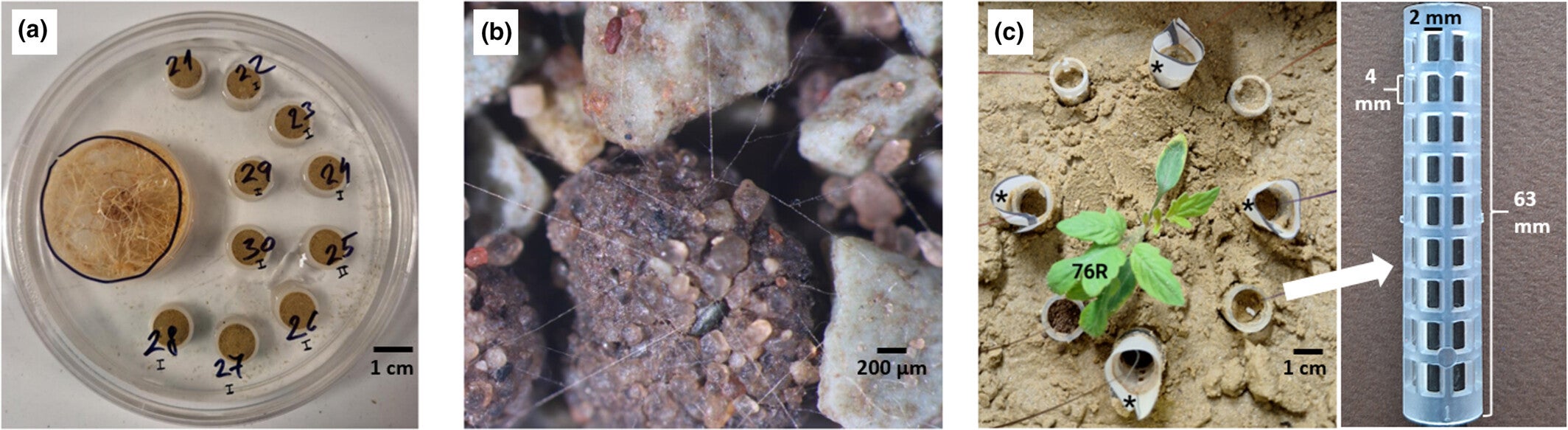
Most plants rely on fungi to survive and grow. These fungi form structures called mycorrhizae, which connect to plant roots and extend outward into the soil. Through these networks, plants gain access to water and nutrients that roots alone cannot reach.
In return, plants provide the fungi with sugars produced through photosynthesis. This exchange supports both partners and helps ecosystems thrive.
These fungal threads, known as hyphae, spread through the soil in vast networks. They can reach areas where nutrients remain untouched, effectively expanding the plant’s reach. Their shape, length, and connections determine how well they perform this role.
Scientists have known about this partnership for decades. However, studying it in real soil has proved difficult. The networks are fragile, complex, and often invisible without disturbing them.
Earlier research often relied on controlled environments such as Petri dishes. These setups allowed scientists to observe fungal growth under a microscope. They revealed how hyphae branch, grow, and transport materials.
Still, these systems removed the complexity of natural soil. Real soil contains particles, air pockets, water, and chemical gradients. These features influence how fungi behave.
To address this, researchers developed intermediate systems that mimic soil structure. These models showed that physical obstacles affect fungal growth. For example, branching increases sharply when fungi encounter barriers.
Yet even these models simplified reality. They often reduced the environment to flat, two-dimensional spaces. The true structure of soil is three-dimensional and far more complex.
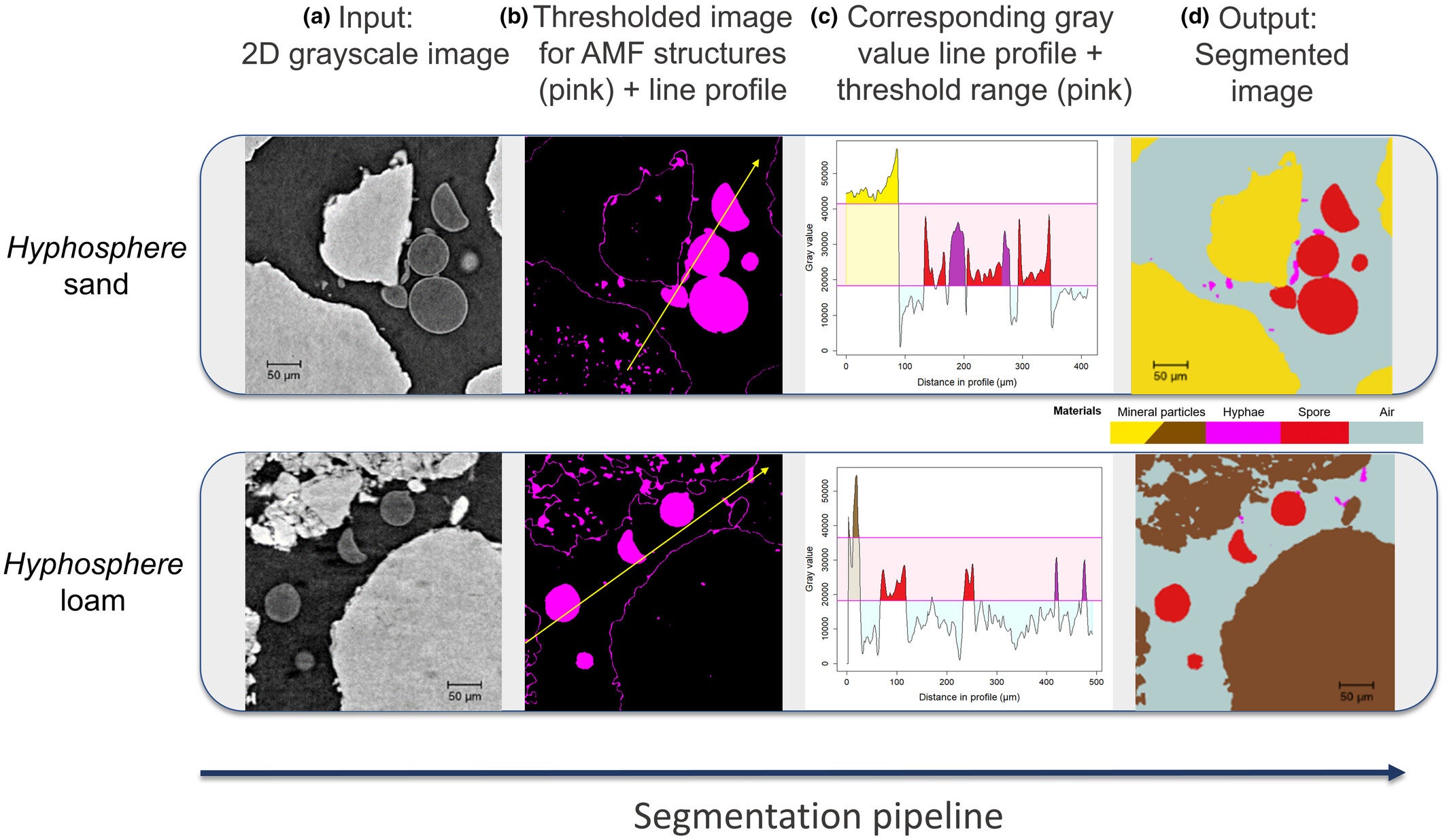
The new method changes that. It uses a powerful imaging technique known as synchrotron computed tomography. This approach uses high-energy X-rays to capture detailed images without disturbing the sample.
Plants are grown in special containers that allow them to be removed from the soil along with their surrounding environment. This preserves the delicate structure of roots and fungal networks.
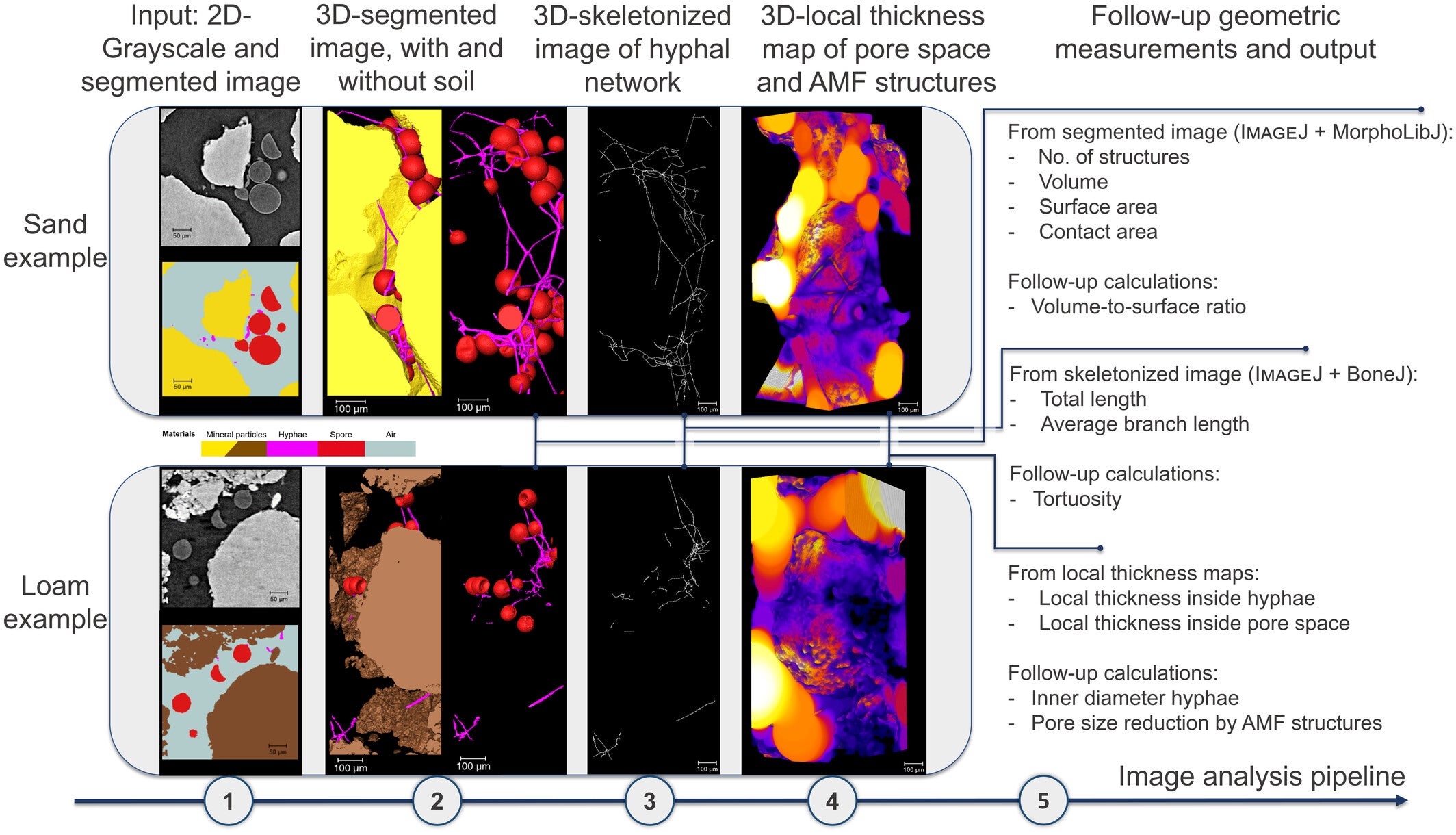
Researchers then create a three-dimensional model from thousands of high-resolution images. These models reveal roots, fungal filaments, and spores in their natural positions.
Unlike older techniques, this method does not require cleaning the roots. That step often destroyed fine structures and erased connections between organisms.
Now, scientists can see the entire network as it exists underground.
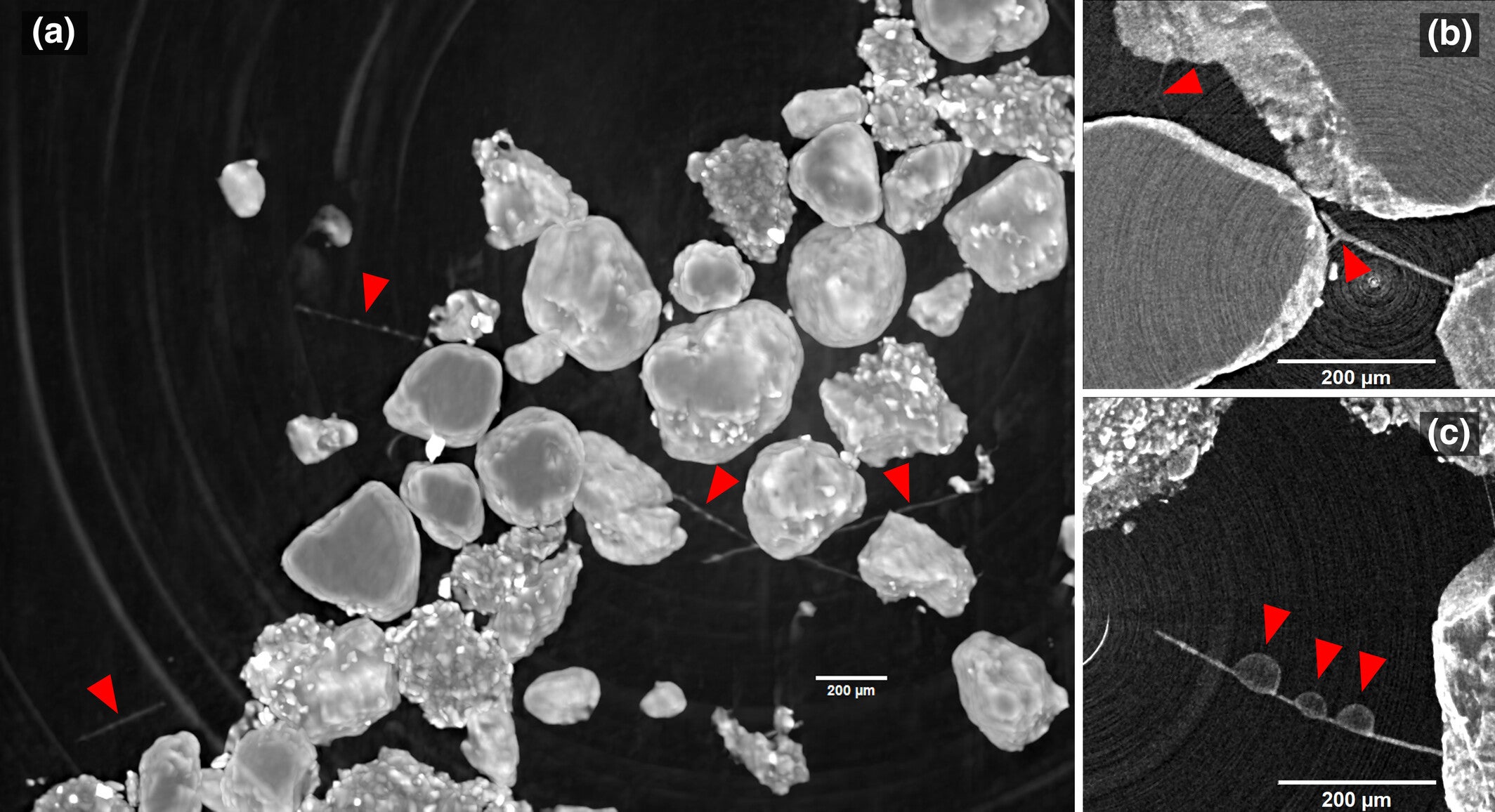
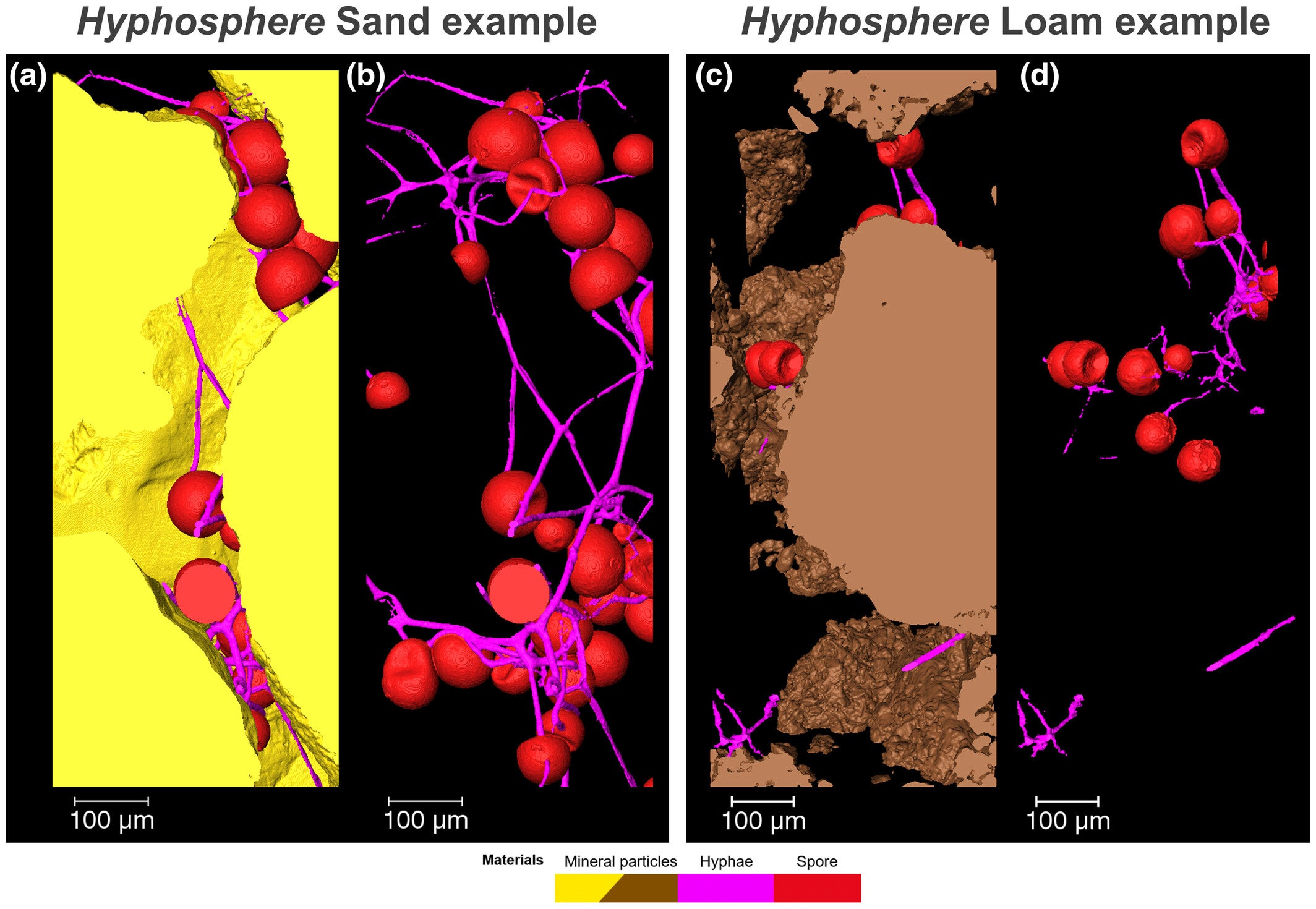
The level of detail is striking. The method captures structures as small as a few micrometers. This makes it possible to observe individual hyphae, branching patterns, and connections to roots.
In one set of observations, fungal threads measured about 5 to 6 micrometers in diameter. Networks stretched thousands of micrometers through the soil, forming complex pathways.
Branching patterns also varied depending on soil type. In coarse sand, networks showed more branches and longer extensions. In finer soil, growth appeared more compact.
Spores, which help fungi reproduce, appeared in different locations. Some were embedded within soil clusters, while others sat in open spaces or inside decaying roots.
These details help explain how fungi adapt to different environments.
The research also shows how soil itself influences fungal growth. In sandy environments, larger pore spaces allow hyphae to extend farther. This leads to longer networks and more branching.
In denser soil, movement becomes more restricted. Networks grow shorter and more compact, adapting to tighter spaces.
The presence of fungi also changes the soil. As hyphae and spores fill pore spaces, they alter how water moves. In some cases, pore size decreases by more than 10 percent, and pore volume drops significantly.
These changes may help soil retain water. By slowing the movement of water, fungal networks can support plants during dry periods.
The new method also reveals how fungi interact with plant roots. Hyphae often grow toward roots and spread along their surfaces. Some connect at multiple points, forming pathways for nutrient exchange.
Inside the roots, scientists observed specialized structures. Arbuscules act as sites where nutrients move between fungi and plants. Vesicles store nutrients for later use.
These structures show how closely the two organisms are linked. The connection is not just external. It extends deep into the plant’s tissues.
Lead author Henri Braunmiller explained the importance of this discovery. “We can now see exactly how plants and fungi interact in the soil and, for example, observe which mycorrhizal networks are particularly effective in supplying plants with water and nutrients.”
Despite its promise, the method has limits. Some fungal structures remain difficult to distinguish from root hairs. Both appear as thin threads and can overlap in shape.
Another challenge involves scale. High-resolution imaging captures only small sections of soil. This makes it harder to study larger networks across wide areas.
The technique also struggles to detect structures in water-filled spaces. In these areas, contrast between materials becomes too weak to see clearly.
Even so, the method provides the most detailed view yet of underground networks.
The ability to see these networks in detail could have major implications for agriculture. As climate change increases the risk of drought, understanding how plants access water becomes more important.
Fungal networks play a key role in this process. By extending the reach of roots, they help plants survive in dry conditions.
“The better we understand mycorrhizae and their connections to plant roots, the better we can make use of this symbiosis,” Braunmiller said.
Researchers hope to identify which networks are most effective at supplying water and nutrients. This knowledge could guide the development of crops that are more resilient to environmental stress.
This work opens new paths for both science and agriculture. By revealing how plants and fungi interact in real soil, researchers can develop better strategies to improve crop growth and resilience. Farmers may one day use this knowledge to select plant varieties or soil treatments that strengthen beneficial fungal networks.
The findings also support efforts to manage soil health. Healthy fungal networks can improve water retention, reduce the need for fertilizers, and support long-term productivity. This could lead to more sustainable farming practices.
In a broader sense, the research deepens understanding of ecosystems. These underground networks play a key role in nutrient cycles and plant survival. Studying them in detail can help scientists predict how ecosystems respond to climate change.
As environmental pressures grow, this knowledge may help protect food supplies and natural habitats alike.
Research findings are available online in the journal New Phytologist.
The original story “Scientists discover hidden fungal networks that help plants survive climate change” is published in The Brighter Side of News.
Like these kind of feel good stories? Get The Brighter Side of News’ newsletter.
The post Hidden fungal networks more than 100 quadrillion km in length help plants survive climate change appeared first on The Brighter Side of News.


Leave a comment
You must be logged in to post a comment.