Offshore wind farms do more than turn moving air into electricity. When built in large clusters, they can also slow the wind, stir the lower atmosphere and change where moisture falls as rain.
A modeling study from Hereon’s Institute of Coastal Systems, Analysis and Modeling examined how major offshore wind expansion could affect weather over the North Sea and Baltic Sea. The work used a high-resolution regional climate model called COSMO-CLM.
The simulations covered weather data from 2008 to 2017. By analyzing a full decade, the researchers could study average atmospheric patterns across many weather conditions, rather than relying on one unusual year.
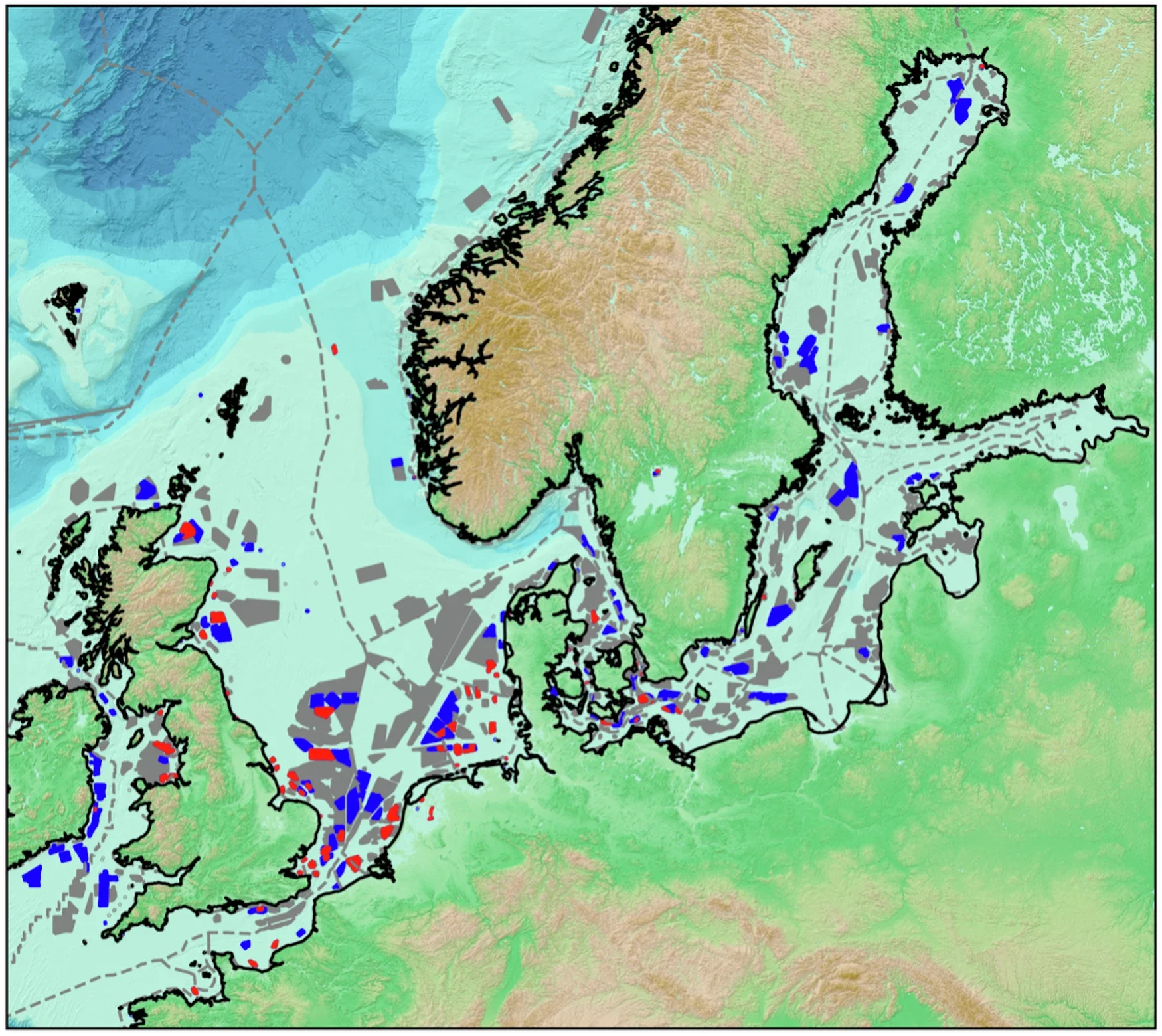
The team included existing offshore wind farm areas and potential future development zones. It also considered how turbines affect wind speed, atmospheric mixing and the movement of moisture through the air.
“Our work helps ensure that the further expansion of offshore wind energy in Europe can be aligned with the requirements of climate protection, environmental protection, and coastal management,” says Dr Naveed Akhtar, lead author of the study.
The study tested a deliberately extreme expansion scenario. It included all designated areas in the North Sea and Baltic Sea that have been identified for possible offshore wind development.
For those areas, the researchers assumed maximum deployment. That produced an installed capacity well above the European Union’s currently discussed target of 300 gigawatts by 2050.
The team chose that large scenario on purpose. A stronger buildout makes possible climate effects easier to detect in a model. It also gives researchers a way to estimate the possible size of those effects.
The scenario should not be read as a prediction. The researchers noted that uncertainty remains about which areas will be developed and how political targets may change.
Still, the exercise helps answer an important planning question. If offshore wind grows far beyond today’s levels, what could happen to regional weather statistics?
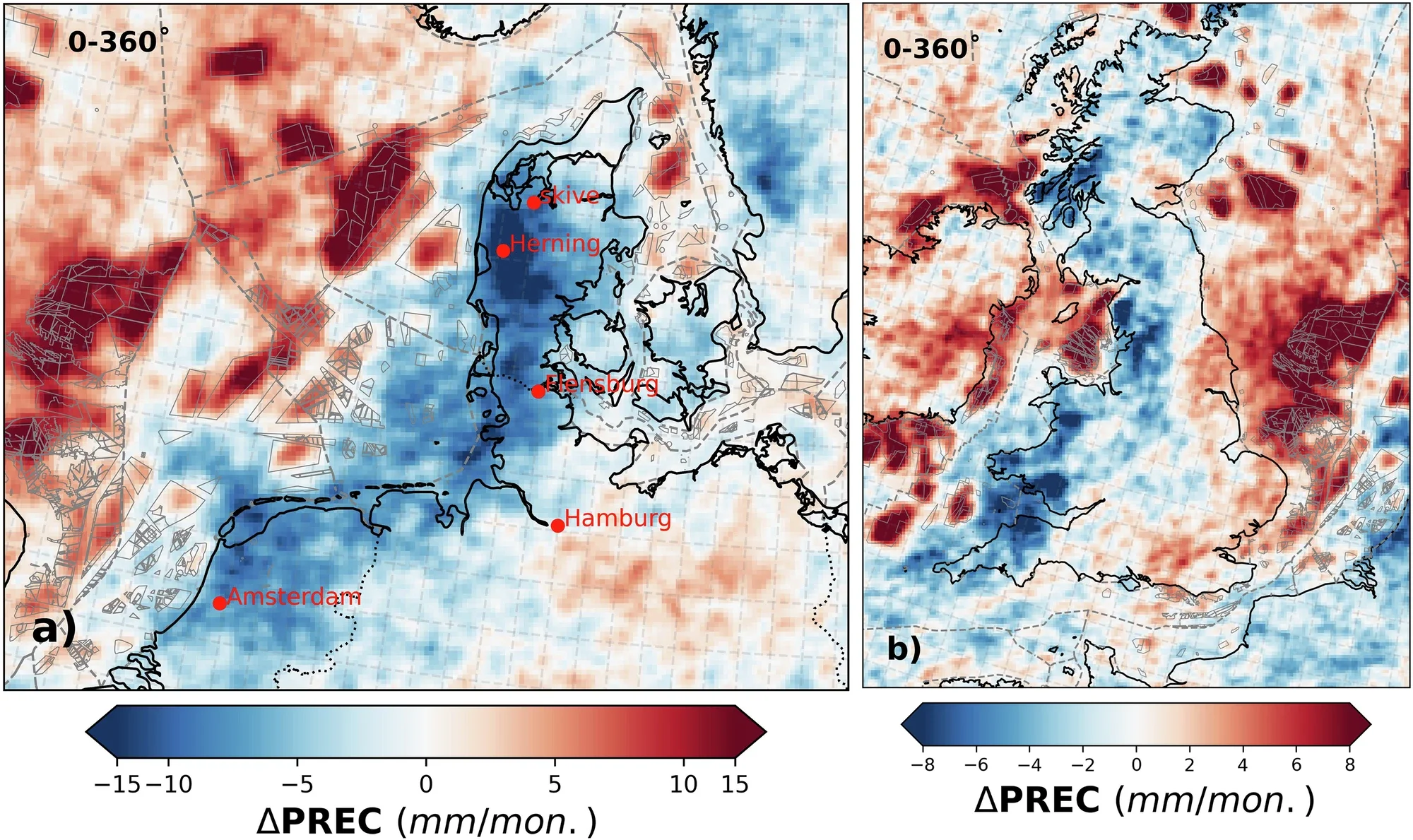
The clearest result involved precipitation. In the model, large offshore wind expansion increased precipitation over the wind farm areas themselves. At the same time, rainfall decreased in some nearby coastal regions.
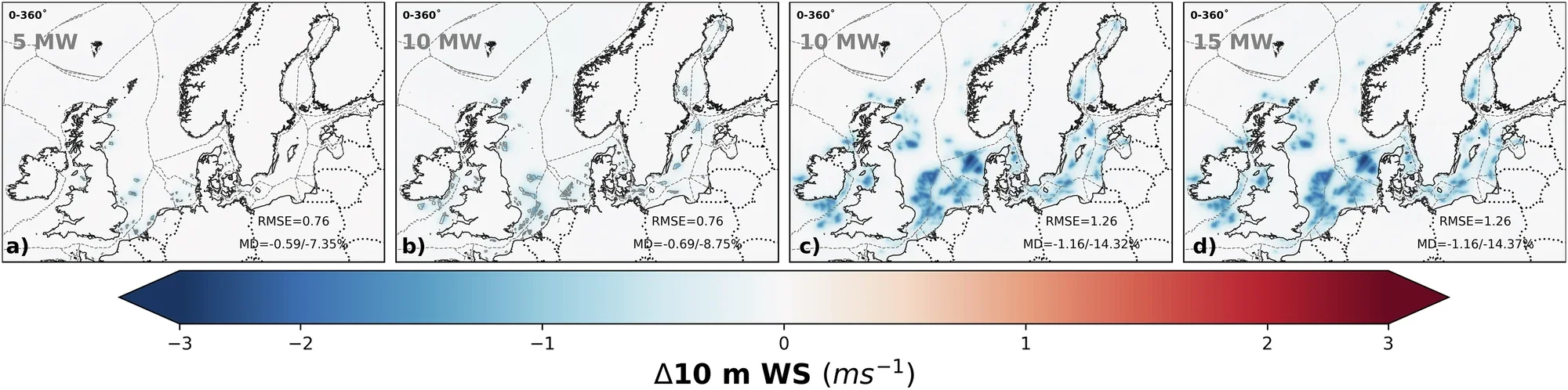
The mechanism begins with the turbines. Wind turbines extract part of the wind’s kinetic energy. They also increase turbulence, meaning they make the lower atmosphere more mixed and disturbed.
Downstream of the turbines, strong variations in air movement increase the exchange between different atmospheric layers. Moist air can rise, cool and condense. That process can lead to cloud formation and precipitation over the wind farms.
But air does not carry unlimited moisture.
If more moisture falls as rain over offshore wind farm areas, less remains available for regions downwind. In the simulations, that altered the transport of moisture toward land.
For parts of Denmark, Germany, the Netherlands and the United Kingdom, the model indicated potential coastal precipitation reductions of up to 15 percent.
The study focused on long-term weather statistics, not single storms or daily forecasts. That distinction matters. The model does not say a specific town will miss rain on a specific day because of turbines offshore.
Instead, it suggests that very large wind farm clusters could shift average precipitation patterns over time. Those shifts could matter for coastal planning, water management and regional environmental assessment.
The strongest changes appeared under the large technical expansion scenario. Smaller existing and planned wind farms may have more limited effects.
Previous studies by Hereon have shown that wind farm size, layout and turbine spacing can affect atmospheric impacts. This new work adds another piece by examining large clusters across both the North Sea and Baltic Sea.
The findings also show why maritime spatial planning cannot focus only on energy yield. Offshore wind farms sit inside a moving atmosphere. Their placement can affect wind, turbulence and moisture transport across national borders.
The results do not challenge the role of offshore wind in climate protection. Wind energy can reduce dependence on fossil fuels and support Europe’s clean-energy goals.
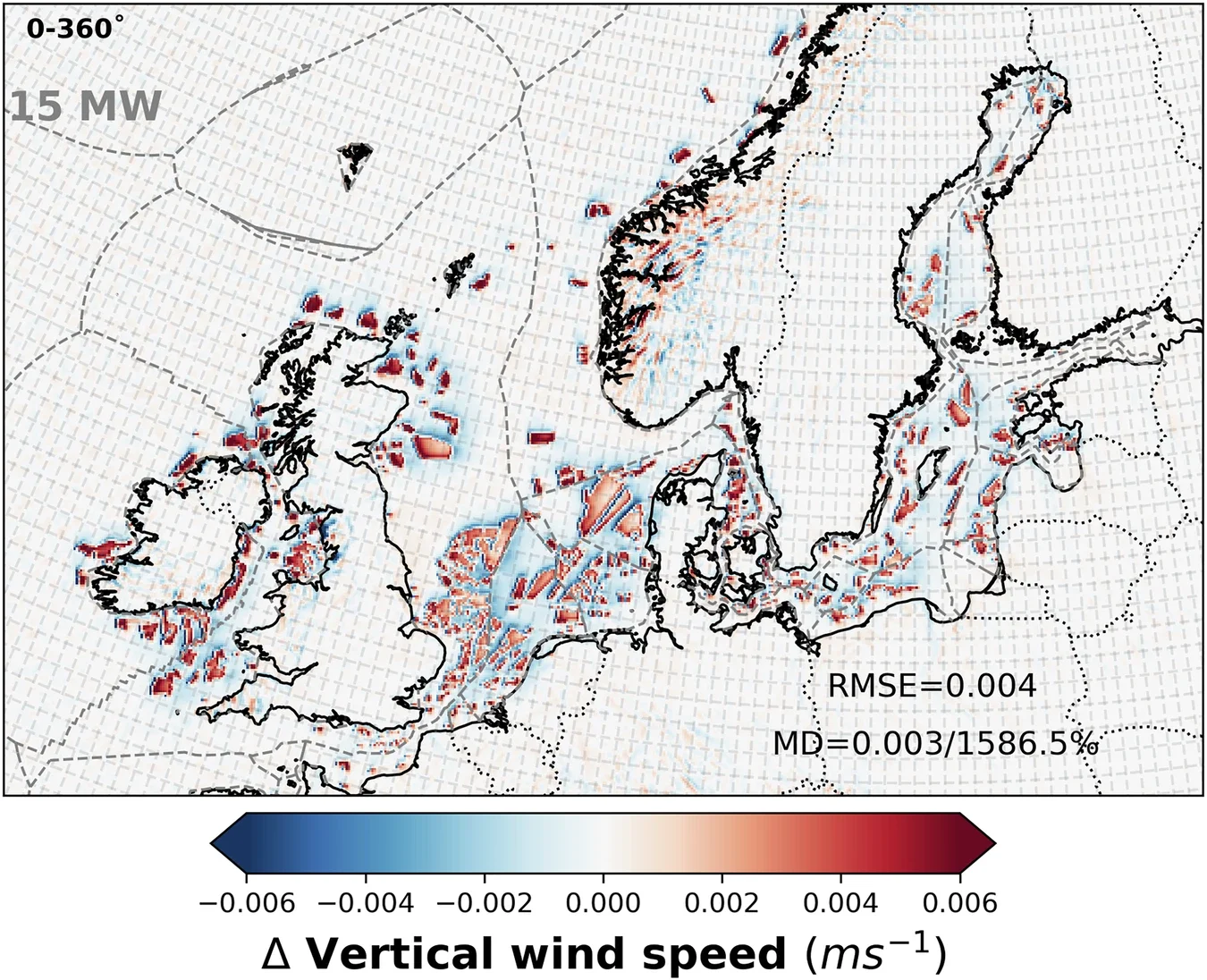
But the study shows that renewable energy infrastructure can still have regional environmental effects. Large turbine clusters are physical structures in the atmosphere. At sufficient scale, they can change local and regional air movement.
That does not make offshore wind a problem to avoid. It makes offshore wind a system to plan carefully.
The researchers framed the work as a way to support sustainable maritime spatial planning and cross-border cooperation. That is especially relevant in the North Sea and Baltic Sea, where many countries share connected air and water systems.
A wind farm built in one country’s waters may influence atmospheric patterns that extend beyond that site. That makes coordination important as offshore development expands.
The researchers called for future studies that examine a wider range of expansion pathways. Different choices could produce different atmospheric effects.
Turbine density may matter. So could wind farm size, spacing and spatial distribution. A dense cluster in one place may affect the atmosphere differently than a more spread-out pattern.
The model also used a deliberately extreme expansion case. Testing more moderate scenarios would help planners compare possible benefits and risks under realistic development plans.
Future research should also examine ocean and marine ecosystem impacts. Offshore wind farms can affect atmospheric mixing above the sea, but they may also influence conditions below the surface.
The study points toward a broader planning approach. Climate protection, coastal management and environmental protection should be considered together, not in separate boxes.
The findings could help European planners design offshore wind expansion with a clearer view of regional weather effects. They show that wind farm placement, density and layout may influence precipitation patterns near coasts.
That information could support better maritime spatial planning in the North Sea and Baltic Sea. It could also strengthen cooperation among countries that share the same coastal weather systems.
The work does not call for stopping offshore wind development. It suggests that large clean-energy projects should be assessed with high-resolution models that capture atmospheric mixing and moisture transport. As offshore wind grows, those details could help align renewable energy goals with coastal water, land and ecosystem planning.
These resources examine atmospheric wakes, turbine design and the wider environmental effects of large offshore wind development.
Impacts of accelerating deployment of offshore windfarms on near-surface climate: Finds that large North Sea wind farms can alter near-surface winds, heat fluxes, clouds and precipitation, providing direct background for the new regional rainfall analysis. (Scientific Reports, 2022)
Larger wind turbines as a solution to reduce environmental impacts: Tests how turbine size influences wakes and suggests that fewer, larger machines may reduce some atmospheric impacts for equivalent power capacity. (Scientific Reports, 2024)
Mesoscale modelling of North Sea wind resources with COSMO-CLM: model evaluation and impact assessment of future wind farm characteristics on cluster-scale wake losses: Evaluates COSMO-CLM for North Sea wind farms and examines how turbine characteristics and wake parameterization affect modeled results. (Wind Energy Science, 2024)
Cumulative hydrodynamic impacts of offshore wind farms on North Sea currents and surface temperatures: Examines how large-scale offshore wind development can affect currents, mixing and sea-surface temperatures beneath turbine arrays. (Communications Earth & Environment, 2026)
Offshore wind farms are projected to impact primary production and bottom water deoxygenation in the North Sea: Links modeled atmospheric and oceanographic wind farm effects with changes in marine productivity and oxygen conditions. (Communications Earth & Environment, 2022)
Research findings are available online in the journal Communications Earth & Environment.
The original story “Massive offshore wind farms could shift rainfall across Europe’s coasts” is published in The Brighter Side of News.
Like these kind of feel good stories? Get The Brighter Side of News’ newsletter.
The post Massive offshore wind farms could shift rainfall across Europe’s coasts appeared first on The Brighter Side of News.


Leave a comment
You must be logged in to post a comment.