A thunderstorm can change the air long after its last flash disappears. Lightning creates nitrogen oxides, gases also found in vehicle exhaust, and starts chemical reactions that influence both air pollution and the atmosphere’s ability to clean itself.
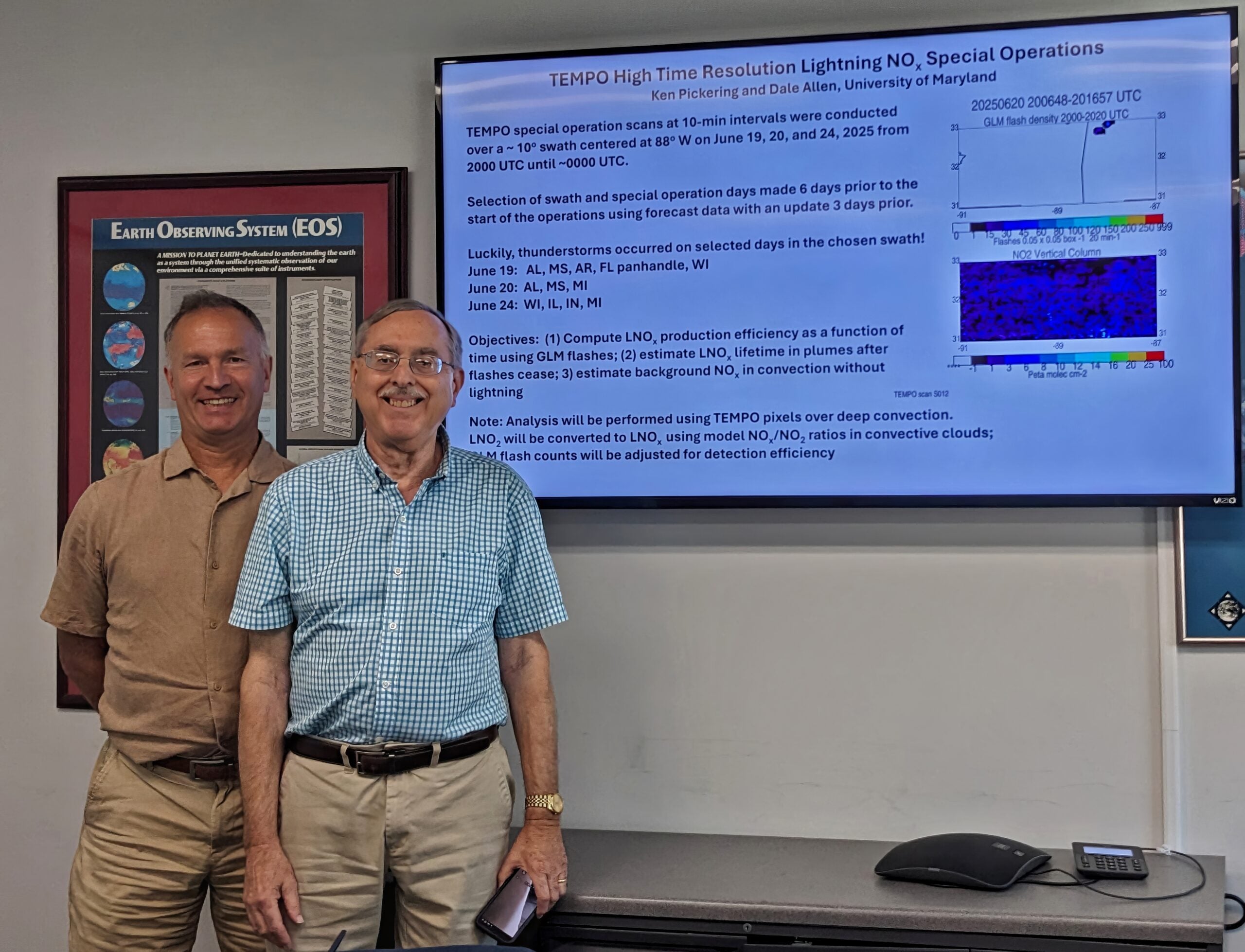
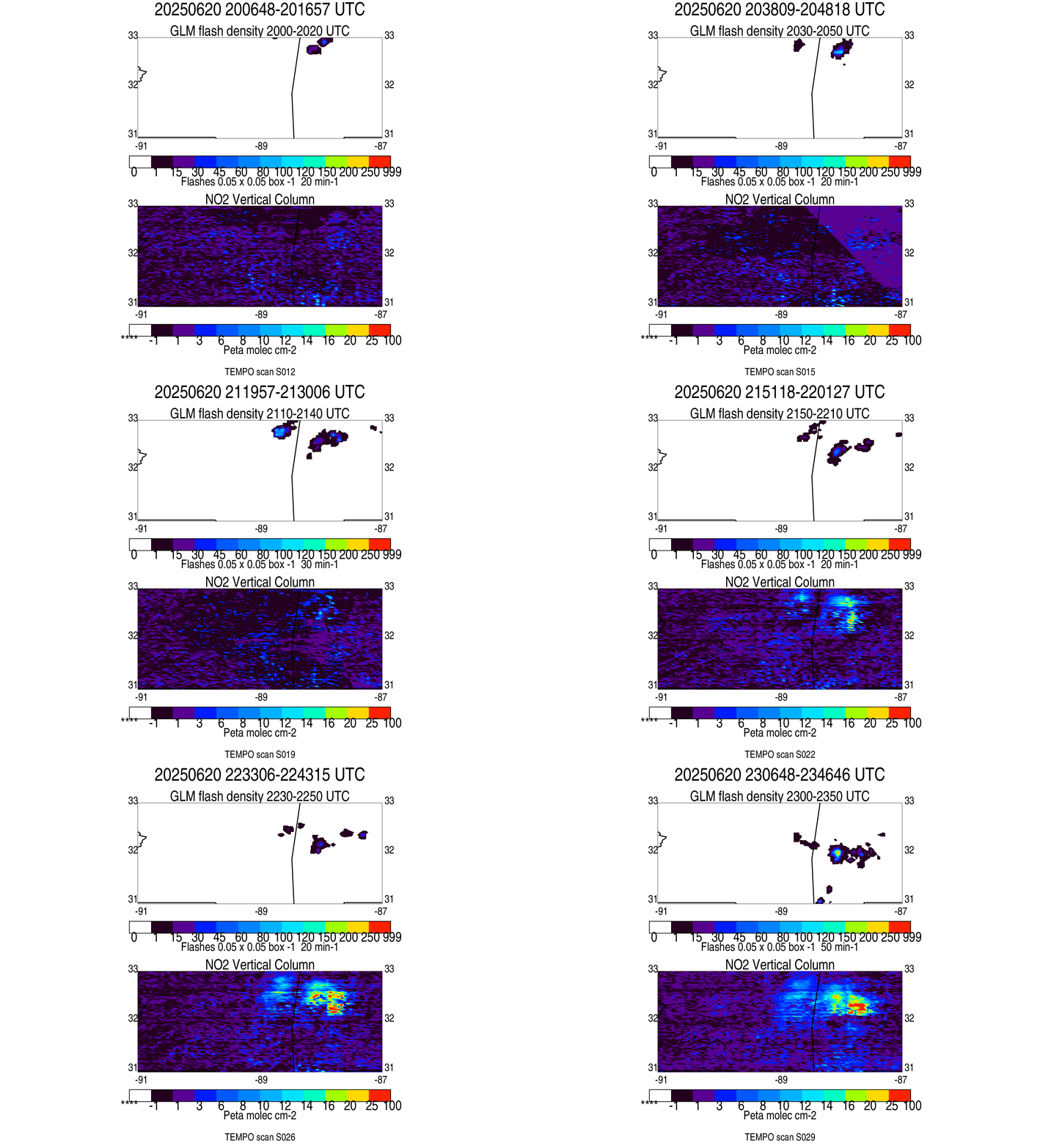
An experiment led by University of Maryland atmospheric scientists Kenneth Pickering and Dale Allen offers a closer view of that chemistry. During several days in late June 2025, they used NASA’s TEMPO instrument to measure nitrogen dioxide around thunderstorms crossing the eastern United States every ten minutes.
The campaign paired those measurements with separate satellite observations of lightning. Together, the records could help explain how a storm’s electrical activity translates into emissions and how those emissions change afterward.
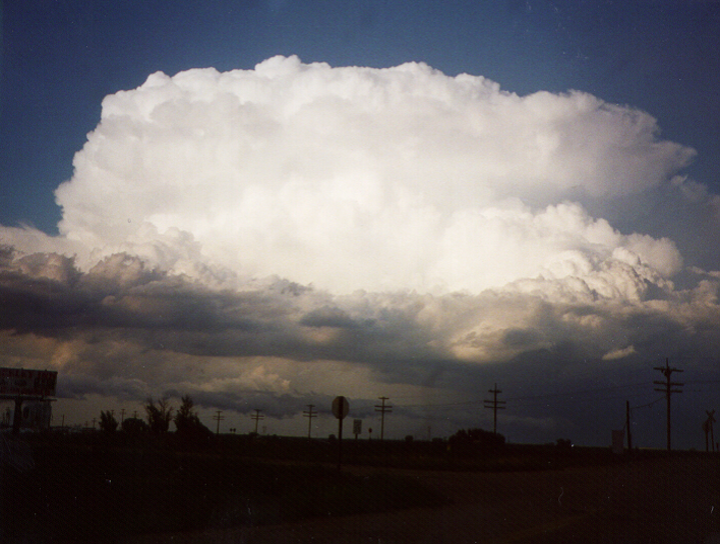
Thunderstorms develop quickly enough to challenge instruments that observe an area only occasionally. A storm can build, intensify and weaken within an hour, leaving important changes hidden between measurements.
TEMPO, short for Tropospheric Emissions: Monitoring of POllution, launched in 2023. Carried aboard a geostationary satellite roughly 22,000 miles above Earth, it normally measures air pollutants across North America hourly during daylight.
Pickering and Allen used a more frequent observing schedule over selected storm regions. The ten-minute intervals provided a much closer sequence of nitrogen dioxide measurements as the weather systems evolved.
“Thunderstorms evolve on a rapid basis,” Pickering said. “They often build up, intensify and die within an hour’s time. These short interval observations give us better snapshots of what actually happens during a storm.”
The lightning counts came from NOAA’s Geostationary Lightning Mapper instruments. These detect flashes, while TEMPO measures gases, giving the team complementary records of a storm’s electrical activity and chemical footprint.
The atmosphere contains abundant nitrogen and oxygen, mostly bound into molecules. Lightning heats the air intensely enough to break molecules apart, allowing reactions that produce nitric oxide, or NO.
Further reactions generate nitrogen dioxide, or NO₂. Atmospheric scientists refer to nitric oxide and nitrogen dioxide together as nitrogen oxides, or NOx.
Fuel combustion also creates these gases, which explains their presence in vehicle exhaust. Their environmental effects depend partly on where they enter the atmosphere and what happens to them afterward.
Pickering estimates that lightning produces roughly 10 to 15 percent of global nitrogen oxide emissions. Human activities contribute more overall, but lightning releases its emissions high above the ground, where their chemical influence can be especially important.
Nitrogen oxides help drive ozone formation. Ozone in the upper troposphere contributes to atmospheric warming, while ozone near the surface is a harmful component of smog.
Winds can also transport gases and their reaction products far beyond a storm. Under some conditions, air influenced by lightning reaches lower altitudes, connecting activity high in thunderclouds with air quality elsewhere.
Counting lightning flashes does not immediately reveal how much nitrogen oxide a storm produces. Flashes differ in their physical characteristics, and their chemical output can vary substantially.
“From past studies by our group and others we believe that each flash of lightning creates about 250 moles of nitrogen oxides in the sky on average,” Allen said.
That estimate remains uncertain. According to the researchers, production by individual flashes varies by at least an order of magnitude, meaning a difference of tenfold or more.
The team suspects that more intense storms can produce shorter flashes that generate less nitrogen oxide individually. The campaign provides observations to investigate that relationship, rather than treating it as an established result.
The distinction matters for models. A storm with more flashes does not necessarily produce a proportionally larger quantity of nitrogen oxides if the characteristics of those flashes also change.
Interpreting the satellite measurements requires accounting for movement, mixing and chemical reactions. A nitrogen dioxide increase cannot automatically be assigned to one particular flash, and a decline may reflect several processes operating together.
More frequent observations help researchers work through those possibilities. They provide a clearer record of when the chemical signal appears, how it changes and where it travels.
Lightning’s chemistry has another side: it influences hydroxyl radicals, highly reactive molecules that help remove methane and other gases from the atmosphere. Hydroxyl is often called the atmosphere’s detergent because it initiates reactions that break down these substances.
Methane is a powerful greenhouse gas, so changes in its atmospheric lifetime matter for climate. Lightning can therefore influence processes associated with both warming and the removal of warming gases.
Those competing effects make its overall role complicated. Producing ozone and promoting methane breakdown are different processes, and their consequences depend on atmospheric conditions and timescales.
The TEMPO campaign measured nitrogen dioxide rather than hydroxyl directly. Scientists must combine those observations with chemical knowledge and modeling to investigate the wider reactions.
Previous research has already demonstrated connections between storm electrical activity and oxidant production. The opportunity in this experiment is to follow lightning-related nitrogen dioxide changes at intervals that better match the rapid development of thunderstorms.
A storm’s chemical effects do not necessarily remain above the place where rain falls. Moving air can carry its emissions and reaction products hundreds of miles, making local pollution harder to understand from nearby sources alone.
Higher terrain can be particularly relevant because it can encounter air transported from elevated parts of the atmosphere. Pickering highlighted Colorado as a region where lightning can make an important contribution to surface ozone.
Summer is a useful season for investigating these connections. Thunderstorms are common, and sunlight and warm conditions favor the chemistry that produces ozone.
A clearer account of lightning emissions could help scientists distinguish natural contributions from those associated with traffic, power generation and other human activities. That distinction would improve understanding of pollution patterns without making naturally produced ozone harmless.
The researchers also want to strengthen climate models. Representing emissions more accurately could help those models account for differences among storms and assess the consequences of changing weather patterns.
“We want to use this high-frequency data to narrow the major uncertainties in our current climate models,” Allen said.
When the university announced the campaign, the researchers were still analyzing the observations. The ten-minute record offers a foundation for testing their ideas; finalized emissions estimates and demonstrated forecasting improvements remain separate steps.
These resources explain how satellites observe storms and how lightning influences the gases around them.
TEMPO: Explore the mission’s approach to measuring air pollutants across North America from geostationary orbit. (NASA)
Geostationary Lightning Mapper: Learn how NOAA’s instruments detect lightning within clouds and between clouds and the ground. (NOAA)
The global lightning-induced nitrogen oxides source: This foundational review examines estimates of lightning emissions and their influence on atmospheric chemistry. (Atmospheric Chemistry and Physics, 2007)
Extreme oxidant amounts produced by lightning in storm clouds: Aircraft observations reveal how storm electrical activity produces reactive molecules involved in atmospheric cleansing. (Science, 2021)
High-resolution geostationary satellite observations of free tropospheric NO₂ over North America and implications for lightning emissions: A separate study uses TEMPO observations to investigate nitrogen dioxide above the lower atmosphere and evaluate modeled lightning emissions. (PNAS, 2025)
The original story “NASA satellite tracks the pollution lightning leaves behind” is published in The Brighter Side of News.
Like these kind of feel good stories? Get The Brighter Side of News’ newsletter.
The post NASA satellite tracks the pollution lightning leaves behind appeared first on The Brighter Side of News.


Leave a comment
You must be logged in to post a comment.