High-energy particles trapped in Earth’s radiation belts can look as if they are spreading randomly, even when their motion is fully predictable. The problem may lie not in the particles, but in how spacecraft see them.
A team working through the International Space Science Institute, led by the University of Birmingham and the Czech Academy of Science, reports in Physical Review Research that highly structured particle motion can produce measurements almost indistinguishable from diffusion.
Radiation belts are doughnut-shaped zones of energetic particles held by magnetic fields. Earth has them, but so do Jupiter, Saturn and Jupiter’s moon Ganymede. Similar belts have also been detected around ultracool brown dwarfs.
For decades, scientists have often interpreted the smoothing of particle populations as evidence of radial diffusion, a process in which particles gradually spread across magnetic regions through repeated interactions with fluctuating electric and magnetic fields.
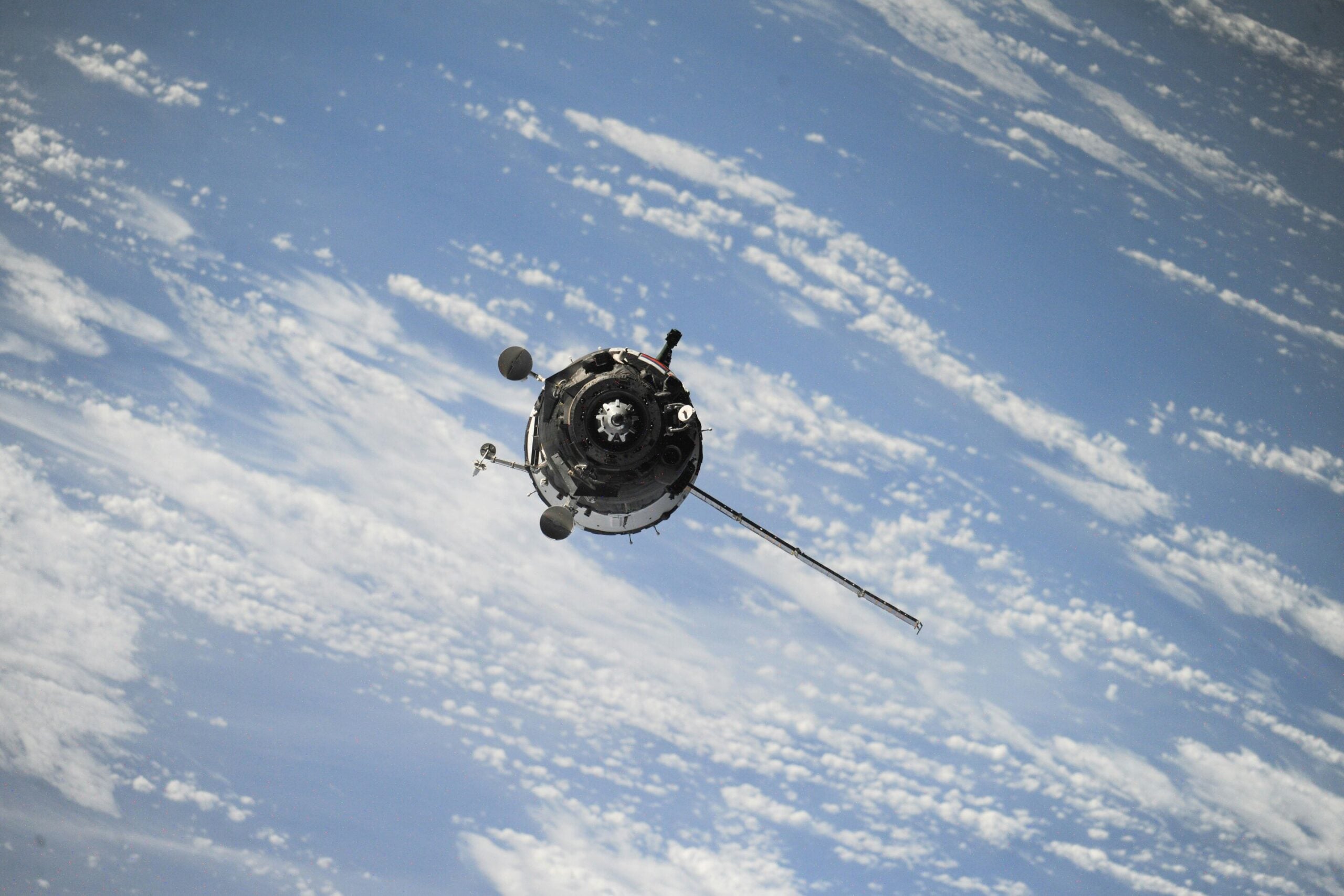
The new analysis shows that another process can produce a similar signal.
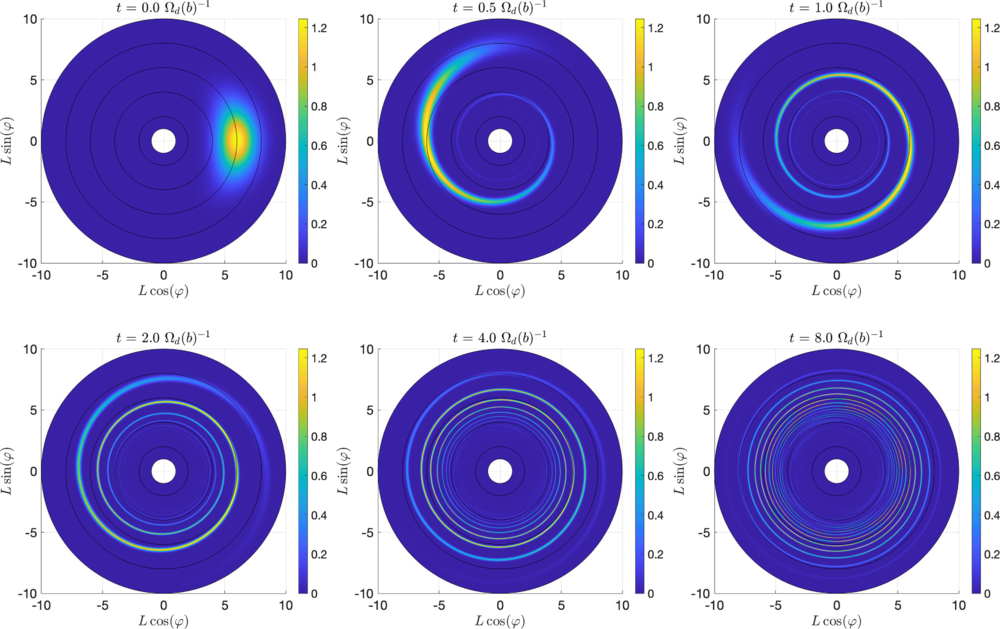
Particles on neighboring drift shells circle a planet at slightly different speeds. When an initially localized group of particles moves through the radiation belt, those speed differences stretch the group into increasingly narrow filaments.
The underlying motion remains ballistic, meaning the particles follow predictable trajectories without diffusion or dissipation. Yet an orbiting spacecraft does not observe the whole structure at once. It sweeps through neighboring regions and samples different drift phases over time.
That sampling can erase the visible detail.
Lead author Dr Adnane Osmane, from the University of Helsinki, said: “For more than 60 years, spacecraft observations have often been interpreted using diffusion-based models. Our results show that some observations may also be explained by a fundamentally different process. The key message is not that diffusion does not occur, but that observations alone may not always distinguish between diffusive and non-diffusive transport.
“This has important implications for how we interpret spacecraft data and develop models of hazardous space environments around Earth and other planets. If different physical processes can appear similar in the observations, we need to be careful about how we infer the underlying physics.”
The effect comes from what the team calls observational phase mixing. Spatial structure and temporal change become entangled because a spacecraft moves while particles drift around the planet.
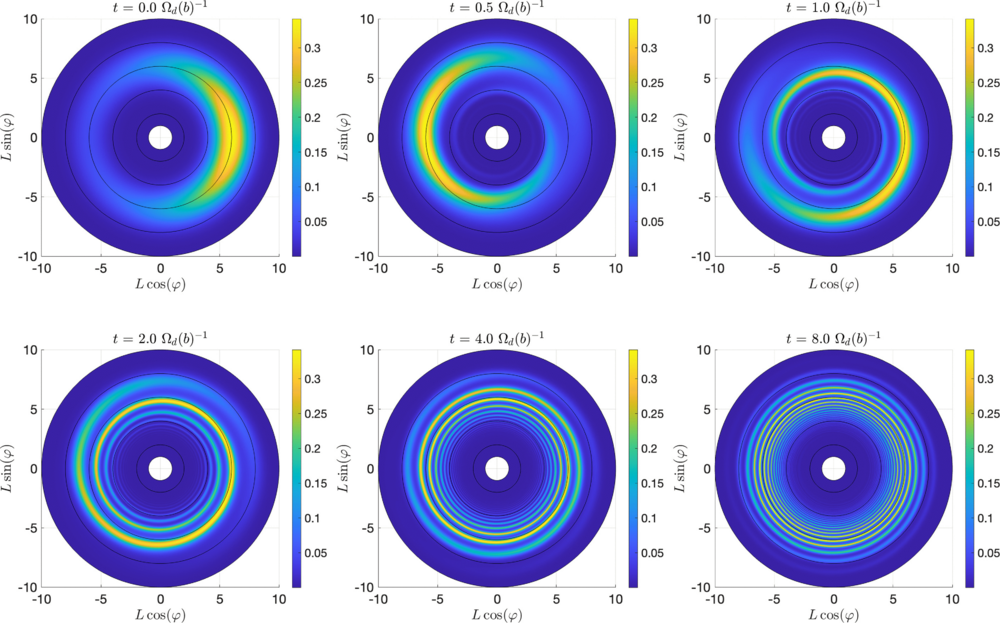
The researchers modeled an energetic particle population localized in magnetic local time and across neighboring drift shells. As particles moved, different drift speeds progressively sheared the original structure.
The fine-scale pattern did not physically vanish. Instead, it became harder for a moving spacecraft to resolve.
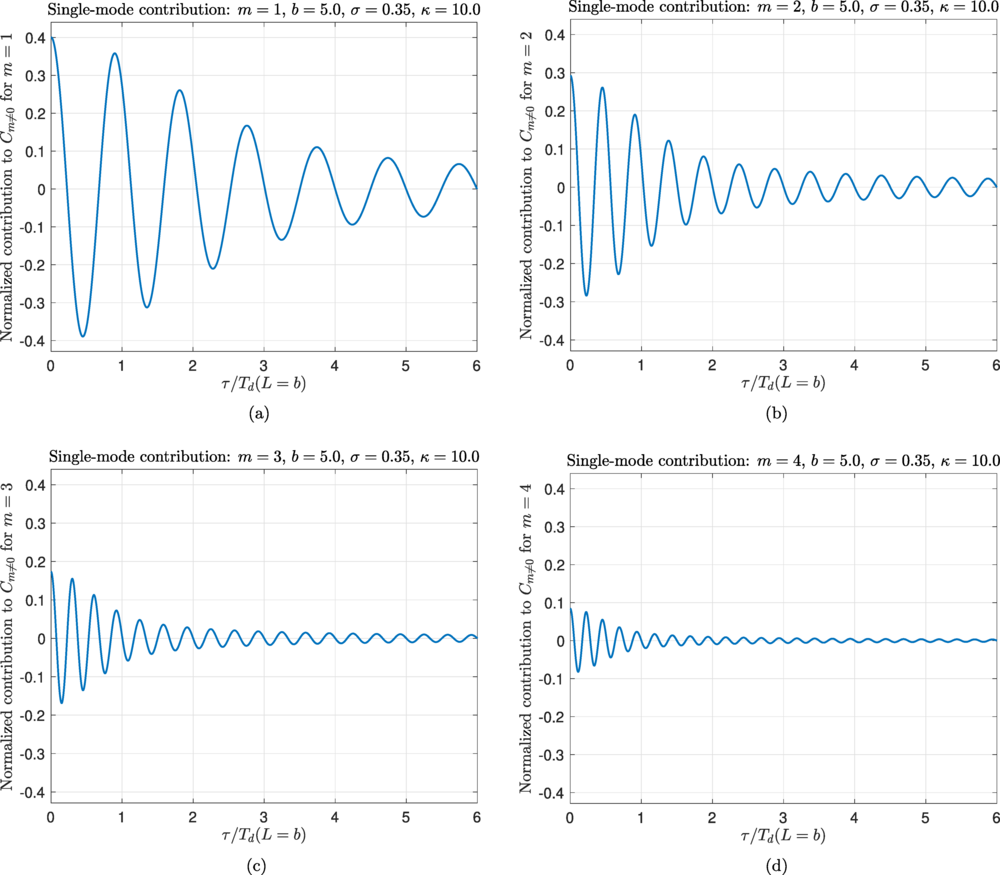
The team found that higher-order structures lose observational coherence especially quickly. For injections occurring across the modeled range of locations and radial widths, even the longest-lived fluctuating component generally decorrelated within about three to four particle drift periods.
More tightly localized structures can lose coherence even faster.
The model also shows why spacecraft motion matters. If a satellite remained on a single drift shell, the nonuniform particle structures would continue to oscillate rather than decorrelate. The apparent smoothing emerges when the spacecraft sweeps across neighboring shells whose particles have slightly different drift frequencies.
Finite instrument cadence adds another limitation. As the observed signal develops increasingly rapid variations, some frequencies can exceed the measurement system’s ability to resolve them. Fine structure can then disappear from the data even though no physical diffusion has taken place.
The team uses an art analogy to explain the problem. A Jackson Pollock painting contains dense lines, splatters and filaments. A Mark Rothko painting is dominated by broad, smooth regions of color.
If the fine detail in a Pollock becomes impossible to resolve, the painting has not actually turned into a Rothko. Its intricate structure has simply become inaccessible to the observer.
The researchers argue that radiation-belt measurements can behave in the same way. Differential particle motion creates progressively finer filamentary structures, while spacecraft sampling makes those structures look smooth and diffusion-like.
That ambiguity could affect estimates of particle acceleration, loss rates and long-term radiation-belt behavior if scientists assume diffusion when another process produced the observations.
The issue also extends beyond Earth. At Jupiter and Saturn, localized particle losses caused by moons can create depleted regions that later appear to refill. The analysis suggests that some of this apparent recovery could reflect loss of observable phase coherence rather than true diffusive transport.
Brown dwarfs present an even harder case because their radiation belts are inferred indirectly from synchrotron emission rather than measured by spacecraft.
The work does not argue that radial diffusion is absent. Instead, it shows that spacecraft observations may not uniquely identify it.
That distinction matters because radiation-belt models help scientists understand environments where energetic particles can threaten satellites, communications and missions. If ballistic phase mixing can mimic diffusion, models based only on smoothed spacecraft measurements may misidentify the process driving particle transport.
The study also points toward a way to reduce that uncertainty. Corresponding author Dr Mirek Hanzelka, from the Czech Academy of Science, said: “Our research points to an important limitation of many past radiation-belt missions: with a single spacecraft, spatial structure and temporal evolution can be difficult to tell apart, so very different physical processes may leave remarkably similar observational signatures. This makes a strong case for future missions using constellations of scientific satellites that can observe the same particle populations simultaneously at multiple locations.”
Combining simultaneous measurements from multiple locations could help scientists separate genuine temporal evolution from structures that only appear to change because of spacecraft motion. The researchers also identify future possibilities involving data assimilation, Kalman filtering and physics-informed machine learning, while noting that observational phase mixing may place fundamental limits on how much fine-scale structure can be recovered from sparse measurements.
These resources explore radiation-belt injections, drift-phase structures, particle transport and how observations can distinguish between competing explanations for energetic-particle behavior.
Large Radiation Belt Drift Phase Structuring: Observation and Interpretation of the 19 September 2014 Event
This research examines a large drift-phase structure in Earth’s radiation belts and compares spacecraft observations with modeling to understand how prompt particle transport creates organized patterns that evolve with particle drift. (Journal of Geophysical Research: Space Physics, 2025)
Direct Radiation Belt Injections and Their Auroral Counterparts
Researchers link enhancements in Earth’s outer radiation belt to direct, localized injections of energetic electrons, providing evidence that rapid, structured transport can contribute to radiation-belt changes. (Geophysical Research Letters, 2025)
Quantifying Radial Diffusion Rate Through Multi-MeV Electron Drift Echoes
This study uses long-lasting, drift-periodic oscillations of multi-MeV electrons and simulations to investigate radial transport, offering a useful comparison with research questioning when diffusion-like observations uniquely indicate true diffusion. (Journal of Geophysical Research: Space Physics, 2026)
Universal energy limits of radiation belts in planetary and brown dwarf magnetospheric systems
The analysis develops a framework for understanding energetic-particle limits across planetary and brown-dwarf magnetospheres, connecting radiation belts around Earth and the giant planets with much more distant magnetic systems. (Science Advances, 2026)
Resolved imaging confirms a radiation belt around an ultracool dwarf
High-resolution radio imaging revealed a stable, double-lobed structure around the ultracool dwarf LSR J1835+3259 that resembles Jupiter’s radiation belts, providing direct evidence that radiation-belt physics extends beyond the Solar System. (Nature, 2023)
Research findings are available online in the journal Physical Review Research.
The original story “Spacecraft may be mistaking how energetic particles move around the Earth” is published in The Brighter Side of News.
Like these kind of feel good stories? Get The Brighter Side of News’ newsletter.
The post Spacecraft may be mistaking how energetic particles move around the Earth appeared first on The Brighter Side of News.


Leave a comment
You must be logged in to post a comment.