A polished image can now appear without the years of drawing practice once needed to produce something comparable. That changes a familiar assumption about art: an impressive result no longer necessarily signals the personal development behind it. A philosophical paper argues that this separation makes the experiences surrounding creativity more important to examine.
Amit Raphael Zoran of the Hebrew University of Jerusalem develops that argument in AI & Society. The paper distinguishes finished artworks from the changes that making or encountering art can bring about. It offers a framework and practical examples, rather than an experiment demonstrating how AI changes creativity.
Zoran calls his central argument the “decoupling thesis.” Generative systems can produce sophisticated images, compositions, and designs without requiring users to follow the specific training traditionally needed for comparable work. Someone can generate an illustration without mastering drawing or explore musical arrangements without learning an instrument.

Historically, those abilities often developed alongside changes in perception and judgment. A painter learned to notice relationships among colors, surfaces, and light. A musician developed physical control while refining listening and interpretation, making the finished performance one outcome of a much longer process.
“For centuries, creating art meant going through a process of learning, experimenting, and changing as a person,” Zoran explains. “Today, AI allows us to produce sophisticated works without necessarily undergoing that journey.” His argument concerns the separation of a result from a particular learning pathway, rather than the disappearance of all creative effort.
Prompting, selecting, revising, and interpreting still involve human choices. Generative systems also depend on records of past human activity, including cultural work and labor. The claim is narrower: producing a sophisticated result no longer necessarily requires the same apprenticeship that once made it possible. A generated image can therefore become a starting point for a demanding practice, rather than evidence that the practice has already occurred.
The paper uses “artistic becoming” to describe changes in what people perceive, understand, feel, or can do through creative engagement. Zoran separates this into three levels: the maker, the recipient, and the surrounding culture. AI affects these levels differently, so changes to one cannot simply stand for changes to all.
An artist may develop new skills through sustained work with materials or tools. A viewer may encounter an image that changes how a familiar subject appears. A community may acquire new shared ways of interpreting experience through an artistic movement or practice. Renaissance perspective and Cubism serve as historical examples of art reorganizing shared habits of seeing, extending its significance beyond individual makers and objects.

This means an AI-generated work can still affect the person encountering it. Bypassing the maker’s traditional training does not automatically prevent a viewer from finding meaning. The paper leaves open how producing such works at scale might affect their capacity to support broader cultural change.
Zoran acknowledges that distinguishing art objects from artistic experience has earlier philosophical roots, especially in John Dewey’s work. His proposed contribution concerns how generative technology loosens their historical connection in production. It does not establish a new distinction between valuable human art and supposedly meaningless machine output.
One example places a tree at the center of a multisensory artistic environment. Participants smell and taste an essence derived from the tree and hear sounds recorded from it. Generative AI transforms those recordings into music, which a human musician performs acoustically.
Visual projections add another layer by revealing structures and processes that ordinarily remain hidden. Sound, image, smell, taste, and performance combine around a living subject. In Zoran’s account, the technology serves an encounter with the tree rather than simply supplying another digital representation of it.
Another intervention involves a lecture on perception that gradually reveals itself as partly prerecorded. Multiple versions of the speaker begin interacting, disrupting the audience’s confidence about digital presence. The same technologies that can manipulate attention become a way to expose that manipulation.
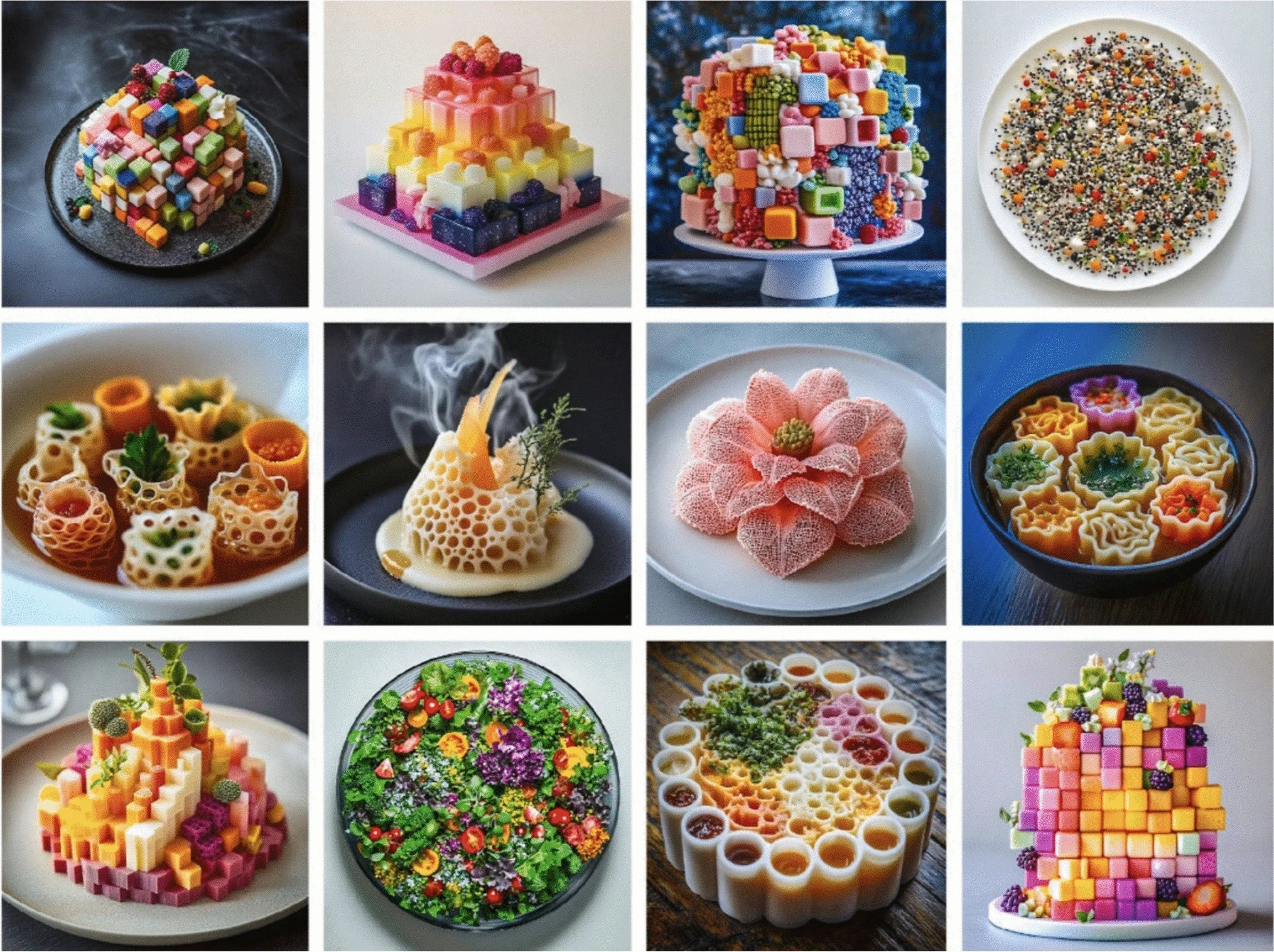
These examples illustrate what the approach could look like, but they do not demonstrate its psychological effects. Zoran explicitly states that participants’ transformations were not assessed and no measurement was attempted. The projects show that this redirection of technology is practicable, not that a particular experience necessarily changed anyone.
The argument challenges familiar ways of evaluating generative systems. Realism, speed, coherence, and technical sophistication can describe an output without explaining what happened to its maker or audience. A visually impressive result therefore cannot, on its own, establish the depth of the creative experience.
Zoran proposes examining whether tools encourage exploration or repeatedly steer users toward familiar patterns. Relevant questions include how widely people explore possibilities and whether different users’ outputs become more alike over time. These are proposed indicators of the conditions surrounding creativity, rather than direct measurements of personal transformation.
The distinction matters because such transformation is difficult to observe reliably. An attractive image offers no dependable record of changes in its creator’s perception or understanding. Even a person’s own account may provide an incomplete picture, a limitation the paper recognizes.
The framework also gives uncertainty a possible role in design. A system that removes every obstacle might reduce opportunities for discovery, depending on the task and context. Zoran argues for preserving difficulty where it supports exploration, rather than treating effortless production as the only worthwhile goal.
For practitioners, the paper suggests treating time saved through AI as an opportunity for further engagement. Artists might spend that time experimenting, working with physical materials, or developing encounters involving other people. These are proposals for practice, not outcomes established by the paper.
Schools, museums, and funding bodies could likewise consider process, duration, and documented participation alongside finished work. A sophisticated artifact increasingly reveals less about how much learning or engagement produced it. That makes assessing only the final product a potentially incomplete way to judge creative development. The proposal would require institutions to look at what participants actually did, rather than treating the sophistication of their output as a complete record.
The paper does not argue that technical skill has become worthless or that AI guarantees richer experiences. It proposes a direction: use abundant generated forms to deepen engagement with places, materials, living processes, and other people. Whether creative tools actually support that engagement remains something their designers and users must examine.
These five resources explore how generative tools interact with cultural diversity, physical craft, and creative expression.
Research findings are available online in the journal AI & Society.
The original story “The age of AI is forcing humanity to rethink what it means to be creative” is published in The Brighter Side of News.
Like these kind of feel good stories? Get The Brighter Side of News’ newsletter.
The post The age of AI is forcing humanity to rethink what it means to be creative appeared first on The Brighter Side of News.


Leave a comment
You must be logged in to post a comment.