Sunlight is usually considered too unruly for delicate quantum experiments. It spreads in many directions, spans many colors and lacks the steady rhythm of a laser. Yet an outdoor test in Germany has now used it to create entangled photons.
The result challenges a basic assumption behind many photonic quantum systems. Lasers have long supplied the orderly light needed to produce linked photon pairs. They also consume electricity, generate heat and require supporting hardware.
Researchers from the University of Ottawa and the Max Planck Institute for the Science of Light showed that sunlight can replace that laser pump.
“Quantum entanglement is crucial for applications such as secure communication, ultra-precise sensing and high-performance computation,” said Cheng Li, a recent University of Ottawa graduate. “Our work shows that abundant natural light sources can be used for quantum entanglement, opening the possibility of more energy-efficient and accessible quantum technologies.”
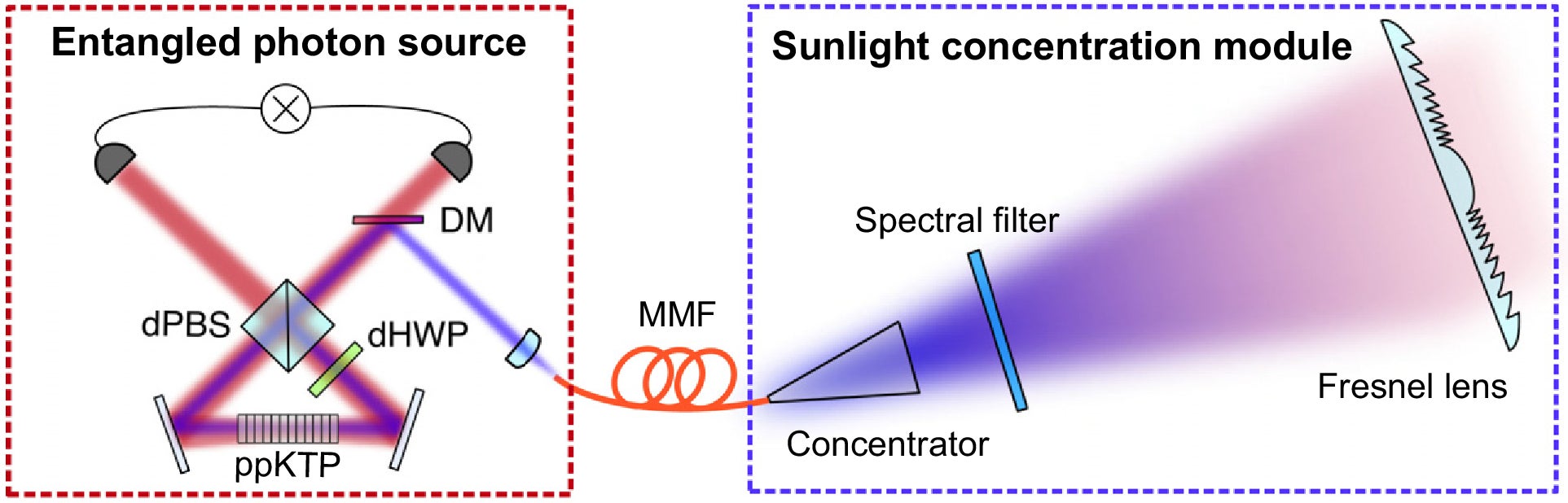
Entanglement links two particles so closely that measurements of one relate to measurements of the other. In photonic systems, researchers often create this link through spontaneous parametric down-conversion, known as SPDC.
During SPDC, a pump photon enters a nonlinear crystal and splits into two lower-energy photons. Under the right conditions, the pair becomes entangled.
Lasers are commonly used because their light is coherent. Its waves remain synchronized, and the beam usually contains a narrow range of colors. Sunlight behaves very differently.
Earlier work from Robert Boyd’s team at the University of Ottawa suggested that this disorder was not necessarily a barrier. The researchers had already used incoherent light from an LED to generate polarization-entangled photons.
That result showed that light could remain disordered in one property while producing entanglement in another. A beam could vary in direction and color, for example, while retaining enough order in its polarization.
The new experiment pushed that idea further. Sunlight is highly divergent and contains a broad spectrum of colors. The team polarized it so the light field oscillated in the same direction, while leaving its spatial and temporal disorder intact.
“We designed our experimental setup so that differences introduced by the different colors and propagation directions didn’t influence the photons’ polarization,” Li said. “As our theory predicts, if the entanglement lives only in polarization, then it should only depend on the pump’s orderliness in its oscillation direction and not on its direction or color.”
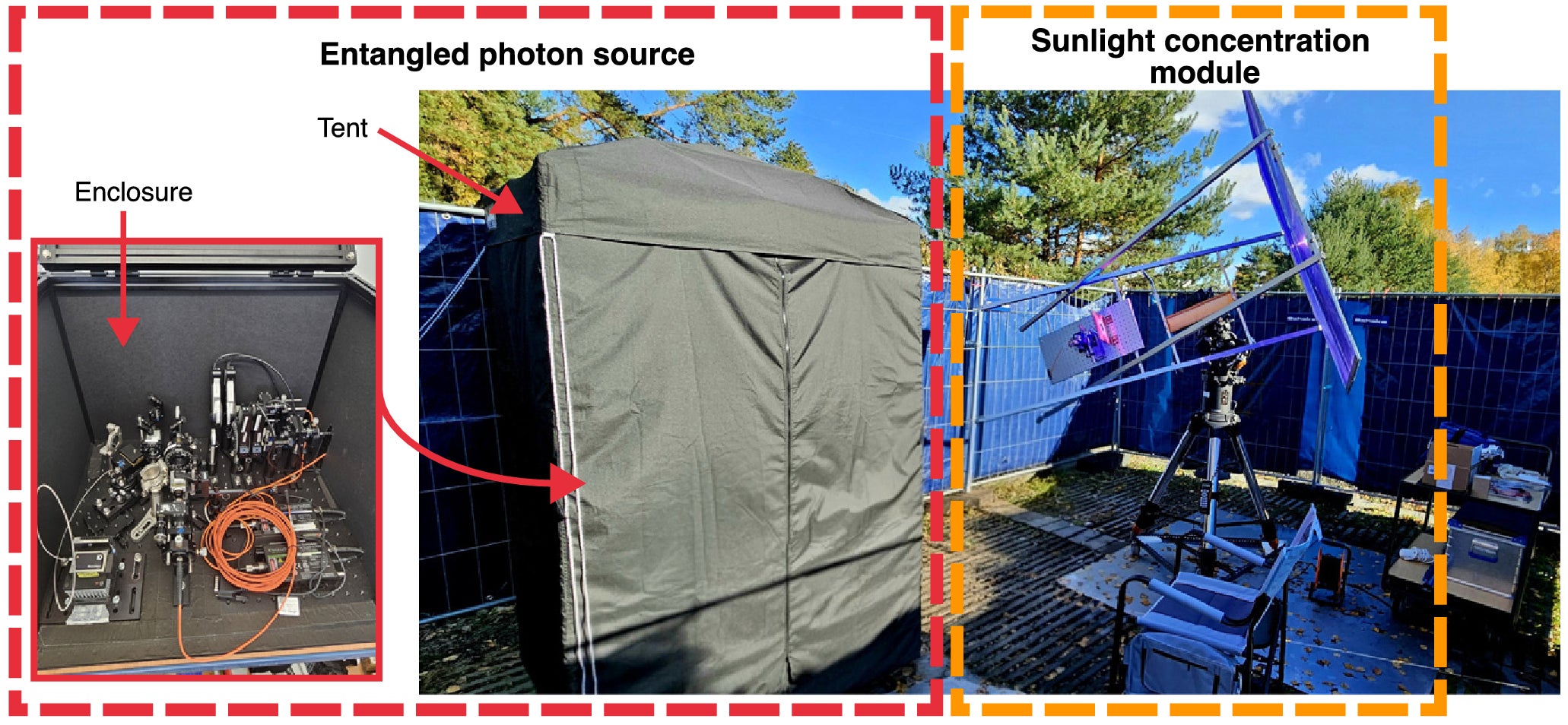
The experiment also faced a practical problem. The sunlight had to be focused onto a nonlinear crystal only a few millimeters across.
Hanieh Fattahi’s team at the Max Planck Institute developed an all-glass solar concentrator for that task. A household window-sized Fresnel lens collected the light. A cone-shaped glass device then concentrated it into an optical fiber about as wide as a human hair.
The fiber carried the filtered sunlight to a periodically poled potassium titanyl phosphate crystal inside a polarization Sagnac interferometer. There, the sunlight drove SPDC and produced photon pairs.
The outdoor system operated at the Max Planck Institute in Erlangen, Germany. Protective fencing reduced wind effects, while a tent and light-tight housing shielded the equipment from stray light.
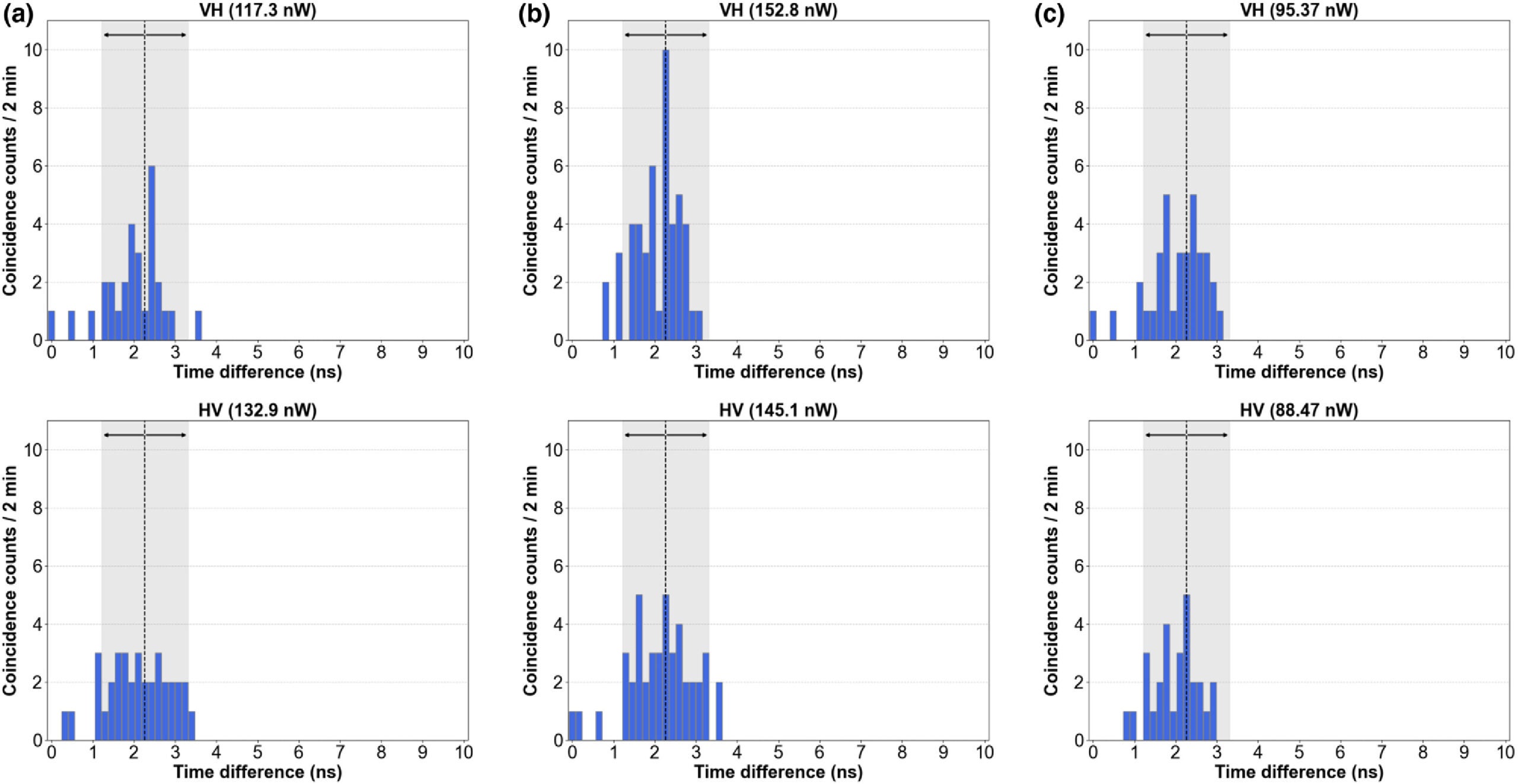
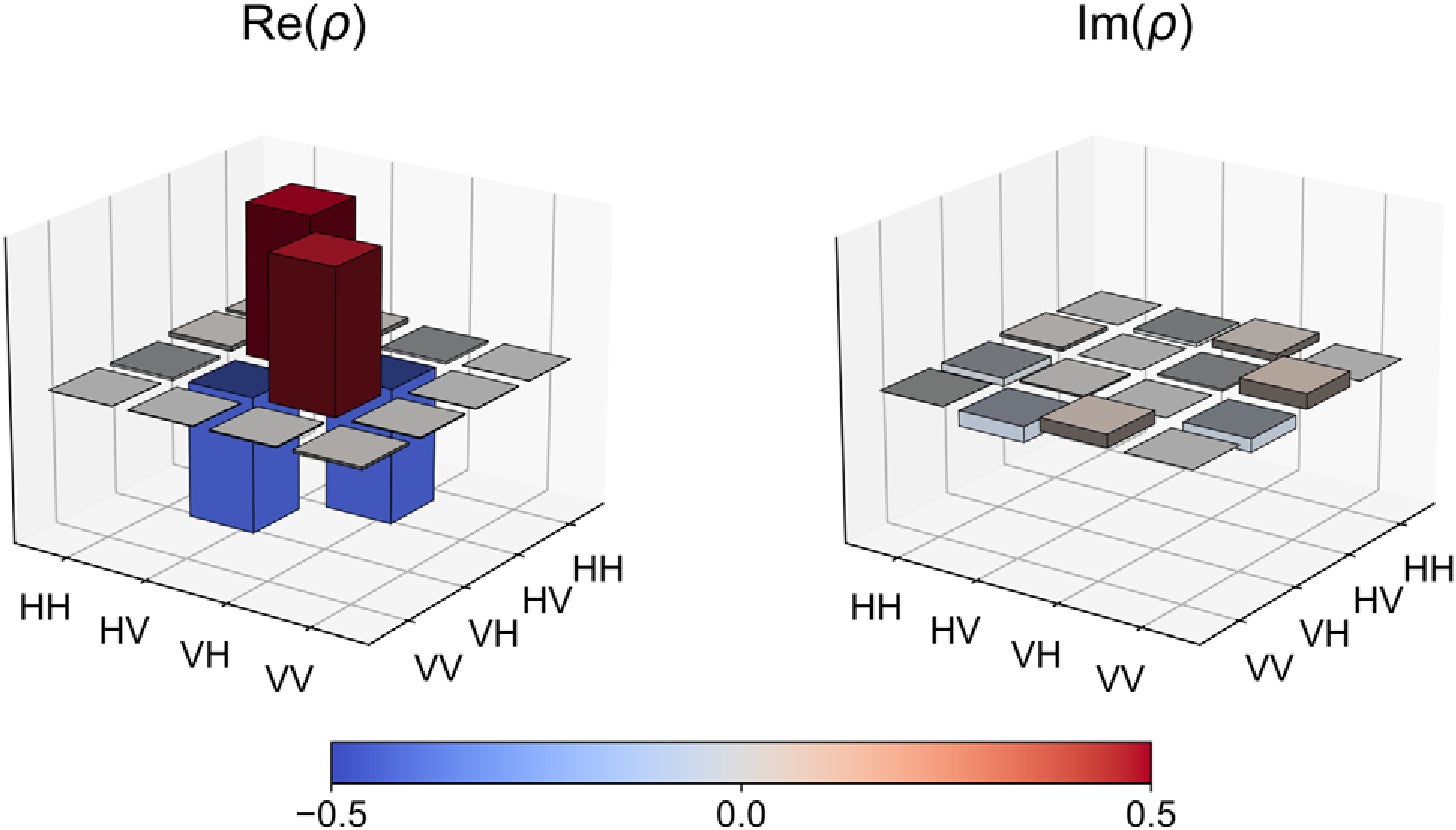
The researchers measured the arrival times and polarization correlations of the photon pairs. They then used quantum state tomography, a method for reconstructing a quantum state from repeated measurements.
The resulting state was about 94% similar to the targeted perfectly entangled Bell state. The team also recorded strong timing correlations with negligible accidental coincidences across measurements conducted on three separate days.
High similarity alone did not prove that the correlations were truly quantum. The researchers therefore performed a Bell test using the CHSH method.
Bell tests compare experimental correlations with the limits allowed by local classical theories. The sunlight-generated photon pairs exceeded that classical threshold by 2.49 standard deviations.
That violation indicated that the measured relationship could not be fully explained by a local hidden-variable model. The photons were genuinely entangled.
The pair-generation rate also compared favorably with laser-driven SPDC after the researchers accounted for the effective phase-matching bandwidth. The team said the remaining imperfections came from practical problems, including wavefront distortions in optical components, rather than any fundamental weakness in sunlight.
Cloud cover, seasonally low solar intensity and a low photon-detection rate limited the experiment. The system also was not fully free of electricity. Motors tracked the sun, while electrical equipment controlled the crystal’s temperature and recorded the photons.
“Since the inception of this project, our idea has met with repeated doubt and pushback,” Li said.
The demonstration points toward quantum light sources that need fewer lasers, less electrical-to-optical conversion and less heat management. That could matter most where power, weight and reliability are tightly constrained.
Satellites are one possible use. Sunlight is abundant in space, and a sunlight-driven source could reduce the need for onboard lasers and some supporting hardware. Sun-synchronous orbits could also reduce tracking demands.
“This technology could one day enable satellites to create secure encryption keys using the sunlight already abundant in space, reducing the need for onboard lasers and much of the supporting hardware,” Li said.
The same approach may support future quantum computing, sensing and free-space communication. Sunlight’s broad spectrum could also provide access to entangled photons across more wavelengths.
The work remains a proof of principle, not a deployable device. The researchers still need to improve brightness, entanglement quality, collection efficiency, tracking, durability and miniaturization.
They also say the concept could extend beyond SPDC to other nonlinear optical methods, including four-wave mixing. For now, the experiment establishes a simpler point: sunlight’s disorder does not prevent it from powering a high-quality source of entangled photons.
Research findings are available online in the journal Optica.
The original story “University of Ottawa scientists produce quantum entanglement using sunlight” is published in The Brighter Side of News.
Like these kind of feel good stories? Get The Brighter Side of News’ newsletter.
The post University of Ottawa scientists produce quantum entanglement using sunlight appeared first on The Brighter Side of News.


Leave a comment
You must be logged in to post a comment.