A vaccine tweak meant to reduce a dangerous antibody problem did something unexpected in mice. It shifted protection against Zika virus almost entirely onto CD8-positive T cells, which controlled infection well at first but failed to provide durable immunity.
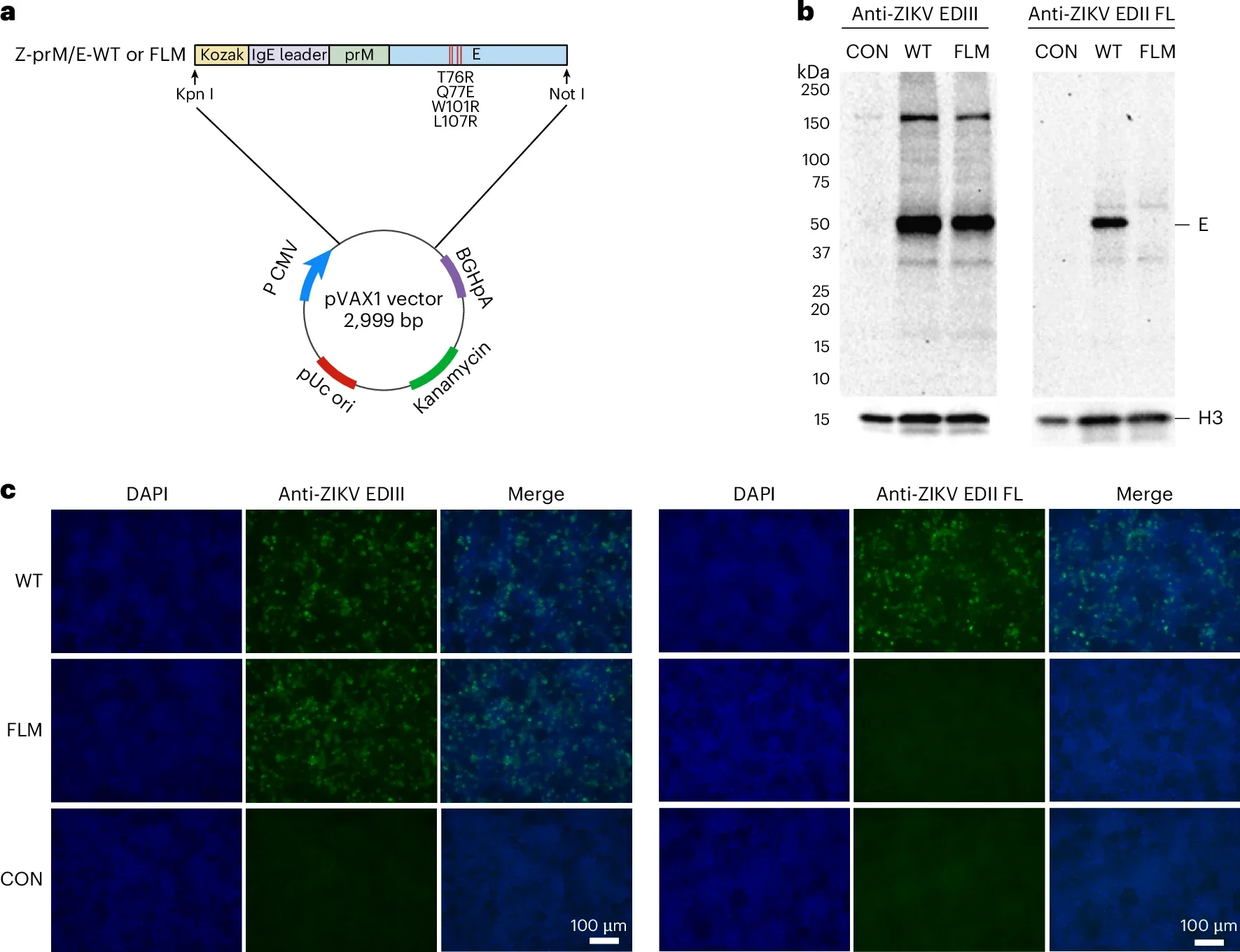
The finding comes from work led by La Jolla Institute for Immunology. Researchers compared two experimental vaccines built around the Zika virus premembrane and envelope proteins. One used the natural proteins, while the other carried four mutations in a region called the fusion loop.
Those mutations were designed to reduce antibodies associated with antibody-dependent enhancement, or ADE. In ADE, antibodies bind a related virus without fully neutralizing it and can worsen infection instead of blocking it. That concern is especially important for Zika because related orthoflaviviruses, including dengue, circulate in many of the same places.
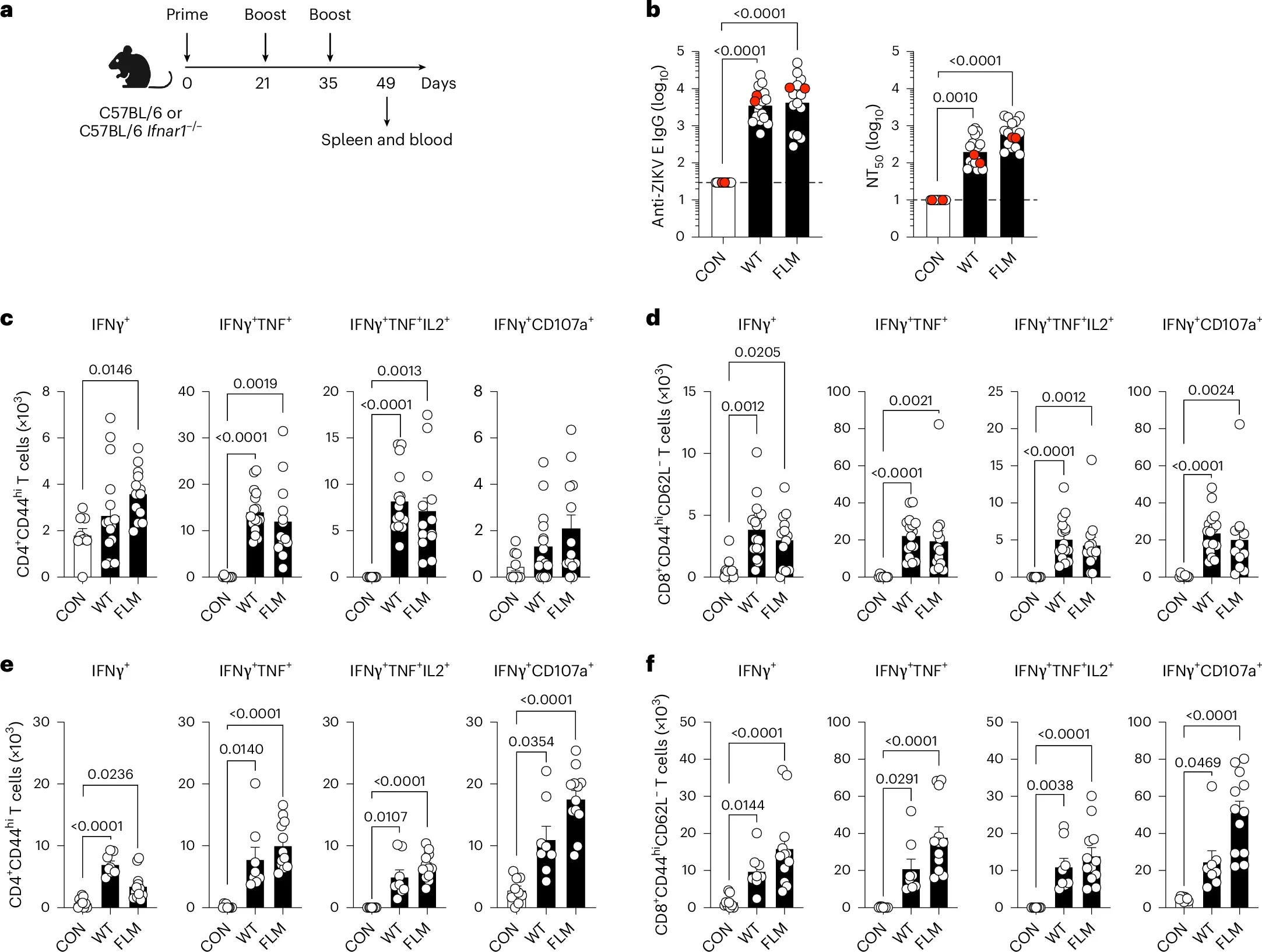
Mice received 50 micrograms of DNA vaccine on day 0, followed by boosters on days 21 and 35. Two weeks after the last dose, both vaccines strongly protected mice bred to be susceptible to Zika. After challenge with 1,000 focus-forming units, infectious particles were undetectable in most tested tissues, while viral RNA fell sharply. Both vaccines also protected against a 1-million-FFU lethal challenge.
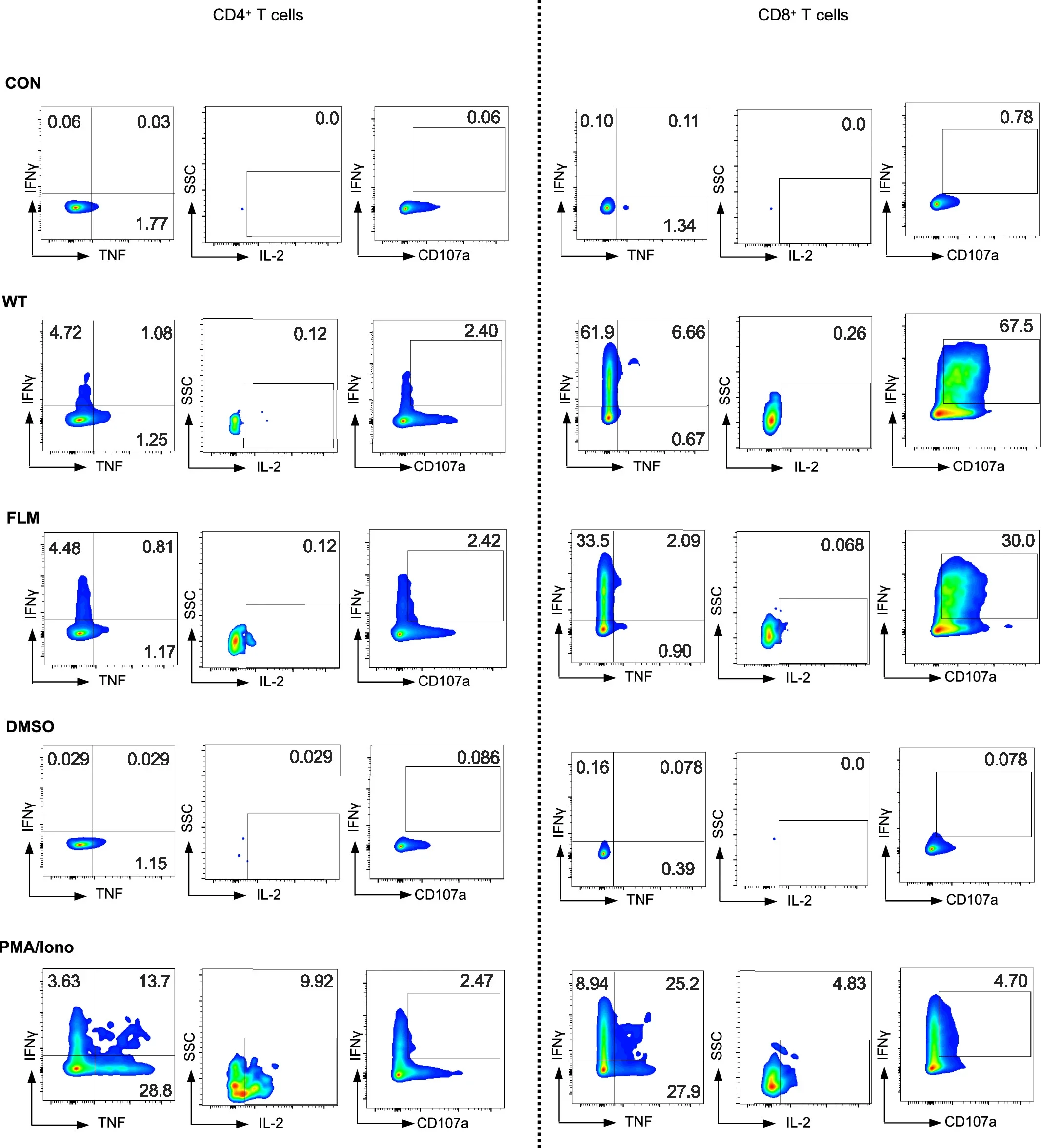
At first, their immune responses looked similar. Both generated envelope antibodies and stimulated CD4-positive and CD8-positive T cells.
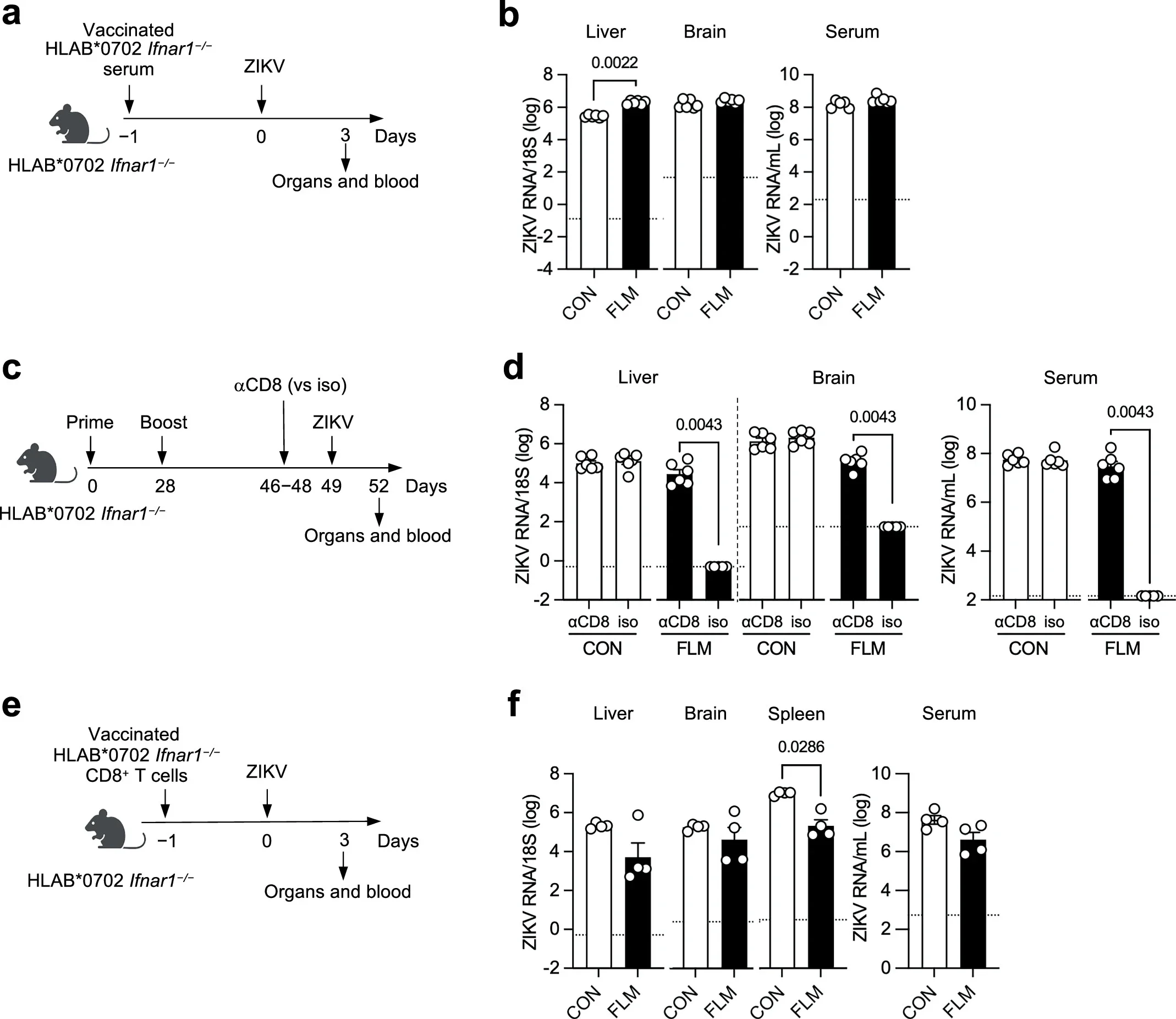
But transferring serum from vaccinated mice exposed a major difference. Serum from animals that received the unmodified vaccine protected unvaccinated mice. Serum from mice given the fusion-loop mutant vaccine did not provide meaningful protection.
“This vaccine wasn’t protecting via antibodies,” said Sujan Shresta of La Jolla Institute for Immunology. “It was protecting via T cells.”
The researchers then depleted more than 99% of CD8-positive T cells before exposing vaccinated mice to Zika. Protection from the fusion-loop mutant vaccine dropped sharply, with significantly higher infectious virus levels in every tissue examined.
The reverse experiment strengthened the conclusion. Researchers purified CD8-positive T cells from vaccinated mice to at least 95% purity and transferred them into unvaccinated animals. Cells from fusion-loop-vaccinated donors significantly lowered infectious virus in the liver, testes and serum.
Together, the depletion and transfer experiments showed that CD8-positive T cells were both necessary and sufficient for the mutant vaccine’s short-term protection in that mouse model.
“The protection came from CD8+ T cells, a type of immune cell that finds and destroys virus-infected cells,” said Kantinan Chuensirikulchai, a visiting scientist at LJI.
Interferon-gamma also contributed. Blocking this immune signaling molecule increased infectious Zika in the brain, spleen and serum of mice that had received protective CD8 cells.
Short-term success did not translate into lasting protection.
When mice were challenged 12 weeks after the final vaccine dose, animals given the unmodified vaccine still showed strong protection. Infectious virus remained virtually undetectable in most tested tissues.
The fusion-loop mutant group looked very different. Infectious virus was readily detectable and often did not differ significantly from levels in unvaccinated controls. Viral RNA also was not significantly reduced compared with controls.
That contrast appeared even though antibody levels against the envelope protein and measured T-cell responses still looked similar between the vaccinated groups before infection.
T cells alone could therefore compensate for weak antibody protection for a time, but not match the durability seen when both arms contributed.
The researchers traced the antibody problem to an unexpected structural effect of the four mutations, T76R, Q77E, W101R and L107R.
Initial neutralization tests had used Zika virus grown in mosquito cells, which produces a mixture of mature and immature particles. When the team instead tested antibodies against mature virus produced in human furin-expressing Vero cells, the difference became clear.
Only four of 11 samples from fusion-loop-vaccinated mice showed detectable neutralization of mature Zika. Their average neutralizing activity was significantly lower than antibodies produced by the unmodified vaccine.
Virus-like particles made by the mutant vaccine contained mostly uncleaved prM, a sign of disrupted maturation. Structural modeling suggested altered charge near the site where the host enzyme furin cuts prM.
That means a change intended to reduce ADE-promoting antibodies also altered how the vaccine particle matured and weakened its ability to generate antibodies against mature virus.
The team repeated key experiments using a self-amplifying RNA version of the mutant vaccine in another mouse model expressing a human HLA class I molecule. Protection again depended on CD8-positive T cells, suggesting the result was not limited to the DNA platform.
The experiments were conducted in mice, including animals with altered interferon signaling, so they do not establish performance in people.
Zika also remains a continuing public health concern. The World Health Organization reported evidence of current or previous mosquito-borne transmission in 97 countries and territories as of the end of 2025, although incidence remains far below its 2016 peak.
The findings give vaccine developers a warning about solving one immune problem without creating another. Removing or changing antibody targets associated with ADE may alter the structure of a vaccine particle in ways that weaken durable neutralizing immunity.
They also strengthen the case for measuring T-cell responses when evaluating Zika and related orthoflavivirus vaccines. A candidate can appear highly protective shortly after vaccination even when antibodies against mature virus are weak.
For Shresta’s team, the next question is how to build longer-lasting T-cell protection while preserving safe, effective antibody responses. The broader goal is a vaccine capable of protecting against several related viruses.
“Our study highlights the importance of considering T cell-mediated immunity alongside neutralizing antibodies,” Chuensirikulchai said. “This concept may inspire new vaccine strategies for other orthoflaviviruses, particularly in situations where antibody responses alone are insufficient or may contribute to unwanted immune effects.”
These studies and expert reviews explore T-cell protection, antibody-dependent enhancement, vaccine-particle design and the broader challenges facing Zika vaccine development.
Vaccine-induced T cell responses control Orthoflavivirus challenge infection without neutralizing antibodies in humans: Human challenge research showed that vaccine-induced T-cell responses can control an orthoflavivirus infection even without detectable neutralizing antibodies, strengthening evidence for cellular immunity as an independent protective mechanism. (Nature Microbiology, 2025)
A single-dose circular RNA vaccine prevents Zika virus infection without enhancing dengue severity in mice: This vaccine study tackled the same ADE problem by designing a Zika immunogen that protected mice without worsening later dengue disease, illustrating another strategy for separating protection from harmful cross-reactive antibodies. (Nature Communications, 2024)
Zika virus vaccines and monoclonal antibodies: a priority agenda for research and development: A global expert group reviewed the Zika vaccine pipeline and identified research priorities for overcoming difficulties in evaluation, licensure and preparedness while virus circulation remains unpredictable. (The Lancet Infectious Diseases, 2025)
An updated review of Zika virus vaccine development: This review surveys DNA, RNA, inactivated, live-attenuated, viral-vector and protein-based Zika vaccine platforms and explains why no candidate has yet reached routine clinical use. (Clinical and Experimental Vaccine Research, 2025)
Zika virus-like particle vaccine fusion loop mutation increases production yield but fails to protect AG129 mice against Zika virus challenge: An earlier fusion-loop experiment also found disrupted prM processing and weakened neutralizing-antibody protection, providing important context for how small envelope changes can alter Zika vaccine maturation. (PLOS Neglected Tropical Diseases, 2022)
Research findings are available online in the journal Nature Microbiology.
The original story “Zika vaccine tweak triggered an unexpected immune defense” is published in The Brighter Side of News.
Like these kind of feel good stories? Get The Brighter Side of News’ newsletter.
The post Zika vaccine tweak triggered an unexpected immune defense appeared first on The Brighter Side of News.


Leave a comment
You must be logged in to post a comment.