For nearly half a century, physicists have searched for a particle made not from quarks, but from the force carriers that bind quarks together. Now, the BESIII Collaboration says X(2370) may finally provide the clearest evidence yet.
The result centers on a long-standing prediction of quantum chromodynamics, or QCD, the theory of the strong interaction. QCD describes how quarks and gluons behave inside particles such as protons and neutrons. Unlike photons, which carry the electromagnetic force, gluons can interact with each other.
That unusual property allows theory to predict a bound state made largely from gluons. Physicists call such a particle a glueball. No glueball has yet been unambiguously established in experiments, despite searches stretching back nearly 50 years.
BESIII, which operates at the Beijing Electron Positron Collider II at China’s Institute of High Energy Physics, presented its latest case on Aug. 5 at the International Conference on High Energy Physics in Brazil. The collaboration says a pseudoscalar glueball, with spin-parity quantum numbers of 0⁻⁺, must be the dominant constituent of X(2370).
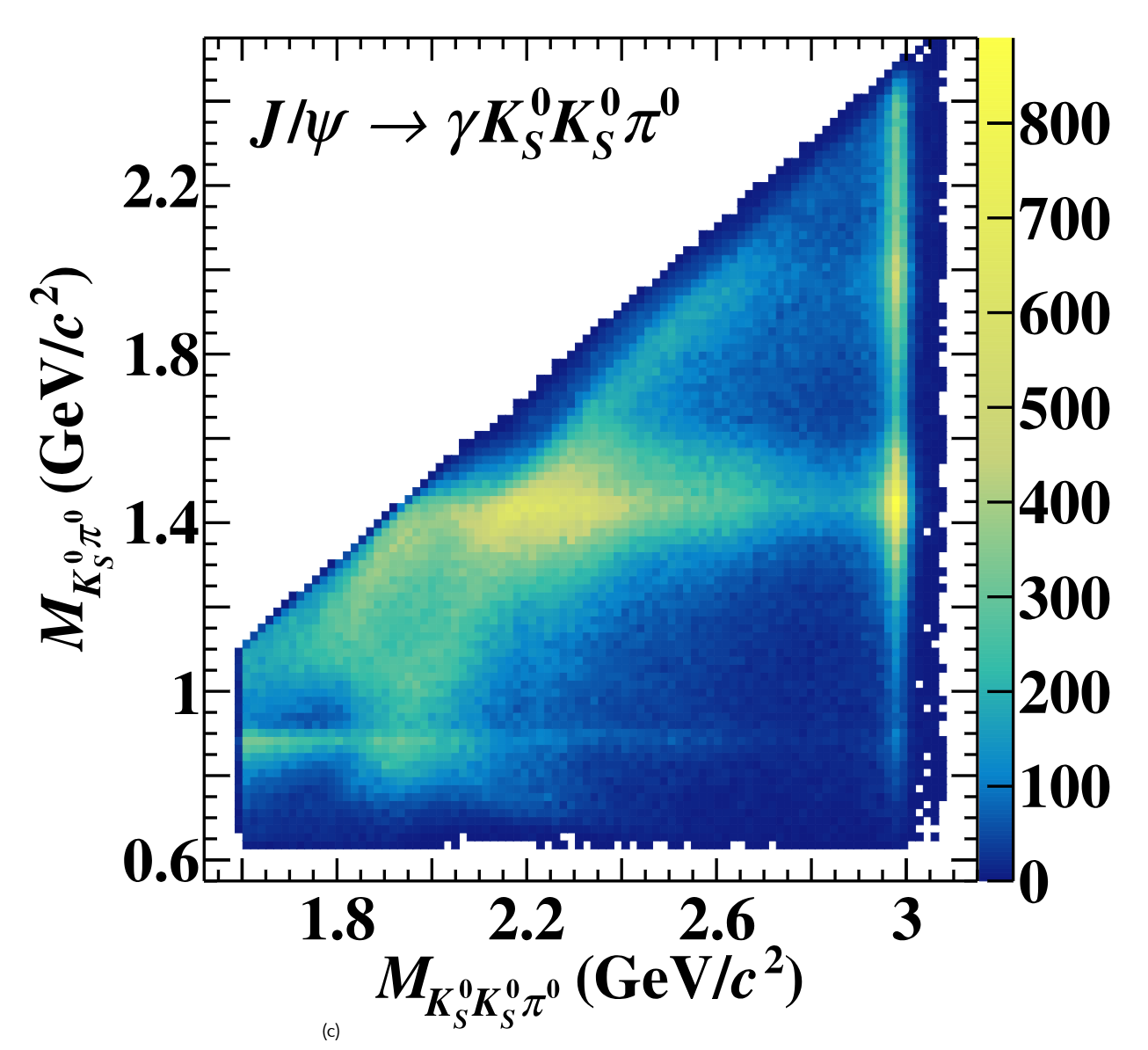
X(2370) first appeared in BESIII data in 2011, in decays of the J/ψ particle. Using 225 million J/ψ events, the team observed X(2370) with a statistical significance above 6.4 sigma. Its measured mass was about 2,376 MeV/c².
That immediately made the particle interesting. Lattice QCD calculations place the lightest pseudoscalar glueball between about 2.3 and 3.0 GeV/c².
The case strengthened in 2024. BESIII analyzed a much larger sample of 10 billion J/ψ events and determined the X(2370) spin and parity to be 0⁻⁺. The statistical significance exceeded 9.8 sigma. Both its mass and quantum numbers matched expectations for the lightest pseudoscalar glueball.
J/ψ decays are especially useful in this search because they create a gluon-rich environment. Theory predicts that glueballs should be produced relatively often under those conditions. BESIII estimates the production rate of X(2370) in radiative J/ψ decays should exceed 1 in 1,000.
Matching mass and spin alone, however, cannot identify a glueball. Other kinds of particles can share some of the same properties. The stronger test is whether X(2370) behaves like a particle with little or no quark flavor content.
Glueballs should be flavor singlets. In simple terms, they should not carry the flavor identity associated with particular quarks.
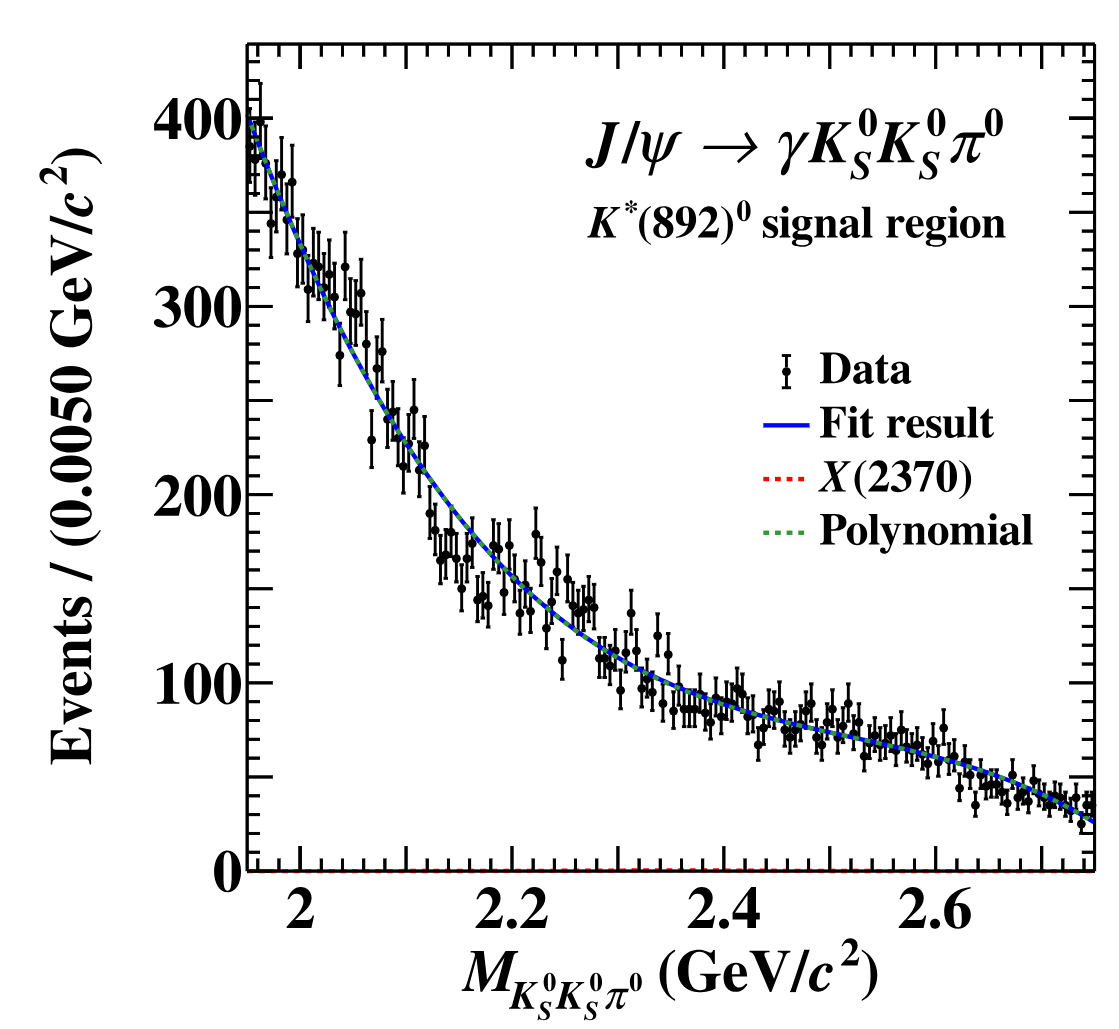
BESIII tested that idea by searching for X(2370) decays involving a K*(892) and an antikaon. For a 0⁻⁺ flavor-singlet state, that channel should be strongly suppressed because of generalized G-parity conservation.
The collaboration analyzed about 10.087 billion J/ψ events. Although the data showed a clear X(2370) signal in the broader K0S K0S π0 final state, the signal essentially disappeared after selecting events associated with the K*(892) region.
The statistical significance for X(2370) in that channel was only 0.1 sigma. The measured branching-fraction ratio was 0.003, with statistical and systematic uncertainties larger than the central value. BESIII set an upper limit of 0.081 at 90% confidence.
That suppression supports the flavor-singlet interpretation. The team says X(2370) is the first flavor-singlet light hadron observed above 1 GeV/c².
Other observations point in the same direction. X(2370) decays to γω and γϕ are also strongly suppressed. Those channels can act as tags for light-quark content, so their weakness suggests very small contributions from the usual up, down and strange quark combinations.
The collaboration compared the full set of measurements with several alternatives, including conventional quark-antiquark states, excited η or η′ mesons, multiquark states, hybrids and a possible baryon-antibaryon configuration.
Each interpretation runs into difficulties.
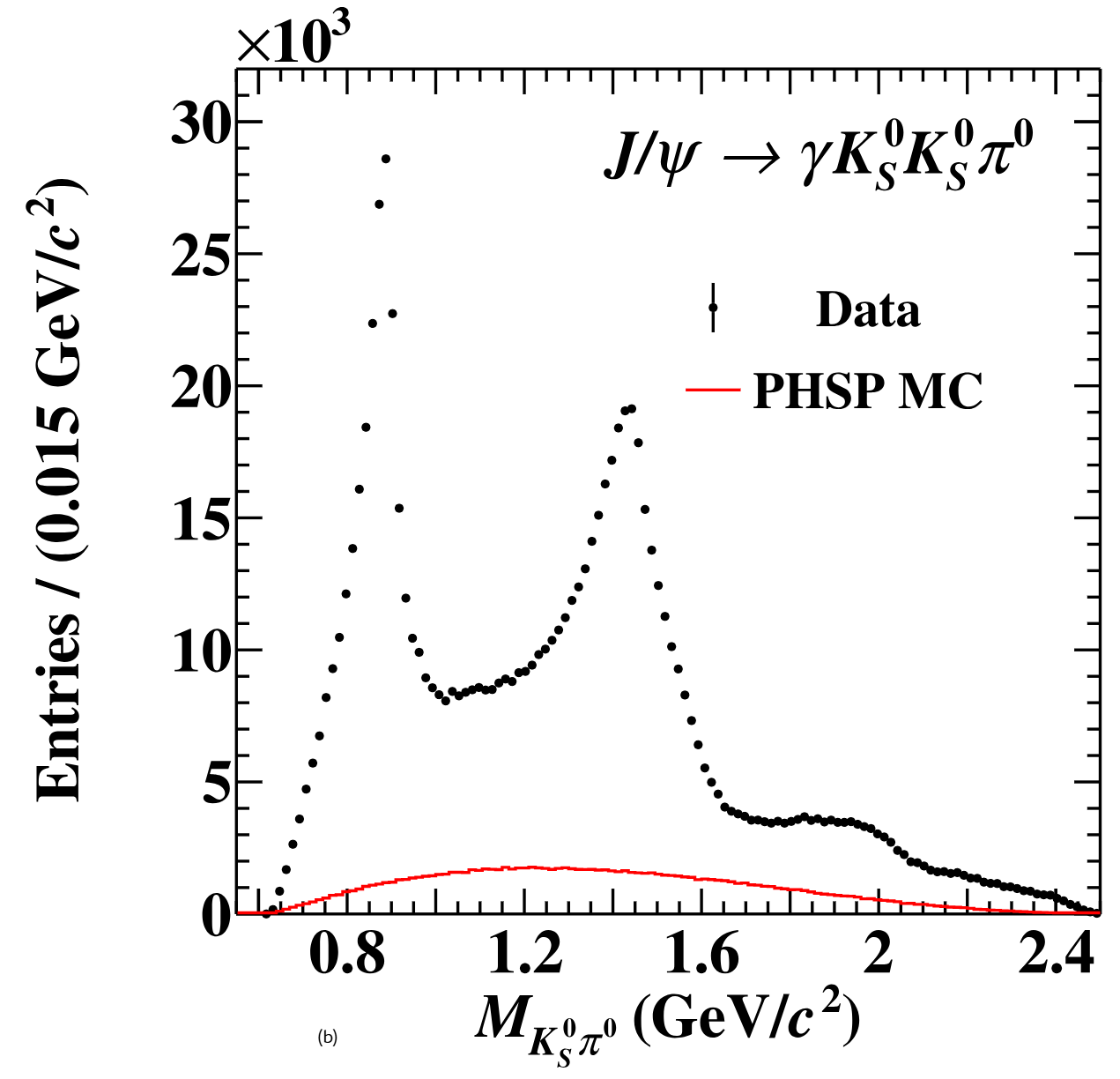
For example, an excited η-η′ state near 2.37 GeV/c² should decay much more strongly into K*(892)K. BESIII instead constrains that branching fraction to below 1.6%, corresponding to a partial width below about 2 MeV. Expectations for an η-η′ excitation range from roughly 15 to 200 MeV for that channel.
A normal quark-antiquark explanation also conflicts with the flavor-singlet behavior. Lattice QCD does not predict such a flavor-singlet state from light quark mixing around 2 GeV/c².
The decay pattern adds another clue. X(2370) appears in several channels, including KKπ, ππη, ππη′ and KKη′, but no single mode dominates. That resembles the behavior expected from a glueball and from ηc, whose decays also proceed largely through gluons.
The team argues that no competing interpretation now explains all of the observations at once: the mass, 0⁻⁺ quantum numbers, high production rate, flavor-singlet behavior, narrow partial widths and suppressed radiative decays.
The claim also rests on accumulation rather than one measurement. Since the Beijing Electron Positron Collider’s major upgrade was completed in 2008, BESIII has collected more than 10 billion J/ψ events. That enormous sample allowed the collaboration to move from the particle’s initial discovery to detailed measurements of its quantum numbers and increasingly rare decay patterns.
Particle physicist Jin Shan of Nanjing University called the possible glueball an “unprecedented form of matter.”
If further studies continue to support this picture, X(2370) would give physicists their strongest experimental handle yet on a form of matter built predominantly from force carriers.
That would provide a direct low-energy test of QCD’s non-Abelian structure, the feature that allows gluons to interact with one another. It would also complement the role of asymptotic freedom in establishing QCD at high energies.
The remaining work is precise rather than cosmetic. BESIII says more measurements are needed to determine how much ordinary quark content may mix into X(2370). Searches for additional decay modes, including ωω, ϕϕ, ωϕ and K*(1410)K, could provide further tests of its flavor-singlet nature.
For now, the collaboration stops short of describing X(2370) as a pure glueball. Its conclusion is more specific: a lightest 0⁻⁺ glueball component is needed to naturally explain the full pattern of data, making it the dominant constituent of X(2370).
These resources explore the experimental and theoretical evidence behind glueballs, including X(2370), lattice QCD predictions, particle mixing and the unusual structure expected for gluon-dominated matter.
Determination of Spin-Parity Quantum Numbers of X(2370) as 0⁻⁺ from J/ψ → γKₛ⁰Kₛ⁰η′
Using about 10 billion J/ψ events, BESIII determined X(2370) to have 0⁻⁺ spin-parity quantum numbers, bringing its measured properties into agreement with predictions for the lightest pseudoscalar glueball. (Physical Review Letters, 2024)
Update on Glueballs
This expert review surveys how lattice QCD is used to predict glueball states, why experimental identification remains difficult and how recent BESIII results fit into the broader search for gluon-dominated particles. (Proceedings of Science, 2025)
Production Rate of Glueball-like X(2370) in J/ψ Radiative Decay
This 2026 analysis examines whether a small mixture of charmonium and a pseudoscalar glueball could explain X(2370)’s relatively high production rate in J/ψ radiative decays, while still leaving the particle overwhelmingly glueball-like. (arXiv, 2026)
S-wave flavor-singlet meson mixing in QCD with light and charm quarks
Lattice QCD calculations investigate how flavor-singlet light mesons and charmonium states can mix, finding statistically significant correlations between operators with different quark content and providing useful context for interpreting mixed exotic states. (Physical Review D, 2025)
Lattice Evidence that Scalar Glueballs Are Small
Researchers used lattice field theory to calculate the internal gravitational structure of a scalar glueball, finding evidence that glueballs could be substantially smaller than typical hadrons and offering another possible signature for future searches. (Physical Review Letters, 2026)
Research findings are available online in the journal arXiv.
The original story “50-year hunt for glueballs closes in on mysterious X(2370) particle” is published in The Brighter Side of News.
Like these kind of feel good stories? Get The Brighter Side of News’ newsletter.
The post 50-year hunt for glueballs closes in on mysterious X(2370) particle appeared first on The Brighter Side of News.


Leave a comment
You must be logged in to post a comment.