Tiny fossil teeth from southern Wyoming are changing a familiar story about early primate evolution. A new University of Kansas study describes a previously unknown primate species and shows that ancient primates in North America followed a more tangled path than scientists once believed.
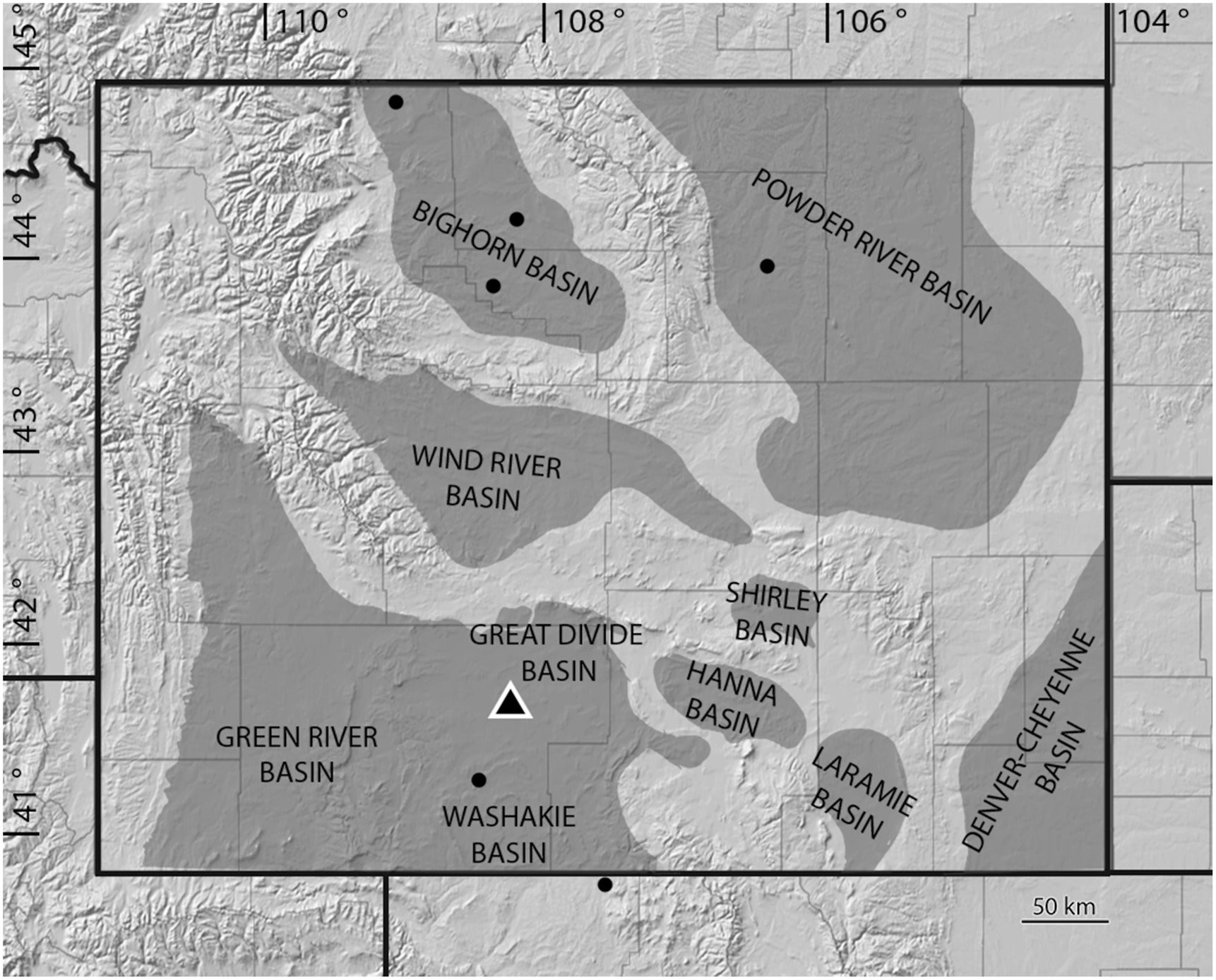
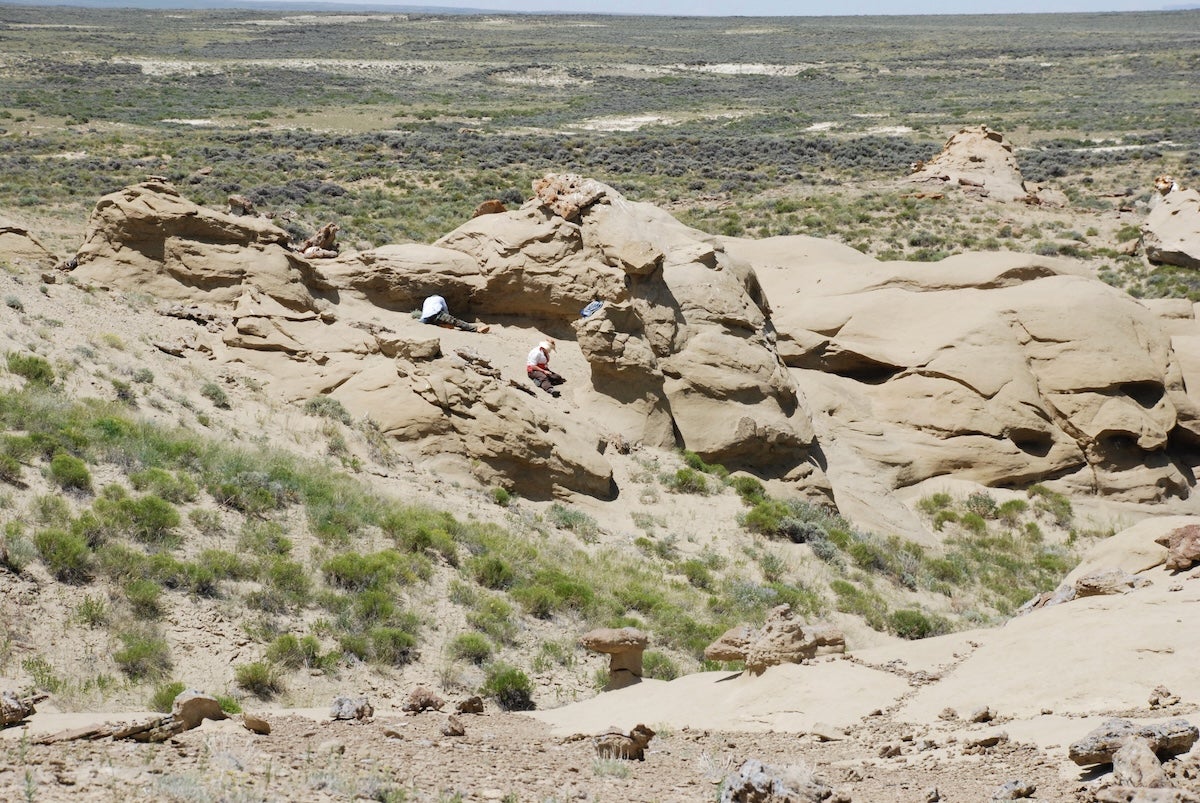
The research focuses on fossils from Smiley Draw in Wyoming’s Great Divide Basin. The site has produced nearly 1,000 tooth-bearing jaws and upper jaw fragments. That makes it one of the richest vertebrate fossil sites in the Rocky Mountain West.
“The paper is about a new species of an omomyid primate, a primate family close to the top of the family tree of modern primates — with lemurs on one side and apes, humans and monkeys on the other,” said lead author Parker Rhinehart, doctoral student with the KU Biodiversity Institute and Natural History Museum.
The fossils date to the Eocene, roughly 55 million years ago. Earth was much warmer then, and mammals were diversifying quickly across the Northern Hemisphere.
Omomyids were true primates, but they are now extinct. They were small animals, and many early species weighed less than 100 grams. Some may have resembled modern mouse lemurs in size.
“They appear about 55 or 56 million years ago across the Northern Hemisphere,” Rhinehart said.
These early primates likely moved through trees using a mix of leaping and four-limbed movement. Some had enlarged eye sockets, a trait often compared with tarsiers. Their tiny jaws and teeth now carry many of the best clues to their lives.
The study introduces Tetonius varleyorum, a new species in the genus Tetonius. Rhinehart said the name honors the Varley family, who run a truck stop near the team’s field campground.
“Varley is the name of a family that runs a truck stop near the campground where we stay when we’re collecting fossils, and they’ve been a great help to us,” he said.
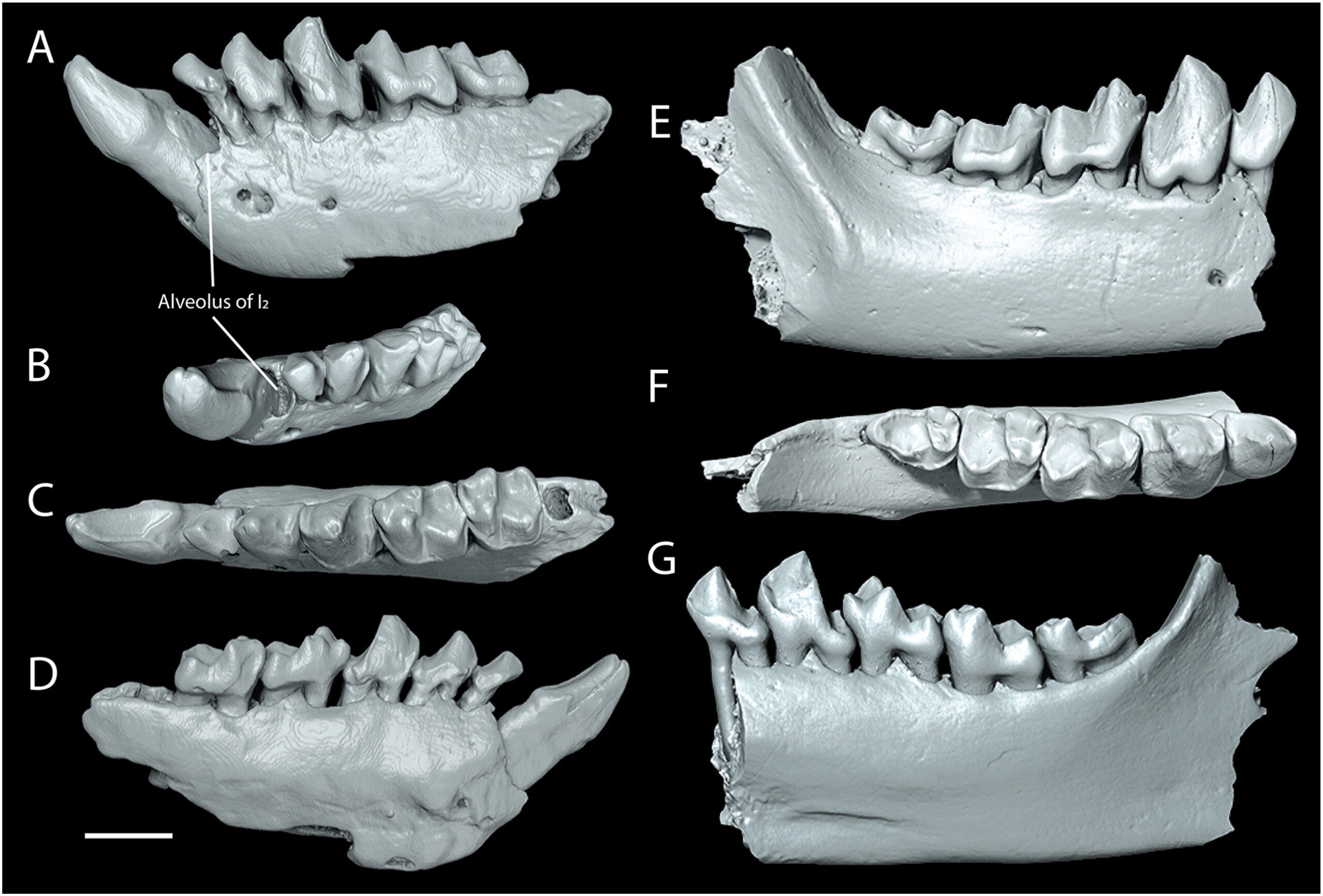
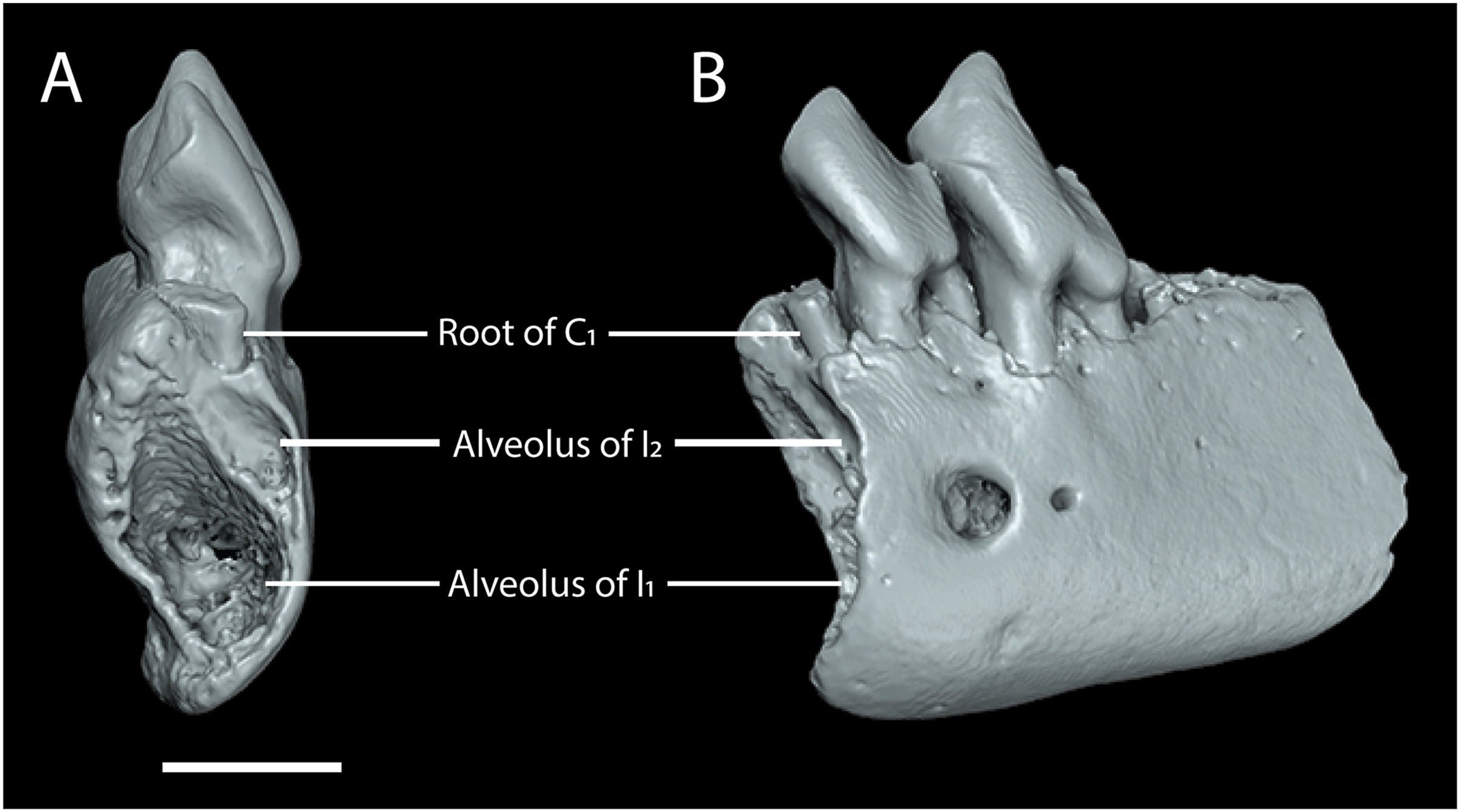
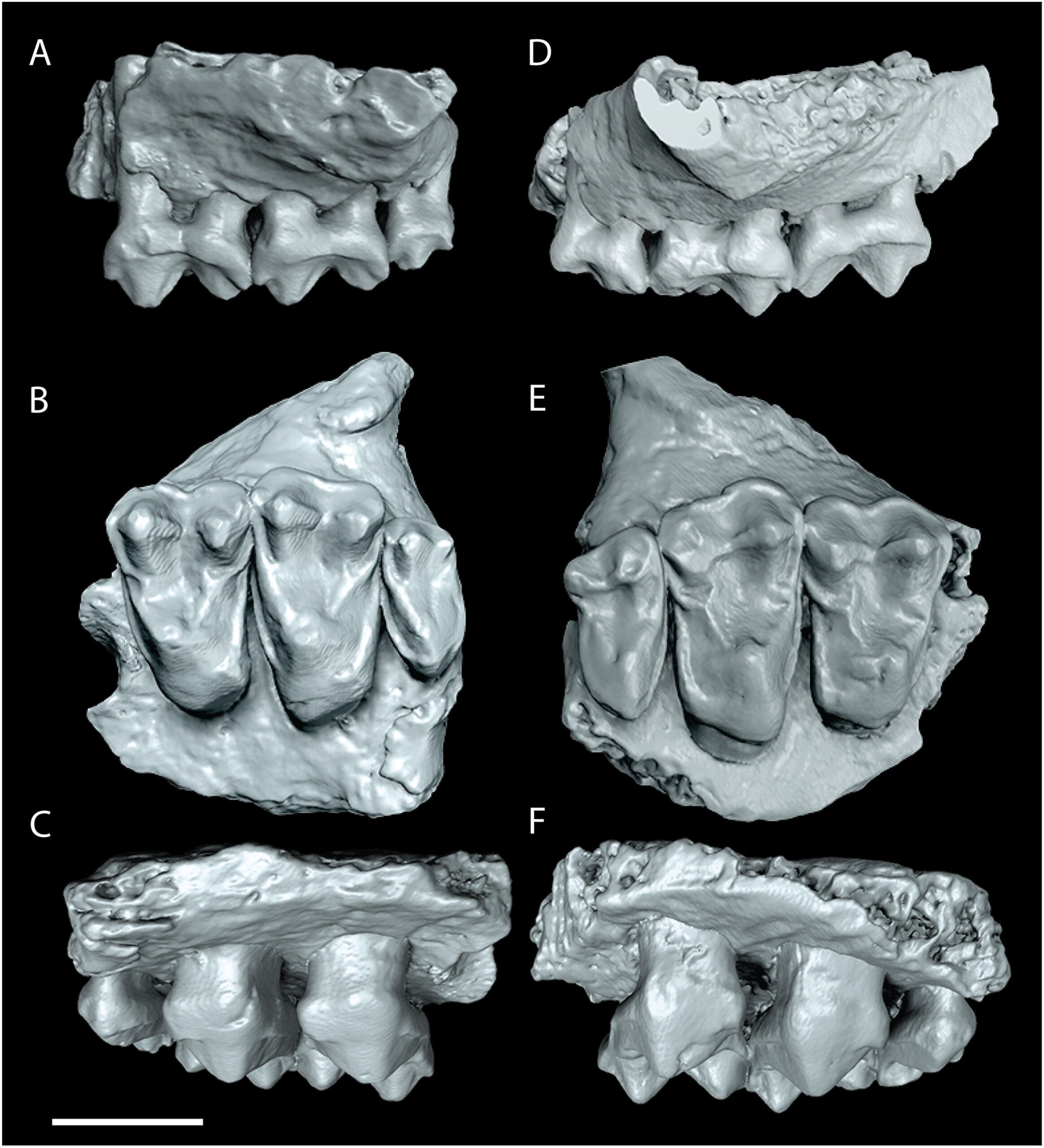
The main specimen is a small lower jaw fragment. It preserves several teeth and tooth sockets. Those details may sound modest, but they carry major evolutionary meaning.
In early primate research, teeth often matter most. They survive erosion better than fragile bones. Their shape, roots and placement can reveal how species relate to each other.
For decades, a famous 1987 study shaped the story of Tetonius evolution. That work, based on fossils from the Bighorn Basin, proposed a mostly straight-line transition.
Evolutionary biologists call that pattern anagenesis. It means one species changes gradually into another without branching into separate lineages.
“One of the premier papers from that basin has this figure depicting a proposed evolutionary transition from an early form of Tetonius,” Rhinehart said. “It’s upheld as a great example of an evolutionary transition — reflecting a true transition in the fossil record.”
The new fossils complicate that picture. Tetonius varleyorum has a mix of older and more advanced dental traits.
It lacks the second lower premolar and has an enlarged first lower incisor. Those traits resemble more advanced relatives. Yet it keeps a double-rooted third lower premolar, a more primitive feature.
The new species appears to interrupt the simple sequence proposed from the Bighorn Basin. It suggests that one related lineage branched away while another continued evolving elsewhere.
“The 1987 paper claims that there is no branching of the tree, going from one intermediate species of Tetonius to the next with no branching speciation events,” Rhinehart said.
The Smiley Draw fossils show that branching likely happened. The new species may have split from an early stage of the Tetonius–Pseudotetonius lineage.
After that split, separate lineages developed similar compact front jaws in different ways. This is called parallel evolution. It happens when related species reach similar solutions through different anatomical changes.
That means the old model was not entirely wrong. It was incomplete.
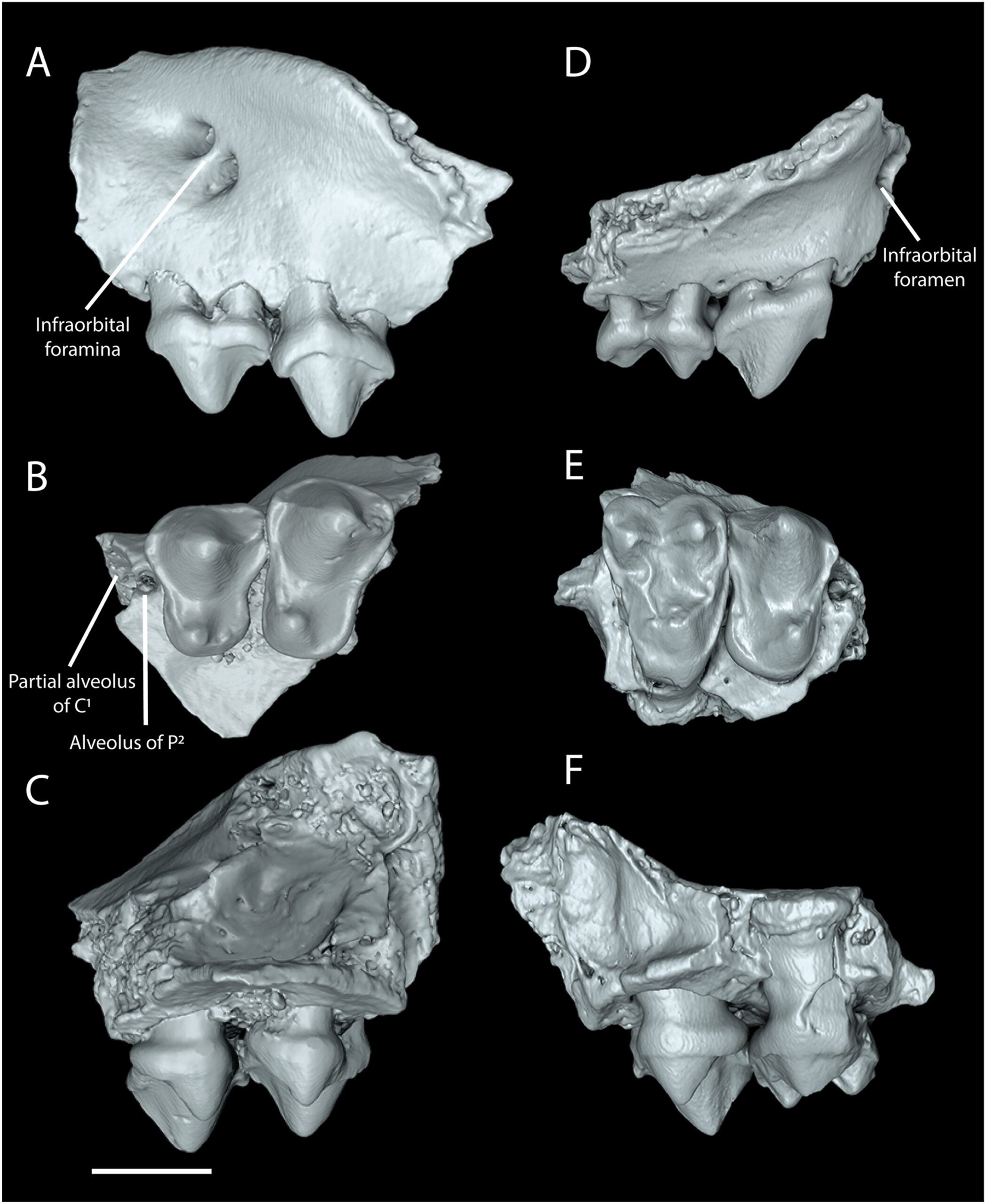
Smiley Draw also yielded two rarely documented omomyids, Arapahovius gazini and Anemorhysis savagei. Their presence makes the site especially unusual.
The study reports only the second known occurrence of Arapahovius gazini. It had previously been known from the Washakie Basin, about 50 kilometers southwest.
It also reports the third known occurrence of Anemorhysis savagei. That species had been found in the Washakie Basin and the Wind River Basin.
Together with Tetonius varleyorum, these fossils create a primate community unlike those known from better-studied Wyoming sites.
The Bighorn Basin has long shaped ideas about early Eocene mammals. Its fossil record is rich and carefully studied. Scientists use it to compare ages and evolutionary patterns across North America.
But relying too heavily on one basin can make evolution look simpler than it was.
“This is really important to the Tetonius story,” Rhinehart said. “Because so many scientific ideas only really consider the fossils from the Bighorn Basin, they just don’t take in the whole picture.”
Smiley Draw sits about 300 kilometers south of the Bighorn Basin. Its fossils show that nearby regions may have hosted different primate communities.
Local habitats, geography and timing may all have shaped which species lived where.
The age of Smiley Draw remains partly uncertain. Some fossils suggest it belongs to an older slice of the Wasatchian, the first North American land mammal age of the Eocene.
Other fossils point to a younger age. That conflict makes the site both challenging and valuable.
The researchers do not think the fossils were mixed from different times. The specimens are well preserved and show little evidence of transport or damage.
For now, the team leans toward a younger age. But independent dating could help settle the question. Future work may use detrital zircon dating to better pin down when the fossils were deposited.
The study shows how tiny anatomical details can change evolutionary history. A missing premolar, shifted incisor socket or double-rooted tooth may seem small. But each detail can reshape a family tree.
Co-author Robert Anemone of the University of North Carolina at Greensboro discovered the Smiley Draw site. K. Christopher Beard, senior curator at the KU Biodiversity Institute, advised Rhinehart’s doctoral research.
Rhinehart plans more fieldwork at Smiley Draw. More fossils could clarify the site’s age, habitats and primate diversity.
For now, the message is clear. Early primate evolution in North America was not a single clean line. It was branching, regional and more dynamic than one famous fossil basin could show.
This research helps scientists build a more accurate picture of early primate evolution. By showing that Tetonius evolution involved branching as well as gradual change, the study improves how researchers interpret fossil records.
The findings also show why broad fossil sampling matters. Even a famous site like the Bighorn Basin cannot tell the whole story alone. Adding fossils from places like Smiley Draw helps scientists avoid oversimplified evolutionary models.
The work may guide future field research across Wyoming and nearby regions. More fossil sites could reveal other hidden branches in early primate history. Better dating could also clarify how climate, geography and habitat shaped these small mammals.
For humanity, the study deepens understanding of our distant primate roots. It reminds you that evolution rarely follows a straight path. The history leading toward modern primates, including humans, was shaped by branching lineages, local environments and chance discoveries.
Research findings are available online in the Journal of Human Evolution.
The original story “55-million-year-old fossil teeth rewrite the story of early primate evolution” is published in The Brighter Side of News.
Like these kind of feel good stories? Get The Brighter Side of News’ newsletter.
The post 55-million-year-old fossil teeth rewrite the story of early primate evolution appeared first on The Brighter Side of News.


Leave a comment
You must be logged in to post a comment.